Переглянути в інтер'єріПереглянути в інтер'єрі Перегляд в ARПерегляд в AR Замовити репродукцію ручної роботи Замовити репродукцію ручної роботиПерейти до цифрових зображень Перейти до цифрових зображень Надіслати як листівкуНадіслати як листівку
ДетальнішеДетальніше Додати до улюблених Додати до улюблених ЗавантажитиЗавантажити Схожі експонатиСхожі експонати Рентгенівське дослідженняРентгенівське дослідження Слайд-шоуСлайд-шоу СтатистикаСтатистика

A Study of Architecture, Florence

Experience John Singer Sargent's 'A Study of Architecture, Florence.' This captivating oil painting showcases Italian Renaissance grandeur with realistic detail and luminous light. A timeless masterpiece by a Gilded Age icon.

Джон Сінгер Сержант – американський художник епохи Розкоші, відомий портретами та мальовничими пейзажами. Його роботи – це світ елегантності, світського життя та вражаючої техніки.

Гікле / Художній принт

Музейна якість друку جيкле або на полотні з оперативним виготовленням та різноманітними варіантами фінішної обробки. (Замовити репродукцію ручної роботи Замовити репродукцію ручної роботиПерейти до цифрових зображень Перейти до цифрових зображень)

P118B $10
P118H $10
P118W $10
P438Z $10
P508JH $12
P508YH $12
P805H $10
P805Z $10
P919BZ $10
P919G $10
P919XJ $10
P959ZH $10
P968JZ $12
W106C $8
W218G $10
W218JH $8
W218Y $10
W307PJ $10
W316G $10
W316PJ $8
W316Y $10
W398PJ $8
W4111J $10
W500HY $15
W500JH $15
W692G $12
W849H $8
W940BG $15
W953PJ $8

Стандартний розмір
індивідуальний
CM
INCH

Обирайте з наших стандартних розмірів, що відповідають оригінальним пропорціям твору мистецтва.

ширина
висота

Ви можете вказати власні розміри, щоб репродукція ідеально підійшла до конкретної рами або інтер'єру. Якщо обраний вами розмір не відповідає пропорціям оригіналу, ми або обріжемо полотно, або розширимо зображення за допомогою дзеркального відображення чи суцільної заливки країв. Перед початком виробництва вам буде надіслано цифровий макет для затвердження.
Будь ласка, зверніть увагу, що попередній перегляд на екрані не відображає фактичне обрізання або розширення. Тільки макет точно покаже фінальну композицію.
Хоча можливість замовлення індивідуальних розмірів доступна, ми рекомендуємо обирати формат із попередньо визначеного списку, щоб зберегти оригінальні пропорції.

Доставка по всьому світу () за 2 тижні замість стандартних 4/5 тижнів. (11 Вересень)

why_choose_icon
Безкоштовна експрес-доставка по всьому світу
why_choose_icon
Високоякісне лляне полотно
why_choose_icon
Повне страхове покриття доставки
why_choose_icon
Гарантія відшкодування митних зборів
why_choose_icon
Гарантія точного відтворення кольорів
why_choose_icon
Політика повернення протягом 100 днів (тільки у разі виявлення дефектів)
why_choose_icon
Гарантія повернення 100% коштів
why_choose_icon
Пропозиція на оптові замовлення

Загальна вартість

$ 68

reproduction

A Study of Architecture, Florence

Гікле / Художній принт

Розмір репродукції

-

Підсумкова вартість

$ 68

Основна інформація

  • Influences: Renaissance
  • Location: Fine Arts Museums, SF
  • Artist: John Singer Sargent
  • Title: A Study of Architecture, Florence
  • Artistic style: Realism, Impressionism
  • Notable elements: Columns, statues, fountain
  • Medium: Oil on canvas

Квіз про мистецтво

У кожному запитанні лише одна правильна відповідь.

Запитання 1:
What is the primary subject of John Singer Sargent’s ‘A Study of Architecture, Florence’?
Запитання 2:
Approximately when was ‘A Study of Architecture, Florence’ created?
Запитання 3:
The painting prominently features which architectural elements?
Запитання 4:
What artistic style is most closely associated with John Singer Sargent’s work as exemplified in ‘A Study of Architecture, Florence’?
Запитання 5:
The lighting in the painting is characterized by:

The Gilded Age’s Architectural Reverie

John Singer Sargent's “A Study of Architecture, Florence,” painted in 1910, isn’t merely a depiction of an Italian courtyard; it’s a carefully constructed meditation on beauty, history, and the very nature of perception. This oil-on-canvas masterpiece, now residing within the Fine Arts Museums of San Francisco, captures a serene moment in the heart of Florence – a city that has long held a magnetic pull on artists and intellectuals alike. Sargent, an American expatriate deeply immersed in European culture, possessed a remarkable ability to distill complex subjects into luminous, emotionally resonant forms. He wasn’t simply recording a scene; he was translating it, imbuing it with his own sensibility and technical mastery.

A Symphony of Light and Form

The painting immediately draws the eye to its masterful use of light. Sargent employs a technique reminiscent of Impressionism, though subtly distinct from the movement’s core tenets. Rather than striving for photographic realism, he manipulates color and brushstroke to create an atmosphere – a hazy, golden glow that seems to emanate from within the architecture itself. The columns, rendered with a delicate touch, aren't starkly defined but rather shimmer with reflected light, suggesting their immense scale while simultaneously conveying a sense of ethereal beauty. Notice how he uses broken color and loose brushwork to create an illusion of depth and movement, particularly in the dappled sunlight filtering through the foliage.

  • Technique: Sargent’s signature “drawing with a brush” is evident here. He builds up layers of paint, creating texture and suggesting form without resorting to precise outlines.
  • Color Palette: Dominated by warm yellows, ochres, and muted greens, the palette evokes the Tuscan sun and the rich hues of Renaissance architecture.
  • Composition: The central fountain acts as a focal point, drawing the eye into the scene while the flanking statues provide vertical anchors and a sense of grandeur.

Echoes of History and Symbolism

The courtyard itself is steeped in historical significance. Florence, the birthplace of the Renaissance, was a crucible of artistic and intellectual innovation. Sargent’s choice to depict an architectural space – specifically, a section of the Uffizi Gallery’s courtyard – speaks volumes about his own admiration for classical ideals and his desire to connect with this rich heritage. The statues in the foreground, positioned deliberately on either side of the image, are not merely decorative elements; they represent enduring symbols of power, wisdom, and artistic achievement. The inclusion of potted plants adds a layer of life and vitality to the scene, suggesting that even within the realm of grand architecture, nature finds a way to flourish.

A Moment Frozen in Time

“A Study of Architecture, Florence” transcends its subject matter to become an exploration of beauty, memory, and the interplay between human creation and natural light. It’s a painting that invites contemplation – prompting us to consider not just what we see but *how* we perceive it. Sargent's ability to capture this elusive quality is what makes this work so enduringly captivating. The painting isn’t simply a record of a place; it’s an evocation of a feeling, a shimmering testament to the timeless allure of Florence and the genius of its artistic legacy. Consider how the light seems to shift and change depending on your vantage point – mirroring our own subjective experiences of beauty and wonder.


Біографія митця

A Life Immersed in Light and Society

John Singer Sargent, a name synonymous with the Gilded Age and its shimmering portraits of elegance, was an American artist who spent most of his life cultivating his craft within the European art world. Born in Florence, Italy, in 1856 to American expatriate parents, Fitzwilliam and Mary Newbold Sargent, his upbringing was anything but conventional. The family’s nomadic existence – constantly traversing France, Germany, Italy, and Switzerland – instilled in young John a cosmopolitan sensibility and an early exposure to the artistic treasures of Europe. Rather than formal schooling, his education unfolded within museum halls and ancient churches, fostering a visual literacy that would profoundly shape his artistic vision. This itinerant childhood, while lacking traditional structure, provided a rich tapestry of cultural experiences that fueled his developing talent. His father, a surgeon, and his mother, an amateur artist, encouraged his inclinations, recognizing early on the remarkable acuity of his observational skills. It was clear from a young age that John’s path lay not in medicine or conventional pursuits, but within the realm of art.

From Parisian Atelier to Portrait Master

In 1874, at the age of eighteen, Sargent embarked on a pivotal chapter of his artistic development by entering the Paris studio of Carolus-Duran. This mentorship proved transformative. Duran’s emphasis on *direct painting* – a technique eschewing preliminary sketches in favor of immediate application of paint to canvas – honed Sargent's already impressive technical facility and instilled within him an astonishing ability to capture likenesses with speed and precision. It was a revolutionary approach, encouraging boldness and spontaneity, and it became the hallmark of Sargent’s style. He absorbed Duran’s lessons wholeheartedly, mastering the art of capturing not just physical resemblance but also the very essence of his sitters. Simultaneously, he enrolled at the École des Beaux-Arts, further refining his skills in drawing from casts and life models. However, it was the influence of Spanish masters like Velázquez, encountered during a formative trip to Spain in 1879, that truly ignited Sargent’s artistic imagination. He became captivated by Velázquez’s masterful use of light, brushwork, and psychological insight – qualities he would strive to emulate throughout his career. This encounter shifted his focus from purely academic training towards a more expressive and observational approach.

Navigating Fame, Scandal, and Artistic Evolution

Sargent quickly established himself as a sought-after portraitist in Paris, attracting commissions from the city’s elite. His ability to capture not just physical likeness but also the personality and social standing of his subjects made him immensely popular. However, his ascent was not without its challenges. The unveiling of *Madame X* (Portrait of Madame Pierre Gautreau) at the 1884 Salon ignited a scandal that threatened to derail his burgeoning career. The painting’s daring depiction of socialite Virginie Amélie Avegno Gautreau – with her pale complexion, suggestive pose, and fallen strap – was deemed provocative and scandalous by Parisian society. Though Sargent later repainted the strap, the damage was done. Disheartened by the controversy, he relocated to London in 1886, where he found a more receptive audience for his talents. In London, he continued to paint portraits of the wealthy and prominent, capturing the opulence and social dynamics of Edwardian society with unparalleled skill. Yet, Sargent’s artistic ambitions extended beyond the confines of commissioned portraiture. He yearned for greater creative freedom and increasingly devoted himself to landscape painting and plein-air studies, embracing an Impressionistic style characterized by loose brushwork, vibrant colors, and a focus on capturing fleeting moments of light and atmosphere. These landscapes reveal a different side of Sargent – one less concerned with social status and more attuned to the beauty of the natural world. He sought to capture not just the appearance of a scene but also its feeling, its mood, its essence.

Influences and Artistic Kinships

  • Carolus-Duran: His teacher, who instilled in him a direct painting technique and encouraged spontaneity.
  • Diego Velázquez: Sargent deeply admired Velázquez’s mastery of light, brushwork, and psychological insight, particularly evident in his Spanish works. He studied Velázquez's techniques meticulously, attempting to replicate the master's ability to convey emotion through subtle shifts in tone and color.
  • Impressionism: The Impressionists' emphasis on capturing fleeting moments and atmospheric effects profoundly impacted his landscape paintings, leading to a looser, more expressive style. He was particularly influenced by Monet’s use of light and color, incorporating these techniques into his own work.
  • James Abbott McNeill Whistler: Sargent shared with Whistler an interest in aestheticism and the pursuit of “art for art’s sake,” influencing his approach to composition and color. They both sought to elevate painting beyond mere representation, aiming to capture a sense of beauty and atmosphere.

A Lasting Legacy: Beyond Portraiture

While celebrated as “the leading portrait painter of his generation,” John Singer Sargent’s artistic legacy extends far beyond his masterful depictions of society figures. His major works, such as *El Jaleo*, a dynamic portrayal of Spanish flamenco dancers, and *Carnation, Lily, Lily, Rose*, a serene depiction of two young girls in an English garden, demonstrate his versatility and technical brilliance. These pieces showcase a remarkable range of subject matter and stylistic approaches, moving beyond the traditional confines of portraiture. Later in life, he embarked on ambitious mural projects, including the monumental cycle at the Boston Public Library, showcasing his ability to translate his artistic vision onto a grand scale. His influence can be seen in the work of subsequent generations of artists who admired his technical skill, his bold brushwork, and his ability to capture both physical likeness and psychological depth. The rediscovery of his previously overlooked male nudes in the 1980s further broadened our understanding of Sargent’s artistic range and revealed a more complex and nuanced artist than previously recognized. *His paintings continue to captivate audiences worldwide*, offering a fascinating glimpse into a bygone era while simultaneously transcending time through their enduring beauty and technical mastery. He remains, undeniably, one of the most significant American artists of his generation, whose work continues to inspire and provoke admiration.

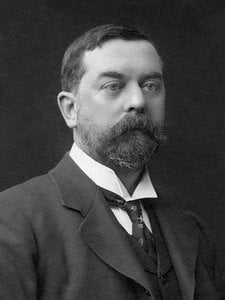
Джон Сінгер Сержант

Джон Сінгер Сержант

1856 - 1925 , Італія

Короткі факти

  • Artistic Movement Or Style: Імпресіонізм
  • Artists Or Movements Influenced By This Artist: ['Вільям Тёрнер']
  • Artists Who Influenced This Artist:
    • Карлос-Дюран
    • Дієго Веласкес
  • Date Of Birth: 12 січня 1856
  • Date Of Death: 15 квітня 1925
  • Full Name: John Singer Sargent
  • Nationality: Американський
  • Notable Artworks:
    • Мадам X
    • Ель Халео
    • Канартія, Лілі, Лілі, Роза
  • Place Of Birth: Флоренція, Італія
Досліджуйте твори мистецтва, впорядковані за темами, стилями та характеристиками.