x
Переглянути в інтер'єріПереглянути в інтер'єрі Перегляд в ARПерегляд в AR Замовити принт Замовити принтКупити цифрове зображення Купити цифрове зображення Надіслати як листівкуНадіслати як листівку
ДетальнішеДетальніше Додати до улюблених Додати до улюблених ЗавантажитиЗавантажити Схожі експонатиСхожі експонати Рентгенівське дослідженняРентгенівське дослідження Слайд-шоуСлайд-шоу

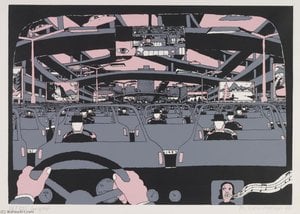
Firing Room

Explore the evocative landscapes & architectural scenes of John Meigs (1916-2003). A unique American artist known for his New Mexico works, vibrant paintings & connection to Peter Hurd.

Олійная репродукція ручної роботи

Написана вручну олією на полотні у вашому розмірі та рамі, виготовлена на замовлення нашими художниками. (Замовити принт Замовити принтКупити цифрове зображення Купити цифрове зображення)

Стандартний розмір
індивідуальний
CM
INCH

Обирайте з наших стандартних розмірів, що відповідають оригінальним пропорціям твору мистецтва.

ширина
висота

Ви можете вказати власні розміри, щоб репродукція ідеально підійшла до конкретної рами або інтер'єру. Якщо вибраний вами розмір не відповідає пропорціям оригіналу, ми або обріжемо полотно, або доповнимо картину додатковими елементами, промальованими вручну. Цифровий макет буде надіслано вам на затвердження перед початком виробництва.
Зверніть увагу, що попередній перегляд на екрані не відображає фактичне обрізання або розширення зображення. Тільки макет точно покаже остаточну композицію.
Хоча ми можемо виготовити виріб у нестандартному розмірі, для збереження оригінальних пропорцій рекомендуємо обирати варіанти зі встановленого списку.

Приклади можливих змін: замінити обличчя на фото клієнта; додати домашню тварину (наприклад, замінити кота на собаку); додати приховане повідомлення на фоні; змінити ландшафт або елементи фону.
Після оформлення замовлення команда WahooArt.com зв'яжеться з клієнтом електронною поштою для отримання інструкцій та надасть попередній макет

Доставка по всьому світу () за 3–4 тижні замість стандартних 5 тижнів. (30 Серпень). Без жодних компромісів у якості.

why_choose_icon
Безкоштовна експрес-доставка по всьому світу
why_choose_icon
Високоякісне лляне полотно
why_choose_icon
Повне страхове покриття доставки
why_choose_icon
Гарантія відшкодування митних зборів
why_choose_icon
Гарантія точного відтворення кольорів
why_choose_icon
Політика повернення протягом 60 днів (лише у разі виявлення дефектів)
why_choose_icon
Гарантія повернення 100% коштів
why_choose_icon
Пропозиція на оптові замовлення

Загальна вартість

$ 272

reproduction

Firing Room

Матеріал репродукції

Розмір репродукції

-

Підсумкова вартість

$ 272


Біографія митця

The Tapestry of Memory: The Life and Vision of John Meigs

John Meigs (1916–2003) occupied a singular space in the landscape of American art, acting as a bridge between the tangible reality of the physical world and the ephemeral nature of human memory. Born in Chicago on May 10, 1916, his entry into the world was shadowed by a profound familial drama; his father, Montgomery C. Meigs Sr., had kidnapped him as an infant from his mother, Margaret Mary Cookley. This early, fractured connection to his origins instilled in Meigs a lifelong preoccupation with the themes of storytelling and the reconstruction of the past. His canvases were never merely windows into scenery, but rather vessels for deeply personal recollections, where every brushstroke served to reclaim a fragment of a lost narrative.

His artistic sensibilities were shaped by the luminous traditions of European Impressionism, particularly through his formative years spent in Paris. Immersed in the works of Claude Monet and Pierre-Auguste Renoir, Meigs learned the delicate art of capturing fleeting moments of light and atmosphere. This influence, however, was far from derivative. While he adopted their fascination with color and light, he infused his work with a uniquely American grit and a structural sensibility derived from his multidisciplinary training. Having studied at the Art Institute of Chicago and the Yale University School of Drama, Meigs possessed a rare ability to synthesize visual texture with theatrical depth, treating each landscape as a stage upon which light and shadow performed their silent dramas.

A Bold Departure: Technique and the Southwestern Spirit

The mid-1940s marked a transformative era in Meigs’s career, as he began to move away from traditional landscape conventions toward a more expressive, visceral style. He deliberately eschewed meticulous topographical accuracy in favor of a bold palette and unconventional brushwork. This stylistic evolution allowed him to capture the essence of a place rather than just its likeness. His work became characterized by textured surfaces that seemed to evoke the very tactile qualities of the earth itself—the dry, sun-baked grit of desert soil and the weathered grain of ancient wood.

Nowhere is this mastery more evident than in his depictions of the American Southwest. Meigs found a profound kinship with the landscapes of New Mexico, where he focused on the iconic adobe structures that define the region's architectural heritage. His paintings often depict these earthen buildings bathed in a heavy, golden light, creating an atmosphere that feels both nostalgic and eternal. Through his use of thick, emotive strokes, he transformed simple architectural scenes into profound meditations on permanence and decay. In works such as Early Countdown or his various explorations of desert vistas, the viewer is invited to experience the heat, the dust, and the quiet majesty of a landscape that feels as much like a dream as it does a destination.

Legacy and Artistic Significance

The historical significance of John Meigs lies in his ability to elevate landscape painting from mere observation to an act of emotional archaeology. He did not simply paint what he saw; he painted what he remembered, blending the physical reality of the New Mexico desert with the psychological weight of his own history. His connection to other notable figures, such as Peter Hurd, further situates him within a vital lineage of Western American artists who sought to define the spirit of the frontier through a modern lens.

Ultimately, Meigs’s body of work remains a testament to the power of the expressive stroke. By prioritizing atmosphere and emotion over precise detail, he created a visual language that resonates with the universal human experience of longing and remembrance. His legacy continues to inspire those who find beauty in the intersection of light, land, and the enduring mysteries of the human heart.

Короткі факти

  • Artistic Movement Or Style: Early Settler
  • Artists Or Movements Influenced By This Artist: ['']
  • Artists Who Influenced This Artist:
    • Benjamin Franklin
    • John Rodgers Meigs Jr.
  • Date Of Birth: December 28, 1740
  • Date Of Death: January 28, 1823
  • Full Name: Return Jonathan Meigs Sr.
  • Nationality: American
  • Notable Artworks: ['']
  • Place Of Birth: Middletown, Connecticut