x
Переглянути в інтер'єріПереглянути в інтер'єрі Перегляд в ARПерегляд в AR Замовити принт Замовити принтКупити цифрове зображення Купити цифрове зображення Надіслати як листівкуНадіслати як листівку
ДетальнішеДетальніше Додати до улюблених Додати до улюблених ЗавантажитиЗавантажити Схожі експонатиСхожі експонати Рентгенівське дослідженняРентгенівське дослідження Слайд-шоуСлайд-шоу

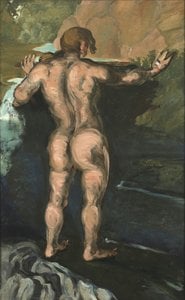
The Crucifixion

Experience John Kyffin Williams’ powerful 'Crucifixion' (1960). This evocative oil painting captures intense emotion through fragmented forms & dark tones, reflecting Welsh landscape art.

Саймон Кіфін Вільямс (1918-2006) – визначний валлійський пейзажист. Його картини відображають суворі гори, ферми та патагонські краєвиди, використовуючи насичені кольори та текстурну техніку імпресіонізму. RA, OBE, KBE.

Олійная репродукція ручної роботи

Написана вручну олією на полотні у вашому розмірі та рамі, виготовлена на замовлення нашими художниками. (Замовити принт Замовити принтКупити цифрове зображення Купити цифрове зображення)

P118B $10
P118H $10
P118W $10
P438Z $10
P508JH $12
P508YH $12
P805H $10
P805Z $10
P919BZ $10
P919G $10
P919XJ $10
P959ZH $10
P968JZ $12
W106C $8
W218G $10
W218JH $8
W218Y $10
W307PJ $10
W316G $10
W316PJ $8
W316Y $10
W398PJ $8
W4111J $10
W500HY $15
W500JH $15
W692G $12
W849H $8
W940BG $15
W953PJ $8

Стандартний розмір
індивідуальний
CM
INCH

Обирайте з наших стандартних розмірів, що відповідають оригінальним пропорціям твору мистецтва.

ширина
висота

Ви можете вказати власні розміри, щоб репродукція ідеально підійшла до конкретної рами або інтер'єру. Якщо вибраний вами розмір не відповідає пропорціям оригіналу, ми або обріжемо полотно, або доповнимо картину додатковими елементами, промальованими вручну. Цифровий макет буде надіслано вам на затвердження перед початком виробництва.
Зверніть увагу, що попередній перегляд на екрані не відображає фактичне обрізання або розширення зображення. Тільки макет точно покаже остаточну композицію.
Хоча ми можемо виготовити виріб у нестандартному розмірі, для збереження оригінальних пропорцій рекомендуємо обирати варіанти зі встановленого списку.

Приклади можливих змін: замінити обличчя на фото клієнта; додати домашню тварину (наприклад, замінити кота на собаку); додати приховане повідомлення на фоні; змінити ландшафт або елементи фону.
Після оформлення замовлення команда WahooArt.com зв'яжеться з клієнтом електронною поштою для отримання інструкцій та надасть попередній макет

Доставка по всьому світу () за 3–4 тижні замість стандартних 5 тижнів. (5 Вересень). Без жодних компромісів у якості.

why_choose_icon
Безкоштовна експрес-доставка по всьому світу
why_choose_icon
Високоякісне лляне полотно
why_choose_icon
Повне страхове покриття доставки
why_choose_icon
Гарантія відшкодування митних зборів
why_choose_icon
Гарантія точного відтворення кольорів
why_choose_icon
Політика повернення протягом 60 днів (лише у разі виявлення дефектів)
why_choose_icon
Гарантія повернення 100% коштів
why_choose_icon
Пропозиція на оптові замовлення

Загальна вартість

$ 272

reproduction

The Crucifixion

Матеріал репродукції

Розмір репродукції

-

Підсумкова вартість

$ 272

Основна інформація

  • Artistic style: Abstract Expressionism
  • Subject or theme: Religious suffering
  • Location: Oriel Plas Glyn y Weddw
  • Influences: Waterhouse
  • Title: The Crucifixion
  • Movement: Welsh Landscape
  • Notable elements: Impasto technique

Квіз про мистецтво

У кожному запитанні лише одна правильна відповідь.

Запитання 1:
What is the primary subject depicted in John Kyffin Williams’ ‘The Crucifixion’?
Запитання 2:
In what year was ‘The Crucifixion’ painted?
Запитання 3:
What artistic movement is most closely associated with John Kyffin Williams’ style, as evidenced by the use of thick impasto?
Запитання 4:
Where is ‘The Crucifixion’ currently housed?
Запитання 5:
What is a key characteristic of Kyffin Williams’ use of color in this painting?

A Vision of Suffering and Serenity: Kyffin Williams’ “The Crucifixion”

Sir John “Kyffin” Williams, a name inextricably linked with the soul of Wales, wasn't merely a painter; he was a translator of landscapes, emotions, and the very spirit of his homeland. Born in Llangefni, Anglesey, in 1918, his life unfolded against the backdrop of a nation grappling with identity and heritage – a tension that profoundly shaped his artistic vision. While often categorized as a landscape artist, Williams’ oeuvre reveals a deeply personal engagement with themes of faith, mortality, and the enduring beauty found within hardship. “The Crucifixion,” painted in 1960, exemplifies this complex interplay, offering not a literal depiction of the biblical event but rather an intensely felt meditation on suffering, sacrifice, and ultimately, a quiet sense of serenity.

A Fragmented Landscape, A Distorted Figure

The painting immediately commands attention with its unconventional composition. It’s not a grand, theatrical scene; instead, it presents a fragmented landscape dominated by a dark, brooding sky – a palpable representation of the emotional weight of the subject matter. The central figure of Christ on the cross is rendered in an almost abstracted manner, his form partially obscured by the surrounding elements. Williams employs a bold, impasto technique, layering thick strokes of oil paint to create a textured surface that seems to vibrate with energy. This physicality mirrors the intensity of the scene, conveying both the violence and the profound sorrow associated with the crucifixion. The use of muted tones – deep blues, browns, and greys – contributes to the painting’s somber mood, while subtle hints of light suggest a glimmer of hope amidst the darkness.

Technique and Influences: Bridging Abstraction and Tradition

Williams' distinctive style evolved over his long career, drawing inspiration from both traditional landscape painting and emerging abstract expressionism. He was deeply influenced by artists like Piero della Francesca, whose use of light and shadow to create a sense of depth and drama is evident in “The Crucifixion.” However, Williams departs significantly from the Renaissance master’s idealized forms, opting for a more fragmented and emotionally charged approach. The influence of abstract expressionism can be seen in the painting's loose brushwork and emphasis on conveying feeling rather than precise representation. He was also heavily influenced by his time spent in Patagonia, where he painted dramatic landscapes under the intense light of the Southern Hemisphere, which informed his use of color and texture.

Symbolism and Spiritual Depth

Beyond its formal qualities, “The Crucifixion” is rich in symbolic meaning. The fragmented landscape can be interpreted as a reflection of Christ’s brokenness and suffering, while the dark sky represents the overwhelming weight of sin and death. Yet, despite the bleakness of the scene, there's an underlying sense of peace and acceptance. Some art historians suggest that Williams was exploring themes of redemption and forgiveness through this work. The painting isn’t about glorifying violence; it’s about confronting the uncomfortable realities of human existence and finding solace in faith. The absence of explicit religious iconography – no halo, no crown of thorns – invites viewers to engage with the painting on a deeply personal level, prompting contemplation about the nature of suffering, sacrifice, and the possibility of transcendence.

A Legacy of Welsh Art: Kyffin Williams’ Enduring Impact

Sir John Kyffin Williams remains one of Wales' most celebrated artists, his work profoundly shaping the landscape of modern British art. His ability to capture the essence of the Welsh countryside while simultaneously exploring complex emotional and spiritual themes is a testament to his artistic genius. “The Crucifixion” stands as a powerful example of this talent, offering viewers a glimpse into the soul of a man deeply connected to his land and his faith. Today, his paintings are exhibited in galleries across Wales and beyond, ensuring that his legacy continues to inspire and move audiences for generations to come. Reproductions of this evocative piece offer a tangible connection to Williams’ profound vision, allowing others to experience the quiet power of his artistic expression.

Біографія митця

A Defining Voice of Welsh Landscape

Sir John “Kyffin” Williams, a name synonymous with the very spirit of Wales, stands as a monumental figure in 20th-century British art. More than just a painter, he was a cultural ambassador, a storyteller who translated the rugged beauty and emotional depth of his homeland onto canvas with unparalleled skill. Born in Llangefni, Anglesey, in 1918, Williams’s life journey was as textured and compelling as the impasto surfaces that became his signature. His connection to Wales wasn't merely geographical; it was woven into the fabric of his being, a heritage both cherished and complicated by a mother who seemingly distanced herself from Welsh language and culture. This early tension perhaps fueled a lifelong dedication to visually capturing and celebrating the land she subtly discouraged him from embracing.

From Military Service to Artistic Awakening

Williams’s path to becoming Wales' foremost artist wasn’t straightforward. Educated at Moreton Hall School and Shrewsbury, his life took an unexpected turn with a bout of polio encephalitis that led to epilepsy. Ironically, this health challenge proved pivotal. Advised by doctors to pursue art as therapy, he discovered a profound connection within himself—a creative impulse ignited by the emotional resonance found in the works of Piero della Francesca. This encounter sparked a lifelong devotion to artistic expression. A brief stint in the 6th Battalion Royal Welch Fusiliers was cut short due to his medical condition, but it wasn’t a detour; rather, it freed him to enroll at London's Slade School of Fine Art during its wartime relocation to Oxford. There, he honed his skills and earned the prestigious Slade Portrait Prize, laying the foundation for a remarkable career. The influence of Piero della Francesca, with his masterful use of light and shadow, became a cornerstone of Williams’s artistic approach—a desire to capture not just form but also mood and atmosphere.

A Life Dedicated to Teaching and Exploration

For many years, Williams balanced his artistic pursuits with a dedicated teaching career, serving as senior art master at Highgate School in London from 1944 until 1973. He nurtured generations of young artists, among them Sir Martin Gilbert, Anthony Green, Patrick Procktor, John Tavener and John Rutter—a testament to his influence and mentorship. However, it was a Winston Churchill Fellowship in 1968 that dramatically altered his artistic trajectory. This opportunity allowed him to travel to Y Wladfa, the Welsh settlement in Patagonia, an experience that profoundly impacted his palette and subject matter. The vast landscapes of Patagonia, so different yet echoing the spirit of Wales, infused his work with a new vibrancy and emotional intensity. He documented this journey not only through paintings but also in his engagingly anecdotal book, “Across the Straits.” This period marked a shift from primarily depicting Welsh landscapes to exploring broader themes of isolation, resilience, and the human connection to nature—themes that would continue to resonate throughout his career.

Technique, Themes, and Lasting Legacy

Kyffin Williams developed a distinctive technique characterized by thick oil paint applied with a palette knife—a method that created textured surfaces and bold impasto effects. This wasn’t merely a stylistic choice; it was a way to convey the ruggedness of the Welsh countryside, the weight of its history, and the emotional resonance of its landscapes. His subjects were broad, encompassing evocative depictions of Wales, striking scenes from Patagonia, and atmospheric studies of Venice. But it was his portrayal of Wales—its farms, mountains, and people—that truly defined him. He captured not just what he saw but *how* it felt to be Welsh, imbuing his paintings with a sense of place and belonging. The use of color was particularly significant; Williams favored muted tones – greys, browns, and blues – that reflected the often-dramatic light and weather conditions of the Welsh mountains. He wasn’t interested in creating idyllic scenes but rather in conveying the raw beauty and inherent challenges of the landscape. His work is frequently described as melancholic, reflecting a deep understanding of the complexities of life and the enduring spirit of his homeland.

Recognition and Influence

Throughout his career, Williams received numerous accolades, including an OBE in 1982 and a KBE in 1999 for services to the arts in Wales. The establishment of the Kyffin Williams Drawing Prize in 2009 further cemented his legacy by supporting emerging talent. Today, Oriel Ynys Môn on Anglesey houses a permanent exhibition dedicated to his work, ensuring that future generations can experience the power and beauty of his vision. Sir John Kyffin Williams wasn’t simply a painter; he was Wales' visual poet, a master who captured the soul of a nation with every brushstroke. His paintings continue to inspire awe and appreciation for the enduring spirit of the Welsh landscape and its people—a legacy that will undoubtedly endure for centuries to come.
  • Key Influences: Piero della Francesca, Welsh Landscape Tradition
  • Signature Technique: Thick impasto with a palette knife
  • Notable Achievements: Slade Portrait Prize, Winston Churchill Fellowship, Kyffin Williams Drawing Prize

Киффин Уильямс

Киффин Уильямс

1918 - 2006 , Уельс

Короткі факти

  • Artistic Movement Or Style: Ландшафтний живопис
  • Artists Or Movements Influenced By This Artist: ['Уельські митці']
  • Artists Who Influenced This Artist: ['Piero della Francesca']
  • Date Of Birth: 1918
  • Date Of Death: 2006
  • Full Name: John Kyffin Williams
  • Nationality: Уельський
  • Notable Artworks:
    • Storm Approaching
    • View from Pwllfanogl
  • Place Of Birth: Llangefni, UK
Досліджуйте твори мистецтва, впорядковані за темами, стилями та характеристиками.