Ранні роки, сім'я та навчання
Джон Констебл народився у 1776 році в селі Іст-Берголт, що в графстві Саффолк. Він був другим сином Голдінга та Енн (Воттс) Констебл. Його батько був заможним торговцем зерном і вугіллям, який володів Flatford Mill. Цей зв'язок із річкою та місцевою торгівлею означав, що ритми води та рух товарів були невід'ємною частиною повсякденного життя родини. Приблизно у 1792 році він почав працювати у сімейному бізнесі, вивчаючи практичні аспекти зернової торгівлі, перш ніж його шлях не змістився у бік живописного полотна.
Його справжнє навчання розпочалося, коли у 1799 році він вступив до Королівської академії мистецтв як слухач. Перші роки він присвятив вивченню анатомії та копіюванню робіт старих майстрів, намагаючись осягнути саму структуру світу. Ця формальна освіта заклала міцний фундамент для його подальших спостережень за ландшафтом. Він балансував між спокійним життям сина торговця та дисциплінованим вивченням малювання та живопису, зрештою знайшовши шлях до Лондона, щоб зробити мистецтво своїм справжнім покликанням.
Життя, вкорінене в долині річки Стур
Пейзаж його дитинства залишався незмінним супутником усе життя. Народившись у Іст-Бергхолті, Великобританія, він ріс там, де саме русло річки визначало щоденний ритм буття. Його батько, заможний торговець зерном, володів правами на використання млинів уздовж річки Стур та мав землі в долині Dedham Vale. Цей зв'язок із водою та землею не був просто питанням бізнесу; це була глибока, притаманна йому від народження прихильність до рідного краю. Джон Констебл плекав глибоку ностальгію за саффокськими селами — Іст-Бергхолтом, Деддемом, Стратфорд-Сент-Мері та Ленгемом. Навіть коли він згодом покинув ці місця, перед його очима завжди поставав образ конкретного лугу або те, як особливе світло падає на береги Стуру.
З часом життя неминуче потягнуло його до мегаполіса. Він мешкав у лондонському Блумсбері, переїхавши на Кеппел-стріт у 1817 році, а згодом — на Шарлотт-стріт у 1822 році. Ці урбаністичні вулиці були настільки далекими від спокійних річкових берегів, що здавалися іншим світом. Він також бував у Стаффордширі, Дербіширі, Озерному краї та Брайтоні. Попри ці мандри, саме знайомі контури долини Стур залишалися його головним джерелом натхнення. Він дивився на світ крізь призму місць, які знав найкраще, знаходячи відчуття приналежності у вогкій землі та мінливих хмарах свого рідного краю.
Меценати, майстерня та замовлення
Шлях до професійної кар'єри часто залежить від правильних знайомств. Для Джона Констебла таким провідником став Джордж Бомонт — колекціонер, який відкрив перед ним двері у зовсім інший світ сприйняття. Саме завдяки Бомонту він познайомився з творами Клода Лоррена, чий вплив допоміг сформувати його глибоке розуміння пейзажу. Ці ранні зв'язки заклали міцний фундамент, коли він почав відходити від сімейного бізнесу з торгівлі зерном у бік офіційного вивчення мистецтва. Вже у 1805 році він отримав конкретне замовлення — написати вівтарну картину для церкви в Брантемі.
Протягом десятиліть його авторитет в академічній спільноті невпинно зростав. У 1819 році він був обраний членом Королівської академії, що стало важливим кроком, який підтвердив визнання його таланту серед колег. До 1829 року, у віці 52 років, він досяг почесної звання академіка Королівської академії. Ця еволюція стала відображенням кар'єри, побудованої на наполегливому, тихому спостереженні за навколишнім світом — шляху від локальних замовлень до визнаного місця в інституційній структурі британського мистецтва.
Техніка та художній стиль
Джон Констебл не намагався досягти ефекту за допомогою театральної вичурності чи надмірної експресії. Натомість він прагнув до правдивого відображення природного світу, що вимагало від нього повільного та методичного процесу спостереження. Він часто працював просто неба, використовуючи техніку пленерного начерку, щоб вловити те, як світло взаємодіє з ландшафтом. Для створення своїх масштабних композицій він спирався на фундамент із олійних ескізів, графічних малюнків та акварельних начерків. Ці попередні шари дозволяли йому ретельно опрацювати всі складнощі сцени, перш ніж перенести її на остаточне полотно.
Його мазок має відчутну фізичну вагу. Використовуючи густий імпасто для створення текстури, він наповнював поверхню відчуттям руху та життя. Такий тактильний підхід допомагав йому передати специфіку того, як світло та атмосфера змінюються над полем чи річкою. Він називав це вивчення світла й тіні «кьяроскуро природи». Це був спосіб зафіксувати реальні, мінливі стани неба та води, а не їхню ідеалізовану версію.
Ключові твори та шедеври
Ріка та небо займають центральне місце у його творчому пошуку. У 1821 році він створив The Hay Wain — сцену на річці Стур, яка стала його найбільш впізнаваною роботою. Щоб передати невловимий рух повітря та води, він часто звертався до масштабних форматів. Це призвело до створення серії шестифутових полотен, таких як The Leaping Horse (1825), де він використовував повнорозмірні підготовчі олійні ескізи для вивіреного поєднання світла та композиції. Такі великі полотна дозволяли йому ретельно опрацьовувати всі деталі ландшафту ще до нанесення фінальних мазків фарби.
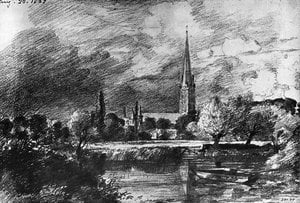
Його інтерес до місцевого пейзажу охоплював не лише дику природу, а й маєтки та архітектурні споруди, що в них розміщені. У 1816 році він написав Wivenhoe Park, зафіксувавши сільвонську гармонію Ессексу. Він також приділяв увагу взаємодії світла та архітектури, що яскраво проявилося у картині Salisbury Cathedral from the Bishop's Grounds, написаній у 1823 році. Здатність Джона Констебля передавати атмосферу конкретного місця часто відображалася у тому, як він працював із вагою хмар та текстурою землі.
Деякі з його полотен здобули колосальну ринкову цінність через довгий час після завершення роботи. Так, The Lock (1824) був проданий на аукціоні Christie's у 2012 році за 22 441 250 фунтів стерлінгів. Його творча спадщина також включає численні інші ескізи та завершені твори:
Коло, суперники та впливи
Манера письма, що притаманна пейзажам долини Стур, була сформована тихим впливом кількох великих майстрів. Твори Клода Лоррена та Якоба ван Рёйсдаля відкрили перед ним новий спосіб бачення, що дозволив відійти від театральності. Він також надихався композиціями Томаса Гейнсборо та фактурністю Петра Пауля Рубенса. Ці впливи допомогли йому подолати жорсткі академічні канони Королівської академії. Замість грандіозних міфологічних сцен, які так цінували його сучасники, він шукав істину в м'якій вологості повітря та в тому, як світло торкається річки.
Його творчий шлях часто пролягав пліч-о-пліч із Дж. М. В. Тернером. Вони були сучасниками, і їхнє суперництво спалахнувало під час виставок у Королівській академії. Тоді як один прагнув до драматизму та піднесеного, інший залишався нерозривно пов'язаним із рідними, знайомими пейзажами своєї юності. Цей фокус на безпосередньому спостереженні за природою зрештою перетнув Ла-Манш. Його підхід до світла та атмосфери залишив глибокий слід у Барбізонській школі у Франції, де художники також шукали подібного зв'язку з природним світом.
Особисті зв'язки також визначали його пересування. Він був близьким другом Джона Фішера, племінника єпископа Солсбері, який запрошував його зупинитися в цих краях. Така дружба давала не лише соціальні зв'язки; вона відкривала доступ до тих самих унікальних ландшафтів, які він вивчав і описував на полотні протягом багатьох років. Завдяки цим людям і цим місцям його творчість перетворилася на живий літопис конкретної, прожитої реальності.
Пізні роки та смерть
Роки, що настали після його шлюбу з Марією Бікнелл у 1816 році, були сповнені відчуттям змін у сприйнятті рідного краю. Хоча його творчість залишалася нерозривно пов'язаною з річкою та полями його юності, життя невблаганно тягнуло його до міста. До 1827 року він остаточно оселився в Гампстеді, Лондон. Цей період був затьмарений погіршенням здоров'я Марії. Вона померла від туберкульозу у 1828 році, і ця втрата наклала важкий відбиток на його долю. Попри біль, він продовжував писати, часто знаходячи розраду у мінливому світлі пейзажів, які він вивчав десятиліттями.
Свої останні роки Джон Констебл провів у Блумсбері, Лондон. Він залишався відданим своєму мистецтву, долаючи складні повороти особистого життя та виснажливі вимоги свого творчого методу. 31 березня 1837 року він пішов із життя в Блумсбері. Його поховали на церковному цвинтарі Святого Іоанна в Гампстеді — у місці, яке стало його справжнім домом у зрілі роки.
Спадщина та вплив
Спрямувавши свій погляд на буденність англійського сільського пейзажу, він докорінно змінив сприйняття природи в мистецтві. Він відмовився від театральних, ідеалізованих сцен, які так цінували академії, натомість обрав пошук глибини в звичайному. Теляча віз із сіном або проста сільська будівля стали об'єктами, гідними ретельного вивчення. Цей зсув допоміг перенести фокус живопису з величних міфологічних наративів на правдиве відображення природного світу. Він продемонстрував, що пейзаж здатний нести в собі глибоке відчуття особистих переживань, перетворюючи вигляд на річку чи луг на спосіб вираження внутрішнього настрою.
Його звичка працювати під відкритим небом, намагаючись зафіксувати те, як світло торкається хмар та як волога розчиняється в повітрі, залишила незабутній слід у тих, хто прийшов після нього. Така відданість безпосередньому спостереженню та вивченню атмосферних ефектів передбачила багато інтересів, які згодом стали ключовими для художників-імпресіоністів. Його вплив перетнув Ла-Манш і дістався Франції, де його підхід знайшов відгук у Барбізонській школі. Ці митці поділяли його пристрасть до живопису з натури та спостереження за миттєвими, мінливими якостями природи. Творчість Джона Констебла залишається живим зв'язком із тим особливим способом бачення, що ставить у пріоритет справжню текстуру землі та мінливе світло небес.
Де сьогодні можна побачити його роботи
Відстежуючи присутність його творчості в різних колекціях, можна побачити, як з часом збиралися його візії англійського сільського пейзажу. Єльський центр британського мистецтва в Нью-Гавен зберігає 25 його робіт, зокрема етюд пейзажу поблизу Дедхема, написаний приблизно у 1802 році. У Лондоні його творчий слід відчувається в кількох провідних інституціях. Музей Вікторії та Альберта зберігає 6 творів, таких як сцена будування човнів поблизу млина Флатфорд. Національна галерея тримає 5 робіт, серед яких величне полотно «Віз із сіном» 1821 року. Галерея Тейт зберігає 4 твори, зокрема деталь млина Флатфорд 1817 року.
Вплив Джона Констебла виходить далеко за межі Британських островів і сягає континенту. Лувр в Парижі зберігає 2 роботи, зокрема зображення Хелмінгем-Делл. Ці полотна демонструють різноманітні способи, якими він втілював світло та атмосферу: від важких хмар над Стуром до тихих куточків села. Споглядання цих шедеврів у різних світових музеях дозволяє глибше зрозуміти, як він використовував густі шари фарби для створення надзвичайної текстури на полотні.
Віз із сіном (1821)
Собор Солсбері з лугів (1831)
Шлюз (1824)
Стоунхендж на заході сонця (1836)
Вівенхоу-парк, Ессекс (1816)


 Переглянути в інтер'єрі
 Надіслати як листівку
 Поділитися
 Деталі витвору
 Посібник

 Завантажити
 Схожі екземпляри
 Рентгенівське дослідження
 Слайд-шоу
 Питання та відповіді
 Статистика

 Розгорнути текст
 Перейти до друку





































 Скляний варіант доступний лише для розмірів до 110 см