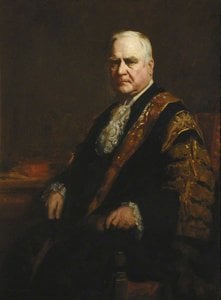
1929
1929 90.0 x 69.0 cm
 Westminster College
Придбайте цифрову копію високої роздільної здатності з покращеною якістю, що значно перевершує онлайн-перегляд.
Кожен файл ретельно підготовлений нашими фахівцями за допомогою сучасних інструментів та професійної ручної ретуші. Ми гарантуємо виняткову чіткість, точну передачу кольору та високу деталізацію кожного зображення.
Фінальний файл надсилається електронною поштою протягом 72 годин і оптимізований для негайного використання у професійних виданнях та друкованих матеріалах. Таку якість обирають провідні дизайнерські студії, видавництва та галереї.
Завантажте файл високої роздільної здатності для особистого використання, друку та творчих проєктів. ( Замовити принт Замовити репродукцію ручної роботи)
Обираючи WahooArt.com, ви отримуєте не просто зображення — ви отримуєте професійно вдосконалений цифровий витвір мистецтва, створений з надзвичайною точністю та підкріплений гарантією задоволення. Ось усе, що автоматично додається до вашого замовлення:

Ваш цифровий файл із зображенням високої роздільної здатності буде надісланий вам електронною поштою протягом 72 годин після оформлення замовлення — він буде готовий до негайного використання.

Ваш витвір мистецтва професійно оптимізовано за допомогою передових інструментів штучного інтелекту та ручної корекції, що забезпечує максимальну деталізацію, чіткість і точність передачі кольорів.

Випадково видалили або втратили файл? Не хвилюйтеся — ми надішлемо його вам повторно в будь-який час безкоштовно.

Насолоджуйтесь вашим витвором мистецтва миттєво без жодних мит, зборів або плати за доставку — цифрові завантаження завжди не оподатковуються.

Ми гарантуємо максимально точне відтворення оригінальних кольорів на вашому цифровому зображенні завдяки використанню професійних інструментів та систем управління кольором.

Якщо ви не задоволені придбаним цифровим зображенням, ми відкоригуємо його або повернемо 100% вартості протягом 100 днів — без жодних запитань.

Не задоволені покупкою? Отримайте повне повернення коштів протягом 100 днів після отримання цифрового файлу — без жодних запитань.

Купуйте 3 зображення — заощаджуйте 10% — Купуйте 5 — заощаджуйте 15% — Купуйте 10+ — заощаджуйте 20%. Чудово підходить для творчих проєктів, галерей та агентств.

John Archibald Alexander Berrie (1887-1962) was a quietly influential British sculptor whose work, often overlooked in the grand narratives of 20th-century art, offers a fascinating window into the evolving identity of Britain during its imperial heyday and subsequent transformation. Born in London, Berrie’s artistic journey began with a formal training at the Royal College of Art, where he studied under Bertram Mackinder and William Orpen – artists whose diverse styles undoubtedly shaped his own approach. However, it was his time spent as an artist-in-residence at St John's College, Cambridge, from 1928 to 1937, that proved to be the defining period of his career, establishing him as a chronicler of academic life and a subtle observer of British society.
Berrie’s early work demonstrated a strong classical influence, evident in his meticulously rendered portraits and studies of architectural detail. He possessed an exceptional eye for capturing form and texture, utilizing a smooth, polished technique that lent a remarkable sense of realism to his sculptures. Initially, he produced numerous commissions – portraits of prominent figures like Margaret Beavan, George Audley, and even Prime Ministers Michael Joseph Savage and Peter Fraser – showcasing his technical skill and ability to convey personality through sculpted likenesses. These works, often executed in bronze or marble, were commissioned by institutions and private clients alike, reflecting the esteem held for his artistic abilities.
It was during his tenure at St John's College that Berrie’s style underwent a significant shift. The collegiate environment – with its ancient buildings, scholarly traditions, and vibrant student life – became the primary subject of his artistic focus. He began to create a series of evocative sculptures depicting the college’s architecture, its members, and the rituals of academic life. These weren't merely faithful reproductions; Berrie imbued them with a sense of atmosphere and emotion, capturing the spirit of the place through subtle gestures and carefully considered compositions.
His most celebrated works from this period include “The Founder’s Statue,” a poignant depiction of St John Nepomuk, the college's patron saint, and numerous studies of the Fellows and students. Notably, his portrait of Margaret Beavan, commissioned in 1928, is a testament to his ability to capture both formal dignity and inner character. However, it was his broader engagement with the College’s setting – its chapel, gardens, and historic buildings – that truly defined his Cambridge output. He meticulously documented these spaces through drawings and sculptures, creating a visual record of a unique microcosm of British culture.
Berrie's sculptural style is characterized by a remarkable restraint and subtlety. Unlike the more overtly expressive works of some contemporaries, his figures possess a quiet dignity and understated elegance. He favored a smooth, polished surface finish, achieved through meticulous hand-modeling and burnishing – techniques that enhanced the tactile quality of his sculptures. His use of bronze was particularly noteworthy; he skillfully manipulated the material to create subtle gradations of tone and texture, lending depth and realism to his figures.
He frequently employed a technique known as “lost wax casting,” which allowed for intricate detail and a remarkable level of precision. This method also enabled him to experiment with different surface treatments, including patination – the application of colored chemicals to bronze to achieve specific effects. Berrie’s sculptures are not flamboyant or dramatic; rather, they possess a quiet intensity that invites careful observation and contemplation.
While Berrie's name may not be as widely recognized as some of his contemporaries, his work holds significant historical value. His depictions of St John’s College offer a valuable insight into the social and cultural life of Britain during the interwar period. They reveal a nuanced understanding of academic traditions, student culture, and the enduring appeal of classical ideals.
Furthermore, Berrie's meticulous documentation of architectural detail – his drawings and sculptures of Cambridge’s historic buildings – contribute to our understanding of British heritage and urban landscape. His work serves as a reminder that art can be both aesthetically pleasing and historically informative. His legacy lies not in grand gestures or revolutionary innovations, but in the quiet observation and skillful execution that characterized his unique artistic vision. He remains an important figure in British sculpture, deserving greater recognition for his subtle yet profound contributions to our understanding of the nation’s identity.

1887 - 1962

 Переглянути в інтер'єрі
 Надіслати як листівку
 Поділитися
 Детальніше

 Завантажити
 Схожі експонати
 Рентгенівське дослідження
 Слайд-шоу
 Читати далі