Переглянути в інтер'єрі Перегляд в AR Перейти до друку Замовити репродукцію ручної роботи Надіслати як листівку
Детальніше Додати до улюблених Завантажити Схожі експонати Рентгенівське дослідження Слайд-шоу Статистика

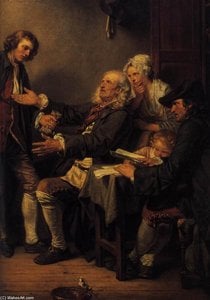
The Broken Pitcher

Experience the poignant emotion of The Broken Pitcher by Jean-Baptiste Greuze (1771), a masterpiece capturing sentimental 18th-century life; bring this timeless sorrow home.

Жан-Батьйольє Грзу — французький живописець, відомий своїми емоційно насиченими жанровими сценами та портретами, що зображують повсякденне життя та моральні уроки. Його роботи стали символом епохи рококо та відображають цінності буржуазного суспільства.

Придбайте цифрову копію високої роздільної здатності з покращеною якістю, що значно перевершує онлайн-перегляд.

Кожен файл ретельно підготовлений нашими фахівцями за допомогою сучасних інструментів та професійної ручної ретуші. Ми гарантуємо виняткову чіткість, точну передачу кольору та високу деталізацію кожного зображення.

Фінальний файл надсилається електронною поштою протягом 72 годин і оптимізований для негайного використання у професійних виданнях та друкованих матеріалах. Таку якість обирають провідні дизайнерські студії, видавництва та галереї.

Цифрове зображення

Завантажте файл високої роздільної здатності для особистого використання, друку та творчих проєктів. ( Перейти до друку Замовити репродукцію ручної роботи)

Підсумкова вартість

$ 24,90

Переваги кожного замовлення цифрових зображень

Експертна цифрова доставка з гарантією якості

Обираючи WahooArt.com, ви отримуєте не просто зображення — ви отримуєте професійно вдосконалений цифровий витвір мистецтва, створений з надзвичайною точністю та підкріплений гарантією задоволення. Ось усе, що автоматично додається до вашого замовлення:

shipping_icon
Швидка доставка на email

Ваш цифровий файл із зображенням високої роздільної здатності буде надісланий вам електронною поштою протягом 72 годин після оформлення замовлення — він буде готовий до негайного використання.

canvas_icon
Цифровий файл із покращенням ШІ

Ваш витвір мистецтва професійно оптимізовано за допомогою передових інструментів штучного інтелекту та ручної корекції, що забезпечує максимальну деталізацію, чіткість і точність передачі кольорів.

insurance_icon
Безкоштовне повторне завантаження назавжди

Випадково видалили або втратили файл? Не хвилюйтеся — ми надішлемо його вам повторно в будь-який час безкоштовно.

tax_icon
Без митних зборів — ніколи

Насолоджуйтесь вашим витвором мистецтва миттєво без жодних мит, зборів або плати за доставку — цифрові завантаження завжди не оподатковуються.

color_icon
Гарантія точності кольорів

Ми гарантуємо максимально точне відтворення оригінальних кольорів на вашому цифровому зображенні завдяки використанню професійних інструментів та систем управління кольором.

return_icon
100-денна гарантія задоволення

Якщо ви не задоволені придбаним цифровим зображенням, ми внесемо правки або повернемо 100% вартості протягом 100 днів — без зайвих запитань.

guarantee_icon
Гарантія повернення 100% коштів

Незадоволені покупкою? Отримайте повне повернення коштів протягом 100 днів після отримання цифрового файлу — без зайвих запитань.

discount_icon
Знижки на оптові замовлення

Купуйте 3 зображення — заощаджуйте 10% — Купуйте 5 — заощаджуйте 15% — Купуйте 10+ — заощаджуйте 20%. Чудово підходить для творчих проєктів, галерей та агентств.

Основна інформація

  • Year: 1771
  • Artist: Jean-Baptiste Greuze
  • Subject or theme: Distress, loss, heartbreak
  • Artistic style: Sentimental genre painting
  • Dimensions: 109 x 87 cm

Квіз про мистецтво

У кожному запитанні лише одна правильна відповідь.

Запитання 1:
What is the primary emotional atmosphere suggested by 'The Broken Pitcher'?
Запитання 2:
Who is the artist credited with painting 'The Broken Pitcher'?
Запитання 3:
In what year was 'The Broken Pitcher' painted?
Запитання 4:
Which element is NOT mentioned as being in the background of the painting?
Запитання 5:
Jean-Baptiste Greuze was known for his talent in capturing which aspect of human life?

A Whisper of Melancholy: Exploring The Broken Pitcher

To stand before Jean-Baptiste Greuze's The Broken Pitcher is to step directly into the heart of eighteenth-century sentimentality. This painting, executed in 1771, is far more than a mere portrait; it is a carefully composed tableau vivant of human vulnerability. The subject—a woman enveloped in a simple white dress—commands immediate attention, her posture speaking volumes without uttering a single word. Her hands, clasped together near her chest, suggest a profound internal dialogue, perhaps one tinged with loss or deep contemplation. Greuze masterfully captures that fleeting moment when emotion crests just before it breaks.

The Art of Sentiment: Context and Style

Greuze himself was a pivotal figure whose career blossomed during the rise of genre painting, an art form deeply attuned to the everyday dramas and emotional nuances of bourgeois life. While academic tastes often favored grand historical epics or mythological grandeur, Greuze found his voice in the intimate sphere. The Broken Pitcher exemplifies this shift toward sentimentality. The inclusion of secondary elements—the watchful dog and the sturdy chair—are not mere props; they are silent witnesses to the woman's emotional state. They ground the ethereal quality of her sorrow in a tangible, domestic reality, making her heartbreak feel immediate and deeply relatable to the viewer.

Technique and Emotional Resonance

The technical brilliance at play here lies in Greuze’s ability to render texture and gesture with exquisite care. Observe the soft fall of the white drapery against the darker tones of the background; this contrast serves to isolate and illuminate the figure's emotional core. The brushwork, while skilled enough for a high-quality reproduction, retains the characteristic warmth of an artist deeply invested in narrative feeling. It is through these subtle gradations of light and shadow that Greuze guides our eye directly to the poignant expression on her face, inviting us into the quiet drama unfolding within the frame.

Symbolism of Loss and Connection

The title itself, The Broken Pitcher, hints at a narrative tragedy or a broken promise—a potent symbol of shattered domestic peace or emotional wholeness. The pitcher, though unseen in its broken state, acts as an emotional proxy for the woman's own fractured spirit. The dog, often symbolizing unwavering loyalty, adds a layer of poignant companionship to her solitude. For the modern collector or decorator, this piece offers more than just aesthetic beauty; it offers a contemplation point—a beautiful meditation on resilience found within moments of perceived breakage.

Bringing Sentiment Home

Reproducing such an emotionally charged work allows one to infuse a space with history and deep feeling. Whether displayed in a formal drawing-room or a more intimate study, The Broken Pitcher acts as a soulful anchor. It speaks to the enduring human capacity for profound feeling—joy, sorrow, longing—and reminds us that the most powerful art often resides not in what is grandly depicted, but in what is quietly felt.


Біографія митця

A Life Etched in Sentiment: The World of Jean-Baptiste Greuze

Jean-Baptiste Greuze, a name synonymous with the intimate and emotionally charged world of 18th-century French painting, was born in Tournus, a small Burgundian town steeped in history, on August 21st, 1725. His early life, far from the grand salons and aristocratic circles that defined much of the art world, was marked by a modest upbringing – his father a roofer, shaping his young mind with practical realities rather than artistic aspirations. Yet, within this seemingly ordinary existence, a spark ignited: a profound sensitivity to human emotion and an innate ability to capture it on canvas. This talent wasn’t immediately nurtured; initially discouraged from pursuing art by his father, young Greuze found encouragement in the guidance of Grandon, a Lyonnese artist who recognized the nascent potential within him. This early mentorship proved pivotal, laying the foundation for a career that would ultimately redefine the boundaries of genre painting.

The Rise of a Genre Painter

Greuze’s artistic breakthrough arrived in 1755 with *Le Père de famille expliquant la Bible à ses enfants* (The Father Explaining the Bible to His Children). This wasn't merely a depiction of domestic life; it was an embodiment of Enlightenment ideals, a carefully constructed tableau that resonated deeply with the sensibilities of the era. The painting’s power lay not in grand historical narrative or mythological grandeur, but in its intimate portrayal of familial piety and moral instruction – a reflection of the burgeoning bourgeois virtue that was gaining prominence within French society. The work quickly garnered attention, culminating in its acquisition by Ange-Laurent de La Live de Jully, a discerning collector who recognized Greuze’s unique talent. This success propelled him to Paris, where he enrolled at the Royal Academy and began to hone his skills under the tutelage of Charles-Joseph Natoire. However, Greuze quickly distinguished himself from the prevailing academic emphasis on historical and mythological subjects, forging his own path towards capturing the nuances of everyday life. A journey to Italy in 1755, undertaken with Abbé Louis Gougenot, broadened his artistic horizons, exposing him to classical models and influencing his compositional techniques. Yet, despite this exposure, Greuze ultimately found greater inspiration in the realities of French society than in the idealized world of antiquity. His ability to evoke genuine feeling—joy, sorrow, remorse—set him apart from many of his contemporaries and established him as a leading figure in the emerging Rococo style, albeit one with a distinctly moralizing bent. He wasn’t simply painting scenes; he was painting emotions, distilling complex human experiences into accessible and deeply affecting images.

Mastering Emotion and Moral Narrative

Greuze's artistic strength lay in his ability to tell stories through paint. His works are not merely portraits of children or domestic scenes; they are explorations of universal human experiences—loss, innocence, temptation, and the complexities of familial relationships. He possessed an extraordinary talent for capturing subtle nuances of expression, conveying inner turmoil with remarkable sensitivity. His compositions were often carefully staged, utilizing dramatic lighting and expressive gestures to heighten emotional impact. Consider *La Jeune Fille qui pleure son oiseau mort* (The Young Girl Weeping for Her Dead Bird) – the heartbreaking grief etched on the girl’s face, the delicate feathers scattered around her—it's a masterclass in conveying sorrow through visual language. Similarly, *Savoyard with a Dancing Doll* captures the fleeting joy and vulnerability of childhood, showcasing his skill in portraiture while simultaneously hinting at the darker undercurrents beneath the surface. Denis Diderot, a leading intellectual of the Enlightenment, became a fervent champion of Greuze’s work, praising his ability to depict “morality in paint.” Greuze's paintings weren’t just aesthetically pleasing; they were intended to provoke thought and inspire virtuous behavior – a reflection of the Enlightenment’s emphasis on reason and moral reform. However, this very success created a dilemma for the artist. He aspired to be recognized as a history painter—the most prestigious category within the Academy—and attempted a transition with *Septimius Severus Reproaching Caracalla* (1769). This ambitious work, depicting the Roman emperor’s confrontation with his son, was met with harsh criticism and ultimately failed to secure him acceptance into the Academy as a history painter.

Later Years and Lasting Legacy

The rejection by the Academy marked a turning point in Greuze's career. He withdrew from exhibiting at the Salon for many years, becoming increasingly reclusive and embittered. His later works often explored themes of seduction and moral transgression, sometimes bordering on the overtly sensual. These paintings, while technically proficient, lacked the emotional resonance and moral clarity of his earlier masterpieces. Financial difficulties plagued his final years, a stark contrast to the acclaim he had once enjoyed. He died in poverty within the Louvre itself in 1805, a poignant end for an artist who had once commanded such admiration. Despite this decline, Jean-Baptiste Greuze’s influence on French art remains significant. He pioneered a new form of genre painting that focused on contemporary life and explored universal human emotions. His work paved the way for later artists who sought to depict the realities of everyday existence with honesty and sensitivity. He left behind a body of work that continues to captivate viewers with its emotional power, technical brilliance, and enduring relevance – a testament to his unique ability to translate the complexities of the human heart onto canvas.

Key Works & Their Significance

  • Le Père de famille expliquant la Bible à ses enfants (1755): A cornerstone of his early success, embodying Enlightenment ideals of familial piety.
  • La Jeune Fille qui pleure son oiseau mort (c. 1765): Demonstrates Greuze’s mastery of emotional expression and poignant storytelling.
  • Savoyard with a Dancing Doll (c. 1763): Captures the spirit and vulnerability of childhood, showcasing his skill in portraiture.
  • Septimius Severus Reproaching Caracalla (1769): A failed attempt at historical painting that highlighted his strengths lay elsewhere.
  • The Broken Pitcher (c. 1770s): Represents a shift towards more sensual and morally ambiguous themes in his later work.

Жан-Батьйоз Грезу

Жан-Батьйоз Грезу

1725 - 1805 , Франція

Основна інформація

  • Artistic Movement Or Style: Рококо, Жанр живопис
  • Artists Or Movements Influenced By This Artist: ['Dutch genre masters']
  • Artists Who Influenced This Artist: ['Grandon (or Grondom)']
  • Date Of Birth: 1725
  • Date Of Death: 1805
  • Full Name: Jean-Baptiste Greuze
  • Nationality: Француз
  • Notable Artworks:
    • Le Père de famille...
    • La Jeune Fille...
    • Savoyard...
    • Septimius Severus
  • Place Of Birth: Tournus, Франція