БЕЗКОШТОВНА КОНСУЛЬТАЦІЯ З МИСТЕЦТВА

x
Замовити репродукцію Замовити репродукціюКупити цифрове зображення Купити цифрове зображення НадіслатиНадіслати
ДеталіДеталі Додати до улюблених Додати до улюблених ЗавантажитиЗавантажити Схожі виробиСхожі вироби Рентгенівське дослідженняРентгенівське дослідження Слайд-шоуСлайд-шоу

Number

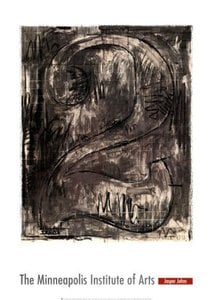
Jasper Johns’ ‘Numbers in Color’ is a chaotic abstract expressionist masterpiece featuring layered red & blue squares, evoking data & unsettling visuals. Explore this unique artwork.

Джеймс Джонс – новатор сучасної мистецтва! Його картини з прапорами, мішенями та картами переосмислюють символи та реальність. Відкрийте для себе світ його унікального стилю!

Гікле / Художній принт

Музейна якість друку جيкле або на полотні з оперативним виготовленням та різноманітними варіантами фінішної обробки.

P118B $10
P118H $10
P118W $10
P438Z $10
P508JH $12
P508YH $12
P805H $10
P805Z $10
P919BZ $10
P919G $10
P919XJ $10
P959ZH $10
P968JZ $12
W106C $8
W218G $10
W218JH $8
W218Y $10
W307PJ $10
W316G $10
W316PJ $8
W316Y $10
W398PJ $8
W4111J $10
W500HY $15
W500JH $15
W692G $12
W849H $8
W940BG $15
W953PJ $8

Standard
custom
CM
INCH

Обирайте з наших стандартних розмірів, що відповідають оригінальним пропорціям твору мистецтва.

ширина
висота

Ви можете вказати власні розміри, щоб репродукція ідеально підійшла до конкретної рами або інтер'єру. Якщо обраний вами розмір не відповідає пропорціям оригіналу, ми або обріжемо полотно, або розширимо зображення за допомогою дзеркального відображення чи суцільної заливки країв. Перед початком виробництва вам буде надіслано цифровий макет для затвердження.
Будь ласка, зверніть увагу, що попередній перегляд на екрані не відображає фактичне обрізання або розширення. Тільки макет точно покаже фінальну композицію.
Хоча можливість замовлення індивідуальних розмірів доступна, ми рекомендуємо обирати формат із попередньо визначеного списку, щоб зберегти оригінальні пропорції.

Доставка по всьому світу () за 2 тижні замість стандартних 4/5 тижнів. (2 Липень)

why_choose_icon
Безкоштовна експрес-доставка по всьому світу
why_choose_icon
Високоякісне лляне полотно
why_choose_icon
Повне страхове покриття доставки
why_choose_icon
Гарантія відшкодування митних зборів
why_choose_icon
Гарантія точного відтворення кольорів
why_choose_icon
Політика повернення протягом 60 днів (лише у разі виявлення дефектів)
why_choose_icon
Гарантія повернення 100% коштів
why_choose_icon
Знижка на багатоелементні замовлення

Загальна вартість

-

reproduction

Number

Гікле / Художній принт

Розмір репродукції

-

Підсумкова ціна

-

Основні факти

  • Title: Number
  • Movement: Abstract Expressionism
  • Subject or theme: Symbolic representation
  • Location: National Gallery of Art
  • Year: 1966
  • Artist: Jasper Johns
  • Influences: Minimalism

Опис експоната

A Bold Statement in Gray: Examining Jasper Johns’ “Number”

Jasper Johns' "Number," created in 1966, stands as a deceptively simple yet profoundly resonant exploration of abstraction and the visual language of everyday objects. This artwork embodies Johns’s signature approach – transforming familiar symbols into canvases brimming with intellectual curiosity and artistic innovation. Initially conceived during the burgeoning Pop Art movement, “Number” simultaneously rejects its preoccupation with consumer culture while retaining an undeniable connection to American iconography, cementing Johns's place as a pivotal figure in redefining what constitutes meaningful art.

Composition and Technique: Layers of Texture and Repetition

The artwork’s core is dominated by a large, stylized numeral ‘0,’ positioned centrally against a densely patterned background composed of numerous small circular shapes. This deliberate arrangement immediately establishes a visual hierarchy, emphasizing the numeral's presence while simultaneously inviting contemplation of its surroundings. Johns skillfully employs a printing technique – likely screenprinting – to achieve remarkable precision and consistency in the repetition of these circles. The resulting texture is palpable; the background appears to be built up from layered elements, creating a tactile impression that mimics the physicality of the printed surface. This textural richness contributes significantly to the artwork’s overall impact, mirroring the artist's fascination with exploring materiality and process.

Symbolism Beyond Calculation: Exploring Void and Completion

Beyond its literal representation of ‘0,’ “Number” operates on multiple symbolic levels. The repetition of circular shapes – a motif frequently revisited by Johns – evokes feelings of confinement or overwhelming complexity, hinting at anxieties surrounding control and order within an increasingly fragmented world. Simultaneously, the numeral itself can be interpreted as representing wholeness, completion, or perhaps even a deliberate embrace of emptiness—a concept central to existentialist thought and powerfully conveyed through Johns’s minimalist aesthetic. This duality underscores the artwork's capacity to provoke introspection and resonate with viewers on an emotional level.

Historical Context: Bridging Abstraction and Pop Art

“Number” emerged during a period of intense artistic experimentation following World War II, marking a crucial juncture between Abstract Expressionism’s emotive outpouring and Pop Art’s embrace of popular culture imagery. Johns deliberately distanced himself from the dominant trends of his time, prioritizing conceptual rigor alongside formal innovation. He sought to challenge viewers' perceptions of art by juxtaposing recognizable symbols—in this case, the numeral ‘0,’ a ubiquitous element of mathematics and language—with abstract forms. This strategic maneuver exemplifies Johns’s commitment to pushing artistic boundaries while simultaneously engaging with broader cultural dialogues.

A Legacy of Quiet Intensity: Why “Number” Remains Relevant Today

Despite its apparent simplicity, "Number" continues to captivate audiences today due to its masterful execution and enduring symbolic power. It serves as a testament to Johns's ability to distill complex ideas into visually arresting compositions—a skill that aligns perfectly with the principles of modern art. Its understated elegance invites viewers to consider fundamental questions about representation, perception, and the relationship between form and content. As a reproduction, “Number” offers an opportunity to experience firsthand the quiet intensity of Johns’s artistic vision, preserving its legacy for generations to come.

Схожі витвори мистецтва


Біографія митця

A Life Painted in Symbols: The World of Jasper Johns

Jasper Johns emerged as a pivotal figure in the landscape of American art, bridging the emotive intensity of Abstract Expressionism with the burgeoning Pop Art movement that would soon redefine artistic boundaries. Born in Augusta, Georgia, in 1930, his early life was marked by a sense of displacement following his parents’ divorce, an experience that perhaps subtly informed his later explorations of identity and belonging within the context of American iconography. His formative years unfolded across various schools before he briefly attended the University of South Carolina, but it wasn't until his move to New York City in 1949 that Johns truly began to forge his artistic path. A period of service during the Korean War further shaped his perspective, exposing him to a world far removed from the burgeoning art scene he was eager to embrace upon his return.

Breaking with Abstraction: The Dawn of a New Visual Language

The post-war American art world was dominated by Abstract Expressionism—a style characterized by spontaneous gesture and deeply personal emotional expression. While initially influenced by this movement, Johns felt compelled to move beyond its purely non-representational approach. He sought a new visual language, one that incorporated recognizable imagery not as illustrations but as vehicles for deeper contemplation. This wasn’t simply about *depicting* the world; it was about questioning how we perceive and interpret symbols within it. Key influences guided his departure: Marcel Duchamp's radical readymades challenged conventional notions of art-making, forcing a redefinition of what constituted “art,” while the emphasis on materiality in Abstract Expressionism informed Johns’ early techniques. However, it was the everyday objects and potent symbols of American culture—flags, targets, maps, numbers—that truly became central to his artistic vocabulary. He wasn’t interested in escaping representation; he wanted to dissect it, layer it with meaning, and ultimately reveal its inherent ambiguities. This deliberate shift away from pure abstraction signaled a profound change in the way art was conceived and experienced.

Iconic Images: Flags, Targets, and the Language of Symbols

Johns' breakthrough works arrived in the mid-1950s, instantly establishing him as a force to be reckoned with. His paintings of flags, most notably *Flag* (1954–55), were not patriotic declarations but rather investigations into the very nature of representation. Rendered in a semi-abstract style, using encaustic—pigment mixed with hot wax—and collage techniques, these flags weren’t simply images; they were textured surfaces laden with symbolic weight. The *Flag* wasn't just a depiction of an American symbol; it was a meditation on the act of seeing, the nature of memory, and the complexities of national identity. The target series, beginning in 1958, further explored this fascination with recognizable forms, questioning perception and meaning through the seemingly straightforward image of a bullseye. *Map* (1961), with its fragmented and layered depictions of the United States, delved into themes of geography, identity, and the complexities of national representation. Works like *False Start* (1959) demonstrated his experimentation with language and visual codes, creating complex compositions that challenged viewers to decipher their underlying meanings. Even *White Flag* (1955), a seemingly simple monochrome canvas, prompted profound questions about absence, surrender, and the very act of seeing. These recurring motifs weren’t presented as straightforward symbols but rather as starting points for deeper inquiry.

Influences and Techniques: A Hybrid Approach

Johns' artistic development was shaped by a diverse range of influences. He deeply admired the work of Marcel Duchamp, whose readymades challenged traditional notions of art and authorship. The emphasis on materiality in Abstract Expressionism—particularly the use of texture and surface—also played a crucial role in his early techniques. However, Johns’ approach went beyond simply incorporating these elements; he actively manipulated them to create layered meanings. He frequently employed encaustic, a technique involving pigment mixed with hot wax, which allowed him to build up complex textures and surfaces that seemed to shift and change depending on the viewer's perspective. Collage was another key element of his practice, often used to juxtapose recognizable imagery with abstract forms. Johns’ work can be seen as a synthesis of these diverse influences—a deliberate blending of abstraction, representation, and symbolism.

Recognition and Enduring Impact

Jasper Johns has received numerous accolades throughout his illustrious career. He was awarded the Golden Lion at the Venice Biennale in 1988, the National Medal of Arts in 1990, and the Presidential Medal of Freedom in 2011—recognizing his profound contribution to American art. His works are held in major museum collections around the world, including the Museum of Modern Art, the Whitney Museum of American Art, the Metropolitan Museum of Art in New York, and Tate Modern in London. Beyond his paintings, Johns’ contributions extend to sculpture and printmaking, demonstrating his versatility and unwavering commitment to artistic innovation. His enduring legacy lies not only in the iconic images he created but also in the profound questions he raised about the nature of representation, symbolism, and the very essence of what it means to be an artist in a rapidly changing world. He remains an active artist, constantly evolving his approach and solidifying his position as one of the most important figures in 20th and 21st-century art.

Короткі факти

  • Artistic Movement Or Style: Поп-арт, Абстрактний експресіонізм
  • Artists Or Movements Influenced By This Artist:
    • Andy Warhol
    • Roy Lichtenstein
  • Artists Who Influenced This Artist: ['Marcel Duchamp']
  • Date Of Birth: 15 травня 1930
  • Full Name: Jasper Johns
  • Nationality: Американський
  • Notable Artworks:
    • Flag
    • Target
    • Map
  • Place Of Birth: А Augusta, США
Досліджуйте твори мистецтва, відсортовані за темами, стилями та характеристиками.