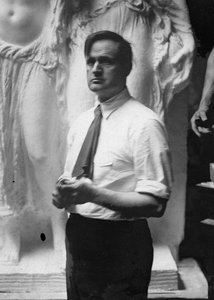
Біографія митця
Життя, сформоване американським Заходом
Джеймс Ерл Фрейзер, народжений у Виноні, штат Міннесота, у 1876 році, був митцем, чиє життя та творчість нерозривно пов’язалися з духом американського Заходу. Його історія – це не просто розповідь про художній талант, а й оповідь, сплетена з ниток досвіду кордону, сімейної спадщини та глибокої поваги до культури корінних народів Америки. Батько Фрейзера, Томас Александр Фрейзер, був інженером залізниці, який зіграв важливу роль у поверненні останків з битви при Маленькій Бігхорн – події, що відкинула довгу тінь на уяву молодого Джеймса. Цей ранній досвід реалій західної експансії, в поєднанні з родоводом матері, який сягає до Плімутських колоністів, вселив у нього складне розуміння еволюції американської ідентичності. Переїзд сім’ї до Мітчела, Південна Дакота, коли Фрейзеру було лише чотири роки, закріпив цей зв'язок; він виріс, занурений у прикордонне життя, зав’язуючи дружбу з дітьми корінних народів і вивчаючи їхні звичаї – досвід, який глибоко сформував його художнє бачення. Навіть будучи дитиною, проявлявся вроджений талант – він почав вирізати фігури з вапнякових плит, знайдених поблизу його дому, що передвіщало монументальні роботи, які пізніше визначили його кар’єру.
Від Парижа до Сен-Годенса: Формування художньої ідентичності
Формальна мистецька подорож Фрейзера розпочалася в Інституті мистецтв Чикаго у 1890 році, але саме подальші навчання в Парижі – в престижній École des Beaux Arts та Académie Julian – дійсно відточили його навички. Саме в цей період він засвоїв вплив імпресіоністського руху, навчившись передавати швидкоплинні моменти та тонкі нюанси світла й тіні. Однак, можливо, найважливішим переломним моментом стало його навчання під керівництвом Огюста Сен-Годенса, видатного діяча американської скульптури. Служба помічником Сен-Годенса виявилася неоціненною, надавши Фрейзеру не лише технічну експертизу, але й розуміння монументального дизайну та сили символічного зображення. Це навчання вселило в нього відданість реалізму, поєднану з чутливістю до форми, що стало визначальною рисою його стилю. Він повернувся до Америки, натхненний європейською освітою, але глибоко відданий зображенню унікальних американських тем – особливо тих, що ґрунтуються на історії та ландшафті Заходу. Фрейзер також почав викладати в Art Students League у Нью-Йорку в 1906 році, згодом ставши її директором, щедро ділячись своїми знаннями та пристрастю до скульптури з новим поколінням митців. Його співпраця простягалася і на особисте життя; шлюб із колегою-скульптором Лаурою Гардін Фрейзер призвів до кількох спільних проектів, зокрема до меморіальної медалі Орегонського стежки.
Іконічні форми: «Кінець шляху» та п’ятдесятицентовий «Буффало»
Художній спадок Джеймса Ерла Фрейзера ґрунтується на двох особливо іконографічних творах: «Кінець шляху» та п’ятдесятицентовому «Буффало». «Кінець шляху», спочатку задуманий у 1894 році, але набув популярності на Міжнародній експозиції Панама-Тихоокеанського регіону в Сан-Франциско в 1915 році, залишається глибоко зворушливим зображенням стомленого корінним американцем вершника – потужним символом занепаду їхньої культури та способу життя. Емоційний вантаж скульптури полягає не лише в її темі, але й у майстерному відтворенні Фрейзером виснаження та приреченості. Це сумний коментар щодо наслідків західної експансії та переміщення корінних народів. Одночасно його дизайн для п’ятдесятицентової монети «Буффало» (офіційно відомої як п’ятдесятицентова монета з зображенням індіанця) закріпив його місце в американській популярній культурі. Монета, на якій зображено спокійний портрет корінних американців та величного американського бізона, була високо оцінена за її художні заслуги та залишається однією з найулюбленіших і найбільш відомих монет у США. П’ятдесятицентова монета «Буффало» була не просто валютою; це був мініатюрний твір мистецтва, який передавав сутність американського Заходу мільйонам людей.
Скульптурна спадщина в камені та бронзі
Окрім цих відзначених творів, Фрейзер залишив незабутній слід у архітектурному ландшафті Вашингтона, округ Колумбія. Його внесок до таких знакових споруд, як Верховний суд – зі скульптурами *Влада закону* та *Роздуми про справедливість*, Національний архів, Казначейство та Меморіал Джеферсона, демонструє його здатність перекладати складні ідеї в монументальні форми. Ці роботи є не просто декоративними елементами; вони є невід’ємною частиною символічних програм цих будівель, підсилюючи їхній сенс та велич. Він також створив значні дизайни медалей, зокрема *For Humanity Obverse* (1918) і *Comité américain pour les régions dévastées de la France* (1919), демонструючи свою універсальність як митця. Його скульптури не обмежувалися великими громадськими просторами; він також створював бюсти та менші роботи, які розкривають гострий погляд на деталі та чутливість до людських емоцій.
Триваюче значення: голос американського Заходу
Спадщина Фрейзера простягається далеко за межі його окремих творів мистецтва. Він передав дух – як тріумфальний, так і трагічний – американського Заходу, запропонувавши нюансоване зображення його історії та народу. Його робота служила контрастом романтизованим зображенням прикордонного життя, визнаючи складності та наслідки західної експансії. П’ятдесятицентова монета «Буффало» залишається відзначеним прикладом художніх досягнень у дизайні монет, впливаючи на наступні нумізматичні роботи та демонструючи силу мистецтва формувати національну ідентичність. Скульптури Фрейзера й досі надихають митців і істориків сьогодні, слугуючи потужним нагадуванням про минуле Америки та її постійну культурну діалектику. Він отримав численні відзнаки протягом своєї кар’єри, зокрема медаль Saltus від Американського нумізматичного товариства та золоту медаль Національного інституту мистецтв і літератури, що закріпило його місце серед найважливіших скульпторів свого покоління. Його робота є невід’ємною частиною багатьох знакових споруд Вашингтона, округ Колумбія, гарантуючи, що його художнє бачення й надалі резонуватиме протягом поколінь. Він був скульптором, який не просто створював мистецтво; він сформував триваючу пам’ять про епоху.



 Замовити репродукцію ручної роботи
 Надіслати як листівку
 Поділитися
 Детальніше

 Завантажити
 Схожі експонати
 Слайд-шоу
 Статистика


 Читати далі






































 Скляний варіант доступний лише для розмірів до 110 см