


 Oil On CanvasWallArtBaroque Drama Light
 1560Renaissance
 1450.0 x 590.0 cm
 Мадонна дель Орто
Написана вручну олією на полотні у вашому розмірі та рамі, виготовлена на замовлення нашими художниками. ( Замовити принт Купити цифрове зображення)





























Обирайте з наших стандартних розмірів, що відповідають оригінальним пропорціям твору мистецтва.

Ви можете вказати власні розміри, щоб репродукція ідеально підійшла до конкретної рами або інтер'єру. Якщо вибраний вами розмір не відповідає пропорціям оригіналу, ми або обріжемо полотно, або доповнимо картину додатковими елементами, промальованими вручну. Цифровий макет буде надіслано вам на затвердження перед початком виробництва.
Зверніть увагу, що попередній перегляд на екрані не відображає фактичне обрізання або розширення зображення. Тільки макет точно покаже остаточну композицію.
Хоча ми можемо виготовити виріб у нестандартному розмірі, для збереження оригінальних пропорцій рекомендуємо обирати варіанти зі встановленого списку.
Доставка по всьому світу () за 3–4 тижні замість стандартних 5 тижнів. (6 Вересень). Без жодних компромісів у якості.


The Last Judgment
Розмір репродукції
In the hallowed, echoing halls of the Basilica di Santa Maria Gloriosa dei Frari in Venice, there exists a vision so immense and overwhelming that it threatens to spill from the walls into the very souls of those who behold it. Jacopo Tintoretto’s The Last Judgment is not merely a painting; it is a cinematic event captured in oil, a swirling vortex of spiritual reckoning that defies the boundaries of traditional canvas. Executed around 1560, this monumental mural serves as a breathtaking cornerstone of Venetian Baroque art, capturing the precise moment when the temporal world dissolves into the eternal. As one stands before this colossal work, the sheer scale—stretching nearly fifteen meters in height—creates an illusion of a cosmic deluge, where the heavens and the earth collide in a frantic, beautiful, and terrifying struggle for salvation.
The composition is a masterclass in controlled chaos. At the heart of this celestial storm sits Christ Pantocrator, the Almighty Judge, radiating a divine authority that anchors the surrounding turbulence. Around Him, the canvas erupts with a rhythmic, almost musical movement of figures. Angels and demons engage in an epic, swirling battle for human souls, their bodies caught in mid-flight, some ascending toward grace while others plummet toward the abyss. This is not a static scene of quiet contemplation, but a visceral experience of motion. Tintoretto utilizes a strained perspective and a dynamic arrangement that draws the viewer’s eye upward, making it feel as though the very fabric of the universe is being torn asunder by the weight of divine judgment.
To understand the emotional gravity of this masterpiece, one must look to Tintoretto’s revolutionary technique. Moving away from the polished, serene elegance of the High Renaissance, he embraced a style that leaned into the dramatic tension of Mannerism and the burgeoning energy of the Baroque. He was a master of chiaroscuro, using the profound interplay between deep, impenetrable shadows and piercing, supernatural light to sculpt his figures. The background is often swallowed by a dark, nocturnal void, which serves to thrust the illuminated bodies forward, creating a sense of three-dimensional urgency. This technique, often referred to as luminism, gives the skin of the saints and the muscles of the damned a pulsating, inner energy.
His brushwork further enhances this sense of "turbulent grace." Eschewing meticulous, fine lines for rapid, expressive strokes, Tintoretto prioritized emotion over anatomical perfection. This deliberate choice lends an unsettling realism to the piece; the figures feel less like statues and more like living, breathing entities caught in a moment of extreme psychological distress or ecstatic triumph. For the collector or the designer, this technique offers a profound sense of depth and texture, making a high-quality reproduction not just a decorative element, but a focal point of intense movement and light that can transform the atmosphere of any grand interior.
Beyond its technical brilliance, The Last Judgment is steeped in the spiritual anxieties of 16th-century Europe. During the era of the Reformation, the concept of divine reckoning was at the forefront of the collective consciousness. Tintoretto captures this tension perfectly, blending the terrifying prospect of eternal punishment with the sublime beauty of divine mercy. The presence of the Virgin Mary and John the Baptist interceding for mankind adds a layer of poignant hope amidst the carnage, providing a narrative complexity that rewards deep contemplation.
For those looking to bring a piece of Venetian history into their private collections or curated spaces, this work offers unparalleled inspiration. It is a painting of extremes—light and dark, heaven and hell, life and death. A reproduction of such a monumental work serves as a powerful statement of sophistication and drama. Whether placed in a library, a grand salon, or a contemporary gallery setting, Tintoretto’s vision continues to command the room, inviting all who look upon it to witness the eternal dance of the human spirit.

1518 - 1594 , Італія
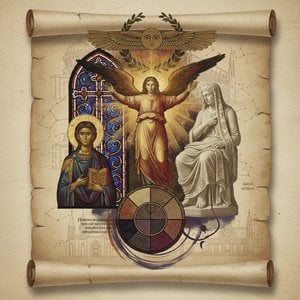
Explore the profound impact of spiritual themes in fine art. From Renaissance iconography to Baroque drama, discover how sacred symbolism and divine visions have shaped art history through a scholarly and reflective lens.

 Переглянути в інтер'єрі
 Надіслати як листівку
 Поділитися
 Детальніше

 Завантажити
 Схожі експонати
 Рентгенівське дослідження
 Слайд-шоу
 Читати далі







 Скляний варіант доступний лише для розмірів до 110 см


