x
Переглянути в інтер'єріПереглянути в інтер'єрі Перегляд в ARПерегляд в AR Замовити принт Замовити принтЗамовити репродукцію ручної роботи Замовити репродукцію ручної роботи Надіслати як листівкуНадіслати як листівку
ДетальнішеДетальніше Додати до улюблених Додати до улюблених ЗавантажитиЗавантажити Схожі експонатиСхожі експонати Рентгенівське дослідженняРентгенівське дослідження Слайд-шоуСлайд-шоу

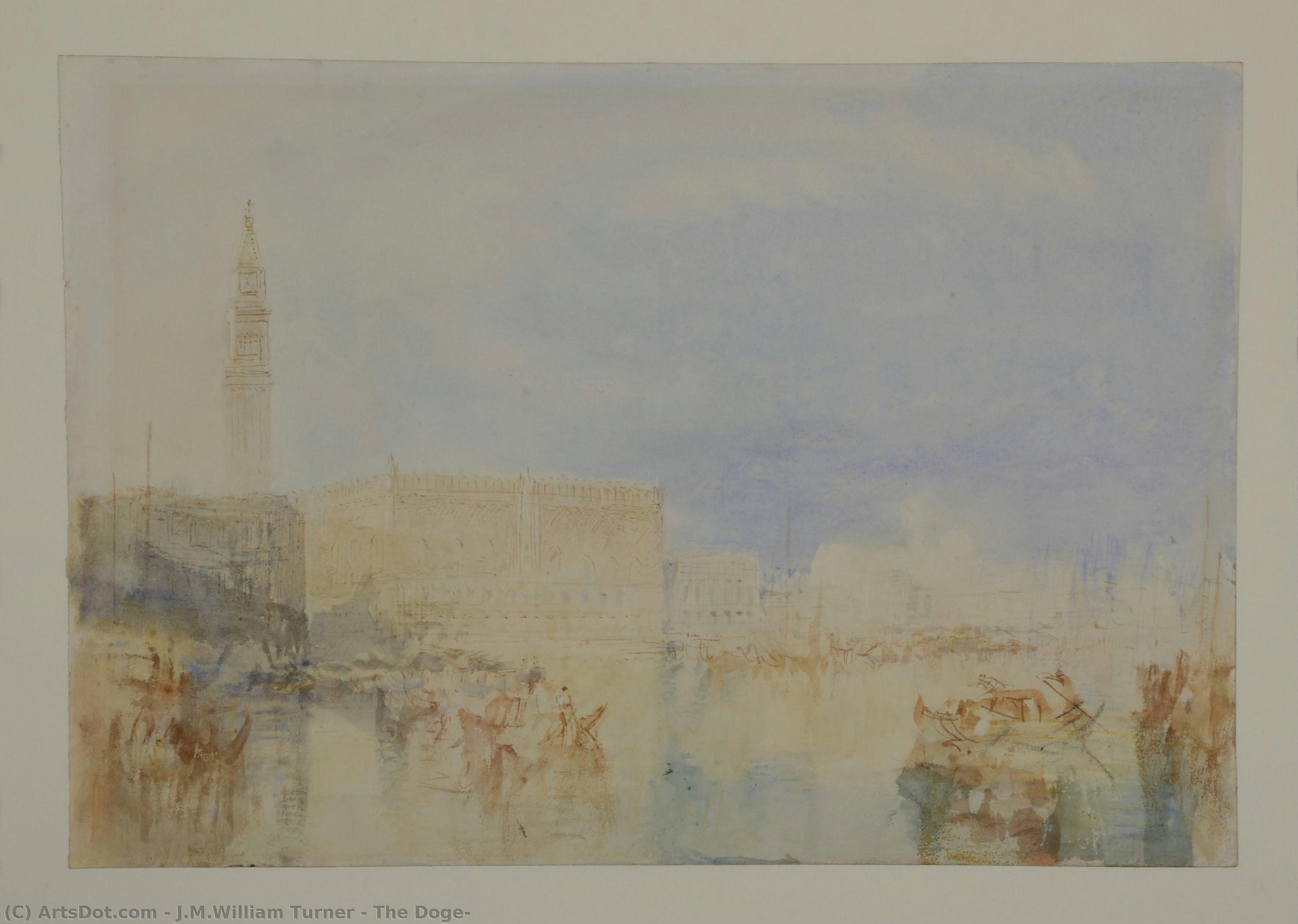
The Doge

Discover J.M.W. Turner’s ‘The Doge,’ a stunning 1840 watercolor study of Venice's Grand Canal. Explore atmospheric Romanticism & Turner’s unique technique.

Йозеф Томпсон Тернер – видатний британський художник-романтик, відомий своїми вражаючими пейзажами та морськими полотнами. Його новаторські техніки використання світла та кольору вплинули на розвиток імпресіонізму та сучасного мистецтва.

Придбайте цифрову копію високої роздільної здатності з покращеною якістю, що значно перевершує онлайн-перегляд.

Кожен файл ретельно підготовлений нашими фахівцями за допомогою сучасних інструментів та професійної ручної ретуші. Ми гарантуємо виняткову чіткість, точну передачу кольору та високу деталізацію кожного зображення.

Фінальний файл надсилається електронною поштою протягом 72 годин і оптимізований для негайного використання у професійних виданнях та друкованих матеріалах. Таку якість обирають провідні дизайнерські студії, видавництва та галереї.

Цифрове зображення

Завантажте файл високої роздільної здатності для особистого використання, друку та творчих проєктів. (Замовити принт Замовити принтЗамовити репродукцію ручної роботи Замовити репродукцію ручної роботи)

Підсумкова вартість

$ 24,90

Переваги кожного замовлення цифрових зображень

Експертна цифрова доставка з гарантією якості

Обираючи WahooArt.com, ви отримуєте не просто зображення — ви отримуєте професійно вдосконалений цифровий витвір мистецтва, створений з надзвичайною точністю та підкріплений гарантією задоволення. Ось усе, що автоматично додається до вашого замовлення:

shipping_icon
Швидка доставка на email

Ваш цифровий файл із зображенням високої роздільної здатності буде надісланий вам електронною поштою протягом 72 годин після оформлення замовлення — він буде готовий до негайного використання.

canvas_icon
Цифровий файл із покращенням ШІ

Ваш витвір мистецтва професійно оптимізовано за допомогою передових інструментів штучного інтелекту та ручної корекції, що забезпечує максимальну деталізацію, чіткість і точність передачі кольорів.

insurance_icon
Безкоштовне повторне завантаження назавжди

Випадково видалили або втратили файл? Не хвилюйтеся — ми надішлемо його вам повторно в будь-який час безкоштовно.

tax_icon
Без митних зборів — ніколи

Насолоджуйтесь вашим витвором мистецтва миттєво без жодних мит, зборів або плати за доставку — цифрові завантаження завжди не оподатковуються.

color_icon
Гарантія точності кольорів

Ми гарантуємо максимально точне відтворення оригінальних кольорів на вашому цифровому зображенні завдяки використанню професійних інструментів та систем управління кольором.

return_icon
Гарантія задоволення протягом 60 днів

Якщо ви не задоволені придбаним цифровим зображенням, ми відкоригуємо його або повернемо 100% вартості протягом 60 днів — без жодних запитань.

guarantee_icon
Гарантія повернення 100% коштів

Не задоволені покупкою? Отримайте повне повернення коштів протягом 60 днів після отримання цифрового файлу — без жодних запитань.

discount_icon
Знижки на оптові замовлення

Купуйте 3 зображення — заощаджуйте 10% — Купуйте 5 — заощаджуйте 15% — Купуйте 10+ — заощаджуйте 20%. Чудово підходить для творчих проєктів, галерей та агентств.

Основна інформація

  • Influences: Turner's style
  • Dimensions: 22 x 32 cm
  • Artist: J.M.W. Turner
  • Artistic style: Watercolor wash
  • Movement: Romanticism
  • Year: 1840
  • Title: The Doge

Квіз про мистецтво

У кожному запитанні лише одна правильна відповідь.

Запитання 1:
What is the primary subject of J.M.W. Turner’s ‘The Doge’?
Запитання 2:
The watercolor ‘The Doge’ primarily utilizes what technique to create its atmospheric effect?
Запитання 3:
According to the image description, what is a key characteristic of Turner’s use of perspective in this painting?
Запитання 4:
In what year was ‘The Doge’ painted, based on the provided information?
Запитання 5:
What is suggested by the description of the painting’s intended purpose – as a ‘colour study for Turner’s future reference’?

A Glimpse of Dusk – The Doge’s Palace and Riva degli Schiavoni

J.M.W. Turner's “The Doge’s Palace and Riva degli Schiavoni” isn’t merely a depiction of Venice; it’s an immersion into the city’s very soul, captured in a fleeting moment of twilight. Painted in 1840 during his final Venetian sojourn, this watercolor study transcends simple landscape painting, becoming a profound meditation on light, atmosphere, and the ephemeral beauty of a fading day. The scene unfolds along the Grand Canal, dominated by the imposing Doge’s Palace – a symbol of Venetian power and history – and framed by the bustling Riva degli Schiavoni, a vibrant waterfront teeming with gondolas and activity. Turner doesn't strive for photographic accuracy; instead, he prioritizes conveying an emotional response to the scene, utilizing his signature technique to dissolve form and emphasize feeling.

  • Subject Matter: The painting focuses on the interplay between architecture, water, and light in Venice.
  • Date: 1840
  • Medium: Watercolor with scraping (a technique where paint is scraped off the paper to reveal the underlying surface)

The Language of Light – Turner’s Revolutionary Technique

Turner's genius lies in his masterful manipulation of watercolor. He employs a layered approach, beginning with washes of yellow to represent the buildings and their reflections shimmering on the water. Crucially, he applies these washes immediately after laying down the blue for the foreground, resulting in occasional patches of green – a testament to the speed and spontaneity of his process. This technique, combined with ‘scraping,’ creates a remarkable sense of texture and luminosity. The scraping reveals the white paper beneath the paint, adding a subtle sheen and enhancing the atmospheric effect. It’s as if Turner is capturing not just what he sees, but the very essence of light itself, transforming the scene into an impressionistic dream.

Turner's use of color is particularly striking – muted blues and greens dominate, creating a sense of melancholy and mystery, while subtle hints of gold suggest the warmth of the setting sun.

Symbolism and Venetian Identity

Beyond its aesthetic beauty, “The Doge’s Palace and Riva degli Schiavoni” is rich in symbolic meaning. The Doge's Palace, with its towering campanile (bell tower), represents Venice’s long and illustrious history as a maritime republic. The bustling Riva degli Schiavoni, filled with gondolas and merchants, embodies the city’s vibrant commercial life. However, Turner doesn’t romanticize this scene; he presents it with a sense of detachment, almost as if observing from afar. The hazy atmosphere suggests a fleeting moment in time, hinting at the impermanence of beauty and power. The painting can be interpreted as a reflection on Venice's past glory juxtaposed against its inevitable decline – a theme that resonated deeply with Turner’s own artistic vision.

A Timeless Masterpiece – Capturing Emotion

“The Doge’s Palace and Riva degli Schiavoni” is more than just a painting; it's an experience. It evokes a sense of tranquility, mystery, and the profound beauty of Venice’s atmosphere. Turner’s ability to capture light and emotion with such delicate brushstrokes remains unparalleled. This watercolor study offers a glimpse into the heart of a city steeped in history and legend, inviting viewers to lose themselves in its timeless charm. Reproductions of this work retain much of the original's evocative power, making it a treasured addition to any art collection or interior space – a reminder that true beauty lies not just in representation, but in the feeling it inspires.


Біографія митця

A Life Painted in Light: The World of J.M.W. Turner

Joseph Mallord William Turner, known to the world as J.M.W. Turner, was more than just a painter; he was a visionary who redefined landscape art and paved the way for modern abstraction. Born in Maiden Lane, Covent Garden, London, in 1775, his beginnings were humble – the son of a barber and wig maker. Yet, even as a child, a remarkable talent blossomed within him. By age fourteen, he was enrolled at the Royal Academy, exhibiting his first work just a year later. This early promise wasn’t merely technical skill; it hinted at an innate understanding of light, color, and atmosphere that would become the hallmarks of his extraordinary career. He supplemented his artistic education with practical experience as an architectural draftsman, honing his perspective and compositional abilities – skills that would prove invaluable in rendering both detailed topographical views and vast, emotive landscapes. Turner’s early life was marked by a dedication to his craft, fueled by a natural aptitude and a relentless pursuit of artistic excellence.

The Romantic Tempest: Style and Influences

Turner emerged during the height of the Romantic era, but he wasn't simply a follower of its conventions. He absorbed influences from various sources – the Dutch masters like Claude Lorrain and Aelbert Cuyp for their luminous landscapes, and artists such as Richard Wilson for his poetic approach to nature. However, Turner didn’t merely imitate; he synthesized these influences into something entirely new. His work is characterized by an expressive use of color, often employing bold contrasts and vibrant hues to convey emotion and atmosphere. He was fascinated by the power and drama of nature – turbulent seascapes, fiery sunsets, and swirling storms became recurring motifs in his paintings. He wasn’t interested in simply depicting what he saw; he sought to capture the *feeling* of a place, the sublime awe inspired by the natural world. This pursuit led him to experiment with increasingly loose brushwork, dissolving forms into washes of color and light – techniques that would anticipate the Impressionist movement decades later. From 1840, his work gained significant recognition thanks to the championing of John Ruskin, who elevated landscape painting to a new level of critical acclaim.

A Prolific Legacy: The Scope of Turner’s Output

The sheer volume of Turner's artistic output is astonishing. He created over 550 oil paintings, nearly 2,000 watercolors, and an astounding 30,000 works on paper. This prolificacy wasn’t simply a matter of quantity; it reflected his tireless exploration of different subjects, techniques, and styles. His paintings range from detailed topographical views of British landscapes to dramatic historical scenes and evocative maritime paintings. He was equally adept at capturing the tranquility of a pastoral scene and the terrifying power of a raging storm. Works like “Fort Vimieux” exemplify his mastery of depicting atmospheric effects – the swirling clouds, the crashing waves, and the intense light all contribute to a sense of drama and sublime beauty. Similarly, "Scene in the Campagna" showcases his ability to capture the warmth and serenity of the Italian countryside with delicate brushwork and luminous colors. Beyond painting, Turner was also a skilled printmaker, further disseminating his artistic vision through engravings and lithographs.

The Eccentric Visionary: Personal Life and Legacy

Turner’s personal life was as complex and enigmatic as his art. He remained intensely private and reclusive, often shunning social gatherings and preferring the solitude of his studio or the open road. He fathered two daughters, Evelina and Georgiana, with Sarah Danby, the wife of a fellow artist, but maintained a distant relationship with them. His later years were marked by increasing eccentricity and declining health. After his father’s death in 1829, he became increasingly morose and withdrawn, living in squalor and neglecting his appearance. He adopted the pseudonym “Mr. Booth” to avoid recognition and even rowed his boat into the Thames during a census to remain untraceable. Despite his eccentricities, or perhaps because of them, Turner remains one of Britain’s most beloved artists. His final years were spent in Chelsea where he passed away on December 19, 1851, at the age of 76. In a fitting tribute to his enduring legacy, he is buried in St Paul's Cathedral, alongside other British luminaries – a testament to his profound impact on art and culture. His work continues to inspire artists and captivate audiences worldwide, ensuring that the light of J.M.W. Turner will continue to shine for generations to come.

Key Works & Influences

Turner’s artistic journey was shaped by numerous influences and reflected in his diverse body of work. Here are some key examples:
  • Early Landscapes (1790s-1800s): Initially influenced by the Dutch masters, particularly Claude Lorrain, Turner produced meticulously detailed topographical views of British landscapes, showcasing a mastery of perspective and composition.
  • Romanticism & Dramatic Effects (1800s-1830s): As he embraced the Romantic movement, Turner shifted towards capturing the emotional intensity of nature. Works like "The Fighting Temeraire" demonstrate his ability to convey dramatic narratives through color and light.
  • Maritime Paintings (1840s-1850s): Inspired by the Industrial Revolution and advancements in technology, Turner’s seascapes became increasingly dynamic and turbulent, reflecting the power of the sea and the changing world around him.
  • Influence of John Ruskin: The critical support of John Ruskin significantly impacted Turner's artistic direction, encouraging him to explore new techniques and push the boundaries of landscape painting.
Notable Paintings:
  • The Fighting Temeraire
  • Rain, Steam and Speed – The Great Western Railway
  • Turner’s Nocturne in Grey and Blue
  • Snow Storm: Hannibal Crossing the Alps
Further Research:
  • Visit the Tate Britain website for a comprehensive collection of Turner's works.
  • Explore online resources such as Wikipedia and Britannica for biographical information and critical analysis.

Дж.М.В. Тернер

Дж.М.В. Тернер

1775 - 1851 , Великобританія

Основна інформація

  • Artistic Movement Or Style: Романтизм
  • Artists Or Movements Influenced By This Artist:
    • Імпресіонізм
    • Абстракція
  • Artists Who Influenced This Artist:
    • John Robert Cozens
    • Richard Wilson
  • Date Of Birth: 23 квітня 1775
  • Date Of Death: 19 грудня 1851
  • Full Name: Joseph Mallord William Turner
  • Nationality: Британський
  • Notable Artworks:
    • Fort Vimieux
    • Scene in the Campagna
  • Place Of Birth: Лондон, Великобританія