Переглянути в інтер'єріПереглянути в інтер'єрі Перегляд в ARПерегляд в AR Перейти до друку Перейти до друкуПерейти до цифрових зображень Перейти до цифрових зображень Надіслати як листівкуНадіслати як листівку
ДетальнішеДетальніше Додати до улюблених Додати до улюблених ЗавантажитиЗавантажити Схожі експонатиСхожі експонати Рентгенівське дослідженняРентгенівське дослідження Слайд-шоуСлайд-шоу СтатистикаСтатистика

The Drama

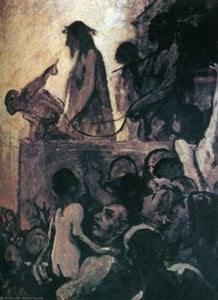
Honoré Daumier's "The Drama" captures a vibrant theatrical scene with intense emotion and dramatic figures. A captivating glimpse into 19th-century performance art, rendered in oil on canvas.

Орне́ Дам’є — французький художник-карикатурист та скульптор, відомий своїми сатиричними творами про Францію 19 століття. Його роботи вплинули на мистецтво та досі актуальні.

Олійная репродукція ручної роботи

Написана вручну олією на полотні у вашому розмірі та рамі, виготовлена на замовлення нашими художниками. (Перейти до друку Перейти до друкуПерейти до цифрових зображень Перейти до цифрових зображень)

P118B $10
P118H $10
P118W $10
P438Z $10
P508JH $12
P508YH $12
P805H $10
P805Z $10
P919BZ $10
P919G $10
P919XJ $10
P959ZH $10
P968JZ $12
W106C $8
W218G $10
W218JH $8
W218Y $10
W307PJ $10
W316G $10
W316PJ $8
W316Y $10
W398PJ $8
W4111J $10
W500HY $15
W500JH $15
W692G $12
W849H $8
W940BG $15
W953PJ $8

Стандартний розмір
індивідуальний
CM
INCH

Обирайте з наших стандартних розмірів, що відповідають оригінальним пропорціям твору мистецтва.

ширина
висота

Ви можете вказати власні розміри, щоб репродукція ідеально підійшла до конкретної рами або інтер'єру. Якщо вибраний вами розмір не відповідає пропорціям оригіналу, ми або обріжемо полотно, або доповнимо картину додатковими елементами, промальованими вручну. Цифровий макет буде надіслано вам на затвердження перед початком виробництва.
Зверніть увагу, що попередній перегляд на екрані не відображає фактичне обрізання або розширення зображення. Тільки макет точно покаже остаточну композицію.
Хоча ми можемо виготовити виріб у нестандартному розмірі, для збереження оригінальних пропорцій рекомендуємо обирати варіанти зі встановленого списку.

Приклади можливих змін: замінити обличчя на фото клієнта; додати домашню тварину (наприклад, замінити кота на собаку); додати приховане повідомлення на фоні; змінити ландшафт або елементи фону.
Після оформлення замовлення команда WahooArt.com зв'яжеться з клієнтом електронною поштою для отримання інструкцій та надасть попередній макет

Доставка по всьому світу () за 3–4 тижні замість стандартних 5 тижнів. (9 Вересень). Без жодних компромісів у якості.

why_choose_icon
Безкоштовна експрес-доставка по всьому світу
why_choose_icon
Високоякісне лляне полотно
why_choose_icon
Повне страхове покриття доставки
why_choose_icon
Гарантія відшкодування митних зборів
why_choose_icon
Гарантія точного відтворення кольорів
why_choose_icon
Політика повернення протягом 100 днів (тільки у разі виявлення дефектів)
why_choose_icon
Гарантія повернення 100% коштів
why_choose_icon
Пропозиція на оптові замовлення

Загальна вартість

$ 272

reproduction

The Drama

Матеріал репродукції

Розмір репродукції

-

Підсумкова вартість

$ 272

Основна інформація

  • Movement: Realism
  • Dimensions: 98 x 90 cm
  • Artist: Honoré Daumier
  • Year: 1860
  • Notable elements: Dramatic scene, crowd
  • Subject or theme: Social unrest, rebellion
  • Title: The Drama

Квіз про мистецтво

У кожному запитанні лише одна правильна відповідь.

Запитання 1:
What is the primary subject depicted in Honoré Daumier’s ‘The Drama’?
Запитання 2:
In what year was Honoré Daumier's ‘The Drama’ painted?
Запитання 3:
What historical event is alluded to in the title ‘The Drama’?
Запитання 4:
Which artistic movement is most closely associated with Honoré Daumier’s style?
Запитання 5:
What does the phrase ‘Behold the Man’ (Ecce Homo) represent in the painting?

A Stage of Emotion: Honoré Daumier’s “The Drama”

Honoré Daumier's "The Drama," painted in 1860, isn’t merely a depiction of a theatrical performance; it’s a visceral exploration of human interaction, power dynamics, and the very essence of spectacle. The painting immediately commands attention with its dynamic composition – a swirling vortex of figures caught in a moment of intense action, frozen mid-gesture as if plucked from the heart of a dramatic scene. It's a work that transcends simple illustration, becoming a potent commentary on social hierarchies and the performative nature of life itself.

Daumier’s style is instantly recognizable: a masterful blend of realism and expressive draftsmanship. He eschews idealized forms in favor of capturing the raw energy and emotional truth of his subjects. The figures are rendered with quick, confident brushstrokes, conveying a sense of immediacy and urgency. Notice how he utilizes chiaroscuro – the dramatic contrast between light and shadow – to heighten the theatricality of the scene, drawing our eyes to key moments of interaction and creating an atmosphere of suspense and intrigue. The palette is rich and earthy, dominated by browns, ochres, and deep reds, lending a sense of both drama and groundedness to the composition.

A Glimpse into 19th-Century Parisian Life

To fully appreciate “The Drama,” it’s crucial to understand its historical context. Painted during the tumultuous years following the French Revolution, Daumier was a keen observer of social and political life in Paris. He used his art as a powerful tool for satire and critique, exposing the corruption and hypocrisy he witnessed within the established order. This particular scene likely depicts a performance at the Théâtre Français, a prominent venue during that era, reflecting the vibrant yet often fraught cultural landscape of the city.

The painting’s subject matter – a man dramatically lifting a woman from the stage – speaks volumes about the power dynamics at play. The central figure, bathed in light, embodies authority and control, while the woman, caught mid-fall, represents vulnerability and perhaps even resistance. The surrounding figures, some watching with detached amusement, others actively participating in the performance, further underscore this complex interplay of roles and relationships. Daumier wasn’t simply documenting a theatrical event; he was dissecting the social rituals and power structures that shaped Parisian society.

Symbolism and Theatricality

Beyond its immediate narrative, “The Drama” is laden with symbolic meaning. The stage itself becomes a metaphor for life – a constructed space where roles are played, identities are performed, and power is asserted. The act of lifting the woman can be interpreted as both an act of dominance and a gesture of care (though the ambiguity leaves room for interpretation). The overall composition evokes the conventions of melodrama, with its heightened emotions, dramatic gestures, and focus on spectacle. Daumier was acutely aware of these theatrical tropes and skillfully employed them to convey his critical message.

The inclusion of a diverse audience – some observing passively, others actively engaged – highlights the role of spectatorship in shaping social reality. We are invited to consider our own position within this scene, questioning our complicity in the performance and reflecting on the power dynamics that govern our interactions with one another.

A Timeless Masterpiece: Reproduction Possibilities

“The Drama” remains a remarkably powerful and enduring work of art. Its dramatic intensity, evocative composition, and insightful social commentary continue to resonate with viewers today. Reproductions offer an accessible way to bring this masterpiece into your home or office, allowing you to experience its captivating beauty and thought-provoking themes firsthand. When selecting a reproduction, consider the quality of materials used – a fine art print on archival paper will ensure that the colors and details remain vibrant for years to come. This painting is more than just an image; it’s a window into a bygone era and a timeless meditation on the complexities of human experience.


Біографія митця

A Life Etched in Satire: The World of Honoré Daumier

Honoré-Victorin Daumier, a name synonymous with biting satire and unflinching social commentary, was born in Marseille in 1808. His early life, shaped by his father’s aspirations as a poet – a dream tragically cut short – and the subsequent relocation to Paris in 1814, immersed him in a city already pulsating with artistic fervor. Initially destined for a career in law, Daumier's true calling emerged not from legal texts but from charcoal and stone, a passion ignited by his apprenticeship under Alexandre Lenoir, a student of Jacques-Louis David. This formative period instilled within him both the classical foundations of technique and an appreciation for the dramatic chiaroscuro favored by Rubens – elements that would later coalesce into his uniquely powerful style. However, Daumier’s art wasn't merely about mastering brushstrokes; it was fundamentally rooted in a profound empathy for the marginalized and a burning desire to expose the hypocrisy he witnessed within French society.

The Sharpened Pen: Caricature and Social Commentary

Daumier’s career truly blossomed following the tumultuous events of 1830, the July Revolution that irrevocably altered the course of France. This seismic shift provided fertile ground for his burgeoning satirical talent, and he quickly established himself as a master lithographer. Initially working anonymously for publications like *Le Charivari*, founded by Charles Philipon, Daumier’s genius rapidly gained recognition. It was within these pages that his caricatures transcended mere humor; they became searing indictments of the bourgeoisie, the legal system, and the political establishment. His unflinching depictions of King Louis-Philippe, for instance, earned him a six-month imprisonment in 1832 – an experience that, rather than silencing him, fueled his commitment to challenging authority through art. His lithographs became visual manifestos, capturing the spirit of dissent and offering a critical perspective on the societal injustices prevalent at the time. The sheer volume of his output during this period is staggering—thousands of images documenting daily life, political machinations, and the struggles of ordinary people. These weren’t simply drawings; they were potent weapons in the fight for social awareness.

Beyond Caricature: Painting and Sculptural Visions

While Daumier's legacy is most firmly established through his lithographs, to limit him solely to caricature would be a profound oversight. He was also a dedicated painter and sculptor, though recognition for these works came later in his life. His paintings, often depicting scenes of everyday Parisian existence – the cramped third-class carriages, the weary laundresses, the pompous lawyers – are imbued with an extraordinary sense of realism and empathy. He eschewed idealized representations, instead presenting a starkly honest portrayal of hardship and struggle. Daumier’s technique was characterized by loose brushwork and dramatic lighting, anticipating some of the techniques later embraced by the Impressionists. His sculptural work, largely created in clay – many pieces remaining unbaked during his lifetime – reveals a similar commitment to capturing the human form with remarkable sensitivity and psychological depth. These sculptures, rediscovered after his death, stand as testament to his extraordinary modeling skills and his ability to convey complex emotions through physical gesture.

A Lasting Legacy: Influence and Historical Significance

Honoré Daumier’s impact on art history is undeniable. He bridged the gap between Romanticism and Realism, laying the groundwork for future generations of artists who sought to depict the world with unflinching honesty. His unwavering social commentary profoundly influenced figures like Gustave Courbet and Édouard Manet, while his innovative use of lithography revolutionized printmaking itself. Daumier’s work continues to resonate powerfully today, serving as a potent reminder of the enduring power of art to challenge authority, expose injustice, and bear witness to the human condition. The Musée d'Orsay in Paris houses an extensive collection of his paintings and sculptures, offering visitors a valuable opportunity to immerse themselves in the world he so vividly portrayed. Furthermore, his lithographs remain widely accessible through collections such as those found on WahooArt, ensuring that his satirical genius continues to provoke thought and inspire dialogue across generations. Daumier wasn’t merely an artist; he was a chronicler of his time – a visual poet who used his talent to give voice to the voiceless and hold power accountable. His legacy endures as a testament to the enduring relevance of art as a force for social change.

Daumier's Artistic Techniques & Influences

  • Lithography: Daumier’s mastery of lithography was central to his artistic practice. He skillfully utilized this printing technique to create intricate and powerful images, often working directly on the stone with a sharp pencil.
  • Realism & Observation: His work is deeply rooted in meticulous observation of everyday life – from the bustling streets of Paris to the faces of ordinary people. This realism was not merely descriptive; it aimed to reveal underlying social and political truths.
  • Influence of Rubens & Lenoir: Daumier’s early training under Alexandre Lenoir, a student of Jacques-Louis David, exposed him to classical techniques and the dramatic chiaroscuro favored by Peter Paul Rubens. These influences shaped his understanding of composition, light, and shadow.
  • Satirical Style: Daumier's caricatures are characterized by their sharp wit, biting satire, and often grotesque depictions of figures in positions of power. He used exaggeration and distortion to expose hypocrisy and challenge societal norms.

Key Works

  • Rue Transnonain (1836): Perhaps his most famous work, this lithograph depicts the brutal suppression of a Parisian street protest by government troops. It’s a powerful indictment of state violence and social injustice.
  • Les Gens de Justice (1832): A satirical depiction of French judges, highlighting their corruption and indifference to the plight of ordinary citizens.
  • Ecce Homo (1839): Daumier’s interpretation of the biblical story of Jesus Christ, presented as a self-portrait reflecting on his own life and struggles.

Daumier's Place in Art History

  • Bridge between Romanticism & Realism: Daumier’s work represents a crucial transition between the emotional intensity of Romanticism and the objective observation of Realism.
  • Influence on Later Artists: His unflinching social commentary and innovative use of printmaking profoundly influenced artists such as Gustave Courbet, Édouard Manet, and later, Impressionists like Degas and Toulouse-Lautrec.
  • Social Documentary: Daumier’s work can be considered a form of early social documentary, providing valuable insights into the lives and conditions of ordinary people in 19th-century France.
Оноре Дюмаєр

Оноре Дюмаєр

1808 - 1879 , Франція

Короткі факти

  • Artistic Movement Or Style: Реалізм, Сатира
  • Artists Or Movements Influenced By This Artist:
    • Імпресіонізм
    • Сучасне мистецтво
  • Artists Who Influenced This Artist:
    • Alexandre Lenoir
    • Jacques-Louis David
  • Date Of Birth: 26 лютого 1808
  • Date Of Death: 10 лютого 1879
  • Full Name: Honoré-Victorin Daumier
  • Nationality: Француз
  • Notable Artworks:
    • Rue Transnonain
    • Les gens de justice
    • Ecce Homo
  • Place Of Birth: Марсель, Франція
Досліджуйте твори мистецтва, впорядковані за темами, стилями та характеристиками.