


Написана вручну олією на полотні у вашому розмірі та рамі, виготовлена на замовлення нашими художниками. ( Замовити принт Купити цифрове зображення)
Обирайте з наших стандартних розмірів, що відповідають оригінальним пропорціям твору мистецтва.

Ви можете вказати власні розміри, щоб репродукція ідеально підійшла до конкретної рами або інтер'єру. Якщо вибраний вами розмір не відповідає пропорціям оригіналу, ми або обріжемо полотно, або доповнимо картину додатковими елементами, промальованими вручну. Цифровий макет буде надіслано вам на затвердження перед початком виробництва.
Зверніть увагу, що попередній перегляд на екрані не відображає фактичне обрізання або розширення зображення. Тільки макет точно покаже остаточну композицію.
Хоча ми можемо виготовити виріб у нестандартному розмірі, для збереження оригінальних пропорцій рекомендуємо обирати варіанти зі встановленого списку.
Доставка по всьому світу () за 3–4 тижні замість стандартних 5 тижнів. (7 Вересень). Без жодних компромісів у якості.


Sunshine After Rain
Розмір репродукції

The story of Henry Hadfield Cubley is one deeply intertwined with the very soil and atmosphere of the British Isles. Born in 1858 within the artistic enclave of Newark, Nottinghamshire, Cubley did not merely stumble upon his vocation; he inherited it as a sacred trust. His father, William Cubley, was a respected teacher and landscape painter whose influence acted as the foundational bedrock for Henry’s creative soul. From these early years, Henry was taught to look beyond the mere surface of nature, learning instead to perceive the sublime rhythms of the earth and the fleeting, ethereal qualities of light that define the natural world.
This formative period in Nottinghamshire instilled in him a profound reverence for the landscape, a passion that would later drive him to seek out the most dramatic vistas of the British Isles. His artistic journey was marked by a pursuit of the atmospheric and the pastoral, leading him to masterfully capture the rugged, untamed majesty of the Scottish Highlands and the tranquil, rolling serenity of the Welsh valleys. Through his eyes, the landscape became more than just scenery; it became a living, breathing protagonist in his visual narratives.
As Cubley’s career matured, particularly following his pivotal relocation to Matlock Bath, Derbyshire, in 1888, his technical prowess began to coalesce into a signature style that bridged the gap between traditional British realism and the burgeoning influence of Impressionism. He worked primarily with oil on canvas, a medium that allowed him to manipulate texture and pigment to achieve an extraordinary sense of depth. His technique was characterized by a meticulous blending of hues, designed to replicate the way sunlight dances across a hillside or how mist clings to a mountain peak.
One cannot discuss Cubley’s work without mentioning his unparalleled ability to capture light. His canvases often pulsate with a vibrant energy, particularly in scenes where sunlight breaks through heavy clouds to illuminate grazing cattle or verdant meadows. This mastery of chiaroscuro and atmospheric perspective allowed him to evoke the palpable humidity of a morning mist or the warmth of a summer afternoon. His compositions frequently featured:
The zenith of Cubley’s professional recognition arrived during the late Victorian and Edwardian eras, a time when his work resonated deeply with the sensibilities of the British art establishment. His frequent exhibitions at prestigious venues, most notably the Royal Academy and the Birmingham Salon, cemented his reputation as a premier landscape painter of his generation. A particularly significant milestone occurred in 1902, when an exhibition at the Royal Academy brought him widespread critical acclaim, marking a high point in his storied career.
Beyond the accolades, Cubley’s historical significance lies in his ability to translate the changing moods of the British landscape into a timeless visual language. While he embraced the modern light-centric approaches of his era, he never lost the grounded, realistic detail that honored the heritage of his father's teachings. Today, his works remain vital windows into a bygone era, offering contemporary viewers a profound connection to the enduring beauty and quiet majesty of the natural world as it was perceived over a century ago.

1858 - 1934 , United Kingdom
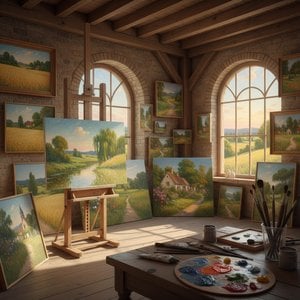
Discover the profound tranquility of rural art through an expert exploration of Impressionist landscapes. From pastoral scenes to textured oil masterpieces, learn how timeless nature-inspired artworks bring enduring elegance and serenity to sophisticated collectors.

Discover the profound serenity of timeless pastoral landscapes. From Impressionist masterpieces to bespoke oil commissions, explore how curated fine art brings the enduring beauty and tranquility of nature into your luxury home interior.

 Переглянути в інтер'єрі
 Надіслати як листівку
 Поділитися
 Детальніше

 Завантажити
 Схожі експонати
 Рентгенівське дослідження
 Слайд-шоу
 Читати далі




































 Скляний варіант доступний лише для розмірів до 110 см


