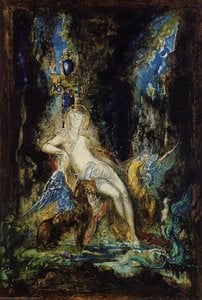
A Dream Weaver of Symbolism: The Life and Art of Gustave Moreau
Gustave Moreau, ім’я якого назавжди пов’язане з ефірною красою та загадковим глибином символізму, виник у 19-сторічній Парижі як унікальна мистецька постать. Він народився в 1826 році в буржуазній родині – його батько був архітектором і архівістом. Раннє дитинство Moreau було просякнуте інтелектуальною цікавістю та естетичним чуттям. З юних років він демонстрував вражаючі здібності до малювання, які були підтримані традиційним академічним навчанням у École des Beaux-Arts під керівництвом таких постатей, як Франсуа-Едуард Піко. Однак мистецький шлях Moreau різко відрізнявся від пануючих Реалістичних та Імпресіоністських течій того часу. Він не цікавився захопленням миттєвих моментів чи об’єктивною реальністю; натомість він прагнув розкрити приховані сфери міфології, релігії та людської психіки через глибоко особистий і символічний візуальний мову. Його подорож була шляхом внутрішнього дослідження, перетворюючи суб’єктивні емоції та духовні прагнення на полотна з бездоганною увагою до деталей і яскравою, часто розкішною палітрою.
The Forge of Imagination: Influences and Artistic Development
Мистецьке становлення Moreau не було народжене у вакуумі. Хоча він відкидав домінуючі тенденції свого часу, він черпав натхнення з різноманітних джерел. Драматичне використання кольору та екзотичні теми, знайдені в роботах Ежена Делакруа, глибоко резонували з ним, запаливши пристрасть до наративних картин, сповнених емоційної інтенсивності. Він також високо цінував творчість таких майстрів Ренесансу, як Мікеланджело та Леонардо да Вінчі, захоплюючись їх майстерністю композиції, анатомії та психологічним проникненням. Однак Moreau не просто наслідував цих художників; він синтезував їхні впливи у щось абсолютно нове. Його подорожі до Італії в 1850-х роках виявилися вирішальними, зануривши його в мистецтво античності та Ренесансу, надаючи безліч мотивів і стилістичних підказок, які населять його майбутні роботи. Він ретельно копіював старі полотна Майстрів, не як вправу у відтворенні, а як спосіб засвоєння їхніх технік та розкриття їхніх секретів. Ця прихильність до майстерності, поєднана з зростаючим інтересом до міфології та літератури, заклала основу для його унікального мистецького бачення.
A World of Symbols: Themes and Techniques
Картини Moreau не є просто ілюстраціями міфів чи біблійних історій; це складні алегорії, які запрошують до роздумів та інтерпретації. Він заглибився в такі наративи, як історії Соломеї, Оріона, Юпітера та Семели, не для того, щоб буквально їх переповідати, а для того, щоб дослідити їхні основні психологічні та духовні істини. Його полотна рясніють символічною мовою – змії, що представляють спокуту, коштовності, що символізують земні бажання, а фігури, що втілюють абстрактні поняття, такі як смуток, втрата або духовне відродження. Він майстерно створював ефірну атмосферу завдяки складним деталям, насиченим текстурам і часто моторошному контрасту світла та тіні. Техніка Moreau характеризувалася бездоганною укладанням фарб, створюючи поверхні, що сяють ірисованими кольорами та викликають відчуття надприродної краси. Його використання золотого литця ще більше підкреслювало цей ефект, надаючи його роботам візантійський вигляд, який підкреслював їхній духовний вимір. Він не турбувався про те, щоб захопити реалістичні текстури чи перспективи; натомість він зосереджувався на виразній силі кольору та форми для передачі настрою та значення.
Legacy and Influence: The Enduring Power of Symbolism
Хоча спочатку його роботи зустріли змішану реакцію, Moreau став центральною фігурою в розквіті символізму в 1890-х роках. На відміну від деяких з його сучасників, які активно шукали публічну увагу, він залишався відносно замкнутим, віддаючи перевагу незалежній роботі та уникаючи мистецьких дебатів. Однак його вплив був неоспорюваним. У 1893 році він прийняв посаду професора в École des Beaux-Arts, де глибоко вплинув на творчість наступних поколінь художників, включаючи Ежена Делакруа та Жоржа Руоля. Він заохочував своїх студентів до уяви, символізму та індивідуального вираження, закликаючи їх звільнитися від звичайних мистецьких норм. Хоча Символізм врешті-решт втратив популярність після смерті Moreau в 1898 році, його твори зазнали значного переоцінки в другій половині 20-го століття. Сьогодні він вважається одним із найважливіших фігур у цьому русі та передцею сучасної мистецтва. Музей Густава Мореау, розташований у його колишній студії та будинку в Парижі, є свідченням його вічної спадщини – святилищем, де відвідувачі можуть зануритися у захоплюючий світ цього виняткового художника. Його картини продовжують резонувати з аудиторією сьогоднішніх днів, пропонуючи погляди на приховані глибини людської душі та нагадуючи нам про силу мистецтва, що перетинає межі реальності.
Notable Works
- Соломея танцює перед Геродом: Можливо, його найвідоміша робота, ця картина демонструє розкішний стиль Мореау та захоплення біблійними історіями.
- Юпітер і Семела: Драматичне зображення грецького міфу, що демонструє майстерність композиції та кольорів Мореау.
- Орфей: У Мореау кілька картин досліджують міф про Оріона, відображаючи теми втрати, смутку та мистецької натхнення.
- Зіткнення з привидом: Демонструє його майстерність у створенні ефірних і надприродних сцен.
- Дездемона: Потужний портрет трагічної героїні Шекспіра.



 Переглянути в інтер'єрі
 Купити картину ручної роботи
 Надіслати
 Поділитися
 Деталі
 Посібник

 Завантажити
 Схожі предмети колекціонування
 Рентгенівське дослідження
 Слайд-шоу
 Статистика переглядів
 Читати далі






































 Скляний варіант доступний лише для розмірів до 110 см