Переглянути в інтер'єрі Примірка в AR Перейти до друку Купити картину ручної роботи Надіслати
Деталі Посібник Додати до улюблених Завантажити Схожі предмети колекціонування Рентгенівське дослідження Слайд-шоу Статистика переглядів

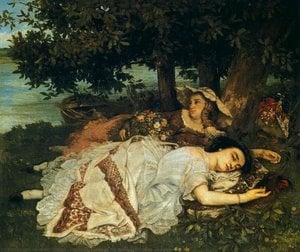
The Hammock

Gustave Courbet’s ‘The Hammock,’ a serene depiction of rural life during the Realist movement, captures a woman resting peacefully amidst lush greenery and soaring birds—a testament to his uncompromising vision of unfiltered observation.

Відкрийте для себе Гюстава Курбе – новатора реалізму! Його картини з зображенням повсякденного життя та соціальної критики змінили мистецтво 19 століття. Пориньте у світ правди та спостережливості!

Придбайте цифрову копію високої роздільної здатності з покращеною якістю, що значно перевершує онлайн-перегляд.

Кожен файл ретельно підготовлений нашими фахівцями за допомогою сучасних інструментів та професійної ручної ретуші. Ми гарантуємо виняткову чіткість, точну передачу кольору та високу деталізацію кожного зображення.

Фінальний файл надсилається електронною поштою протягом 72 годин і оптимізований для негайного використання у професійних виданнях та друкованих матеріалах. Таку якість обирають провідні дизайнерські студії, видавництва та галереї.

Цифрове зображення

Завантажте файл високої роздільної здатності для особистого використання, друку та творчих проєктів. ( Перейти до друку Купити картину ручної роботи)

Загальна вартість

$ 24,90

Що входить у кожне замовлення цифрових зображень

Експертна цифрова доставка з гарантією якості

Обираючи WahooArt.com, ви отримуєте не просто зображення — ви отримуєте професійно вдосконалений цифровий витвір мистецтва, створений з надзвичайною точністю та підкріплений гарантією задоволення. Ось усе, що автоматично додається до вашого замовлення:

shipping_icon
Швидка доставка на email

Ваш цифровий файл із зображенням високої роздільної здатності буде надісланий вам електронною поштою протягом 72 годин після оформлення замовлення — він буде готовий до негайного використання.

canvas_icon
Цифровий файл із покращенням ШІ

Ваш витвір мистецтва професійно оптимізовано за допомогою передових інструментів штучного інтелекту та ручної корекції, що забезпечує максимальну деталізацію, чіткість і точність передачі кольорів.

insurance_icon
Безкоштовне повторне завантаження назавжди

Випадково видалили або втратили файл? Не хвилюйтеся — ми надішлемо його вам повторно в будь-який час безкоштовно.

tax_icon
Без митних зборів — завжди

Насолоджуйтесь вашим витвором мистецтва миттєво без жодних мит, зборів або плати за доставку — цифрові завантаження завжди не оподатковуються.

color_icon
Гарантія точності кольорів

Ми гарантуємо максимально точне відтворення оригінальних кольорів на вашому цифровому зображенні завдяки використанню професійних інструментів та систем управління кольором.

return_icon
100-денна гарантія задоволення клієнта

Якщо ви не задоволені придбаним цифровим зображенням, ми внесемо правки або повернемо 100% вартості протягом 100 днів — без зайвих запитань.

guarantee_icon
Гарантія повернення 100% коштів

Незадоволені покупкою? Отримайте повне повернення коштів протягом 100 днів після отримання цифрового файлу — без зайвих запитань.

discount_icon
Знижки на оптові замовлення

Купуйте 3 зображення — заощаджуйте 10% — Купуйте 5 — заощаджуйте 15% — Купуйте 10+ — заощаджуйте 20%. Чудово підходить для творчих проєктів, галерей та агентств.

Короткі факти

  • Subject or theme: Domestic tranquility
  • Influences: Romanticism
  • Location: Private Collection
  • Notable elements or techniques: Detailed observation; Naturalistic rendering
  • Artist: Gustave Courbet
  • Artistic style: Impressionistic tendencies

A Moment of Tranquility Captured: Gustave Courbet’s “The Hammock”

Gustave Courbet’s “The Hammock,” painted circa 1869-70, stands as a cornerstone of Realism—a movement that deliberately rejected the romanticized fantasies and idealized depictions favored by its predecessors. More than just a depiction of a simple outdoor scene, this canvas embodies Courbet's radical ambition to portray life as it truly is: unvarnished, honest, and devoid of embellishment.

  • Subject Matter: The painting centers around a woman reclining on her stomach in a hammock strung between two trees. This seemingly unassuming pose speaks volumes about Courbet’s desire to capture everyday life—a stark contrast to the grand narratives championed by Romantic artists who often staged heroic figures against dramatic backgrounds.
  • Style & Technique: Courbet employed a meticulous technique characterized by thick impasto – applying paint in heavy, textured layers. This approach wasn't merely stylistic; it was fundamentally driven by Courbet’s belief that painting should faithfully reproduce the materiality of its subject matter. The visible brushstrokes convey a palpable sense of immediacy and contribute to the painting’s overall textural richness.

Historical Context: Challenging Artistic Conventions

Painted during a period of significant social upheaval in France—marked by industrialization, urbanization, and growing anxieties about societal change—Courbet's work directly confronted the artistic establishment. The École des Beaux-Arts, dominated by conservative tastes, favored idealized portraits and mythological subjects. Courbet deliberately rejected these conventions, arguing that art should reflect the realities of ordinary people’s lives.

  • Reaction to Romanticism: Courbet's refusal to adhere to Romantic ideals represented a decisive break from artistic tradition. He famously declared, “I do not depict what I see; I paint what I feel,” encapsulating his commitment to emotional truthfulness and rejecting the sentimental clichés of Romantic art.
  • Social Commentary: Beyond stylistic rebellion, “The Hammock” subtly engages in social commentary. The woman’s relaxed posture suggests a rejection of societal pressures and expectations—a quiet assertion of independence within the confines of domestic life.

Symbolism & Observation: Details That Speak Volumes

Despite its apparent simplicity, “The Hammock” is replete with symbolic elements. The birds circling overhead represent freedom and aspiration—a visual counterpoint to the woman’s stillness. Courbet's unwavering attention to detail—the dappled sunlight filtering through the leaves, the subtle variations in color—underscores his belief that observation is paramount to artistic expression.

  • The Hammock Itself: The hammock symbolizes rest and tranquility, but also represents vulnerability and exposure. Courbet’s careful depiction of its weave highlights the materiality of the scene, grounding it firmly in the tangible world.
  • Color Palette: Courbet utilized a muted color palette dominated by earthy tones—greens, browns, and yellows—creating an atmosphere of serenity and reflecting the natural surroundings. These colors contribute to the painting’s emotional impact, conveying a sense of peace and contentment.

Emotional Impact & Legacy

"The Hammock" continues to resonate with viewers today because it captures something profoundly human: the desire for respite from the pressures of daily life. Courbet’s unflinching realism—coupled with his masterful technique—transformed painting into a vehicle for conveying emotional truthfulness. It stands as a testament to the enduring power of observation and the importance of portraying life authentically, cementing Courbet's place as one of the most influential artists of the Realist movement.


Біографія митця

Gustave Courbet (1819-1877): Pioneer of Realism

Jean Désiré Gustave Courbet, born in Orléans, France, on June 10, 1819, stands as a monumental figure in the history of art – a rebel who irrevocably altered the course of nineteenth-century painting. His artistic journey transcends mere pigment and canvas; it’s a chronicle steeped in social critique, unwavering conviction, and an uncompromising dedication to portraying reality exactly as he perceived it: unvarnished, visceral, and profoundly truthful. Growing up within a relatively prosperous bourgeois household, Courbet benefited from his mother's encouragement to pursue his artistic inclinations – a nurturing that would propel him toward a revolution within the art world itself. His formal education commenced at the École des Beaux-Arts in Paris in 1839, yet he swiftly recognized the stifling limitations imposed by academic conventions and Romantic idealism. While acknowledging influences from Eugène Delacroix and Théodore Géricault – artists who wrestled with grand narratives of heroism and emotion – Courbet forged his own path, prioritizing observation over imagination and veracity above tradition.

The Birth of Realism: Challenging Artistic Conventions

Courbet’s artistic trajectory was defined by a deliberate repudiation of prevailing aesthetic standards. He eschewed mythological tales or heroic allegories; his gaze remained fixed on the everyday lives of ordinary individuals – particularly those engaged in labor and rural existence. This commitment to depicting the world without embellishment—what would soon become known as Realism—encountered initial scorn from critics accustomed to more polished, idealized representations. Early canvases explored landscapes and portraits, but swiftly pivoted toward scenes of working-class life, rendered on a monumental scale traditionally reserved for historical or religious paintings. This purposeful choice wasn’t merely stylistic; it was an assertion about the inherent dignity and importance of subjects often overlooked by artistic discourse. The Stone Breakers (completed in 1849), tragically destroyed during World War II, exemplifies this approach—a stark portrayal of two laborers toiling away under oppressive conditions, their faces obscured by exhaustion and despair. Critics deemed it vulgar and lacking in aesthetic merit, reflecting the prevailing prejudices of the time. Yet, Courbet steadfastly defended his artistic vision, arguing that art should reflect the realities of human experience.

Influences and Artistic Development

Courbet’s formative years were marked by exposure to influential artists like Eugène Delacroix and Théodore Géricault—artists who grappled with grand narratives of heroism and emotion. However, Courbet deliberately distanced himself from Romantic idealism, prioritizing observation over imagination and truth over convention. He recognized the legacy of Caravaggio – particularly his masterful use of chiaroscuro (light and shadow) – as a source of inspiration for dramatic realism. This influence is palpable in his later works, where he skillfully manipulated light to heighten emotional impact and convey psychological depth. His artistic development progressed through meticulous study and experimentation, culminating in a distinctive technique characterized by thick impasto—applying paint thickly onto the canvas—that emphasized the materiality of the medium itself.

Major Works and Artistic Philosophy

Courbet’s oeuvre encompasses a remarkable range of subjects – landscapes, portraits, still lifes, and genre scenes depicting everyday life. Among his most celebrated paintings are A Burial at Ornans (1850-51), a monumental canvas portraying a provincial funeral that provoked considerable controversy upon its exhibition. Its sheer scale—typically reserved for historical canvases—combined with its unflinching realism and absence of sentimental embellishment shocked audiences accustomed to idealized depictions of piety and nobility. Courbet’s artistic philosophy extended beyond subject matter; he championed the notion that art should serve as a conduit for social commentary, mirroring the realities of human existence without resorting to moralizing pronouncements. He famously declared, “I paint what I see.” This uncompromising stance resonated deeply with fellow artists who sought to challenge established norms and explore new avenues of artistic expression.

Legacy and Historical Significance

Gustave Courbet’s impact on subsequent art movements is undeniable. While he acknowledged influences from earlier masters like Caravaggio for their dramatic realism and masterful use of light, his contribution transcended mere imitation. He fundamentally reshaped the landscape of nineteenth-century painting by liberating artists from the constraints of Romantic idealism—encouraging them to embrace observation and strive for truthful representation. His unwavering advocacy for artistic freedom cemented his position as a champion of revolutionary ideas during a period marked by social upheaval. Courbet’s participation in the Salon des Refusés in 1863 – an exhibition showcasing artworks rejected by the official Salon – symbolized defiance against academic dogma and reaffirmed his commitment to artistic integrity. He died peacefully in Paris on December 31, 1877, leaving behind a legacy that continues to inspire artists and scholars alike—a testament to the transformative power of art to confront societal injustices and elevate human experience. His enduring influence can be seen in movements like Impressionism and Post-Impressionism, where artists sought to capture fleeting moments of sensory perception and express subjective emotion with unprecedented boldness.

Гюстав Курбе

Гюстав Курбе

1819 - 1877 , Франція

Коротко про автора

  • Artistic Movement Or Style: Реалізм
  • Artists Or Movements Influenced By This Artist:
    • Імпресіонізм
    • Пост-імпресіонізм
  • Artists Who Influenced This Artist:
    • Ежен Делакруа
    • Теодор Жерико
    • Караваджо
  • Date Of Birth: 10 червня 1819
  • Date Of Death: 31 грудня 1877
  • Full Name: Gustave Courbet
  • Nationality: Француз
  • Notable Artworks:
    • «Заливна брама в Оптевозі»
    • Гра зі шахівницями
    • Жінка в білих панчохах
  • Place Of Birth: Орланс, Франція