Переглянути в інтер'єріПереглянути в інтер'єрі Перегляд в ARПерегляд в AR Замовити принт Замовити принтЗамовити репродукцію ручної роботи Замовити репродукцію ручної роботи Надіслати як листівкуНадіслати як листівку
ДетальнішеДетальніше Додати до улюблених Додати до улюблених ЗавантажитиЗавантажити Схожі експонатиСхожі експонати Рентгенівське дослідженняРентгенівське дослідження Слайд-шоуСлайд-шоу

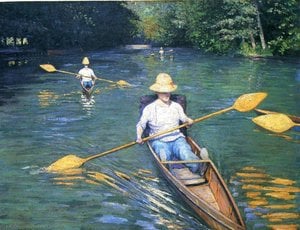
The Canoes

Gustave Caillebotte’s "The Canoes," an Impressionist masterpiece from 1878, captures serene men in canoes with a bird soaring above. Admire this beautiful oil on canvas reproduction and bring home a timeless work by the Parisian artist.

Густав Кайботт (1848-1894): Французький художник, що майстерно зображував сучасне Пaрiж у стилі реалізму та імпресіонізму. Відомий картиною «Paris Street; Rainy Day».

Придбайте цифрову копію високої роздільної здатності з покращеною якістю, що значно перевершує онлайн-перегляд.

Кожен файл ретельно підготовлений нашими фахівцями за допомогою сучасних інструментів та професійної ручної ретуші. Ми гарантуємо виняткову чіткість, точну передачу кольору та високу деталізацію кожного зображення.

Фінальний файл надсилається електронною поштою протягом 72 годин і оптимізований для негайного використання у професійних виданнях та друкованих матеріалах. Таку якість обирають провідні дизайнерські студії, видавництва та галереї.

Цифрове зображення

Завантажте файл високої роздільної здатності для особистого використання, друку та творчих проєктів. (Замовити принт Замовити принтЗамовити репродукцію ручної роботи Замовити репродукцію ручної роботи)

Підсумкова вартість

$ 24,90

Переваги кожного замовлення цифрових зображень

Експертна цифрова доставка з гарантією якості

Обираючи WahooArt.com, ви отримуєте не просто зображення — ви отримуєте професійно вдосконалений цифровий витвір мистецтва, створений з надзвичайною точністю та підкріплений гарантією задоволення. Ось усе, що автоматично додається до вашого замовлення:

shipping_icon
Швидка доставка на email

Ваш цифровий файл із зображенням високої роздільної здатності буде надісланий вам електронною поштою протягом 72 годин після оформлення замовлення — він буде готовий до негайного використання.

canvas_icon
Цифровий файл із покращенням ШІ

Ваш витвір мистецтва професійно оптимізовано за допомогою передових інструментів штучного інтелекту та ручної корекції, що забезпечує максимальну деталізацію, чіткість і точність передачі кольорів.

insurance_icon
Безкоштовне повторне завантаження назавжди

Випадково видалили або втратили файл? Не хвилюйтеся — ми надішлемо його вам повторно в будь-який час безкоштовно.

tax_icon
Без митних зборів — ніколи

Насолоджуйтесь вашим витвором мистецтва миттєво без жодних мит, зборів або плати за доставку — цифрові завантаження завжди не оподатковуються.

color_icon
Гарантія точності кольорів

Ми гарантуємо максимально точне відтворення оригінальних кольорів на вашому цифровому зображенні завдяки використанню професійних інструментів та систем управління кольором.

return_icon
100-денна гарантія задоволення

Якщо ви не задоволені придбаним цифровим зображенням, ми внесемо правки або повернемо 100% вартості протягом 100 днів — без зайвих запитань.

guarantee_icon
Гарантія повернення 100% коштів

Незадоволені покупкою? Отримайте повне повернення коштів протягом 100 днів після отримання цифрового файлу — без зайвих запитань.

discount_icon
Знижки на оптові замовлення

Купуйте 3 зображення — заощаджуйте 10% — Купуйте 5 — заощаджуйте 15% — Купуйте 10+ — заощаджуйте 20%. Чудово підходить для творчих проєктів, галерей та агентств.

Основна інформація

  • Medium: Oil on canvas
  • Movement: Impressionism
  • Influences: Photography
  • Artistic style: Impressionist
  • Notable elements: Light & color
  • Year: 1878
  • Artist: Gustave Caillebotte

A Moment of Tranquility: Caillebotte's "The Canoes"

Gustave Caillebotte’s “The Canoes,” painted in 1878, is more than just a depiction of two men navigating a tranquil waterway; it’s a carefully constructed tableau that embodies the burgeoning Impressionist movement and captures a fleeting moment of quiet contemplation within the rapidly changing landscape of late 19th-century Paris. Measuring 156 x 109 cm, this oil on canvas work invites viewers into a world where light and atmosphere hold as much significance as the subjects themselves.

  • Subject Matter: The painting centers around two men engaged in a simple activity – canoeing – a scene remarkably ordinary yet imbued with an extraordinary sense of serenity.
  • Impressionist Technique: Caillebotte’s masterful use of broken brushstrokes and vibrant color reflects the core tenets of Impressionism, prioritizing the immediate sensation of light and its effect on form rather than meticulous detail.
  • Composition: The composition is deliberately balanced, drawing the eye across the canvas with a subtle diagonal created by the canoes' movement and the implied flow of the water.

The Artist’s Vision: Caillebotte and the Rise of Impressionism

Gustave Caillebotte (1848-1894) emerged as a pivotal figure in the Parisian art scene, profoundly influenced by both his privileged upbringing and his keen observation of modern life. Born into a wealthy family involved in the textile trade, he possessed the financial freedom to pursue his artistic passions without the constraints of commercial necessity. This afforded him access to exceptional training – initially under Léon Bonnat – and, crucially, an early fascination with photography. As you can see from the painting, Caillebotte’s exposure to photographic techniques—particularly its ability to capture fleeting moments and precise perspectives—directly shaped his artistic approach. He wasn't simply painting what he saw; he was meticulously constructing a visual experience, much like a photographer composing a shot.

His work reflects the anxieties and excitement of a city undergoing rapid transformation – industrialization, urbanization, and the rise of new social classes. “The Canoes” can be interpreted as a quiet resistance to this upheaval, a yearning for simplicity and connection with nature within the heart of a bustling metropolis.

Decoding the Details: Light, Color, and Symbolism

Caillebotte’s palette is dominated by muted greens, blues, and browns, creating an atmosphere of cool tranquility. The artist skillfully employs light to model the canoes and the figures, suggesting movement and depth through subtle variations in tone and color. Note the way the sunlight glints off the water's surface – a hallmark of Impressionist technique. The inclusion of a bird soaring above adds a layer of symbolic richness, representing freedom, aspiration, or perhaps a connection to the natural world amidst the urban environment.

  • Color Palette: Muted greens, blues, and browns evoke tranquility and reflect the natural setting.
  • Light & Shadow: Caillebotte’s use of light creates depth and suggests movement within the scene.
  • Symbolism: The bird adds a layer of meaning, potentially representing freedom or connection to nature.

A Legacy of Impressionistic Beauty

"The Canoes" stands as a testament to Gustave Caillebotte’s artistic vision and his pivotal role in the development of Impressionism. This painting is not merely a beautiful image; it's an invitation to pause, reflect, and appreciate the subtle beauty of everyday moments – a timeless message that continues to resonate with art lovers today. Its meticulous detail and masterful execution make it a superb subject for a hand-painted reproduction, allowing you to bring this serene scene into your own space.


Біографія митця

A Parisian of the New Age: The Life and Art of Gustave Caillebotte

Gustave Caillebotte, born into a prosperous Parisian family in 1848, was an artist uniquely positioned to capture the dramatic transformations reshaping his city. His father, Martial Caillebotte, inherited a successful textile business and served as a judge, providing Gustave with both financial security and a vantage point from which to observe the burgeoning modern world. While initially pursuing legal studies – earning degrees in law in 1868 and 1870 – Caillebotte’s true calling lay within the realm of art. He began serious training under Léon Bonnat, immersing himself in painting while simultaneously developing a keen interest in photography, an emerging medium that would profoundly influence his artistic vision. This early exposure to photographic principles—its framing, perspective, and capturing of fleeting moments—would become hallmarks of his distinctive style. Caillebotte wasn’t merely documenting change; he was actively engaging with the aesthetic possibilities it presented.

Realism Infused with Impressionist Light

Caillebotte's artistic path diverged from strict academic tradition, yet he never fully embraced the purely optical explorations of many of his Impressionist contemporaries. He found kinship with artists like Edgar Degas and Giuseppe de Nittis, sharing a fascination with modern life but approaching it through a lens of meticulous realism. His early masterpiece, Les Raboteurs de Parquet (The Floor Scrapers), exhibited at the 1875 Salon, immediately established his reputation as a bold and unconventional painter. The work depicts three laborers painstakingly scraping a wooden floor, rendered with an unflinching honesty that shocked some viewers while captivating others. It wasn’t simply the subject matter—the working class rarely graced the canvases of high art—but also the composition: cropped, almost jarringly direct, and devoid of sentimental idealization. This commitment to portraying contemporary life without embellishment continued in works like View of Rooftops (Snow), where he masterfully captured the industrial landscape of a rapidly changing Paris. However, Caillebotte wasn’t immune to the influence of Impressionism; his palette gradually lightened, and he began experimenting with broken brushstrokes and atmospheric effects, particularly evident in his stunning views of Parisian rooftops blanketed in snow, such as View of Rooftops (Snow). The interplay of light and shadow, a hallmark of Impressionism, became increasingly prominent in his later works, creating a sense of fleeting beauty and transient moments.

A Patron and a Pioneer: Navigating the Art World

Beyond his own artistic endeavors, Caillebotte played a crucial role in supporting the Impressionist movement. His financial independence allowed him to become a significant patron, purchasing works by Monet, Renoir, Pissarro, Cézanne, Degas, and others at a time when their art was largely rejected by the official Salon. He wasn’t merely a collector; he actively championed these artists, organizing and financing several of the Impressionist exhibitions that defied conventional artistic norms. This dedication to fostering innovation extended to his own collection, which he bequeathed to the French state upon his death in 1894—a bequest initially met with resistance but ultimately forming the cornerstone of the Musée d’Orsay's renowned Impressionist holdings. Caillebotte’s unique perspective also manifested in his compositions; works like Boulevard vu d’en haut (Boulevard Seen from Above), painted in 1880, demonstrate a strikingly modern sensibility, employing an elevated viewpoint and dynamic cropping that anticipate the photographic perspectives of the 20th century. This innovative approach to composition, possibly influenced by Japanese prints and his own photographic experiments, set him apart as a true pioneer.

Notable Works

  • Les Raboteurs de Parquet (The Floor Scrapers) (1875): A groundbreaking work showcasing Caillebotte’s realism and unconventional composition.
  • View of Rooftops (Snow) (1878): Demonstrates his use of high vantage points and atmospheric effects, influenced by photography and Japanese prints.
  • Boulevard vu d’en haut (Boulevard Seen from Above) (1880): A strikingly modern composition with a dynamic perspective.
  • Paris Street; Rainy Day (1877): Perhaps his most famous work, capturing the bustling energy of Parisian life in a unique and evocative manner.
  • The Bezique Game(1881) : A captivating Impressionist painting of Parisian leisure.

Legacy and Rediscovery: A Modern Master Reclaimed

For decades following his death, Caillebotte’s work remained relatively obscure, overshadowed by the more celebrated figures of Impressionism. It wasn't until the late 20th century that a comprehensive reassessment of his art began to take place, fueled by scholarly research and major exhibitions. This rediscovery revealed an artist of remarkable technical skill, intellectual depth, and visionary insight. Caillebotte’s paintings are not simply depictions of modern life; they are profound meditations on the complexities of urban existence, the changing social landscape, and the evolving relationship between art and reality. His ability to seamlessly blend realism with Impressionist techniques, his innovative compositions, and his unwavering commitment to portraying the world around him have secured his place as a pivotal figure in 19th-century art. Today, Caillebotte’s works are celebrated for their unique perspective, their masterful execution, and their enduring relevance—a testament to an artist who dared to capture the spirit of a new age.
Густав Кайботт

Густав Кайботт

1848 - 1894 , Франція

Основна інформація

  • Artistic Movement Or Style: Реалізм, Імпресіонізм
  • Artists Or Movements Influenced By This Artist: ['Імпресіонізм']
  • Artists Who Influenced This Artist:
    • Дега
    • Ніттіс
  • Date Of Birth: 19 серпня 1848
  • Date Of Death: 21 лютого 1894
  • Full Name: Gustave Caillebotte
  • Nationality: Француз
  • Notable Artworks:
    • Les Raboteurs de Parquet
    • Rooftop View
    • Boulevard Seen from Above
  • Place Of Birth: Париж, Франція