БЕЗКОШТОВНА КОНСУЛЬТАЦІЯ З МИСТЕЦТВА

x
Замовити репродукцію Замовити репродукціюКупити цифрове зображення Купити цифрове зображення НадіслатиНадіслати
ДеталіДеталі Додати до улюблених Додати до улюблених ЗавантажитиЗавантажити Схожі виробиСхожі вироби Рентгенівське дослідженняРентгенівське дослідження Слайд-шоуСлайд-шоу

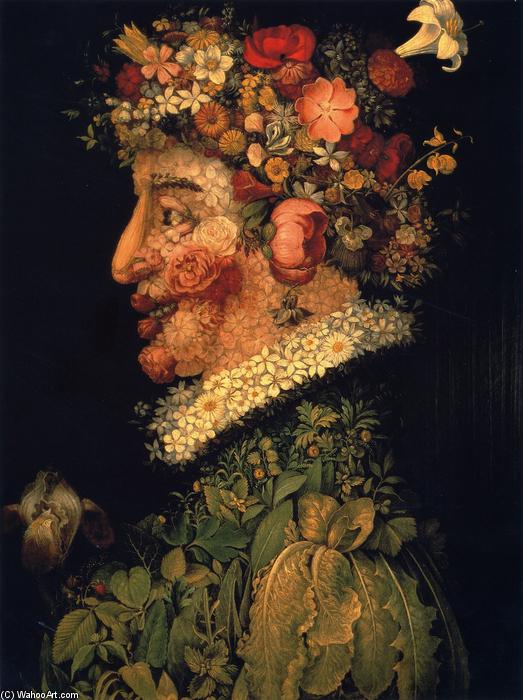
Spring

Behold 'Spring' by Giuseppe Arcimboldo! This surreal Mannerist masterpiece transforms a portrait into a vibrant botanical wonder, blending human form with nature’s beauty.

Йозеф Арчимбольдо – видатний італійський художник, відомий своїми унікальними портретами-композиціями з фруктів, овочів та інших об'єктів. Його сюрреалістичні твори, що поєднують мистецтво та символізм, захоплюють своєю витонченістю та глибоким змістом.

Гікле / Художній принт

Музейна якість друку جيкле або на полотні з оперативним виготовленням та різноманітними варіантами фінішної обробки.

Standard
custom
CM
INCH

Обирайте з наших стандартних розмірів, що відповідають оригінальним пропорціям твору мистецтва.

ширина
висота

Ви можете вказати власні розміри, щоб репродукція ідеально підійшла до конкретної рами або інтер'єру. Якщо обраний вами розмір не відповідає пропорціям оригіналу, ми або обріжемо полотно, або розширимо зображення за допомогою дзеркального відображення чи суцільної заливки країв. Перед початком виробництва вам буде надіслано цифровий макет для затвердження.
Будь ласка, зверніть увагу, що попередній перегляд на екрані не відображає фактичне обрізання або розширення. Тільки макет точно покаже фінальну композицію.
Хоча можливість замовлення індивідуальних розмірів доступна, ми рекомендуємо обирати формат із попередньо визначеного списку, щоб зберегти оригінальні пропорції.

Доставка по всьому світу () за 2 тижні замість стандартних 4/5 тижнів. (2 Липень)

why_choose_icon
Безкоштовна експрес-доставка по всьому світу
why_choose_icon
Високоякісне лляне полотно
why_choose_icon
Повне страхове покриття доставки
why_choose_icon
Гарантія відшкодування митних зборів
why_choose_icon
Гарантія точного відтворення кольорів
why_choose_icon
Політика повернення протягом 60 днів (лише у разі виявлення дефектів)
why_choose_icon
Гарантія повернення 100% коштів
why_choose_icon
Знижка на багатоелементні замовлення

Загальна вартість

-

reproduction

Spring

Гікле / Художній принт

Розмір репродукції

-

Підсумкова ціна

-

Основні факти

  • Artist: Giuseppe Arcimboldo
  • Year: 1563
  • Artistic style: Stylized and surreal
  • Title: Spring
  • Notable elements or techniques:
    • Floral arrangement
    • Surreal portraiture
  • Movement: Mannerism

Вікторина з мистецтва

Для кожного питання є лише одна правильна відповідь.

Запитання 1:
What artistic movement is Giuseppe Arcimboldo’s ‘Spring’ most closely associated with?
Запитання 2:
The artwork's composition primarily features what type of elements?
Запитання 3:
What is a key characteristic of the lighting in ‘Spring’?
Запитання 4:
The description suggests that 'Spring' symbolically represents which of the following themes?
Запитання 5:
What is notable about Arcimboldo's technique in creating this artwork?

Опис експоната

A Botanical Portrait: Unveiling Giuseppe Arcimboldo's "Spring"

Step into a world where nature intertwines with human form in this captivating artwork, “Spring,” created by the ingenious Italian painter, Giuseppe Arcimboldo in 1563. This piece is far more than just a portrait; it’s a vibrant exploration of transformation and the enduring power of the natural world. The subject, almost entirely obscured by an elaborate arrangement of flowers, foliage, and fruits, presents a fascinating enigma. It's a visual riddle that invites viewers to contemplate the relationship between humanity and nature.

Mannerism and Artistic Technique

Arcimboldo’s “Spring” exemplifies the Mannerist style, a movement that emerged in 16th-century Italy as a reaction against the High Renaissance's emphasis on classical ideals and naturalism. Notice the elongated proportions of the figure, the dramatic lighting that highlights specific elements, and the overall sense of stylized elegance rather than strict realism. The artwork is skillfully rendered using oil painting techniques, evident in the visible brushstrokes and layered application of pigments which create depth and texture. The dark background serves to amplify the brilliance of the floral components, drawing the eye directly to the central figure’s botanical disguise.

Symbolism and Interpretation

Beyond its aesthetic appeal, “Spring” is rich in symbolic meaning. The abundance of flowers and fruits—typical springtime imagery—suggests themes of renewal, growth, and fertility. However, the obscured human form introduces a layer of complexity. It could be interpreted as nature’s dominance over humanity, or perhaps a meditation on the ephemeral quality of human existence compared to the enduring cycle of flora. The composition's asymmetry and unconventional arrangement further contribute to its enigmatic character, prompting viewers to consider multiple interpretations. The careful selection of each botanical element—the type of flower, fruit, or leaf—likely held specific symbolic significance within the context of Renaissance Neo-Platonism, though precise meanings remain open to scholarly debate.

Emotional Impact and Legacy

“Spring” evokes a powerful emotional response – one of intense beauty tempered by a slight sense of unease. The distortion of the human form, while visually striking, can be unsettling, prompting reflection on our place within the natural world. Arcimboldo’s innovative approach to portraiture challenged artistic conventions and captivated audiences during his time, particularly at the courts of Ferdinand I, Maximilian II, and Rudolf II. Today, “Spring” stands as a testament to Arcimboldo's unique genius and continues to inspire awe and intrigue in art lovers worldwide. It is a remarkable example of how art can transcend mere representation to become a profound exploration of life, nature, and the human condition.

Схожі витвори мистецтва


Біографія митця

Giuseppe Arcimboldo: A Master of Illusion and Symbol

Giuseppe Arcimboldo, a name that echoes through the halls of art history, conjures images both delightfully whimsical and profoundly enigmatic. Born in Milan in 1527, his life unfolded against the backdrop of a Europe brimming with intellectual curiosity, religious upheaval, and an insatiable desire to understand the natural world. Initially recognized for his skill in creating frescoes for cathedrals and portraits adhering to established courtly standards, Arcimboldo’s enduring legacy rests upon a series of astonishing composite heads—masterpieces constructed entirely from meticulously arranged objects: fruits, vegetables, flowers, books, musical instruments, and even entire animals. These weren't mere playful tricks; they were complex allegories, imbued with layers of symbolism that resonated deeply within the Renaissance worldview and continue to captivate viewers today. His father, Biagio Arcimboldo, a painter in the service of the Milanese Duomo, provided young Giuseppe with his early artistic training, likely instilling a foundational appreciation for detail and design—qualities that would become central to his distinctive style.

Courtly Patronage and the Birth of a Unique Vision

Arcimboldo’s career trajectory took a dramatic turn in 1562 when he was appointed court portraitist to Ferdinand I, the Archduke of Austria, at the Habsburg court in Vienna. This appointment marked a pivotal moment, catapulting him into an environment of refined taste and intellectual ferment—a setting perfectly suited to his burgeoning artistic vision. Over the next two decades, he served three successive Habsburg rulers: Maximilian II, Rudolf II, and ultimately, Ferdinand III. Beyond simply painting portraits – though even these often possessed subtle eccentricities – Arcimboldo’s duties encompassed costume design for elaborate court festivals, the creation of stunning stage sets, and the organization of the imperial collections, which included a vast array of exotic artifacts, rare animals, and precious artworks. It was within this stimulating atmosphere that his signature style began to truly flourish. The Habsburg court's demand for novelty and spectacle provided an ideal breeding ground for experimentation, allowing Arcimboldo to move beyond traditional portraiture and explore the possibilities of creating entirely new forms of representation. He drew inspiration from a variety of sources—Renaissance *trompe l’oeil* techniques, classical mythology, and the burgeoning interest in alchemy and symbolism—weaving them together into a unique visual language that challenged conventional notions of beauty and realism.

Decoding the Language of Objects: Symbolism and Allegory

Arcimboldo's portraits are not simply visually arresting; they are rich in symbolic meaning. Each object carefully selected, laden with layers of interpretation related to the sitter’s character, profession, or social status. Consider *The Librarian* (1566), a portrait seemingly constructed entirely from books—a clever commentary on scholarly pursuits and the accumulation of knowledge. The rows of stacked volumes aren't merely decorative; they represent the weight of learning, while the scattered papers suggest the chaos of intellectual inquiry. Similarly, his portraits of the seasons – particularly *Vertumnus*, depicting Emperor Rudolf II as the Roman god of gardens and change – are brimming with botanical symbolism, reflecting the emperor’s patronage of science and natural history. The arrangement of fruits, flowers, and vegetables isn't arbitrary; it speaks to the cyclical nature of life, the abundance of the harvest, and the interconnectedness of all things. Arcimboldo wasn’t simply creating pretty pictures; he was crafting complex allegories designed to provoke contemplation and invite viewers to unravel layers of meaning hidden within the seemingly playful arrangement of objects. The very act of constructing a human likeness from inanimate matter served as a meditation on the fundamental principles of Renaissance philosophy—the belief in an underlying harmony of the universe, accessible through careful observation and symbolic representation.

The Influence of Mannerism and Beyond

Arcimboldo’s style is often categorized within the broader movement of Mannerism, characterized by its emphasis on artificiality, exaggeration, and a deliberate departure from naturalistic representation. However, his work transcends simple categorization, incorporating elements of both Renaissance humanism and proto-Surrealist aesthetics. He drew inspiration from earlier artists who experimented with *trompe l’oeil* effects and distorted perspectives, but he synthesized these influences into something entirely his own—a unique visual language that challenged conventional notions of representation. His work also reflects the influence of Renaissance Neoplatonism, which emphasized the interconnectedness of all things through a shared divine source. The meticulous arrangement of objects in his portraits can be interpreted as an attempt to recreate this harmonious order, reflecting the underlying unity of the universe. Furthermore, Arcimboldo’s innovative use of perspective and spatial illusion foreshadowed developments in later artistic movements, particularly Surrealism, which embraced dreamlike imagery and unexpected juxtapositions.

Legacy and Rediscovery: A Precursor to Surrealism

Despite his considerable success during his lifetime, Arcimboldo's reputation waned considerably after his death in 1593. His work was often dismissed as mere curiosities—appreciated for its technical skill but lacking serious artistic merit. It wasn’t until the early 20th century that a renewed appreciation for his art emerged, fueled by the rise of Surrealism. Artists like Salvador Dalí recognized in Arcimboldo a kindred spirit—a visionary who dared to challenge conventional perceptions and explore the subconscious through unexpected juxtapositions of imagery. The influence of Arcimboldo can be seen in Dalí’s own dreamlike compositions and his fascination with metamorphosis and illusion. Today, Giuseppe Arcimboldo is celebrated as a pivotal figure in art history—a precursor to Surrealism whose innovative use of symbolism and playful distortion continues to inspire artists and captivate audiences worldwide. His paintings are housed in prestigious museums such as the Kunsthistorisches Museum in Vienna and the Louvre in Paris, ensuring that his unique vision will continue to resonate for generations to come. *His legacy stands as a testament to the enduring power of imagination and the ability of art to transform our understanding of the world around us.*
Арчимбольдо

Арчимбольдо

1527 - 1593 , Італія

Короткі факти

  • Artistic Movement Or Style: Манієризм, сюрреалізм
  • Artists Or Movements Influenced By This Artist: ['Сальвадор Далі']
  • Artists Who Influenced This Artist: ['Леонардо да Вінчі']
  • Date Of Birth: 5 квiтня 1527
  • Date Of Death: 11 липня 1593
  • Full Name: Giuseppe Arcimboldo
  • Nationality: Італійський
  • Notable Artworks:
    • Вертумнус
    • Чотири пори року
    • Бібліотекар
  • Place Of Birth: Мілан, Італія
Досліджуйте твори мистецтва, відсортовані за темами, стилями та характеристиками.