x
Переглянути в інтер'єріПереглянути в інтер'єрі Перегляд в ARПерегляд в AR Замовити репродукцію ручної роботи Замовити репродукцію ручної роботиКупити цифрове зображення Купити цифрове зображення Надіслати як листівкуНадіслати як листівку
ДетальнішеДетальніше Додати до улюблених Додати до улюблених ЗавантажитиЗавантажити Схожі експонатиСхожі експонати Рентгенівське дослідженняРентгенівське дослідження Слайд-шоуСлайд-шоу

Perspective View (Stage design)

Discover Canaletto's 'Perspective View (Stage design)': A captivating capriccio depicting a fantastical Roman Capitol stage set, showcasing intricate details and masterful perspective.

Каналетто – видатний венеціанський художник, відомий своїми вражаючими видами міста, зокрема «Великим каналом» та «Регатою на Гранд-каналі». Його точні пейзажі та використання перспективи вплинули на розвиток мистецтва XVIII століття.

Гікле / Художній принт

Музейна якість друку جيкле або на полотні з оперативним виготовленням та різноманітними варіантами фінішної обробки. (Замовити репродукцію ручної роботи Замовити репродукцію ручної роботиКупити цифрове зображення Купити цифрове зображення)

P118B $10
P118H $10
P118W $10
P438Z $10
P508JH $12
P508YH $12
P805H $10
P805Z $10
P919BZ $10
P919G $10
P919XJ $10
P959ZH $10
P968JZ $12
W106C $8
W218G $10
W218JH $8
W218Y $10
W307PJ $10
W316G $10
W316PJ $8
W316Y $10
W398PJ $8
W4111J $10
W500HY $15
W500JH $15
W692G $12
W849H $8
W940BG $15
W953PJ $8

Стандартний розмір
індивідуальний
CM
INCH

Обирайте з наших стандартних розмірів, що відповідають оригінальним пропорціям твору мистецтва.

ширина
висота

Ви можете вказати власні розміри, щоб репродукція ідеально підійшла до конкретної рами або інтер'єру. Якщо обраний вами розмір не відповідає пропорціям оригіналу, ми або обріжемо полотно, або розширимо зображення за допомогою дзеркального відображення чи суцільної заливки країв. Перед початком виробництва вам буде надіслано цифровий макет для затвердження.
Будь ласка, зверніть увагу, що попередній перегляд на екрані не відображає фактичне обрізання або розширення. Тільки макет точно покаже фінальну композицію.
Хоча можливість замовлення індивідуальних розмірів доступна, ми рекомендуємо обирати формат із попередньо визначеного списку, щоб зберегти оригінальні пропорції.

Доставка по всьому світу () за 2 тижні замість стандартних 4/5 тижнів. (2 Вересень)

why_choose_icon
Безкоштовна експрес-доставка по всьому світу
why_choose_icon
Високоякісне лляне полотно
why_choose_icon
Повне страхове покриття доставки
why_choose_icon
Гарантія відшкодування митних зборів
why_choose_icon
Гарантія точного відтворення кольорів
why_choose_icon
Політика повернення протягом 60 днів (лише у разі виявлення дефектів)
why_choose_icon
Гарантія повернення 100% коштів
why_choose_icon
Пропозиція на оптові замовлення

Загальна вартість

$ 68

reproduction

Perspective View (Stage design)

Гікле / Художній принт

Розмір репродукції

-

Підсумкова вартість

$ 68

Основна інформація

  • Movement: Venetian School
  • Title: Perspective View (Stage design)
  • Medium: Oil on canvas
  • Notable elements or techniques: Perspective, foreshortening
  • Artistic style: Veduta, Capriccio
  • Artist: giovanni antonio canal

Квіз про мистецтво

У кожному запитанні лише одна правильна відповідь.

Запитання 1:
What is the primary subject depicted in ‘Perspective View (Stage design)’?
Запитання 2:
The description mentions that the painting may have been created shortly after Canaletto’s stay in Rome. What does this suggest about its style?
Запитання 3:
The painting features a prominent equestrian monument. What historical figure does it resemble?
Запитання 4:
According to the description, what is a key characteristic of Canaletto’s style that has been debated by scholars?
Запитання 5:
What type of perspective is prominently featured in ‘Perspective View (Stage design)’?

A Captivating Vision of Venetian Theatre

Canaletto’s “Perspective View (Stage Design)” is more than just a depiction of a bustling scene; it's a window into the vibrant theatrical culture of 18th-century Venice. Painted likely in the early 1720s, this capriccio – a term Canaletto himself employed for imaginary or idealized views – transports us to a fantastical Capitol, glimpsed through a grand loggia adorned with Corinthian columns and shimmering with golden ornamentation. The composition is anchored by an equestrian monument, reminiscent of Marcus Aurelius, rising majestically from the steps of a triumphal arch, creating a powerful sense of grandeur and historical resonance.

The painting’s genius lies not merely in its technical precision but also in its evocative atmosphere. Canaletto masterfully employs linear perspective to draw the viewer into this meticulously rendered space. The receding lines of the loggia, the diminishing scale of the statues, and the subtle shifts in light create a convincing illusion of depth, inviting us to step through the painted world and become part of the scene. Notice how he uses atmospheric perspective – distant elements are paler and less defined, contributing to the overall sense of vastness and theatrical spectacle.

The Artist’s Context: Canaletto and Venetian Topography

Giovanni Antonio Canal, known as Canaletto, was a pivotal figure in the development of topographical painting. Born in Venice in 1697, he initially trained under his father, Bernardo Canal, a stage designer for theatrical productions. This early experience instilled in him a deep understanding of perspective and spatial relationships – skills that would later define his remarkable career. Canaletto’s work was profoundly shaped by the bustling commercial activity of Venice, a city renowned for its trade and artistic patronage. He meticulously documented the city's canals, palaces, markets, and everyday life, creating a vast archive of visual records.

His approach differed significantly from earlier Venetian painters who focused primarily on religious or mythological subjects. Canaletto’s interest lay in capturing the tangible reality of Venice – its architecture, its people, and its atmosphere. This shift towards secular subject matter reflected a broader cultural trend during the 18th century, as artists increasingly sought to depict the world around them with greater accuracy and detail. The painting's attribution has been debated by scholars, but Stefano Susinno recognized it as a unique example in Canaletto’s oeuvre due to its drawing, points of light, and similarities to other capricci.

Symbolism and Theatrical Allusion

Beyond its technical brilliance, “Perspective View (Stage Design)” is rich in symbolic meaning. The equestrian monument, a reference to Roman emperors, suggests an ideal of leadership and power. The triumphal arch evokes the grandeur of ancient Rome, while the golden ornaments symbolize wealth and prestige. The inclusion of figures engaged in various activities – musicians, spectators, and performers – underscores the importance of theatre as a central element of Venetian society. It’s a scene brimming with life, energy, and the allure of entertainment.

Interestingly, scholars believe this painting may have been created shortly after Canaletto's stay in Rome (1718-1720), possibly inspired by the city’s ancient ruins and theatrical traditions. The presence of numerous architectural elements reminiscent of Roman antiquity suggests a deliberate attempt to evoke the spirit of the classical world.

A Legacy of Precision and Vision

“Perspective View (Stage Design)” stands as a testament to Canaletto's exceptional skill and artistic vision. It’s a captivating blend of realism, imagination, and theatricality – a painting that continues to delight and intrigue viewers centuries after its creation. Reproductions of this work offer a remarkable opportunity to experience the beauty and detail of Canaletto’s artistry in your own home or office, bringing a touch of Venetian elegance and historical grandeur to any space.


Біографія митця

Early Life and Artistic Beginnings

Giovanni Antonio Canal, universally known as Canaletto, was born on October 18, 1697, in the heart of Venice – a city that would forever be the subject of his artistic obsession. His early life unfolded within a family deeply rooted in the world of visual arts; his father, Bernardo Canal, was a respected scene painter for theatrical productions, imbuing young Giovanni with an initial understanding of composition and perspective. Artemisia Barbieri, his mother, further nurtured his creative spirit. Canaletto’s artistic journey began not with grand ambitions, but with the practicalities of assisting his father in crafting backdrops for Venetian stages – a formative experience that instilled within him a keen eye for detail and an appreciation for capturing fleeting moments of everyday life.

Crucially, Canaletto's training extended beyond simply replicating theatrical settings. He honed his skills by working alongside his brother, also a painter, absorbing techniques and developing a foundational understanding of color, light, and shadow. This early apprenticeship laid the groundwork for his later success as a topographical artist – an artist dedicated to meticulously documenting the city he loved.

The Roman Years: Seeds of a New Style

In 1718, Canaletto embarked on a pivotal journey to Rome, a move that profoundly shaped his artistic development. He sought opportunities within the bustling world of Roman theatre scenery, working for renowned composers like Alessandro Scarlatti and Giovanni Porto. This period proved transformative; he was exposed to the vibrant energy of the city, its grand architecture, and the diverse cast of characters that populated its streets. It was here that Canaletto began to develop his signature style – a precise, almost photographic realism combined with an elegant sense of composition.

The influence of Giovanni Paolo Pannini, a celebrated Roman vedutista (a painter specializing in cityscapes), is particularly evident in Canaletto’s early work. Pannini's meticulous attention to detail and his ability to capture the essence of urban life served as a model for Canaletto, inspiring him to translate the dynamism of Rome onto canvas.

Venetian Mastery: Capturing the Spirit of the City

Upon returning to Venice in 1725, Canaletto quickly established himself as one of the city’s most sought-after artists. He shifted his focus from theatrical scenery to painting *vedute* – detailed depictions of Venetian buildings, canals, and public spaces. These weren't merely accurate records; they were carefully constructed compositions designed to evoke a sense of atmosphere and charm. Canaletto’s approach was revolutionary for its time, moving beyond simple documentation to create visually compelling narratives.

His most celebrated works from this period include “The Stonemason’s Yard” (circa 1725), a masterpiece that showcases his early skill in capturing the textures of stone and the bustle of daily life. Other notable paintings, such as "Regatta on the Grand Canal" and "Eton College," demonstrate his ability to depict public ceremonies and grand architectural settings with equal artistry.

Collaboration and Influence: Bellotto and Beyond

Canaletto’s artistic career was inextricably linked to that of his nephew, Bernardo Bellotto. Bellotto became a talented artist in his own right, inheriting Canaletto's style and techniques. The two collaborated extensively on numerous projects, often working together to create large-scale *vedute* of Venice – a testament to their shared vision and artistic partnership.

Furthermore, Canaletto’s influence extended far beyond his immediate circle. His meticulous preparatory drawings, often incorporating the use of a camera obscura (a device that projects an image of the outside world onto a surface), became a model for other artists seeking to achieve greater accuracy and detail in their landscapes. His work profoundly impacted 18th-century art, shaping the development of *vedute* painting across Europe.

A Journey to England: New Perspectives

In 1746, Canaletto embarked on a significant chapter of his career – a journey to England. Invited by the wealthy merchant and connoisseur Joseph “Consul” Smith, he spent nearly two decades documenting London and other English sites. This period marked a shift in his artistic focus, as he began to paint imaginary landscapes alongside his realistic depictions of urban scenes.

Canaletto’s paintings of England, including views of Warwick Castle and Alnwick Castle, were immensely popular with the British public, thanks to Smith's astute business acumen. His work was widely reproduced in prints, making it accessible to a broader audience and solidifying his reputation as one of Europe’s leading artists.

Legacy and Enduring Significance

Canaletto’s legacy is profound and enduring. His meticulously rendered *vedute* offer invaluable insights into the daily life, architecture, and atmosphere of Venice and other European cities during the 18th century. His work can be found in prestigious museums around the world, including the National Gallery in London, where it continues to captivate viewers with its beauty and detail.

Canaletto’s innovative use of perspective, his meticulous preparatory drawings, and his ability to capture both the accuracy and the spirit of a place have cemented his position as one of the most important artists of the Baroque period. His art remains a testament to the power of observation, skill, and artistic vision.

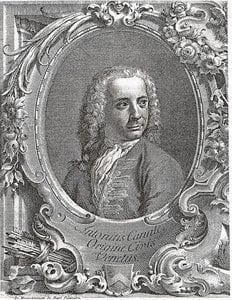
Каналетто

Каналетто

1697 - 1768 , Італія

Короткі факти

  • Artistic Movement Or Style: Ведюти Венеції
  • Artists Or Movements Influenced By This Artist: ['Бенкардо Канал']
  • Artists Who Influenced This Artist: ['Джованні Паоло Паньні']
  • Date Of Birth: 18 жовтня 1697
  • Date Of Death: 19 квітня 1768
  • Full Name: Giovanni Antonio Canal
  • Nationality: Італійський
  • Notable Artworks:
    • Саломасанівська майстерня
    • Регата на каналі Сан-Марко
    • Етонський коледж
  • Place Of Birth: Венеція, Італія
Досліджуйте твори мистецтва, впорядковані за темами, стилями та характеристиками.