БЕЗКОШТОВНА КОНСУЛЬТАЦІЯ З МИСТЕЦТВА

x
Замовити друк Замовити друкКупити цифрове зображення Купити цифрове зображення НадіслатиНадіслати
ДеталіДеталі Додати до улюблених Додати до улюблених ЗавантажитиЗавантажити Схожі виробиСхожі вироби Рентгенівське дослідженняРентгенівське дослідження Слайд-шоуСлайд-шоу

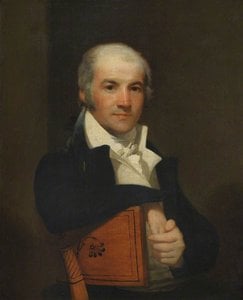
John Jay

Admire Gilbert Stuart's masterful portrait of John Jay! This iconic 1794 oil painting captures the statesman’s authority and detail, housed at the National Gallery of Art. Explore American art history!

Ґільберт Стюарт (1755–1828): Найвідоміший американський портретист! Дослідіть його неокласичний стиль, культовий портрет Вашингтона та спадок у мистецтві США.

Олійная репродукція ручної роботи

Написана вручну олією на полотні у вашому розмірі та рамі, виготовлена на замовлення нашими художниками.

P118B $10
P118H $10
P118W $10
P438Z $10
P508JH $12
P508YH $12
P805H $10
P805Z $10
P919BZ $10
P919G $10
P919XJ $10
P959ZH $10
P968JZ $12
W106C $8
W218G $10
W218JH $8
W218Y $10
W307PJ $10
W316G $10
W316PJ $8
W316Y $10
W398PJ $8
W4111J $10
W500HY $15
W500JH $15
W692G $12
W849H $8
W940BG $15
W953PJ $8

Standard
custom
CM
INCH

Обирайте з наших стандартних розмірів, що відповідають оригінальним пропорціям твору мистецтва.

ширина
висота

Ви можете вказати власні розміри, щоб репродукція підійшла до конкретної рами або інтер'єру. Якщо вибраний вами розмір не відповідає пропорціям оригіналу, ми або обріжемо полотно, або доповнимо картину додатковими елементами, промальованими вручну. Цифровий макет буде надіслано вам на затвердження перед початком виробництва.
Зверніть увагу, що попередній перегляд на екрані не відображає фактичне обрізання або розширення зображення. Тільки макет точно покаже остаточну композицію.
Хоча ми можемо виготовити виріб у нестандартному розмірі, для збереження оригінальних пропорцій рекомендуємо обирати варіанти зі встановленого списку.

Приклади можливих змін: замінити обличчя на фото клієнта; додати домашню тварину (наприклад, замінити кота на собаку); додати приховане повідомлення на фоні; змінити ландшафт або елементи фону.
Після оформлення замовлення команда WahooArt.com зв'яжеться з клієнтом електронною поштою для отримання інструкцій та надасть попередній макет

Доставка по всьому світу () за 3–4 тижні замість стандартних 5 тижнів. (2 Липень). Без жодних компромісів у якості.

why_choose_icon
Безкоштовна експрес-доставка по всьому світу
why_choose_icon
Високоякісне лляне полотно
why_choose_icon
Повне страхове покриття доставки
why_choose_icon
Гарантія відшкодування митних зборів
why_choose_icon
Гарантія точного відтворення кольорів
why_choose_icon
Політика повернення протягом 60 днів (лише у разі виявлення дефектів)
why_choose_icon
Гарантія повернення 100% коштів
why_choose_icon
Знижка на багатоелементні замовлення

Загальна вартість

-

reproduction

John Jay

Матеріал репродукції

Розмір репродукції

-

Підсумкова ціна

-

Основні факти

  • Influences:
    • Stuart
    • Washington
  • Movement: Neoclassicism
  • Dimensions: 131 x 102 cm
  • Artistic style: Portraiture, realism
  • Year: 1794
  • Location: National Gallery of Art
  • Subject or theme: American statesman

Вікторина з мистецтва

Для кожного питання є лише одна правильна відповідь.

Запитання 1:
What is the primary subject of Gilbert Stuart’s portrait of John Jay?
Запитання 2:
In the painting, what does the red robe with gold trim signify?
Запитання 3:
Which artist is most closely associated with Gilbert Stuart?
Запитання 4:
Where is the original painting of John Jay currently housed?
Запитання 5:
What artistic movement is Gilbert Stuart most closely associated with?

Опис твору

A Portrait of Power and Promise: John Jay by Gilbert Stuart

Gilbert Charles Stuart’s 1794 portrait of John Jay is more than just a likeness; it's a carefully constructed embodiment of the nascent American republic. Housed within the National Gallery of Art in Washington, D.C., this oil on canvas painting transcends mere representation, offering a profound glimpse into the character and ambitions of one of America’s founding fathers. Stuart, already establishing himself as a leading portraitist, masterfully captures Jay's commanding presence – a man simultaneously radiating authority and hinting at the weighty responsibilities he bore in shaping the nation’s future.

The painting immediately draws the eye to Jay’s posture: seated with an air of deliberate composure, his gaze directed downward, seemingly lost in contemplation. This subtle shift in focus – away from direct engagement – speaks volumes about the man himself. Jay was a meticulous and often reserved individual, known for his strategic thinking and cautious approach to governance. Stuart cleverly utilizes this characteristic, suggesting a mind deeply engaged with complex matters of state, yet maintaining an outward sense of dignified restraint. The rich crimson robe, adorned with gold trim, is not merely decorative; it’s a visual declaration of Jay's high office as the first Chief Justice of the United States Supreme Court – a position he held with unwavering dedication for nearly two decades.

The Neoclassical Masterstroke: Technique and Detail

Stuart’s skill is evident in every brushstroke. The painting exemplifies the hallmarks of Neoclassicism, a style deeply rooted in the ideals of ancient Greece and Rome. Notice the meticulous attention to detail – the intricate folds of the robe, the texture of Jay's clothing, the subtle shading that defines his face. Stuart’s use of light is particularly effective, creating a sense of depth and dimensionality that brings the portrait to life. The chiaroscuro technique—the dramatic contrast between light and shadow—highlights Jay’s features, emphasizing his intelligence and gravitas. The artist skillfully employs atmospheric perspective in the background, subtly blurring the details to draw attention to the central figure.

Furthermore, observe how Stuart captures the nuances of Jay's expression. It isn’t a boisterous or overtly enthusiastic portrayal; rather, it’s a quiet confidence, a hint of melancholy, and an underlying sense of duty. This restrained emotionality is characteristic of Neoclassical portraiture, which sought to capture not just physical likeness but also the inner character of the subject.

A Founding Father in Context: John Jay and the American Experiment

To fully appreciate “John Jay,” it’s crucial to understand the historical context in which it was created. The late 1790s were a turbulent period in American history, marked by political divisions between Federalists and Republicans. Jay played a pivotal role as a diplomat during the Revolutionary War and later served as Governor of New York, navigating complex international relations and shaping domestic policy. As Chief Justice, he established many precedents for the Supreme Court, solidifying its authority within the new government.

The portrait itself was commissioned at a time when Jay’s role in securing peace with Great Britain after the war was still fresh in the public's mind. His Treaty of Paris, signed in 1795, averted a potentially devastating conflict and established crucial trade relations between the United States and Great Britain. The painting thus serves as a visual reminder of Jay’s contributions to the nation’s founding and his commitment to preserving its stability.

Symbolism and Enduring Legacy

Beyond its technical brilliance, “John Jay” is rich in symbolism. The seated pose itself conveys authority and wisdom – qualities highly valued in a leader of the new republic. The red robe, signifying judicial office, underscores Jay’s role as a guardian of justice. And the downward gaze suggests a man deeply engaged with the weighty responsibilities of his position. This portrait is not merely a representation of a historical figure; it's an embodiment of the ideals and aspirations of early America – a nation striving to establish itself as a beacon of liberty, justice, and self-governance. Today, reproductions of this iconic work continue to inspire admiration for Jay’s legacy and Stuart’s enduring artistic talent.

Схожі витвори мистецтва


Біографія митця

Gilbert Stuart (1755 – 1828): The Soul of American Portraiture

Gilbert Stuart remains one of America’s most revered portraitists, a figure whose canvases capture not merely likenesses but the very essence of his subjects—a feat achieved through meticulous observation and masterful technique. Born December 3rd, 1755, in Saunderstown, Rhode Island, Gilbert Charles Stuart emerged from humble beginnings as the son of a snuff mill owner; however, his artistic talent swiftly distinguished him from his peers. His early fascination with drawing blossomed under the tutelage of Samuel King, establishing a foundation for his lifelong dedication to capturing human character on canvas. ### Early Life and Artistic Training Stuart’s formative years were marked by exposure to Scottish artistic traditions thanks to Cosmo Alexander, whom he studied in Scotland around 1771. This period instilled in him an understanding of composition and technique that would prove invaluable throughout his career. Returning to America in 1775 after Alexander's untimely death, Stuart honed his skills further under Benjamin West, a prominent American painter residing in London—a collaboration that cemented his stylistic development within the influential Royal Academy. It was during this time that he began to develop his signature style: an approach rooted in realism and imbued with dramatic lighting effects designed to illuminate both physical appearance and psychological depth. ### Artistic Career and Major Works Stuart’s artistic journey wasn't without obstacles; the American Revolution forced him to relocate to England, where he continued to produce exceptional portraits despite facing financial difficulties. Despite these challenges, Stuart achieved considerable success early on with “The Skater” (1782), a captivating depiction that instantly established his reputation as one of America’s foremost artists. However, it is undoubtedly his unfinished portrait of George Washington—the Athenaeum Portrait—that secures Stuart's place in art history. Begun in 1796 and never completed, this monumental work became an enduring symbol of American leadership and identity, appearing on the U.S. dollar bill for over a century. Stuart painstakingly replicated this image countless times, catering to commissions from across America and Europe—a testament to his artistic prowess and unwavering devotion to capturing the spirit of his subjects. Beyond Washington, Stuart immortalized other luminaries of the era: John Adams, Thomas Jefferson, James Madison, and numerous members of the Federalist elite, each portrait reflecting Stuart’s profound understanding of human psychology and his ability to convey emotion through subtle nuances of expression. ### Influences and Artistic Style Stuart's artistic sensibilities were profoundly shaped by several key influences. Cosmo Alexander imparted foundational knowledge regarding technique and composition, while Benjamin West instilled a deep appreciation for classical ideals and artistic principles—a legacy that permeated Stuart’s oeuvre. The burgeoning Neoclassical movement served as an overarching framework for his stylistic explorations, encouraging him to prioritize realism and emulate the grandeur of ancient Greek and Roman art. Stuart's meticulous attention to detail—particularly in capturing facial expressions and conveying inner character—became a hallmark of his distinctive style. He skillfully employed chiaroscuro—the dramatic interplay of light and shadow—to heighten the emotional impact of his portraits, transforming them into timeless representations of human dignity and intellect. ### Historical Significance and Legacy Gilbert Stuart’s contribution to American art is undeniable; he elevated portraiture to an art form that transcended mere likeness, capturing not just physical appearance but also the soul of his subjects—a feat achieved through unparalleled skill and sensitivity. The Athenaeum Portrait remains a cornerstone of American iconography, embodying ideals of leadership and republican virtue. Stuart’s portraits continue to inspire admiration for their artistic excellence and historical importance, ensuring that his legacy endures as one of America's most celebrated artists. His work resides in prominent museums across the United States and Europe—a testament to his enduring influence on subsequent generations of painters.
Ґільберт Стюарт

Ґільберт Стюарт

1755 - 1828 , Великобританія

Короткі факти

  • Artistic Movement Or Style: Неокласицизм
  • Artists Who Influenced This Artist:
    • Космо Александер
    • Бенджамін Вест
  • Date Of Birth: 3 грудня 1755 р.
  • Date Of Death: 9 липня 1828 р.
  • Full Name: Gilbert Charles Stuart
  • Nationality: Американський
  • Notable Artworks:
    • Портрет Джорджа Вашингтона (Атенаеумський портрет)
    • Портрет Джона Адамса
    • Портрет Томаса Джефферсона
  • Place Of Birth: Сентерхолт, Великобританія
Досліджуйте твори мистецтва, відсортовані за темами, стилями та характеристиками.