x
Переглянути в інтер'єріПереглянути в інтер'єрі Перегляд в ARПерегляд в AR Замовити принт Замовити принтКупити цифрове зображення Купити цифрове зображення Надіслати як листівкуНадіслати як листівку
ДетальнішеДетальніше Додати до улюблених Додати до улюблених ЗавантажитиЗавантажити Схожі експонатиСхожі експонати Рентгенівське дослідженняРентгенівське дослідження Слайд-шоуСлайд-шоу

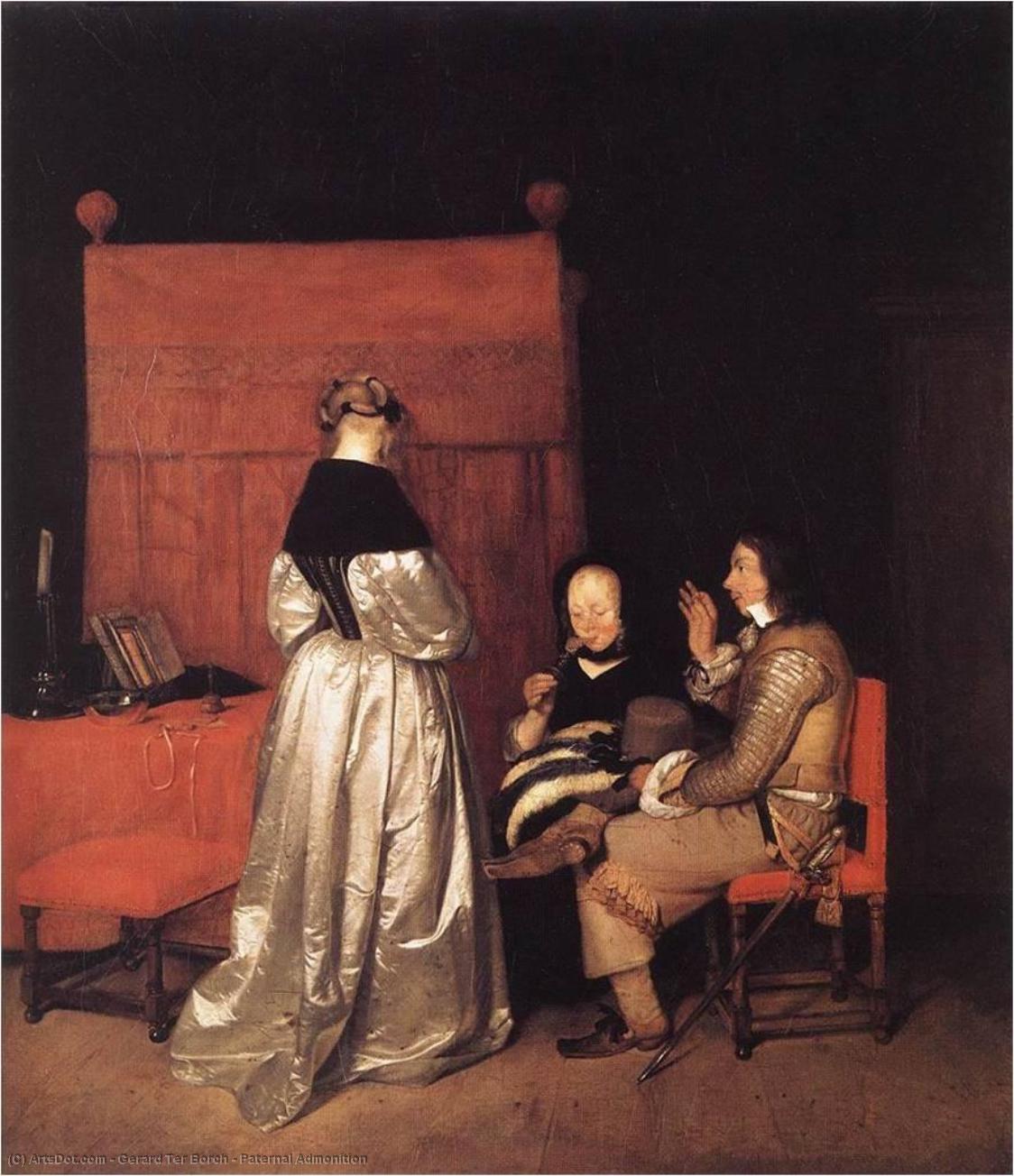
Paternal Admonition

Explore Gerard ter Borch's 'Paternal Admonition,' a captivating Dutch Golden Age painting depicting an ambiguous encounter between a soldier and a woman, rich with texture & psychological depth.

Герард Тэр Борх був видатним художником епохи Голландського золотого віку, який прославився своїми жанровими картинами, що вражаюче передають реалістичну атмосферу повсякденного життя та особливості освітлення. Його шедевр «Лист» та інші твори стали символом епохи та продовжують захоплювати глядачів у музеях світу!

Олійная репродукція ручної роботи

Написана вручну олією на полотні у вашому розмірі та рамі, виготовлена на замовлення нашими художниками. (Замовити принт Замовити принтКупити цифрове зображення Купити цифрове зображення)

P118B $10
P118H $10
P118W $10
P438Z $10
P508JH $12
P508YH $12
P805H $10
P805Z $10
P919BZ $10
P919G $10
P919XJ $10
P959ZH $10
P968JZ $12
W106C $8
W218G $10
W218JH $8
W218Y $10
W307PJ $10
W316G $10
W316PJ $8
W316Y $10
W398PJ $8
W4111J $10
W500HY $15
W500JH $15
W692G $12
W849H $8
W940BG $15
W953PJ $8

Стандартний розмір
індивідуальний
CM
INCH

Обирайте з наших стандартних розмірів, що відповідають оригінальним пропорціям твору мистецтва.

ширина
висота

Ви можете вказати власні розміри, щоб репродукція ідеально підійшла до конкретної рами або інтер'єру. Якщо вибраний вами розмір не відповідає пропорціям оригіналу, ми або обріжемо полотно, або доповнимо картину додатковими елементами, промальованими вручну. Цифровий макет буде надіслано вам на затвердження перед початком виробництва.
Зверніть увагу, що попередній перегляд на екрані не відображає фактичне обрізання або розширення зображення. Тільки макет точно покаже остаточну композицію.
Хоча ми можемо виготовити виріб у нестандартному розмірі, для збереження оригінальних пропорцій рекомендуємо обирати варіанти зі встановленого списку.

Приклади можливих змін: замінити обличчя на фото клієнта; додати домашню тварину (наприклад, замінити кота на собаку); додати приховане повідомлення на фоні; змінити ландшафт або елементи фону.
Після оформлення замовлення команда WahooArt.com зв'яжеться з клієнтом електронною поштою для отримання інструкцій та надасть попередній макет

Доставка по всьому світу () за 3–4 тижні замість стандартних 5 тижнів. (5 Вересень). Без жодних компромісів у якості.

why_choose_icon
Безкоштовна експрес-доставка по всьому світу
why_choose_icon
Високоякісне лляне полотно
why_choose_icon
Повне страхове покриття доставки
why_choose_icon
Гарантія відшкодування митних зборів
why_choose_icon
Гарантія точного відтворення кольорів
why_choose_icon
Політика повернення протягом 60 днів (лише у разі виявлення дефектів)
why_choose_icon
Гарантія повернення 100% коштів
why_choose_icon
Пропозиція на оптові замовлення

Загальна вартість

$ 272

reproduction

Paternal Admonition

Матеріал репродукції

Розмір репродукції

-

Підсумкова вартість

$ 272

Основна інформація

  • Subject or theme: Intimate scene
  • Artist: Gerard ter Borch
  • Title: Paternal Admonition
  • Medium: Oil on canvas
  • Movement: Dutch Golden Age
  • Location: Rijksmuseum, Amsterdam
  • Influences:
    • Ter Borch
    • Vermeer

Квіз про мистецтво

У кожному запитанні лише одна правильна відповідь.

Запитання 1:
What is the primary subject matter depicted in Gerard ter Borch’s ‘Paternal Admonition (Gallant Conversation)’?
Запитання 2:
According to the provided text, what is particularly notable about the depiction of the woman’s dress in ‘Paternal Admonition (Gallant Conversation)’?
Запитання 3:
Gerard ter Borch is known for his skill in portraying which of the following elements?
Запитання 4:
In what century was ‘Paternal Admonition (Gallant Conversation)’ painted?
Запитання 5:
The text suggests that Ter Borch’s paintings often capture what kind of atmosphere?

A Moment Frozen in Time: Gerard ter Borch’s *Paternal Admonition*

Gerard ter Borch's *Paternal Admonition*, painted around 1654, isn’t merely a portrait; it’s a meticulously crafted tableau of unspoken tension and veiled desire. Within the confines of a modestly furnished room—a subtle blend of domestic comfort and quiet restraint—three figures occupy a space brimming with psychological depth. The painting immediately draws the eye to the woman seated between two men, her posture suggesting both vulnerability and a carefully guarded composure. Her silver satin gown, shimmering with an almost ethereal light, acts as a focal point, demanding attention while simultaneously hinting at a hidden world of pleasure and intrigue.

Ter Borch’s genius lies not in dramatic gestures or overt displays of emotion, but rather in his ability to capture the subtle nuances of human interaction. The man, dressed in the formal attire of a military officer, holds a hat on his lap – a gesture that simultaneously conveys authority and a certain awkwardness. His gaze is directed towards the woman, yet his expression remains ambiguous, leaving us to ponder his intentions. The third figure, partially obscured behind the seated woman, adds another layer of complexity to the scene, suggesting a silent observer or perhaps even a participant in this unspoken exchange.

A Masterclass in Light and Texture

Technically, *Paternal Admonition* is a remarkable achievement. Ter Borch was a pioneer in Dutch genre painting, renowned for his unparalleled skill in rendering texture and light. He employed a technique of carefully layered glazes to create an astonishingly realistic depiction of fabrics – the luxurious sheen of the satin, the velvet upholstery, even the delicate folds of the woman’s dress are rendered with breathtaking detail. The use of chiaroscuro—the dramatic contrast between light and shadow—further enhances the painting's depth and atmosphere, drawing our attention to key elements while simultaneously creating a sense of mystery.

Notice how the light source seems to originate from an unseen window, casting soft shadows that accentuate the contours of the figures and their surroundings. This masterful manipulation of light not only adds visual interest but also contributes significantly to the painting’s overall mood—a blend of intimacy, restraint, and underlying tension.

Decoding a Silent Conversation

The initial interpretation of *Paternal Admonition* as a scene of paternal guidance has been largely superseded by more nuanced readings. While the man undoubtedly holds a position of authority, many scholars now believe that the painting depicts an amorous negotiation between a soldier and a prostitute within a brothel setting. The presence of the bed, the mirror, and the various objects of feminine beauty on the table all lend credence to this interpretation.

However, Ter Borch’s genius lies in his refusal to offer easy answers. He presents us with a scene pregnant with ambiguity, inviting us to interpret the unspoken dynamics between the figures. The woman's averted gaze and the man's hesitant posture suggest a delicate dance of power and desire—a silent conversation that transcends simple categorization.

A Window into 17th-Century Life

*Paternal Admonition* offers a fascinating glimpse into the social customs and moral sensibilities of 17th-century Holland. The painting reflects a society where appearances were carefully cultivated, and private interactions often concealed deeper desires. Ter Borch’s ability to capture this complex interplay of public and private life is what makes his work so enduringly captivating.

Reproductions of *Paternal Admonition* can bring this world into your own space, offering a subtle yet powerful reminder of the complexities of human relationships and the enduring allure of unspoken desires. Its quiet intensity and masterful technique make it a truly exceptional addition to any art collection or interior design scheme.


Біографія митця

Gerard ter Borch - A Pioneer of Dutch Genre Painting

Gerard ter Borch (Dutch: Gerard Terburg; December 1617 – 8 December 1681), also known as Gerard Terborch, was a Dutch Golden Age painter who profoundly impacted the artistic landscape of his time. Born in Zwolle, Netherlands, he emerged from a family steeped in artistic tradition—his father, Gerard ter Borch the Elder, was himself a respected artist—and quickly established himself as a master of genre painting, marking a pivotal moment in Dutch art history.

Early Life and Influences

  1. Ter Borch’s formative years were marked by extensive travel throughout Europe. He ventured to London, Germany, France, Spain, and Italy, absorbing diverse artistic styles and broadening his understanding of the human condition. This exposure undoubtedly fueled his creative vision and shaped his distinctive approach to portraying everyday life.
  2. His sister, Gesina ter Borch, pursued a parallel artistic career, demonstrating the strong familial encouragement for artistic pursuits prevalent during the era.

Notable Works and Achievements

  1. The Letter: Arguably Ter Borch’s most celebrated masterpiece, “The Letter” exemplifies his unparalleled skill in capturing texture and light—a technique that would become synonymous with his oeuvre. It depicts a woman anxiously awaiting the arrival of her husband, conveying subtle emotions through masterful brushstrokes.
  2. The Gallant Conversation: Engraved by Johann Georg Wille, this portrait captures a moment of refined social interaction, showcasing Ter Borch’s ability to convey nuanced psychological depth.
  3. Man on Horseback (1634): An early work reveals Ter Borch's burgeoning talent and foreshadows the stylistic innovations that would characterize his mature style.
  4. Adrian Pauw’s Arrival in Münster (1646): This monumental canvas portrays a significant political event—the arrival of Adrian Pauw, Stadtholder of Holland, in Münster—demonstrating Ter Borch's narrative prowess and compositional brilliance.

Museum Collections Featuring Ter Borch’s Work

  1. The Hermitage: Boasting six paintings by Ter Borch, the Hermitage Museum holds one of the largest collections dedicated to his art, offering visitors a comprehensive glimpse into his artistic legacy.
  2. Berlin Museum: With six pieces housed within its galleries, Berlin Museum showcases Ter Borch’s international recognition and enduring appeal as an artist.
  3. Getty Center: Three paintings by Ter Borch are proudly displayed at the Getty Center, cementing his place among the most revered masters of the Dutch Golden Age.

Legacy and Impact

Ter Borch’s influence extended far beyond his contemporaries, notably impacting artists like Gabriel Metsu, Gerrit Dou, Eglon van der Neer, and Johannes Vermeer. His groundbreaking approach to genre painting—focusing on capturing the complexities of human emotion and portraying scenes from daily life with remarkable realism—established a new paradigm for artistic expression. He is considered a cornerstone of Dutch art history, shaping the stylistic trajectory of subsequent generations of painters.

For more information about Gerard ter Borch’s life and work, visit WahooArt.com/@/gerard-ter-borch Explore the museum Boijmans van Beuningen Rotterdam, Netherlands, featuring some of Ter Borch’s contemporaries at WahooArt.com/@@/a@d3arrk-museum-boijmans-van-beuningen-rotterdam-netherlands Learn more about the Dutch Golden Age and its notable artists at https://en.wikipedia.org/wiki/Dutch_Golden_Age

Герард Тэр Борх

Герард Тэр Борх

1617 - 1681 , Нідерланди

Короткі факти

  • Artistic Movement Or Style: Жанровий живопис
  • Artists Or Movements Influenced By This Artist: ['Ян Вермеер']
  • Artists Who Influenced This Artist:
    • Вільям Корнеліс Дуйстер
    • Пітер де Молін
  • Date Of Birth: 1617-12-01
  • Date Of Death: 1681-12-08
  • Full Name: Gerard ter Borch
  • Nationality: Нідерландський
  • Notable Artworks:
    • Лист
    • Галантна бесіда
  • Place Of Birth: Zwolle, Netherlands
Досліджуйте твори мистецтва, впорядковані за темами, стилями та характеристиками.