x
Переглянути в інтер'єріПереглянути в інтер'єрі Перегляд в ARПерегляд в AR Замовити репродукцію ручної роботи Замовити репродукцію ручної роботиКупити цифрове зображення Купити цифрове зображення Надіслати як листівкуНадіслати як листівку
ДетальнішеДетальніше Додати до улюблених Додати до улюблених ЗавантажитиЗавантажити Схожі експонатиСхожі експонати Рентгенівське дослідженняРентгенівське дослідження Слайд-шоуСлайд-шоу

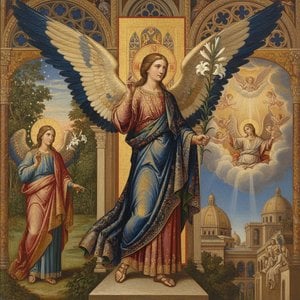
The Annunciation

Experience the serene beauty of Gerard David’s ‘The Annunciation,’ a masterpiece of Northern Renaissance art depicting Gabriel announcing Mary's pregnancy with Jesus. Admire intricate detail and subtle color palettes in this iconic Flemish painting.

"UkrainianMetaDescription": "Гердар Девід – видатний фламандський художник епохи Відродження, відомий своїми яскравими кольорами, релігійними полотнами та новаторськими пейзажами. Його твори – це вікно у світ духовного мистецтва та майстерності."

Гікле / Художній принт

Музейна якість друку جيкле або на полотні з оперативним виготовленням та різноманітними варіантами фінішної обробки. (Замовити репродукцію ручної роботи Замовити репродукцію ручної роботиКупити цифрове зображення Купити цифрове зображення)

P118B $10
P118H $10
P118W $10
P438Z $10
P508JH $12
P508YH $12
P805H $10
P805Z $10
P919BZ $10
P919G $10
P919XJ $10
P959ZH $10
P968JZ $12
W106C $8
W218G $10
W218JH $8
W218Y $10
W307PJ $10
W316G $10
W316PJ $8
W316Y $10
W398PJ $8
W4111J $10
W500HY $15
W500JH $15
W692G $12
W849H $8
W940BG $15
W953PJ $8

Стандартний розмір
індивідуальний
CM
INCH

Обирайте з наших стандартних розмірів, що відповідають оригінальним пропорціям твору мистецтва.

ширина
висота

Ви можете вказати власні розміри, щоб репродукція ідеально підійшла до конкретної рами або інтер'єру. Якщо обраний вами розмір не відповідає пропорціям оригіналу, ми або обріжемо полотно, або розширимо зображення за допомогою дзеркального відображення чи суцільної заливки країв. Перед початком виробництва вам буде надіслано цифровий макет для затвердження.
Будь ласка, зверніть увагу, що попередній перегляд на екрані не відображає фактичне обрізання або розширення. Тільки макет точно покаже фінальну композицію.
Хоча можливість замовлення індивідуальних розмірів доступна, ми рекомендуємо обирати формат із попередньо визначеного списку, щоб зберегти оригінальні пропорції.

Доставка по всьому світу () за 2 тижні замість стандартних 4/5 тижнів. (4 Вересень)

why_choose_icon
Безкоштовна експрес-доставка по всьому світу
why_choose_icon
Високоякісне лляне полотно
why_choose_icon
Повне страхове покриття доставки
why_choose_icon
Гарантія відшкодування митних зборів
why_choose_icon
Гарантія точного відтворення кольорів
why_choose_icon
Політика повернення протягом 60 днів (лише у разі виявлення дефектів)
why_choose_icon
Гарантія повернення 100% коштів
why_choose_icon
Пропозиція на оптові замовлення

Загальна вартість

$ 68

reproduction

The Annunciation

Гікле / Художній принт

Розмір репродукції

-

Підсумкова вартість

$ 68

Основна інформація

  • Influences: Early Flemish painting
  • Title: The Annunciation
  • Location: Metropolitan Museum of Art, New York
  • Medium: Oil on wood panel
  • Movement: Northern Renaissance
  • Year: 1506
  • Artist: Gerard David

Квіз про мистецтво

У кожному запитанні лише одна правильна відповідь.

Запитання 1:
What artistic movement is ‘The Annunciation’ primarily associated with?
Запитання 2:
Which prominent artist created this masterpiece?
Запитання 3:
What is the primary symbolic significance of the angel’s gesture in ‘The Annunciation’?
Запитання 4:
What architectural element is featured prominently in the background of ‘The Annunciation’, contributing to its overall atmosphere?
Запитання 5:
Approximately when was ‘The Annunciation’ completed?

A Divine Encounter in Flemish Light

In the quiet, hallowed stillness of Gerard David’s The Annunciation, time seems to suspend itself, inviting the viewer into a moment of profound spiritual revelation. Created in 1506, this masterpiece of the Northern Renaissance serves as more than a mere biblical illustration; it is a window into the soul of the late Middle Ages, where the earthly and the divine intersect with breathtaking clarity. The scene captures the pivotal instant when the Archangel Gabriel descends to deliver his celestial message to the Virgin Mary. There is an undeniable serenity that permeates the composition, a hush that commands attention and draws the observer into the intimate sanctity of the room. For those seeking to bring a sense of peace and contemplative grace into a modern living space, this work offers an unparalleled emotional anchor.

The artistry of David is most strikingly evident in his mastery of Flemish Light. Through the meticulous application of oil on wood, he achieves a luminous quality that feels almost supernatural. The light does not merely illuminate the scene; it seems to emanate from within the figures themselves, particularly through the radiant, flowing robes of Gabriel. The artist employs a sophisticated use of chiaroscuro, playing with the delicate balance between deep, velvety shadows and the soft, diffused glow streaming through diamond-paned windows. This interplay creates a palpable sense of three-dimensional depth, making the interior space feel real enough to touch, yet ethereal enough to transcend the physical world.

Symbolism and the Language of Devotion

Every element within this meticulously crafted tableau is imbued with layers of symbolic meaning, designed to guide the faithful through a journey of meditation. The composition itself follows a classical pyramidal structure, a technique that directs the eye upward, mirroring the spiritual ascent of the soul. As Gabriel gestures toward the unseen, his movement bridges the gap between the heavens and the terrestrial chamber. The dark wood paneling and the intricate geometric patterns of the floor provide a grounded, architectural stability, contrasting beautifully with the celestial fluidity of the angel’s presence.

Beyond the central figures, subtle details whisper of purity and acceptance. The inclusion of specific textures—the heavy weight of the drapery, the cold smoothness of the window panes, and the delicate floral motifs on the floor—serves to ground the miraculous event in a recognizable reality. For the discerning collector or interior designer, these details offer a rich tapestry of visual interest that rewards prolonged study. The painting does not just depict a story; it embodies the humanist ideals of the era, where the beauty of the natural world was seen as a direct reflection of divine perfection.

An Eternal Legacy for the Discerning Collector

To possess a reproduction of The Annunciation is to invite a piece of art history into one's home. This work represents the zenith of the Netherlandish tradition, a period where technical precision met profound emotional depth. Whether placed in a grand gallery or a quiet study, the painting acts as a focal point of sophistication and tranquility. It appeals to those who appreciate the fine details of Renaissance craftsmanship—the subtle gradations of color, the masterful handling of light, and the evocative narrative that has captivated viewers for over five centuries.

As an investment in atmosphere, this piece provides a timeless elegance that complements both classical and contemporary interiors. It offers a sense of continuity with the great masters, bringing the quiet majesty of the 16th-century Flemish workshops into the modern era. In an age of rapid change, the enduring stillness of David’s vision remains a powerful sanctuary for the eyes and the spirit.


Біографія митця

A Master of Flemish Light: The Enigmatic World of Gerard David

Gerard David, a name that echoes through the halls of art history, remains an artist shrouded in captivating mystery and profound beauty. Born around 1460 in Oudewater, a small town near Gouda in the Netherlands, his life story is pieced together from fragments – archival records, the eloquent whispers of his paintings, and the legacy he left behind. Unlike many of his contemporaries whose lives are meticulously documented, David’s personal narrative remains tantalizingly sparse, allowing his art to speak volumes about a man who lived within a transformative era. What we *do* know suggests a remarkably successful career, likely managing workshops in both Antwerp and Bruges – vibrant centers of artistic innovation during the Renaissance—and a deep understanding of the traditions he inherited while forging his own distinctive path. His reputation experienced a period of relative obscurity in the 17th century, only to be rediscovered and profoundly appreciated by 19th-century art historians who recognized his unique contributions to the Northern Renaissance. He was inducted as a free master into the Corporation of Imagemakers and Saddlers in Bruges in 1484, marking a pivotal moment in his ascent – a testament to his skill and standing within the artistic community. His later involvement with the Antwerp guild in 1515 further solidified his position as a leading figure.

Formative Influences and Artistic Development

David’s artistic journey began under the influence of masters who shaped the very foundation of his style. Early works reveal a clear debt to painters like Jacob Janszoon, Dieric Bouts, and Geertgen tot Sint Jans – artists who instilled in him a meticulous attention to detail and a sensitivity to religious narrative. It is believed he spent time in Haarlem absorbing these lessons before relocating to Bruges, a bustling hub of artistic exchange attracting talent from across Europe. Here, David encountered the masterpieces of Jan van Eyck, Rogier van der Weyden, and Hans Memling, absorbing their techniques while simultaneously forging his own distinct path. He didn’t merely imitate; he synthesized these influences into something uniquely his own – a style characterized by luminous color, serene compositions, and an increasingly sophisticated understanding of landscape. His early paintings demonstrate this evolution, moving from the doll-like figures reminiscent of Haarlem traditions towards more sculptural forms grounded in their environment. Consider *Christ Nailed to the Cross*—a work that showcases this transition; the influence of Bouts’ spatial construction blends seamlessly with David's emerging coloristic sensibility, creating a powerful and emotionally resonant image. The meticulous detail, combined with the dramatic lighting, speaks volumes about his dedication to realism and his ability to capture the essence of human suffering.

Innovation in Landscape and Religious Narrative

Gerard David’s artistic signature lies in his innovative approach to both landscape and religious subject matter. He wasn't simply depicting backgrounds; he was creating immersive environments that enhanced the emotional resonance of his scenes. His landscapes are not merely decorative, but integral components of the narrative, often imbued with symbolic meaning—a reflection of the Renaissance fascination with nature’s harmony and its connection to the divine. This fascination with natural settings – dense forests, rolling hills, expansive skies – set him apart from many of his contemporaries and foreshadowed the development of landscape painting as an independent genre. Within his religious works, David demonstrated a remarkable ability to convey both profound spirituality and human emotion. Paintings like *The Marriage of St. Catherine* exemplify this skill. The scene is rendered with exquisite detail—the rich fabrics, the intricate architecture, the expressions on the figures’ faces—yet it's the subtle nuances of their emotions – piety, contemplation, gentle joy – that truly captivate the viewer. He possessed a gift for imbuing his sacred subjects with a sense of quiet dignity and relatable humanity. The *Triptych of the Madonna Enthroned and Saints*, housed in the Groeninge Museum in Bruges, is another testament to this mastery—a complex and richly layered composition that showcases his technical skill and artistic vision. His *Virgin Among the Virgins*, donated to the Carmelite nuns of Sion at Bruges, is particularly noteworthy; it’s a self-portrait within the painting itself – a rare and intimate gesture from an artist of his time, revealing a personal connection to the subject matter.

Major Achievements and Artistic Style

David's artistic style evolved significantly throughout his career, reflecting both his influences and his own creative vision. Initially influenced by Haarlem painters like Jacob Janszoon, he developed a distinctive approach characterized by:
  • Luminous Color: David was renowned for his masterful use of color—rich, vibrant hues that created a sense of depth and atmosphere.
  • Sculptural Figures: His figures possessed a remarkable three-dimensionality, conveying a sense of solidity and presence.
  • Innovative Landscape: He pioneered the integration of landscape into religious scenes, creating immersive environments that enhanced the narrative’s emotional impact.
His most celebrated works include *Judgment of Cambyses*, a monumental altarpiece depicting the judgment of Pharaoh Cambyses, showcasing his ability to combine dramatic storytelling with meticulous detail and vibrant color. The *Triptych of the Madonna Enthroned* is another masterpiece—a complex and emotionally resonant depiction of the Virgin Mary surrounded by angels and saints. These works, along with numerous smaller panels and devotional paintings, demonstrate David’s versatility as an artist and his ability to master a wide range of subjects and techniques.

Legacy and Enduring Influence

Though his fame waned somewhat after his death in 1523, Gerard David's influence on subsequent generations of artists is undeniable. His innovative use of color, his masterful handling of light and shadow, and his pioneering approach to landscape all left an indelible mark on the development of Flemish painting. He paved the way for artists who would further explore the expressive potential of natural settings, such as Jacob Patinir and Jacob van Ruisdael. His work served as a bridge between the late medieval tradition and the emerging Renaissance style, demonstrating a remarkable ability to synthesize diverse influences into a cohesive and compelling artistic vision. Today, David’s works are celebrated in museums and collections around the world—a testament to his enduring legacy as one of the greatest masters of the Northern Renaissance. Exploring his oeuvre is not merely studying art history; it's entering a world of luminous beauty, profound contemplation, and enduring human emotion – a true reflection of the genius of Gerard David.

Гердар Давід

Гердар Давід

1450 - 1523 , Нідерланди

Короткі факти

  • Artistic Movement Or Style: Ранньонідерландське живопис
  • Artists Or Movements Influenced By This Artist:
    • Ян ван Ейк
    • Рогоєр ван дер Віден
    • Ханс Мемлінг
  • Artists Who Influenced This Artist:
    • Якоб Янссон
    • Дієрик Боутас
    • Гертген донт Сінтанс
  • Date Of Birth: c. 1460
  • Date Of Death: 1523
  • Full Name: Gerard David
  • Nationality: Нідерландський
  • Notable Artworks:
    • Малюнок Святої Катерини
    • Тріптих Богоматері на троні
    • Пресвітер серед лісу
  • Place Of Birth: Oudewater, Нідерланди
Досліджуйте твори мистецтва, впорядковані за темами, стилями та характеристиками.