Early Life and the Call of the Frontier
George Catlin, народжений у Вілкс-Бере, штат Пенсільванія, у 1796 році, був людиною, яка була призначена мостом між світами – між усталеним американським суспільством його часу та швидко зникаючими культурами племен корінних народів. Його дитинство глибоко відзначене історіями про кордон, розповіді, які розповідали його мати, Поллі Саттон, яка сама пережила жахливу спробу захоплення ін дінами. Ці історії запалили в молодого Catlin захоплення Заходом – землею, сприйнятою як одночасно небезпечну та глибоко романтичну. Хоча спочатку він був навчений юристом, він знайшов своє справжнє покликання не у залі, а у змалюванні суті способу життя, який боявся, що зникає. Він покинув юридичну практику лише через два роки, керуючись художнім потягом і зростаючим переконанням, що традиції та зовнішній вигляд корінних народів заслуговують ретельної документації для нащадків. Це було не просто естетичне цікавість; це був почуття терміновості, пророцтво про те, що західний розтин остаточно змінить ці культури. Його ранні роботи включали гравюри, які зображали сцени вздовж каналу Ері, демонструючи його технічну майстерність і увагу до деталей – якості, які стали відмінними рисами його пізніших, більш амбітних проектів. Ці перші зусилля послужили важливим фундаментом, удосконалюючи його спостережливі здібності та встановлюючи його зобов’язання щодо візуального оповідання.
Документування зникаючого світу: Індыйська галерея
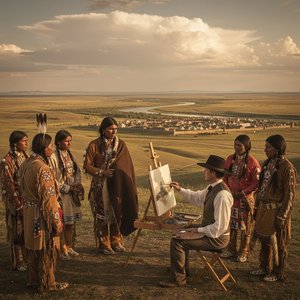
Визначним досягненням Catlin безсумнівно було створення «Індыйської галереї», надзвичайної колекції понад 500 картин, присвячених зображенню життя та культури корінних народів. Починаючи з 1830-х років він вирушив у п’ять масштабних експедицій на західну частину Америки, подорожуючи річкою Міссісіпі і заглиблюючись у території, де мешкали племена, такі як Мандан, Сіукс, Блекфіти та Чокто. Він не просто спостерігав; Catlin поринув у ці спільноти, брав участь у церемоніях, свідчив про повсякденне життя і встановлював стосунки з лідерами племен. Його картини виділяються реалістичністю та яскравими кольорами, передаючи не лише фізичну схожість, але й відчуття гідності та складності корінних народів. Наприклад, *Sham Fight, Mandan Boys* (1832-1833) – це жива сцена імітованого бою серед молодих воїнів Мандана, демонструючи не лише красу ландшафту, але й дух спільноти. Також *Mrs. George Catlin (Clara Bartlett Gregory)* (1850) показує його дружину, даруючи можливість подивитися на особисте життя художника. Його роботи характеризуються ретельністю та увагою до деталей, часто включаючи складні тла, які надають контекст своїм героям – ландшафти, тіпи, церемоніальні предмети – все зображене з гострим поглядом на точність. Він прагнув представити корінних народів не як стереотипних дикунів, а як людей із багатим культурним спадком і складною соціальною структурою, кидаючи виклик уявленням того часу.
Виклики та визнання: Життя, присвячене збереженню
Незважаючи на художню цінність та історичне значення Індыйської галереї, Catlin стикався з значними труднощами в отриманні визнання та фінансової підтримки для своїх робіт. Він уявляв собі передати колекцію уряду США, сподіваючись, що її збережуть як національний скарб, але його перші пропозиції неодноразово відхилялися. Незважаючи на це, він продовжував демонструвати свою галерею в Америці та Європі, привертаючи увагу великої аудиторії. Він також видав кілька книг, які детально описують свої подорожі та спостереження, включаючи *Manners, Customs, and Condition of the North American Indians* (1841) і *Last Rambles Amongst the Indians of the Rocky Mountains and the Andes* (1868), що зміцнювало його репутацію як провідного експерта з культури корінних народів. Проте фінансові труднощі продовжували переслідувати його протягом усього життя. У відчайдушному спробі повернути деякі інвестиції він створив меншу «карткову колекцію» з понад 400 картин, але навіть цей зусилля не приніс значних прибутків. Цей період був позначений постійною боротьбою та сумною іронією – людина, яка була присвячена збереженню культури, що наближається до зникнення, боровся за своє власне виживання.
Наслідки та історичне значення
Джордж Catlin помер у 1872 році, залишивши позаду спадщину, яка продовжує резонувати сьогодні. Хоча його роботи не були повністю оцінені під час його життя, вони згодом були визнані як цінний історичний запис про життя корінних народів до масштабних змін, спричинених західним розширенням. Його картини дають уявлення про культури, які часто представлялися неточно або ігнорувалися в основних наративах. *Prairie Meadows Burning* (1832) з її драматичним зображенням контрольованого спалювання та супроводжуючих вершників демонструє не лише красу ландшафту, але й тісний зв’язок між корінними народами і їхнім середовищем. *Pipestone Quarry, Coteau Des Prairies* (1848) ілюструє священне місце для багатьох племен і їхній духовний зв'язок із землею. Catlin’s meticulous documentation provides insights into tribal customs, social structures, religious beliefs and artistic traditions – information that would have been lost to history without his dedicated efforts. His work serves as a powerful reminder of the importance of cultural preservation and the need to challenge preconceived notions about indigenous peoples. He wasn't simply an artist; he was a chronicler, a witness, and a passionate advocate for a vanishing way of life – a legacy that continues to inspire and inform our understanding of American history and culture.
Ключові роботи
- Sham Fight, Mandan Boys (1832-1833): Жива сцена імітованого бою серед молодих воїнів Мандана.
- Mrs. George Catlin (Clara Bartlett Gregory) (1850): Портрет, який демонструє життя художника та його дружину.
- Pipestone Quarry, Coteau Des Prairies (1848): Ілюструє священне місце для багатьох племен і їхній духовний зв'язок із землею.
- Medicine Buffalo of the Sioux (1839): Зухвале зображення лідера Сіукс, що символізує силу та стійкість.
- Prairie Meadows Burning (1832): Драматичне зображення контрольованого спалювання, що підкреслює тісний зв'язок між корінними народами і їхнім середовищем.
- Dubuque’s Grave, Upper Mississippi (1836): Пейзажна картина, що зображує спокійну красу Верхнього Місісіпі з імпресіоністичним мазком.
- Eagle Dance, Choctaw (1837): Яскраве зображення традиційного ритуалу Чокто, демонструючого їхню багату культурну спадщину.
- Little Wolf, A Famos Warrior (1844): Потужний портрет воїна корінних народів, що символізує силу та стійкість.



 Переглянути в інтер'єрі
 Перейти до друку
 Надіслати як листівку
 Поділитися
 Детальніше

 Завантажити
 Схожі експонати
 Рентгенівське дослідження
 Слайд-шоу
 Статистика


 Читати далі






































 Скляний варіант доступний лише для розмірів до 110 см