Біографія митця
Gabriel Metsu – A Life of Artistic Exploration
Gabriel Metsu (1629–1667) stands as a singular figure within the Dutch Golden Age, celebrated for his masterful depictions of domestic interiors and genre scenes imbued with subtle symbolism. His oeuvre—a mere handful of paintings compared to contemporaries like Rembrandt and Vermeer—holds an extraordinary power due to its meticulous observation of everyday life and its profound engagement with humanist ideals. This biography delves into Metsu’s formative years, artistic influences, prolific career, and enduring legacy, illuminating the complexities of a creative spirit that defied easy categorization.
Early Life and Influences
Born in Leiden around November 27 or mid-December 1629, Gabriel Metsu descended from a lineage steeped in artistic tradition. His father, Jacques Metsu (c. 1588–1629), was a tapestry weaver and painter originally hailing from Hainault—a region renowned for its textile craftsmanship and artistic patronage. While Jacques’s output remains elusive to scholars, his involvement in the visual arts undoubtedly instilled in Gabriel an early appreciation for diverse techniques and aesthetic sensibilities. The Metsu family's relocation to Leiden exposed young Gabriel to a vibrant cultural milieu characterized by burgeoning intellectual discourse and artistic experimentation. Notably, his stepfather, Cornelis Bontecraey (d. 1649), was a skipper—a profession that afforded him considerable financial stability and facilitated access to broader horizons beyond Leiden’s confines. Jacquemijntje Garniers, Gabriel's mother, was a midwife—a role reflecting the social realities of the time and hinting at an upbringing marked by practicality alongside artistic awareness.
Artistic Training and Style
Metsu’s artistic training remains shrouded in mystery, hampered by the scarcity of biographical information and the deliberate omission of dates from his paintings. Despite speculation regarding potential connections with Gerrit Dou—a fellow Leiden painter—evidence supporting this claim is scant. However, prevailing scholarly consensus points to Claes Pietersz. de Grebber (1590–1650), a Haarlem silversmith and prominent artist, as Metsu’s primary instructor. De Grebber's influence on Metsu’s early style—particularly his penchant for luminous chiaroscuro—is undeniable, mirroring the stylistic innovations championed by Rembrandt van Rijn during his formative years. Furthermore, Metsu’s apprenticeship with Antonie Claesz de Grebber—Gerrit’s son—reinforced this connection to Haarlem’s artistic elite and solidified Metsu's commitment to mastering foundational drawing skills. The Guild of Saint Luke in Leiden recognized Metsu’s talent early on, registering him as a member in 1648—a pivotal moment signifying his acceptance into the established artistic community and affirming his dedication to upholding professional standards.
Notable Works and Artistic Innovations
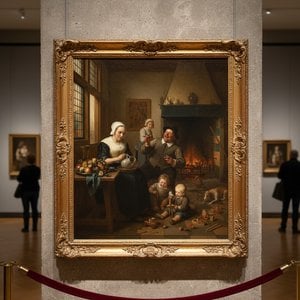
Metsu's distinctive style—characterized by its understated elegance and meticulous attention to detail—established him as one of the foremost practitioners of genre painting during the Dutch Golden Age. Unlike Rembrandt’s dramatic theatricality or Vermeer’s serene idealism, Metsu eschewed grand narratives in favor of intimate portrayals of domestic life, capturing fleeting moments of human emotion with remarkable sensitivity. His canvases frequently depict young women engaged in commonplace activities—such as sewing or reading—often framed within windows that serve as symbolic portals to the outside world. Recurring motifs—including poultry sellers and market scenes—reflect Metsu’s fascination with emblems—visual symbols conveying moral lessons and philosophical concepts—a hallmark of humanist thought prevalent during his era. Among Metsu's most celebrated achievements are *The Sick Child* (c. 1664–66), a poignant depiction of maternal tenderness that draws inspiration from Vermeer’s masterful use of light and color; *Portrait of the Hinlopen Family*, a masterpiece blending genre conventions with portraiture—demonstrating Metsu's ability to synthesize diverse artistic influences into a cohesive visual idiom; and *A Visit to the Nursery*, which exemplifies his meticulous observation of domestic interiors and his skillful rendering of naturalistic textures.
Legacy and Influence
Gabriel Metsu’s oeuvre—though comparatively modest in size—commands considerable admiration among art historians and collectors alike. His unwavering dedication to capturing the subtleties of human experience—coupled with his masterful command of technique—solidified his reputation as a visionary artist who transcended stylistic boundaries. Metsu's influence extended beyond his immediate contemporaries, inspiring subsequent generations of painters—including Pieter de Hooch—who embraced similar aesthetic principles and compositional strategies. Today, Metsu’s paintings reside in prestigious museums across Europe—most notably the Rijksmuseum in Amsterdam—where they continue to captivate audiences with their timeless beauty and profound psychological insight. His legacy serves as a reminder that artistic excellence can flourish even amidst stylistic diversity—and that true artistry resides not merely in grand gestures but in the quiet contemplation of everyday life.



 Переглянути в інтер'єрі
 Перейти до друку
 Надіслати
 Поділитися
 Деталі
 Посібник

 Завантажити
 Схожі предмети колекціонування
 Рентгенівське дослідження
 Слайд-шоу
 Статистика переглядів

 Читати далі






































 Скляний варіант доступний лише для розмірів до 110 см