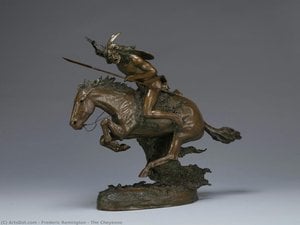
A Chronicler of the Vanishing West: The Life and Art of Frederic Remington
Frederic Sackrider Remington, народжений у Кантоні, штат Нью-Йорк, 4 жовтня 1861 року, не був продуктом Західного краю, який він так живо зображував; радше, він був східняком, який сформував свою мистецьку ідентичність через захоплення та наполегливе вивчення. Його походження натякало на життя, далеке від пильних стежок і кавалерійських маршів – французько-баскська спадщина змішувалася зі сталею республіканськими корнями Нової Англії, батьком, який був полковником та редактором газети Вільної Армії, та зв’язками з відомою династією Remington Arms через далеких родичів. Проте, раннє знайомство з військовими темами, поєднане з непокірним духом і гострим зором на оповідання, визначило його шлях до того, щоб стати, мабуть, найвідомішим художником Західного краю. Його дитинство переїхало в Блумінгтон, Іллінойс, потім повернулося до Кантона та, нарешті, Оджєнсбурга, штат Нью-Йорк, але його уява залишалася захопленою історіями про життя на кордоні. Хоча спочатку його спрямували до військової освіти в Інституті Святого Ендрюса, Remington’s справжня пристрасть полягала не в тому, щоб виконувати накази, а в тому, щоб спостерігати та інтерпретувати навколишній світ через мистецтво. Короткий період навчання у Yale University підтвердив це; футбол і малювання мали більше значення, ніж формальні академічні заняття.
Від Ілюстратора до Художника: Формування Мистецького Бачення
Мистецька подорож Remington’s розпочалася не з великих полотен, а з чорнила та паперу. Його перша опублікована робота – карикатура для *Yale Courant*, позначила ранню схильність до зображення дії та наративу. Ключова поїздка в Монтана 1881 року запалила його вічне захоплення Заходом. Це не було просто поглядом туриста; Remington прагнув зануритися в культуру, спостерігаючи кочівників, індіанців та ландшафт. Спочатку він намагався зайнятися фермерством та розвідкою родовищ, але ці спроби виявилися невдалими, звільняючи його для повного присвячення мистецтву. Повернувшись на Схід, він швидко зарекомендував себе як ілюстратора для журналів *Harper’s Weekly* та *Collier’s*, його динамічні зображення західних сцен захопили національну публіку, яка прагнула історій про край. Ці ілюстрації не були просто звітуванням; вони були наповнені драмою, енергією та романтизованим баченням Заходу, яке глибоко резонувало з уявленнями громадськості. Саме через цю роботу Remington відточив свої навички композиції, зображення руху та передачі емоцій – якості, які пізніше визначили його картини. Він отримав мінімальну формальну освіту за межами кількох уроків малювання в Yale та короткого періоду навчання в Art Students League, розвиваючи замість цього унікальний стиль, що характеризується енергійними малюнками, яскравими кольорами та зосередженістю на реалізмі, змішаному з драматичним акцентом.
Зображення Зникаючого Світу: Теми та Стиль
Мистецтво Remington’s нерозривно пов'язане з певним моментом в історії Америки – розквітоту Західного краю. Його полотна населені іконографічними фігурами: суворі кочівники, що їздять на великих рогатих биках, стримані індіанці, які стикаються з витісненням, та солдати УСЦ, залучені як у героїчних боях, так і в трагічних конфліктах. Він не соромився зображати жорсткі реалії життя на кордоні, але його роботи часто схиляються до романтизованого зображення, підкреслюючи мужність, пригоди та зіткнення культур.
Його картини – це не просто історичні документи; це емоційні наративи, які досліджують теми героїзму, втрати та неминучий поступ прогресу. Стиль Remington’s розвивався з часом, від більш вузьких, академічних зображень до більш вільних, експресивних малюнків. Він був майстром зображення руху – великі рогаті бики, що галопують по рівнинах, кочівники, що борються зі скотом, солдати, що кидаються у бій. Він часто використовував швидкі ескізи та фотографії як джерельну матеріал, але його мистецтво завжди виходило за рамки простого наслідування, наповненого власним унікальним баченням і емоційною інтенсивністю. Значні роботи, такі як *My Ranch*, *Waiting in the Moonlight*, *Ridden Down* (1905) та *The Long-Horn Cattle Sign* (1908), демонструють його здатність захоплювати велич та вразливість американського Заходу.
Наслідування та Тривале Вплив
Frederic Remington помер несподівано 26 грудня 1909 року у віці 48 років, залишивши за собою величезний обсяг робіт, який і сьогодні захоплює аудиторії. Його вплив на західне мистецтво незаперечний; він не просто зображував Захід, а й допоміг *визначити* його для поколінь американців. Він встановив візуальну мову кордону – іконографію кочівників, індіанців та солдатів УСЦ, яка глибоко вкорінилася в уявленнях громадськості.
- Його роботи надихнули безліч інших художників, включаючи N.C. Wyeth та Zane Grey.
- Музей Frederic Remington з мистецтва в Оджєнсбурзі, штат Нью-Йорк, є свідченням його тривалого спадку, зберігаючи велику колекцію його картин, скульптур і архівних матеріалів.
- Його роботи постійно виставляються у великих музеях по всій країні, включаючи Metropolitan Museum of Art та Amon Carter Museum of American Art.
Зображення Remington’s, хоча іноді критикують за їх романтизоване зображення Заходу, пропонують цінний погляд на вирішальний період в історії Америки. Він захопив не те, що *було*, а те, що люди *вірили* про Захід – його міфи, легенди та вічне привабливість. Він залишається потужним символом американського духу — хронікарем зникаючого світу, який перетворив його на тривалий мистецький спадок.



 Перейти до друку
 Надіслати як листівку
 Поділитися
 Детальніше

 Завантажити
 Схожі експонати
 Слайд-шоу
 Статистика


 Читати далі