БЕЗКОШТОВНА КОНСУЛЬТАЦІЯ З МИСТЕЦТВА

x
Замовити репродукцію Замовити репродукціюКупити цифрове зображення Купити цифрове зображення НадіслатиНадіслати
ДеталіДеталі Додати до улюблених Додати до улюблених ЗавантажитиЗавантажити Схожі виробиСхожі вироби Рентгенівське дослідженняРентгенівське дослідження Слайд-шоуСлайд-шоу

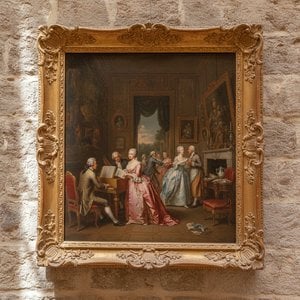
First Steps

Discover 'First Steps' by Franz Ludwig Catel (1820). A charming genre painting depicting a family in rural Italy. Explore this neoclassical masterpiece & its connection to Gérard’s ‘Ages of Man.’

Discover Franz Ludwig Catel's landscapes & genre paintings from Rome! Explore his classic style, Sicilian influences, & pivotal role in German art history.

Гікле / Художній принт

Музейна якість друку جيкле або на полотні з оперативним виготовленням та різноманітними варіантами фінішної обробки.

P118B $10
P118H $10
P118W $10
P438Z $10
P508JH $12
P508YH $12
P805H $10
P805Z $10
P919BZ $10
P919G $10
P919XJ $10
P959ZH $10
P968JZ $12
W106C $8
W218G $10
W218JH $8
W218Y $10
W307PJ $10
W316G $10
W316PJ $8
W316Y $10
W398PJ $8
W4111J $10
W500HY $15
W500JH $15
W692G $12
W849H $8
W940BG $15
W953PJ $8

Standard
custom
CM
INCH

Обирайте з наших стандартних розмірів, що відповідають оригінальним пропорціям твору мистецтва.

ширина
висота

Ви можете вказати власні розміри, щоб репродукція ідеально підійшла до конкретної рами або інтер'єру. Якщо обраний вами розмір не відповідає пропорціям оригіналу, ми або обріжемо полотно, або розширимо зображення за допомогою дзеркального відображення чи суцільної заливки країв. Перед початком виробництва вам буде надіслано цифровий макет для затвердження.
Будь ласка, зверніть увагу, що попередній перегляд на екрані не відображає фактичне обрізання або розширення. Тільки макет точно покаже фінальну композицію.
Хоча можливість замовлення індивідуальних розмірів доступна, ми рекомендуємо обирати формат із попередньо визначеного списку, щоб зберегти оригінальні пропорції.

Доставка по всьому світу () за 2 тижні замість стандартних 4/5 тижнів. (4 Липень)

why_choose_icon
Безкоштовна експрес-доставка по всьому світу
why_choose_icon
Високоякісне лляне полотно
why_choose_icon
Повне страхове покриття доставки
why_choose_icon
Гарантія відшкодування митних зборів
why_choose_icon
Гарантія точного відтворення кольорів
why_choose_icon
Політика повернення протягом 60 днів (лише у разі виявлення дефектів)
why_choose_icon
Гарантія повернення 100% коштів
why_choose_icon
Знижка на багатоелементні замовлення

Загальна вартість

-

reproduction

First Steps

Гікле / Художній принт

Розмір репродукції

-

Підсумкова ціна

-

Основні факти

  • Dimensions: 47.6 x 37.4 cm
  • Artist: Franz Catel
  • Subject: Child's first steps
  • Notable elements: Italian setting, family
  • Year: 1820-25
  • Influences:
    • Gérard
    • Allegory
  • Style: Neoclassical

Вікторина з мистецтва

Для кожного питання є лише одна правильна відповідь.

Запитання 1:
What is the primary theme depicted in Franz Ludwig Catel’s ‘First Steps’?
Запитання 2:
In what historical context was ‘First Steps’ likely created?
Запитання 3:
The painting’s setting is primarily located in:
Запитання 4:
What architectural element is prominently featured in ‘First Steps’ to reinforce its thematic message?
Запитання 5:
Franz Ludwig Catel’s style in ‘First Steps’ is best described as:

Опис експоната

A Moment of Domestic Harmony: Franz Ludwig Catel’s “First Steps”

Franz Ludwig Catel's "First Steps," painted around 1820-25, is more than just a charming depiction of a young child taking its first tentative steps; it’s a poignant meditation on continuity and the enduring promise of family within the evolving landscape of post-revolutionary Europe. This idyllic scene, rendered in rich oil paints, transports us to a sun-drenched courtyard in rural Italy – a setting deliberately chosen by Catel to evoke the classical ideals of harmony and balance, subtly contrasting with the turbulent social shifts occurring across the continent.

The painting’s subject matter—a young girl supported by her mother as she embarks on this momentous occasion—resonates deeply with a popular genre theme of the early 19th century. Following the upheaval of the French Revolution, there was a widespread desire for stability and a return to traditional values. Families, representing the bedrock of society, became potent symbols of reassurance and continuity. Catel masterfully captures this sentiment, presenting a scene that feels both timeless and remarkably contemporary. The peasant family depicted isn’t idealized in an overly romanticized way; rather, they are presented with a quiet dignity and warmth, embodying a sense of groundedness and connection to the land.

A Neoclassical Composition: Light, Space, and Detail

Catel's technical skill is immediately apparent in his masterful use of light and shadow. The scene is bathed in a warm, golden glow, suggesting an idyllic afternoon. He employs a carefully orchestrated interplay of light to highlight the central figures – the mother and child – while subtly receding into the background, creating a sense of depth and spatial awareness. The architectural details—the simple yet sturdy walls of the courtyard, the arched doorway hinting at a larger space beyond—are rendered with meticulous precision, reflecting Catel’s training in the École des Beaux-Arts in Paris.

Notice also the attention to detail in the depiction of everyday objects: the two chairs positioned invitingly, the bowl containing fruit or vegetables – these elements ground the scene in a tangible reality. The artist's brushwork is smooth and refined, contributing to the overall sense of serenity and order. The color palette is restrained yet vibrant, dominated by earthy tones—ochres, browns, and greens—that evoke the warmth of the Italian countryside.

Symbolism and Historical Context

The choice of an Italian setting is significant. Italy, with its ancient ruins and enduring traditions, represented a romanticized vision of antiquity for many European artists and intellectuals during this period. Catel’s work subtly references this fascination with the classical past, suggesting a connection between the present family and the timeless values embodied by the ancients. The inclusion of a contemporary peasant family within this idyllic setting serves as a deliberate contrast to the aristocratic ideals that had been challenged by the revolution. It suggests a belief in the inherent goodness and stability of the common people.

Furthermore, Catel’s work aligns with François Gérard's “Ages of Man,” a monumental Salon painting from 1808 at the Louvre Museum. While sharing the Italian setting, "First Steps" updates Gérard’s antique dress by depicting a contemporary peasant family, offering a more immediate and relatable portrayal of human experience. This subtle shift in perspective reflects a broader trend in art during this period—a move away from purely mythological subjects towards scenes of everyday life.

A Legacy of Italian Influence

"First Steps" is a testament to Franz Ludwig Catel’s artistic journey, beginning with his training in Berlin and culminating in his embrace of the Neoclassical style while living in Rome. The painting embodies the spirit of the era—a desire for stability, harmony, and connection to both tradition and nature. It's a beautiful reminder that even the smallest moments – a child’s first steps – can hold profound significance, representing not only personal growth but also the enduring promise of family and continuity within a changing world. Reproductions of this evocative work capture its warmth and timeless appeal, making it a cherished addition to any collection or interior space.


Біографія митця

Rembrandt Peale: A Pioneer of American Portraiture

Born in near present-day Bucks County, Pennsylvania, in 1778, Rembrandt Peale emerged as a pivotal figure in the early development of American portrait painting. His life was inextricably linked to his father, Charles Willson Peale, a renowned naturalist, artist, and museum curator – a connection that profoundly shaped both their artistic trajectories and ultimately established a legacy of scientific observation interwoven with artistic skill.

Rembrandt’s childhood was immersed in the world of art and science. Unlike many artists who pursued formal training in Europe, Rembrandt received his education primarily through his father's tutelage. Charles instilled in him not only painting techniques but also a deep appreciation for natural history, encouraging his son to study anatomy, botany, and various specimens collected during his extensive travels. This dual focus—artistic representation and scientific documentation—would become a hallmark of Peale’s oeuvre.

Early influences were diverse, ranging from the classical ideals championed by his father to the burgeoning neoclassical style gaining traction in Europe. However, Rembrandt quickly developed a distinctive approach, characterized by a meticulous attention to detail, a warm palette, and an ability to capture not just physical likeness but also the personality and character of his subjects. His early works, including self-portraits at the age of thirteen, demonstrated remarkable technical skill and a nascent understanding of light and shadow.

A Career Defined by Portraits and Museums

Peale’s career unfolded across several key phases. Initially, he worked alongside his father in establishing the Peale Museum in Philadelphia, a groundbreaking institution that combined a gallery of fine art with a natural history collection—a truly innovative concept for its time. This museum served as both a platform for showcasing his own work and a vital resource for disseminating knowledge about science and art to the public.

He became particularly celebrated for his portraits of prominent figures, including George Washington, Thomas Jefferson, John Marshall, and numerous members of Philadelphia’s elite society. These paintings were not merely likenesses; they aimed to convey an air of dignity, authority, and civic virtue – qualities highly valued in the young United States. His portrait of George Washington, “Patriae Pater” (Father of the Fatherland), is arguably his most famous work, a monumental canvas that solidified his reputation as one of America’s leading portraitists.

Beyond commissioned portraits, Peale also produced numerous genre scenes and historical paintings, often incorporating elements of scientific illustration. Works like “Court of Death” (1820) – depicting prominent figures gathered around a cadaver—demonstrate his ability to blend artistic skill with anatomical accuracy and a fascination with mortality.

Technique and Style

Peale’s style evolved over time, reflecting the changing aesthetic currents of his era. His early portraits were influenced by neoclassical principles, characterized by balanced compositions, clear lines, and a restrained palette. However, as he matured, his work became increasingly expressive, with richer colors, softer brushstrokes, and a greater emphasis on capturing the nuances of human emotion.

He was a master of light and shadow, skillfully using chiaroscuro to create dramatic effects and highlight key features. His meticulous attention to detail—particularly in rendering fabrics, textures, and facial expressions—contributed significantly to the realism and immediacy of his portraits. Peale’s technique also benefited from his scientific background; he understood anatomy and perspective with a precision that informed his artistic practice.

Legacy and Historical Significance

Rembrandt Peale's contributions extend beyond his individual artworks. He played a crucial role in establishing the tradition of portraiture in America, demonstrating that it could be both aesthetically pleasing and socially significant. His work helped to shape the visual culture of the early republic, providing iconic representations of its leaders and ideals.

Furthermore, his establishment of the Peale Museum was instrumental in fostering public engagement with art and science. It served as a model for future museums and contributed significantly to the development of American cultural institutions. Peale’s legacy endures not only through his paintings but also through his pioneering spirit—a testament to the power of combining artistic talent with scientific curiosity.

franz ludwig catel

franz ludwig catel

1778 - 1856 , Germany

Короткі факти

  • Artistic Movement Or Style: Neoclassicism
  • Artists Or Movements Influenced By This Artist:
    • John Varley
    • William Hazlitt
  • Artists Who Influenced This Artist:
    • Charles Willson Peale
    • Rembrandt Harmenszoon van Rijn
  • Date Of Birth: Feb 22, 1778
  • Date Of Death: Oct 3, 1860
  • Full Name: Rembrandt Peale
  • Nationality: American
  • Notable Artworks:
    • Court of Death
    • George Washington, Patriae Pater
    • Rubens Peale with a Geranium
  • Place Of Birth: Near present-day Richboro, PA