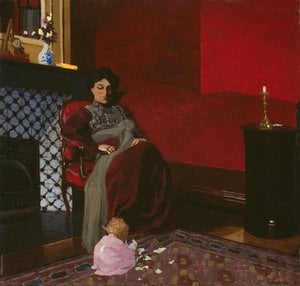
Félix Vallotton’s “Verdun”: A Haunting Echo of Modern Warfare
Félix Vallotton's "Verdun," painted in 1917, isn’t merely a depiction of a battlefield; it’s a visceral embodiment of the horrors and anxieties of World War I. This oil on canvas, currently residing within the Musée de l’Armée in Paris, transcends simple representation to become a profoundly unsettling meditation on destruction, chaos, and the erosion of humanity amidst industrial warfare. Vallotton, a key figure within the Nabis movement—a group known for their exploration of color and flattened forms—utilized his distinctive style to capture not just the physical devastation but also the psychological weight of the conflict.
A Fragmented Landscape of Trauma
The painting immediately confronts the viewer with a scene dominated by an immense explosion, rendered in stark black, white, and shades of grey. It’s not a dramatic, explosive moment captured mid-action; instead, Vallotton presents a tableau of aftermath—a landscape utterly ravaged and transformed into a geometric puzzle. Jagged lines, reminiscent of Cubist fragmentation, dissect the scene, suggesting both the physical shattering of buildings and the fracturing of human experience. The sky is choked with smoke and ash, creating an oppressive atmosphere of doom. The color palette is deliberately muted, devoid of vibrant hues, reflecting the bleakness and despair of the situation. This restrained use of color amplifies the painting’s emotional impact, forcing the viewer to confront the stark reality of war without resorting to sensationalism.
Symbolic Resonance: The Geometry of Destruction
Beyond its immediate visual impact, “Verdun” is rich in symbolic meaning. Vallotton employs a deliberate geometric structure—triangles and diagonals—to organize the composition. These shapes aren’t accidental; they represent the systematic destruction wrought by artillery fire, transforming the battlefield into an abstract diagram of devastation. The scattered figures, barely discernible amidst the chaos, are not heroic soldiers but rather anonymous victims swallowed by the conflict. The presence of a lone airplane in the upper right corner serves as a chilling reminder of the new technologies introduced to warfare—instruments of destruction that further dehumanized the experience. The rain depicted falling diagonally across the canvas symbolizes both the physical deluge and the overwhelming sense of sorrow and loss.
Historical Context: A Reflection of a Nation’s Trauma
“Verdun” was painted during the height of the Battle of Verdun, one of the longest and bloodiest battles in World War I. This protracted conflict, known as “the meat grinder,” resulted in staggering casualties for both sides—an estimated 714,000 French and German soldiers perished. The battle became a symbol of French resilience and sacrifice, but also of the immense suffering inflicted by modern warfare. Vallotton’s painting isn't a glorification of war; rather, it’s a poignant reflection of the nation’s trauma—a visual testament to the human cost of conflict. The Musée de l’Armée, itself a repository of French military history, provides an ideal setting for this powerful artwork, ensuring its continued relevance as a reminder of the horrors of the past.
Collecting and Experiencing “Verdun” – A Reproduction Worth Considering
Originals of works like "Verdun" are incredibly rare and highly valued. However, for those seeking to bring this evocative masterpiece into their homes or offices, meticulously crafted oil painting reproductions offer a remarkable alternative. WahooArt.com provides exceptional quality reproductions that faithfully capture Vallotton’s unique style and the painting's profound emotional impact. These reproductions serve not only as decorative objects but also as powerful reminders of history—a tangible connection to one of the 20th century’s most devastating conflicts. Consider a reproduction alongside other pieces reflecting themes of war, loss, or resilience – it will undoubtedly become a focal point and spark conversation.



 Переглянути в інтер'єрі
 Перейти до друку
 Надіслати
 Поділитися
 Деталі
 Посібник

 Завантажити
 Схожі предмети колекціонування
 Рентгенівське дослідження
 Слайд-шоу
 Статистика переглядів


 Читати далі






































 Скляний варіант доступний лише для розмірів до 110 см