Придбайте цифрову копію високої роздільної здатності з покращеною якістю, що значно перевершує онлайн-перегляд.
Кожен файл ретельно підготовлений нашими фахівцями за допомогою сучасних інструментів та професійної ручної ретуші. Ми гарантуємо виняткову чіткість, точну передачу кольору та високу деталізацію кожного зображення.
Фінальний файл надсилається електронною поштою протягом 72 годин і оптимізований для негайного використання у професійних виданнях та друкованих матеріалах. Таку якість обирають провідні дизайнерські студії, видавництва та галереї.
Завантажте файл високої роздільної здатності для особистого використання, друку та творчих проєктів. ( Замовити принт Замовити репродукцію ручної роботи)
Обираючи WahooArt.com, ви отримуєте не просто зображення — ви отримуєте професійно вдосконалений цифровий витвір мистецтва, створений з надзвичайною точністю та підкріплений гарантією задоволення. Ось усе, що автоматично додається до вашого замовлення:

Ваш цифровий файл із зображенням високої роздільної здатності буде надісланий вам електронною поштою протягом 72 годин після оформлення замовлення — він буде готовий до негайного використання.

Ваш витвір мистецтва професійно оптимізовано за допомогою передових інструментів штучного інтелекту та ручної корекції, що забезпечує максимальну деталізацію, чіткість і точність передачі кольорів.

Випадково видалили або втратили файл? Не хвилюйтеся — ми надішлемо його вам повторно в будь-який час безкоштовно.

Насолоджуйтесь вашим витвором мистецтва миттєво без жодних мит, зборів або плати за доставку — цифрові завантаження завжди не оподатковуються.

Ми гарантуємо максимально точне відтворення оригінальних кольорів на вашому цифровому зображенні завдяки використанню професійних інструментів та систем управління кольором.

Якщо ви не задоволені придбаним цифровим зображенням, ми відкоригуємо його або повернемо 100% вартості протягом 100 днів — без жодних запитань.

Не задоволені покупкою? Отримайте повне повернення коштів протягом 100 днів після отримання цифрового файлу — без жодних запитань.

Купуйте 3 зображення — заощаджуйте 10% — Купуйте 5 — заощаджуйте 15% — Купуйте 10+ — заощаджуйте 20%. Чудово підходить для творчих проєктів, галерей та агентств.
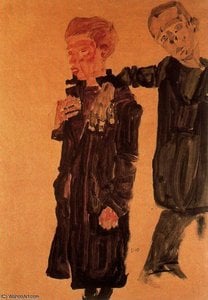
Egon Schiele's “Child in Black,” painted in 1911, isn’t merely a portrait; it’s a distilled essence of anxiety and nascent sexuality, a haunting glimpse into the artist’s intensely personal world. Created during a period of profound upheaval – both personally and within European art – this watercolor captures a young figure, likely a girl, rendered with an unsettling directness that speaks volumes about Schiele's fascination with vulnerability and the darker aspects of human experience. The painting immediately draws the viewer in with its muted palette—a symphony of grays, blacks, and subtle blues—creating an atmosphere of quiet contemplation tinged with unease. It’s a visual embodiment of Expressionism’s core tenets: prioritizing emotional impact over realistic representation.
To truly appreciate “Child in Black,” one must understand the turbulent backdrop against which it was created. Born in 1890 in Tulln an der Donau, Austria, Egon Schiele’s life was tragically shaped by illness and loss from a young age. The death of his father, a railway station master, due to syphilis at just fourteen profoundly impacted him, fueling a lifelong preoccupation with mortality and the fragility of existence. This early trauma, coupled with the subsequent loss of his sister Elvira, instilled in Schiele a deep-seated sense of melancholy and an unflinching gaze upon the human condition. His uncle’s guardianship, marked by control and disapproval of his artistic pursuits, further contributed to his independent spirit and rebellious nature – qualities that would become hallmarks of his work. The painting can be seen as a direct reflection of this internal struggle, a visual manifestation of grief and uncertainty.
Schiele’s mastery lies in his distinctive technique—a raw, almost violent application of watercolor. Notice the loose, gestural lines that define the child's form; they aren’t precise or idealized but rather convey a sense of immediacy and emotional intensity. The figure is rendered with an unsettling lack of detail, emphasizing its vulnerability and drawing attention to the subtle shifts in expression—a slight tilt of the head, a downward gaze – that hint at inner turmoil. The use of color is equally deliberate: the dominant blacks and grays create a somber mood, while small touches of blue suggest a melancholic longing. The background, with its indistinct wall and cryptic writing (likely a title or description), further isolates the child, intensifying the sense of loneliness and introspection. It’s a technique that prioritizes feeling over form, echoing the core principles of Expressionism.
“Child in Black” is rich with symbolic potential. The child herself represents innocence—a fleeting, vulnerable state threatened by the encroaching realities of life and death. The black clothing could symbolize mourning or a sense of impending doom, while the hat adds an element of defiance, suggesting a quiet resistance to the forces that seek to diminish her spirit. The painting’s overall atmosphere evokes a sense of unease, prompting viewers to contemplate themes of mortality, loss, and the complexities of human emotion. It's not a cheerful portrait; it’s a poignant meditation on the darker aspects of existence—a subject Schiele explored relentlessly throughout his tragically short career. The ambiguity surrounding the child’s identity further enhances the painting’s power, inviting viewers to project their own anxieties and interpretations onto the scene.
WahooArt offers meticulously crafted hand-painted reproductions of “Child in Black,” allowing you to bring this powerful work of art into your home or office. Each reproduction is created by skilled artists using archival-quality materials, ensuring that it captures the essence and emotional depth of Schiele’s original masterpiece. Explore our collection today and experience the haunting beauty of “Child in Black” firsthand.


1890 - 1918 , Австрія

 Переглянути в інтер'єрі
 Надіслати як листівку
 Поділитися
 Детальніше

 Завантажити
 Схожі експонати
 Рентгенівське дослідження
 Слайд-шоу

 Читати далі