Написана вручну олією на полотні у вашому розмірі та рамі, виготовлена на замовлення нашими художниками. ( Перейти до друку
Перейти до цифрових зображень)

Обирайте з наших стандартних розмірів, що відповідають оригінальним пропорціям твору мистецтва.
Ви можете вказати власні розміри, щоб репродукція ідеально підійшла до конкретної рами або інтер'єру. Якщо вибраний вами розмір не відповідає пропорціям оригіналу, ми або обріжемо полотно, або доповнимо картину додатковими елементами, промальованими вручну. Цифровий макет буде надіслано вам на затвердження перед початком виробництва.
Зверніть увагу, що попередній перегляд на екрані не відображає фактичне обрізання або розширення зображення. Тільки макет точно покаже остаточну композицію.
Хоча ми можемо виготовити виріб у нестандартному розмірі, для збереження оригінальних пропорцій рекомендуємо обирати варіанти зі встановленого списку.
Доставка по всьому світу () за 3–4 тижні замість стандартних 5 тижнів. (3 Жовтень). Без жодних компромісів у якості.
Cuenca
Розмір репродукції
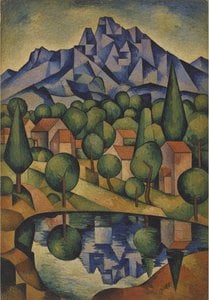
In his 1934 masterpiece, Cuenca, David Bomberg invites the viewer into a profound meditation on solitude and the enduring resilience of life amidst the overwhelming grandeur of nature. This oil on canvas transcends a mere topographical record of a Spanish hillside; it is an evocative window into a landscape where human presence and geological majesty exist in a delicate, poetic tension. The painting captures a panoramic view of a town nestled precariously yet harmoniously upon a rugged slope, where humble dwellings are scattered like quiet thoughts across the vast, undulating terrain. Through his masterful command of the medium, Bomberg distills the essence of this mountainous vista, offering an experience that is as much about emotional depth as it is about visual splendor.
The composition is anchored by a sense of monumental scale, with towering mountains dominating the horizon and creating a backdrop of immense power. In the foreground, trees punctuate the view, providing essential textural contrast and guiding the eye into the expansive scene. The sky, draped in soft, cloudy layers, lends an atmospheric weight to the work, suggesting the shifting moods of a mountain climate. This deliberate framing creates a captivating dialogue between the intimacy of the human settlement and the infinite scale of the natural world, fostering a contemplative space where themes of permanence and vulnerability intertwine.
Rooted in the transformative principles of Modernism, Cuenca showcases Bomberg’s sophisticated engagement with the legacies of Cubism and the structural insights of Cézanne. The artist employs a technique that prioritizes geometric simplification and multiple perspectives to sculpt spatial depth within the landscape. Rather than relying on rigid outlines, he utilizes loose, expressive brushstrokes that capture the very dynamism of the mountain air, imbuing the scene with a palpable sense of movement and life. This fluid application of paint allows the forms of the mountains and buildings to emerge organically from the canvas.
The color palette is masterfully restrained, leaning toward muted, earthy tones—predominantly rich browns and deep greens—that reflect the subdued, soulful hues characteristic of an autumnal landscape. Bomberg’s skillful use of tonal gradations allows him to define mass and volume, creating a sense of "the artist's consciousness of mass." This approach ensures that every element, from the smallest stone structure to the most distant peak, possesses a physical presence that feels both grounded and ethereal. For the discerning collector or interior designer, this work offers a sophisticated interplay of texture and tone, making it a timeless addition to any curated space.
To understand Cuenca is to understand a pivotal moment in Bomberg’s artistic evolution. Created during a period when the artist was moving away from the radical, fractured geometries of his earlier Cubo-Futurist years, this work represents a return to an aesthetic rooted in nature and organic form. The trauma of the First World War and the subsequent shift toward a more figurative, landscape-driven style are palpable here; there is a search for the sublime within the natural world that replaces the mechanical fervor of his youth. The painting reflects a period of profound transition, where the artist sought to realize the poetry found in mankind's contemplation of nature.
The emotional impact of the piece lies in its ability to evoke a sense of quiet awe. It is a work that speaks to the heart of anyone moved by the beauty of the untamed world and the quiet strength of those who inhabit it. Whether viewed as a study of light and shadow or as a symbolic representation of human endurance, Cuenca remains a visually arresting composition. For those seeking to bring a sense of historical depth and tranquil majesty into their surroundings, this reproduction serves as a powerful testament to Bomberg’s ability to capture the very breath of the landscape.
«Cuenca» Девід Бомберг було створено у 1934 році.
Сторінка Схожі твори для твору «Cuenca» Девід Бомберг містить схожі витвори мистецтва.
Емоційний тон, зафіксований для «Cuenca» Девід Бомберг, — Спокійний. Він узагальнює почуття, які виражає цей твір.
Автором твору «Cuenca» є Девід Бомберг. Робота внесена до каталогу під іменем Девід Бомберг.
У творі "Cuenca" Спокійний настрій супроводжується Спокійний емоцією.
«Cuenca» Девід Бомберг — це композиція у форматі Альбомна орієнтація, розмір якої в оригіналі становить 32 x 40 cm.
Коли у 1934 році було створено «Cuenca», художнику Девід Бомберг (народився/лася у 1890) було 44 років.
Народившись у родині польсько-єврейських іммігрантів, Абрахама та Ребекки Бомберг, він спочатку навчався в Технічній художній школі Сіті та Гілдс, перш ніж опанувати професію літографа в Бірмінгемі.
Під керівництвом Волтера Сікерта у Вестмінстерській школі мистецтв (1908–1910) він перейняв пристрасть майстра до форми та міського життя. Важливим етапом стало знайомство з творчістю Поля Сезанна завдяки виставці Роджера Фрая «Мане та постімпресіоністи» 1910 року. Згодом, навчаючись у Слейд-школі мистецтв (1911), він здобув премію Тонкса за свій портрет однокурсника Айзека Розенберга.
Досвід служби рядовим під час Першої світової війни глибоко вплинув на його художнє бачення, спонукаючи відійти від абстракції.
У 1920-х роках Бомберг перейшов до більш фігуративного стилю, зосередившись на портретах та пейзажах, створених безпосередньо з натури. Він розвивав дедалі експресіоністичнішу техніку, що вирізнялася текстурним імпасто та емоційною інтенсивністю.
Подорожі Близьким Сходом (зокрема Палестиною) та Європою суттєво вплинули на його пізні роботи. Його зображення Єрусалима є особливо визначними.
1890 - 1957 , Сполучене Королівство