x
Переглянути в інтер'єріПереглянути в інтер'єрі Перегляд в ARПерегляд в AR Замовити репродукцію ручної роботи Замовити репродукцію ручної роботиКупити цифрове зображення Купити цифрове зображення Надіслати як листівкуНадіслати як листівку
ДетальнішеДетальніше Додати до улюблених Додати до улюблених ЗавантажитиЗавантажити Схожі експонатиСхожі експонати Рентгенівське дослідженняРентгенівське дослідження Слайд-шоуСлайд-шоу

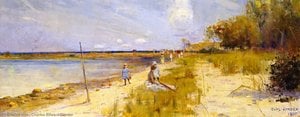
MIrage

Discover "Mirage" by Charles Conder – a captivating Australian Impressionist painting of a woman and a ball. Explore this iconic work's details & history on WahooArt.

"Ukrainian Meta Description": "Відкрийте для себе захопливі пейзажі та імпресіоністичні сцени Чарльза Кондера (1868-1909), ключової фігури австралійської Heidelberg School. Побачте його яскраві картини портів, пляжів та французької провінції на WahooArt."

Гікле / Художній принт

Музейна якість друку جيкле або на полотні з оперативним виготовленням та різноманітними варіантами фінішної обробки. (Замовити репродукцію ручної роботи Замовити репродукцію ручної роботиКупити цифрове зображення Купити цифрове зображення)

P118B $10
P118H $10
P118W $10
P438Z $10
P508JH $12
P508YH $12
P805H $10
P805Z $10
P919BZ $10
P919G $10
P919XJ $10
P959ZH $10
P968JZ $12
W106C $8
W218G $10
W218JH $8
W218Y $10
W307PJ $10
W316G $10
W316PJ $8
W316Y $10
W398PJ $8
W4111J $10
W500HY $15
W500JH $15
W692G $12
W849H $8
W940BG $15
W953PJ $8

Стандартний розмір
індивідуальний
CM
INCH

Обирайте з наших стандартних розмірів, що відповідають оригінальним пропорціям твору мистецтва.

ширина
висота

Ви можете вказати власні розміри, щоб репродукція ідеально підійшла до конкретної рами або інтер'єру. Якщо обраний вами розмір не відповідає пропорціям оригіналу, ми або обріжемо полотно, або розширимо зображення за допомогою дзеркального відображення чи суцільної заливки країв. Перед початком виробництва вам буде надіслано цифровий макет для затвердження.
Будь ласка, зверніть увагу, що попередній перегляд на екрані не відображає фактичне обрізання або розширення. Тільки макет точно покаже фінальну композицію.
Хоча можливість замовлення індивідуальних розмірів доступна, ми рекомендуємо обирати формат із попередньо визначеного списку, щоб зберегти оригінальні пропорції.

Доставка по всьому світу () за 2 тижні замість стандартних 4/5 тижнів. (3 Вересень)

why_choose_icon
Безкоштовна експрес-доставка по всьому світу
why_choose_icon
Високоякісне лляне полотно
why_choose_icon
Повне страхове покриття доставки
why_choose_icon
Гарантія відшкодування митних зборів
why_choose_icon
Гарантія точного відтворення кольорів
why_choose_icon
Політика повернення протягом 60 днів (лише у разі виявлення дефектів)
why_choose_icon
Гарантія повернення 100% коштів
why_choose_icon
Пропозиція на оптові замовлення

Загальна вартість

$ 68

reproduction

MIrage

Гікле / Художній принт

Розмір репродукції

-

Підсумкова вартість

$ 68

Основна інформація

  • Artistic style: Impressionism
  • Movement: Heidelberg School
  • Medium: Watercolor on paper
  • Title: Mirage
  • Location: Private Collection
  • Year: 1889
  • Artist: Charles Conder

Квіз про мистецтво

У кожному запитанні лише одна правильна відповідь.

Запитання 1:
What artistic movement is Charles Conder most associated with?
Запитання 2:
In 'Mirage,' what prominent element is depicted near the center of the painting, suggesting a change in weather conditions?
Запитання 3:
What year was 'Mirage' painted by Charles Edward Conder?
Запитання 4:
Charles Conder was born in which city?
Запитання 5:
The painting 'Mirage' primarily showcases a scene of:

A Mirage of Light and Leisure: Charles Edward Conder’s “Mirage”

Charles Edward Conder's "Mirage," painted in 1889, isn’t merely a depiction of a landscape; it’s an invitation into a realm where reality subtly bends, inviting contemplation on the ephemeral nature of perception and the allure of the Australian outback. Born in Tottenham, London, Conder’s journey led him to Australia, where he became a pivotal figure within the Heidelberg School – a movement that championed a distinctly Australian artistic voice, rejecting European academic traditions in favor of capturing the light, color, and spirit of the continent.

The painting immediately draws the eye with its vibrant palette. Warm ochres dominate the foreground, punctuated by the cool blues and greens of distant trees and sky. Conder masterfully employs an Impressionistic technique, utilizing loose brushstrokes and broken colors to capture the shimmering heat haze that defines the Australian landscape. This isn’t a photographic representation; rather, it's a subjective experience translated onto canvas – a distillation of light, color, and atmosphere. The composition itself is deceptively simple: a woman holding a ball in her hand, positioned beside a solitary tree against a backdrop of rolling hills. Yet, within this apparent stillness lies a subtle dynamism, a sense of movement created by the play of light and shadow.

The Symbolism of Leisure and Illusion

While superficially appearing as a charming pastoral scene, “Mirage” is rich in symbolic meaning. The woman holding the ball evokes a sense of carefree leisure – a quintessential image of Australian summer. It speaks to a time of relaxation, social gatherings, and the simple pleasures of life. However, the presence of the ball itself introduces an element of illusion. Balls are often associated with games, entertainment, and even fleeting moments of joy. In this context, it suggests that these experiences, like the mirage itself, can be deceptive – beautiful but ultimately transient.

The solitary tree further amplifies this theme. Trees represent resilience, strength, and connection to the earth. Yet, its isolation within the vast landscape hints at a sense of loneliness or detachment. The woman’s position beside it suggests a moment of quiet contemplation, perhaps questioning the nature of her own place in this world.

A Window into the Heidelberg School

"Mirage" exemplifies the core tenets of the Heidelberg School – a group of Australian artists who sought to capture the unique character of their homeland. Unlike their European counterparts, they were deeply interested in portraying the light and color of the Australian landscape, often focusing on scenes of rural life and leisure. Conder’s work is characterized by its vibrant colors, loose brushstrokes, and emphasis on capturing the fleeting effects of light and atmosphere. His use of local pigments and his rejection of academic conventions firmly established him as a key figure in shaping Australian art.

Capturing the Essence of an Illusion

Conder’s skill lies not just in depicting a scene, but in conveying its *feeling*. The painting isn't about literal accuracy; it’s about capturing the subjective experience of being immersed in the heat haze of the Australian outback. The shimmering quality of the landscape, the sense of distance and ambiguity, all contribute to a powerful emotional impact. “Mirage” invites us to question our perceptions, to appreciate the beauty of illusion, and to contemplate the transient nature of life itself. It remains a captivating testament to Conder’s artistic vision and his profound connection to the Australian landscape.


Біографія митця

Early Life and Artistic Journey

Charles Edward Conder (1868 – 1909) was an English-born painter, lithographer and designer who left an indelible mark on the art world. Born in Tottenham, Middlesex, the second son of six children, of James Conder, civil engineer and Mary Ann Ayres, he spent several years as a young child in India before the death of his mother on 14 May 1873 in Bombay, aged 31 years; he was then sent back to England and attended a number of schools including a boarding school at Eastbourne, which he attended from 1877. He left school at 15, and his very religious, non-artistic father, against Charles’s natural artistic inclinations, decided that he should follow in his footsteps as a civil engineer. He was a direct descendant, on his father's side, of the well-known sculptor Louis-François Roubiliac. He had a profound appreciation for classical art and sculpture from an early age, which would later inform his stylistic choices. Despite his father’s reservations about artistic pursuits, Conder possessed an innate talent for drawing and painting—a passion that defied conventional expectations.

Artistic Career in Australia

In 1884, at the age of 16, he emigrated to Sydney, Australia, where he worked for his uncle, a land surveyor for the New South Wales government. However he disliked the work, much preferring to draw the landscape rather than surveying it. This formative experience ignited his lifelong fascination with capturing the beauty and grandeur of the Australian wilderness—a passion that would define his artistic output for decades to come. By 1886, he had become an artist for the Illustrated Sydney News alongside notable artists such as Albert Henry Fullwood and Frank Mahony. He attended the painting classes of Alfred James Daplyn and joined the Art Society of New South Wales.

The Heidelberg School and Notable Works

Conder’s masterpiece, Departure of the Orient – Circular Quay (1888), showcased his newfound mastery of form and brushwork. This dockside scene, depicting the bustling harbour at Sydney Cove at the moment when the *has cast off for her voyage to England*, was quickly purchased by the Art Gallery of New South Wales, making it Conder’s first work to enter a public collection. It exemplifies the Heidelberg School's distinctive style—characterized by loose brushstrokes, vibrant colours, and an emphasis on capturing fleeting moments of light and atmosphere. The painting is considered one of Australia’s most iconic artworks. Alongside Tom Roberts and Arthur Streeton, Conder embraced the plein air technique—painting outdoors directly from nature—a cornerstone of Heidelberg School aesthetics. He produced numerous landscapes that celebrate the Australian bush, infused with a sense of romantic idealism and emotional intensity. His work also included genre paintings depicting everyday life in Melbourne and Sydney, reflecting the social realities of the era.

Legacy and Later Life

Conder’s later years were plagued by poor health, including paralysis and a bout of delirium tremens. Despite these debilitating afflictions, he continued to paint—a testament to his unwavering dedication to art—producing several significant works during his final decade. His art was better received in England than in Paris, where critics often dismissed it as overly sentimental or lacking in technical sophistication. Henri de Toulouse-Lautrec painted his portrait in 1892, capturing Conder’s melancholic gaze and conveying a sense of inner turmoil—a reflection of the artist's personal struggles. He remained an active member of the art world until his death in London in 1909, leaving behind a legacy as one of Australia’s foremost Impressionist painters and a pivotal figure in establishing a uniquely Australian artistic tradition.
Чарльз Едвард Кондер

Чарльз Едвард Кондер

1868 - 1909 , Великобританія

Короткі факти

  • Artistic Movement Or Style: Гейдельбергская школа
  • Artists Who Influenced This Artist:
    • Альберт Генрі Фулвуд
    • Том Робертс
    • Франк Махони
  • Date Of Birth: 24 жовтня 1868 р.
  • Date Of Death: 9 лютого 1909 р.
  • Full Name: Charles Edward Conder
  • Nationality: Британський
  • Notable Artworks:
    • Відхід Оріента – Круговий док (1888)
    • Канікули в Ментоне (1888)
    • Під югами
  • Place Of Birth: Тоттенхем, Великобританія
Досліджуйте твори мистецтва, впорядковані за темами, стилями та характеристиками.