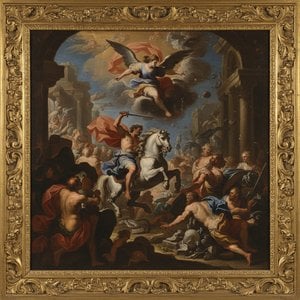
Carlo Maratta: The Architect of Roman Baroque Grace
Carlo Maratta, широко відомий як Марратті, є ключовою фігурою в історії італійського живопису XVII століття, що символізує перехід від розкішного бароко до більш витонченої та класично натхненної естетики. Він народився 15 травня 1625 року в Камерано, у Папській Державі – сьогодні частині Італії – і його мистецький шлях розпочався з раннього переїзду до Риму у вісім років. Це переміщення виявилося трансформаційним, оскільки він вступив до майстерської Андреа Саккі, художника, відомого своїми виваженими композиціями та прихильністю до класичних ідеалів. Вплив Саккі глибоко вплинув на розвиток стилю Марратті, навчивши його цінувати чіткість, баланс і стриманий емоційний вираз – що відрізняло його від більш театральних барокових співрозмірників. Це навчання було не лише технічним тренуванням; це було занурення у філософський підхід до мистецтва, який наголошував на інтелектуальній строгості та гармонійному дизайні, а не на драматичній спектативності. Марратті засвоїв ці принципи, але він не залишився в їхніх межах, демонструючи вражаючу здатність синтезувати класичні основи з потоками барокової чутливості.
Розквіт кар'єри у Римі
Талант Марратті швидко процвітав, і до середини 1650-х років він вже приваблював значні замовлення. Його ранні роботи, такі як *Відвідування* (1656) для Санта-Марія-делла-Паче, демонструють майстерне володіння світлом і рухом, а також виникаючу здатність наповнювати релігійні сцени відчутною духовністю. Він не просто відтворював усталені моделі; він втілював у них свій власний унікальний погляд, що характеризується граційними фігурами, елегантним одягом і тонким, але потужним використанням кольору. Цей період також став свідком створення *Таємниці Трійці, розкритих для святого Авґустина* (приблизно 1655 року), роботи, яка демонструє його вміння збалансувати класичну ідеалізацію з бароковим динамізмом. Зі зростанням його репутації зростав і масштаб та престиж його замовлень. Він став улюбленим художником провідних римських сімейств і, що більш важливо, папства. Протягом шести десятиліть Марратті отримував підтримку від не менше шести пап – що свідчить про його мистецьку майстерність та політичний досвід. Ця постійна папельна підтримка не лише забезпечувала фінансову безпеку, але й позиціонувала його в самому серці художнього та культурного життя Риму.
Синтез стилів і впливів
Стиль Марратті часто описують як “класичний бароко”, термін, який відображає його унікальне положення в мистецькій історії. Хоча він глибоко заснований на класичній традиції, що походить від Рафаеля, він не був імуний до впливу більш театральних тенденцій бароко. Його сучасник Джованні Беллорі визначив цей синтез, документуючи художній підхід Марратті в ранній біографії. Художник майстерно інтегрував використання світла та тіні, характерне для барокової живопису, з чіткістю форми та композиційним балансом, які були прихильні до класиків. Цей синтез призвів до творів, які були одночасно емоційно залучаючими і інтелектуально задовільними. Його палітра, хоч і яскравіша, ніж у барокових художників, часто була стриманою, зосереджуючись на гармонійних кольорових відносинах, а не на сміливих контрастах. Він виділявся в зображенні релігійних наративів, наповнюючи їх відчуттям пошани та духовної інтенсивності. *З’явлення Діви Марії до святого Філіпа Нері* (приблизно 1675 року), зараз знаходиться в Галереї Пітті у Флоренції, є чудовим прикладом його здатності інтерпретувати такі теми з грацією та глибокою емоційною глибиною.
За межами живопису: Відновлення та спадщина
Внесок Марратті виходив за рамки створення нових творів; він також був доручений збереженням мистецьких скарбів Риму. У 1702-1703 роках Інокентій VII призначив його *керівником камер Ватикану* і поклав на нього завдання з відновлення фресок Рафаеля в Станзах Ватикану – відповідальність, яка підкреслювала його статус провідного експерта з класичного мистецтва. Це підприємство було не лише технічною реставрацією; це був акт шани до одного з найбільших художніх скарбів Італії, доручений художнику, який розумів його значення. Марратті продовжував працювати продуктивно до своєї смерті 15 грудня 1713 року, залишивши за собою величезний і впливовий корпус робіт. Його спадщина як майстра класичного бароко збереглася протягом XVIII століття, впливаючи на покоління художників завдяки його акценту на чіткості, балансі та гармонійному дизайні.
Ключові роботи та довготривалий вплив
- Полювання Дафні: Динамічне зображення класичної міфології, що демонструє майстерність Марратті в зображенні руху та емоцій.
- Вбрання святих Марії (в Garland): Барокова шедевр з 1690 року, яка відзначається своїм божественним символізмом і динамічною композицією.
- Поклоніння волхвам: Приклад його майстерності в передачі релігійних сцен з грацією та духовністю.
- Відвідування: Рання робота, що демонструє розвиток його талантів у зображенні світла і руху в релігійному контексті.
- Таємниця Трійці, розкрита для святого Авґустина: Переконливий приклад його здатності збалансувати класичну ідеалізацію з бароковими елементами.
Марратті залишив після себе не лише конкретні картини; він також вплинув на розвиток стилю, запропонувавши витончений та інтелектуально задовільний альтернативний варіант театральним тенденціям високого бароко. Він є значущою фігурою для розуміння еволюції італійського мистецтва та його довготривалої спадщини на західну художню традицію.



 Переглянути в інтер'єрі
 Перейти до друку
 Надіслати
 Поділитися
 Деталі
 Посібник

 Завантажити
 Схожі предмети колекціонування
 Рентгенівське дослідження
 Слайд-шоу
 Статистика переглядів


 Читати далі






































 Скляний варіант доступний лише для розмірів до 110 см