Біографія митця
Benjamin Martin: A Pioneer of English Language and Scientific Instrument Making
Benjamin Martin (1705-1782) stands as a quietly significant figure in the annals of 18th-century England – a lexicographer, instrument maker, and dedicated educator who profoundly shaped the development of the English language and fostered a burgeoning interest in scientific inquiry. Born in Worplesdon, Surrey, to a family of modest means, Martin’s early life as a ploughboy belied an intellectual curiosity that would ultimately lead him to become one of the era's most influential polymaths. His journey exemplifies the rise of the independent scholar and demonstrates how proximity to centers of learning – in this case, the Royal Society near Fleet Street – could ignite a lifelong pursuit of knowledge.
Early Life and Intellectual Foundations
Martin’s formative years were marked by an unusual combination of practical labor and intellectual engagement. Initially working as a ploughboy, he later transitioned to teaching, a role that exposed him to the diverse range of minds within his community. Crucially, his location near Fleet Street placed him in close proximity to the Royal Society, where Isaac Newton lectured regularly. This environment profoundly influenced Martin’s thinking, instilling in him a deep appreciation for Newtonian physics and a commitment to disseminating scientific knowledge. He embraced the newtonian system, becoming an early champion of its principles within England. His dedication to learning was further fueled by a legacy of £500, which he judiciously invested in books and instruments – tools that would prove essential to his future endeavors.
A Lexicographer’s Vision: The Lingua Britannica Reformata
Martin's most enduring contribution lies in his meticulous compilation of the *Lingua Britannica Reformata*, published in 1749. This ambitious dictionary represented a significant leap forward from its predecessors, notably incorporating and largely preserving Nathan Bailey’s already established *Universal Dictionary* of 1721. However, Martin didn't simply replicate existing work; he sought to refine and modernize the English language as a whole. His dictionary was notable for its universal scope – aiming to explain the etymology of words – its simpler system of spelling, and a clearer guide to pronunciation. Importantly, Martin challenged the prevailing notion that language needed rigid standardization, arguing instead that it was a dynamic entity shaped by usage and custom. This forward-thinking perspective foreshadowed Samuel Johnson’s own dictionary, demonstrating Martin's pioneering role in shaping lexicographical methodology.
Beyond the Dictionary: Scientific Instruments and Educational Pursuits
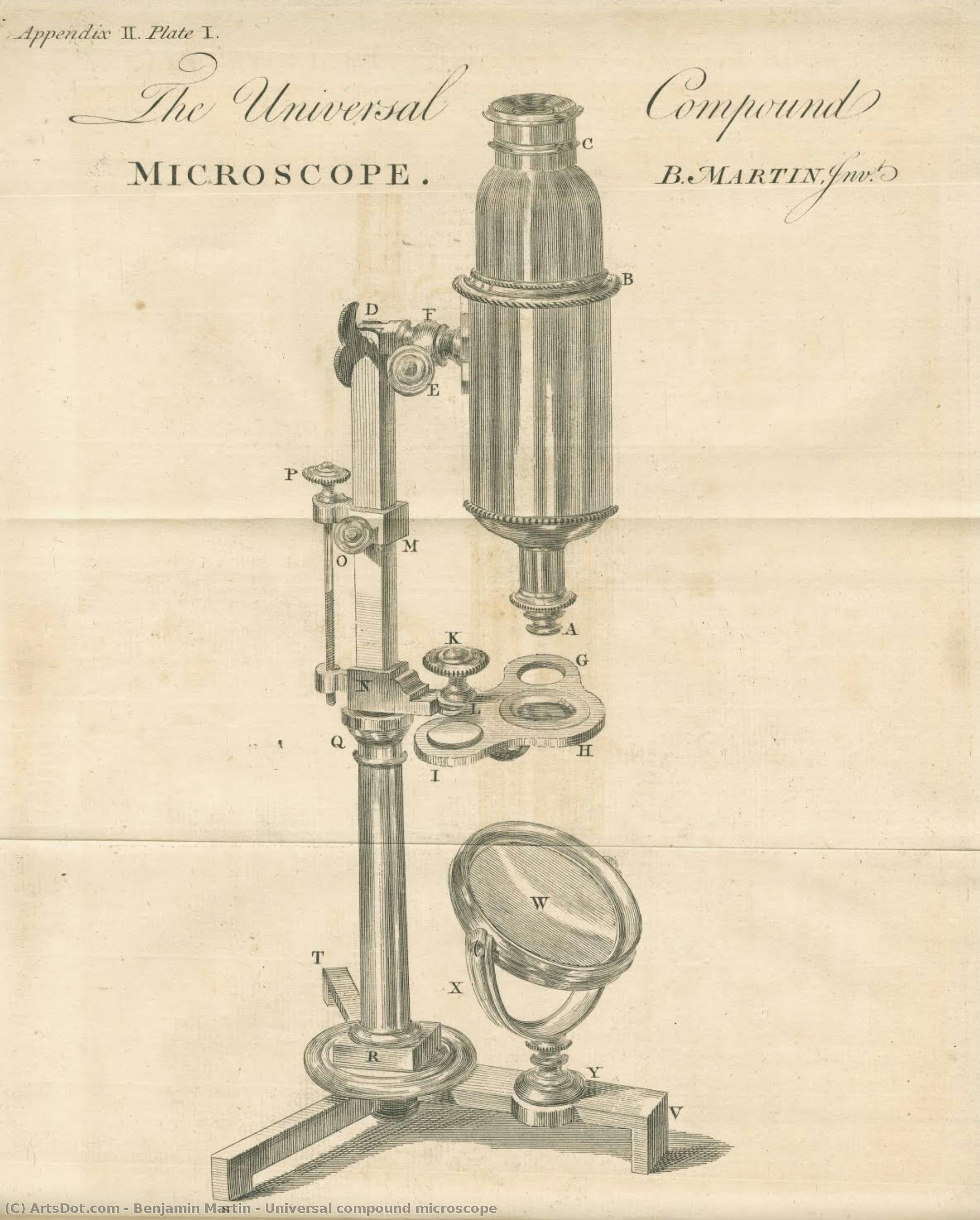
Martin’s talents extended far beyond lexicography. He was a skilled instrument maker, producing essential tools for scientific observation and measurement, including Hadley’s quadrant – a precursor to the modern sextant – and various microscopes. His workshop flourished, establishing him as a respected figure in the London instrument trade. Furthermore, Martin dedicated himself to education, lecturing on natural philosophy at the Royal Society and publishing *Martin's Magazine* (1755-1764), formally known as the *General Magazine of Arts and Sciences*. This periodical served as an encyclopedia for its subscribers, offering a wealth of knowledge distilled into digestible “one Half-sheet upon a Science” portions. It represented Martin’s vision of democratizing scientific learning, making complex concepts accessible to a wider audience.
Legacy and Historical Significance
Benjamin Martin's life concluded tragically in 1782, following a period of financial hardship and a failed attempt at suicide. Despite this difficult end, his legacy remains substantial. His *Lingua Britannica Reformata* provided a crucial foundation for future dictionaries, while his work as an instrument maker contributed to the advancement of scientific observation. Martin’s emphasis on accessible education and his rejection of rigid linguistic dogma continue to resonate today, solidifying his position as a pivotal figure in the history of English language development and 18th-century British science. His story serves as a testament to the power of intellectual curiosity, dedication, and a commitment to disseminating knowledge for the benefit of society.



 Замовити друк
 Надіслати
 Поділитися
 Деталі витвору

 Завантажити
 Схожі вироби
 Рентгенівське дослідження
 Слайд-шоу

 Розгорнути текст






































 Скляний варіант доступний лише для розмірів до 110 см





