Біографія митця
A Welsh Bohemian: The Life and Art of Augustus Edwin John
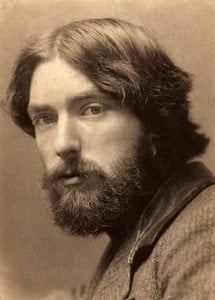
Augustus Edwin John, a name synonymous with vibrant color and captivating portraits, emerged as one of the most distinctive figures in early 20th-century British art. Born on January 4, 1878, in the picturesque coastal town of Tenby, Wales, his life was a tapestry woven with artistic passion, bohemian adventures, and an unwavering pursuit of capturing the essence of human experience. From humble beginnings, John’s journey led him through diverse landscapes – from the rolling hills of Wales to the bustling studios of London, and finally, to a nomadic existence embracing the spirit of the Romani people. His art, characterized by its emotional intensity, fluid brushwork, and a remarkable ability to distill personality onto canvas, continues to resonate with audiences today.
Early Influences and Artistic Foundations
John’s artistic sensibilities were shaped by a confluence of influences, beginning with his mother's encouragement and early exposure to drawing. This nascent talent blossomed during his time at the Tenby School of Art, where he quickly demonstrated an exceptional aptitude for capturing form and light. However, it was his enrollment at the Slade School of Fine Art in London – a prestigious institution steeped in tradition – that truly provided him with a formal foundation. Under the tutelage of Henry Tonks, a renowned critic and teacher, John honed his draughtsmanship to an extraordinary degree, mastering the fundamentals of line, perspective, and composition. Crucially, he absorbed the spirit of the Old Masters, particularly the dramatic compositions and rich color palettes of Peter Paul Rubens, whose dynamic energy profoundly influenced his approach to painting. Simultaneously, he was drawn to the innovations of French contemporaries like Matisse and Gauguin, embracing their expressive use of color and rejection of rigid academic conventions. The subtle tonal harmonies of Puvis de Chavannes also left an indelible mark on his aesthetic vision, demonstrating a sensitivity to mood and atmosphere. These diverse influences coalesced into a unique style – one that prioritized capturing the *feeling* of a subject rather than merely replicating its appearance.
A Turning Point: Accident and Artistic Transformation
A pivotal moment in John’s life occurred in 1897 when he suffered a severe head injury during a diving accident in Tenby. This traumatic event dramatically altered his personality, unleashing a newfound spontaneity and boldness that would permeate both his life and art. The injury resulted in a loss of peripheral vision, forcing him to rely more heavily on his central field of sight – an experience that profoundly impacted his perception of the world and his approach to painting. He described this shift as a liberation from the constraints of academic technique, allowing him to paint with greater immediacy and emotional intensity. This newfound freedom manifested in looser brushwork, brighter colors, and a willingness to experiment with unconventional compositions. It was during this period that he began to develop his signature style – one characterized by vibrant hues, fluid lines, and an uncanny ability to capture the fleeting emotions of his subjects.
Portraits of Character: A Master of Psychological Insight
Augustus Edwin John is perhaps most celebrated for his captivating portraits, which transcend mere likeness to reveal profound psychological insights. He possessed a remarkable gift for capturing not just outward appearance but also the inner life and character of his sitters. His portraits are imbued with a sense of immediacy and spontaneity, as if he were freezing a fleeting moment in time. Royal figures like David Lloyd George, literary giants such as James Joyce, and prominent personalities like Francis Henry Crittall all found themselves immortalized on canvas by John’s discerning eye. He wasn't interested in creating idealized representations; instead, he sought to reveal the complexities of human nature – their vulnerabilities, passions, and quirks. His ability to convey a sitter’s personality through subtle gestures, expressions, and body language is what truly sets his portraits apart. Notable works like *Caspar* (1909), depicting a young boy with an innocent gaze, and *Air Mechanic Shaw* (1935), a powerful portrait of T.E. Lawrence, exemplify this extraordinary talent.
Beyond the Portrait: Romani Encounters and Nomadic Life
While renowned for his portraits, John’s artistic interests extended far beyond the confines of traditional genre painting. A profound fascination with Romani culture led him to embrace a nomadic lifestyle, traveling in a caravan with his family for an extended period. This immersive experience profoundly influenced his art, imbuing it with themes of freedom, wanderlust, and the beauty of the natural world. He documented his encounters with the Romani people through numerous paintings and sketches, capturing their vibrant costumes, expressive faces, and unique way of life. His deep connection to this community culminated in his presidency of the Gypsy Lore Society, a testament to his commitment to understanding and celebrating their rich cultural heritage. These experiences fostered a sense of empathy and openness that permeated his art, adding layers of depth and complexity to his work.
Legacy and Recognition
Throughout his career, Augustus Edwin John experienced both widespread acclaim and periods of critical fluctuation. Initially celebrated for his innovative oil sketching techniques and figure drawings, some critics later found his work to be overly flamboyant or lacking in painterly finesse. However, he remained a significant force in British art history, particularly during the interwar period. He was one of the few artists of his time to achieve widespread public recognition and played a crucial role in popularizing Post-Impressionism within the United Kingdom. Awarded the Order of Merit in 1942, John continued to paint and exhibit until his death on October 31, 1961, at the age of 89. His legacy is further enriched by the artistic achievements of his sister, Gwen John, whose own unique vision contributed significantly to the modernist movement. Today, Augustus Edwin John’s art continues to captivate and inspire, reminding us of the power of individual expression and the enduring allure of a life lived with passion and artistic integrity.



 Замовити друк
 Надіслати
 Поділитися
 Деталі

 Завантажити
 Схожі вироби
 Рентгенівське дослідження
 Слайд-шоу


 Розгорнути текст






































 Скляний варіант доступний лише для розмірів до 110 см