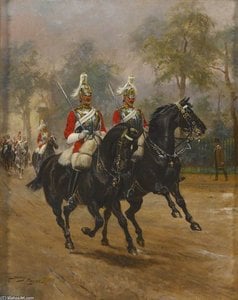
Придбайте цифрову копію високої роздільної здатності з покращеною якістю, що значно перевершує онлайн-перегляд.
Кожен файл ретельно підготовлений нашими фахівцями за допомогою сучасних інструментів та професійної ручної ретуші. Ми гарантуємо виняткову чіткість, точну передачу кольору та високу деталізацію кожного зображення.
Фінальний файл надсилається електронною поштою протягом 72 годин і оптимізований для негайного використання у професійних виданнях та друкованих матеріалах. Таку якість обирають провідні дизайнерські студії, видавництва та галереї.
Завантажте файл високої роздільної здатності для особистого використання, друку та творчих проєктів. ( Замовити принт Замовити репродукцію ручної роботи)
Обираючи WahooArt.com, ви отримуєте не просто зображення — ви отримуєте професійно вдосконалений цифровий витвір мистецтва, створений з надзвичайною точністю та підкріплений гарантією задоволення. Ось усе, що автоматично додається до вашого замовлення:

Ваш цифровий файл із зображенням високої роздільної здатності буде надісланий вам електронною поштою протягом 72 годин після оформлення замовлення — він буде готовий до негайного використання.

Ваш витвір мистецтва професійно оптимізовано за допомогою передових інструментів штучного інтелекту та ручної корекції, що забезпечує максимальну деталізацію, чіткість і точність передачі кольорів.

Випадково видалили або втратили файл? Не хвилюйтеся — ми надішлемо його вам повторно в будь-який час безкоштовно.

Насолоджуйтесь вашим витвором мистецтва миттєво без жодних мит, зборів або плати за доставку — цифрові завантаження завжди не оподатковуються.

Ми гарантуємо максимально точне відтворення оригінальних кольорів на вашому цифровому зображенні завдяки використанню професійних інструментів та систем управління кольором.

Якщо ви не задоволені придбаним цифровим зображенням, ми внесемо правки або повернемо 100% вартості протягом 100 днів — без зайвих запитань.

Незадоволені покупкою? Отримайте повне повернення коштів протягом 100 днів після отримання цифрового файлу — без зайвих запитань.

Купуйте 3 зображення — заощаджуйте 10% — Купуйте 5 — заощаджуйте 15% — Купуйте 10+ — заощаджуйте 20%. Чудово підходить для творчих проєктів, галерей та агентств.

In the golden, dust-moted twilight of the British Raj, few artists captured the intricate tapestry of colonial India with as much precision and soul as Alfred Crowdy Lovett. A man whose life was defined by the dual callings of the sword and the brush, Lovett occupied a unique position in the annals of nineteenth-century art. Born in 1862 to a family rooted in the British civil service, his early years in Croydon, London, were marked by an burgeoning artistic talent that would eventually find its most profound expression far from the streets of England. While his military career saw him rise to the distinguished rank of Brigadier-General, it was his sensitive observation of the world around him—the vibrant uniforms of the Rajputana Infantry, the stoic dignity of Indian princes, and the sweeping landscapes of the Alwar Fort region—that secured his legacy as a premier watercolorist of his era.
Lovett’s artistic journey was deeply intertwined with his military postings, creating a rare synergy between documentation and fine art. His formal training at the Slade School of Fine Art under the tutelage of Sir Alfred East provided him with a rigorous technical foundation, yet it was his extensive travels through India between 1893 and 1902 that truly ignited his creative spirit. As an officer in the Royal Garrison Artillery, he traversed territories ranging from Karachi to Bombay, absorbing the atmospheric nuances of the subcontinent. This period of exploration allowed him to move beyond mere illustration; he began to employ a sophisticated command of atmospheric perspective and subtle tonal gradations, allowing the heat, light, and humidity of India to breathe through his delicate watercolor washes.
The brilliance of Lovett’s oeuvre lies in its ability to function simultaneously as a historical record and an emotive masterpiece. He possessed a remarkable eye for the chromolithographic potential of military attire, meticulously rendering the textures of cloth, the glint of brass, and the intricate patterns of regimental uniforms. His works, such as Imperial Service Troops and Alwar Lancers, are more than mere studies of costume; they are portraits of an era’s identity. Through his brush, the viewer can almost hear the rhythmic movement of cavalry and feel the weight of tradition carried by the soldiers of the British Indian Army.
Beyond the martial, Lovett’s talent extended into the realm of aristocratic portraiture, where he captured the commanding presence of figures like Maharaja Pratap Singh of Jaipur. In these works, his style shifted toward a disciplined realism infused with Impressionistic light, emphasizing the dignity and authority of his subjects. His ability to balance the grand scale of Mughal architecture with the intimate details of a single figure’s expression demonstrates a versatility that few of his contemporaries could match. This mastery of both the vast landscape and the human countenance allowed him to document the social hierarchy of colonial India with unparalleled sensitivity.
The historical significance of Alfred Crowdy Lovett extends far beyond the aesthetic pleasure of his paintings. His art serves as a vital visual archive of a vanished world, preserving the likenesses of regiments, leaders, and landscapes that have since been transformed by time and political upheaval. While his military service during the Great War—notably at the battles of Mons and Ypres—demonstrated his courage on the battlefield, his true enduring victory was achieved through the preservation of cultural memory.
Today, Lovett’s work continues to resonate with historians and art enthusiasts alike, offering a window into the Victorian fascination with the exotic and the imperial. His contribution to the medium of watercolor remains profound, characterized by:
In the quiet elegance of his watercolors, we find the intersection of duty and passion, a testament to an artist who saw the world not just as a soldier to be defended, but as a magnificent spectacle to be immortalized.

1862 - 1919

 Переглянути в інтер'єрі
 Надіслати як листівку
 Поділитися
 Детальніше

 Завантажити
 Схожі експонати
 Рентгенівське дослідження
 Слайд-шоу
 Читати далі