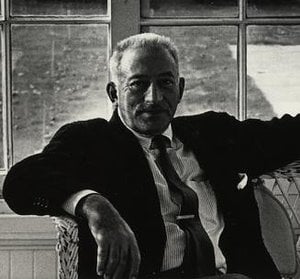
Біографія митця
A Pioneer of Abstract Expressionism: The Life and Art of Adolph Gottlieb
Adolph Gottlieb, born in New York City in 1903, emerged as a pivotal figure in the burgeoning landscape of American Abstract Expressionism. His journey was one of constant exploration—a relentless pursuit to distill universal human experiences into a visual language that resonated with both ancient symbolism and modern anxieties. Growing up as the son of Jewish immigrants, Gottlieb’s early life instilled within him a sensitivity to cultural displacement and the search for meaning in a rapidly changing world, themes that would profoundly shape his artistic vision. He received foundational training at the Art Students League and Parsons The New School for Design, but it was his subsequent travels through Europe during the 1920s that truly ignited his aesthetic sensibilities. Immersing himself in the art and philosophies of Germany and France, he absorbed influences from Constructivism and Surrealism, laying the groundwork for his future innovations.
Early Influences and Artistic Formation
Gottlieb’s formative years were marked by exposure to European avant-garde movements—particularly Surrealism—which challenged traditional artistic conventions and championed dreamlike imagery and subconscious exploration. Artists like Giorgio Morandi and Fernand Léger captivated him with their understated compositions and investigations into the relationship between perception and reality. These encounters instilled in Gottlieb a desire to move beyond representational art, seeking instead to express inner emotions and psychological states through abstract forms. His initial experiments involved incorporating fragmented shapes and textures—techniques reminiscent of Cubism—but he quickly abandoned these approaches in favor of a more expressive style.
The Founding of “The Ten” and Collaborative Exploration
A crucial step in Gottlieb’s artistic development was his involvement with “The Ten,” a collective of artists who formed in 1935, including Mark Rothko and John D. Graham. This group represented a significant departure from the prevailing artistic trends of the time—rejecting academic formalism and embracing spontaneity and improvisation. “The Ten” fostered an environment of experimentation and intellectual exchange, encouraging members to push boundaries and challenge established norms. Gottlieb’s collaboration with fellow artists broadened his perspective and fueled his creative impulses, contributing to the establishment of a distinctly American voice within the international art scene. The collective's commitment to exploring new artistic languages solidified its position as a cornerstone of postwar American art.
The Impact of Arizona and Native American Symbolism
Between 1937 and 1938, Gottlieb undertook a transformative journey to Arizona—a region steeped in ancient Native American culture and mythology. The stark desert landscapes captivated him, sparking an fascination with primal symbolism and the spiritual power of nature. He sought to capture not merely the visual appearance of the desert, but its emotional resonance—a sense of vastness, isolation, and profound contemplation. This experience profoundly influenced Gottlieb’s artistic style, prompting him to incorporate motifs inspired by Amerindian art into his paintings—particularly his *Pictographs*. These series featured biomorphic shapes arranged within rectangular fields, resembling ancient hieroglyphs or tribal markings—a deliberate homage to the traditions of the Southwest.
The Pictographs and Burst Paintings: Exploring Universal Archetypes
Gottlieb’s most iconic contribution to Abstract Expressionism was undoubtedly the *Pictographs* (1940s). These paintings represent a pivotal moment in Gottlieb's artistic evolution, marking his decisive move away from representational forms toward abstraction. The series consisted of rectangular fields populated by stylized shapes—often resembling hieroglyphs or tribal markings—that conveyed profound symbolic meaning. Gottlieb drew inspiration from diverse sources—classical mythology, Amerindian art, and African motifs—creating a compelling dialogue between modernity and ancient traditions. He aimed to capture not merely visual impressions but also emotional resonances—expressing universal archetypes through simplified forms. Following the *Pictographs*, Gottlieb embarked on his *Burst Paintings* in the 1950s—characterized by explosive bursts of color and energy—reflecting a more dynamic and emotionally charged approach to abstraction. These paintings explored themes of creation, destruction, and psychological intensity—continuing Gottlieb’s exploration of universal human experience through visual language.
Legacy and Recognition
Throughout his prolific career, Adolph Gottlieb exhibited extensively in both the United States and Europe, garnering critical acclaim for his innovative style and profound artistic vision. His work is now housed in major museum collections worldwide—including MoMA in New York City and Tate Modern in London—a testament to its enduring influence on American art history. Gottlieb received numerous awards and accolades recognizing his contribution to Abstract Expressionism and cementing his place as one of the most significant artists of the 20th century. His unwavering commitment to exploring universal themes through a uniquely American lens ensured that Gottlieb’s legacy would continue to inspire generations of artists—a reminder of art's capacity to transcend cultural boundaries and speak to the deepest recesses of human consciousness.