БЕЗКОШТОВНА КОНСУЛЬТАЦІЯ З МИСТЕЦТВА

x
Замовити друк Замовити друкЗамовити репродукцію Замовити репродукцію НадіслатиНадіслати
ДеталіДеталі Додати до улюблених Додати до улюблених ЗавантажитиЗавантажити Схожі виробиСхожі вироби Рентгенівське дослідженняРентгенівське дослідження Слайд-шоуСлайд-шоу

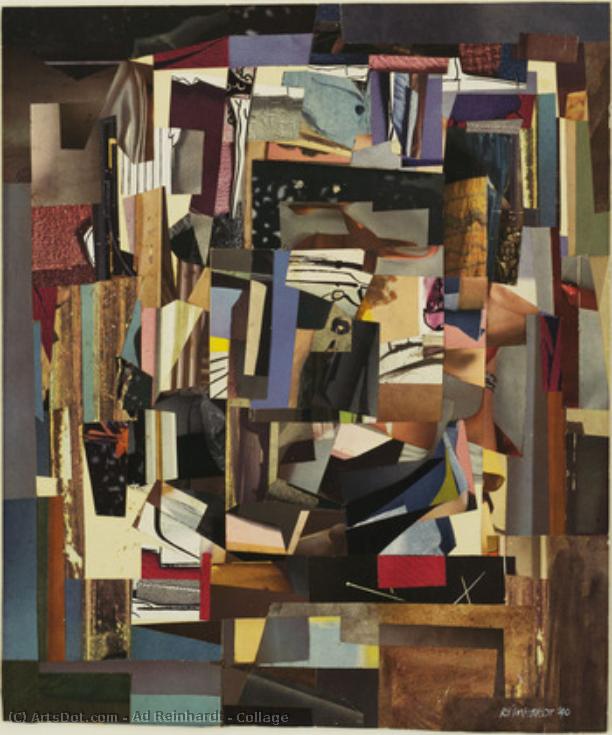
Collage

Explore Ad Reinhardt's 1940 abstract collage featuring muted geometric forms; discover this seminal piece of early modern art for your collection.

Ад Реіндхарт – американський абстрактний художник, відомий чорними малюнками та філософією «Мистецтво як мистецтво». Його роботи – це революція в абстракції, що вплинула на мінімалізм і концептуальне мистецтво. Відкрийте для себе його унікальний стиль!

Придбайте цифрову копію високої роздільної здатності з покращеною якістю, що значно перевершує онлайн-перегляд.

Кожен файл ретельно підготовлений нашими фахівцями за допомогою сучасних інструментів та професійної ручної ретуші. Ми гарантуємо виняткову чіткість, точну передачу кольору та високу деталізацію кожного зображення.

Фінальний файл надсилається електронною поштою протягом 72 годин і оптимізований для негайного використання у професійних виданнях та друкованих матеріалах. Таку якість обирають провідні дизайнерські студії, видавництва та галереї.

Цифрове зображення

Завантажте файл високої роздільної здатності для особистого перегляду, друку та творчих проєктів.

Підсумкова ціна

$9.99

Включено в кожне замовлення цифрових зображень

Експертна цифрова доставка, гарантовано

Обираючи WahooArt.com, ви отримуєте не просто зображення — ви отримуєте професійно вдосконалений цифровий витвір мистецтва, створений з надзвичайною точністю та підкріплений гарантією задоволення. Ось усе, що автоматично додається до вашого замовлення:

shipping_icon
Швидка доставка на email

Ваш цифровий файл із зображенням високої роздільної здатності буде надісланий вам електронною поштою протягом 72 годин після оформлення замовлення — він буде готовий до негайного використання.

canvas_icon
Цифровий файл із покращенням ШІ

Ваш витвір мистецтва професійно оптимізовано за допомогою передових інструментів штучного інтелекту та ручної корекції, що забезпечує максимальну деталізацію, чіткість і точність передачі кольорів.

insurance_icon
Безкоштовне повторне надання послуг протягом усього життя

Випадково видалили або втратили файл? Не хвилюйтеся — ми надішлемо його вам повторно в будь-який час безкоштовно.

tax_icon
Без митних зборів — завжди

Насолоджуйтесь вашим витвором мистецтва миттєво без жодних мит, зборів або плати за доставку — цифрові завантаження завжди не оподатковуються.

color_icon
Гарантія точності кольорів

Ми гарантуємо, що ваше цифрове зображення максимально точно відтворює оригінальні кольори завдяки використанню професійних інструментів та систем управління кольором.

return_icon
Гарантія задоволення протягом 60 днів

Якщо ви не задоволені придбаним цифровим зображенням, ми відкоригуємо його або повернемо 100% вартості протягом 60 днів — без жодних запитань.

guarantee_icon
Гарантія повернення 100% коштів

Не задоволені покупкою? Отримайте повне повернення коштів протягом 60 днів після отримання цифрового файлу — без жодних запитань.

discount_icon
Знижки на оптові замовлення

Купуйте 3 зображення — заощаджуйте 10% — Купуйте 5 — заощаджуйте 15% — Купуйте 10+ — заощаджуйте 20%. Чудово підходить для творчих проєктів, галерей та агентств.

Основні факти

  • Subject or theme: None discernible.
  • Influences:
    • Pablo Picasso
    • Georges Braque
  • Movement: Synthetic Cubism
  • Title: Collage
  • Artist: Ad Reinhardt
  • Medium: Collage
  • Location: Museum of Modern Art (MoMA)

Вікторина з мистецтва

Для кожного питання є лише одна правильна відповідь.

Запитання 1:
What artistic movement is Ad Reinhardt’s ‘Collage’ primarily associated with?
Запитання 2:
The color palette of 'Collage' predominantly features:
Запитання 3:
What is the dominant geometric shape used in ‘Collage’?
Запитання 4:
'Collage' exemplifies a technique characterized by:
Запитання 5:
According to the description, what is the overall impression conveyed by the composition?

Опис колекційного об'єкта

The Architecture of Abstraction: Ad Reinhardt's "Collage"

To stand before Ad Reinhardt’s Collage from 1940 is to encounter an intellectual puzzle rendered in paper and pigment. This work does not whisper; it asserts a complex, almost architectural dialogue with the viewer. It is a composition that refuses singular focus, instead inviting the eye on a meandering journey across its surface. Reinhardt masterfully employs the collage technique—the careful assemblage of disparate elements—to build an environment where structure and apparent chaos coexist in delicate tension. The overall impression is one of profound meditation, a visual field built from overlapping planes that suggest depth without ever committing to illusionistic space.

A Study in Muted Geometry

The formal language of Collage is dominated by the rectangle. These geometric forms, varying wildly in size and orientation, are layered one upon another like strata of memory or geological time. The palette itself speaks volumes about its era and its intent: it is restrained, earthy, and deeply considered. Browns, grays, beiges, and blacks form a somber foundation, occasionally punctuated by whispers of muted pink, blue, or orange. These colors are not meant to dazzle; rather, they absorb the light, encouraging the viewer to look closer, to discern the subtle shifts in tone where one piece meets another. The lines defining these shapes are sharp, unwavering vectors that impose a grid-like order over what might otherwise dissolve into pure randomness.

Historical Resonance and Intellectual Depth

Created at a pivotal moment in art history, this piece sits at the fascinating intersection of early abstraction and the burgeoning modernist impulse. While it shares some visual vocabulary with Abstract Expressionism, its cool, calculated arrangement distinguishes it. Reinhardt was always concerned with defining the very essence of painting—what could remain when all narrative and representation were stripped away? This collage is a testament to that rigorous inquiry. It suggests an art that is self-referential, focusing not on depicting the world outside, but on exploring the possibilities inherent within the medium itself. For the collector or designer, this piece offers a sophisticated anchor of intellectual weight for any space.

Symbolism and Emotional Echoes

What does such an arrangement of non-objective shapes evoke? One might interpret the fragmentation as a reflection of modern life—a sense of being composed of many disparate, yet necessary, parts. The quietude emanating from the muted tones can settle over a room, bringing a sense of contemplative calm or even poignant melancholy. It is art that demands patience; it rewards the viewer who slows their breath and allows their gaze to wander without expectation. Owning a reproduction of Collage is not merely acquiring decoration; it is curating an atmosphere of thoughtful engagement.

Схожі витвори мистецтва


Біографія митця

A Life Dedicated to the Essence of Art

Ad Reinhardt, born Adolph Friedrich Reinhardt in Buffalo, New York, on December 24, 1913, was a figure who dedicated his life not merely to creating art, but to defining what art *could* be. His early years were marked by a familial mobility—his father’s work led the family to Queens, New York—and a close bond with his cousin Otto. Even as a child, Reinhardt displayed an exceptional talent for drawing and painting, winning accolades in school that hinted at the rigorous artistic journey ahead. He wasn't simply interested in *making* images; he was driven by a need to understand the very foundations of visual expression. This intellectual curiosity led him to Columbia University where he studied art history under the influential Meyer Schapiro, an experience that profoundly shaped his thinking about aesthetics and the role of the artist. Further training at Columbia’s Teachers College, the American Artists School with Carl Holty and Francis Criss, and portraiture studies at the National Academy of Design under Karl Anderson solidified his technical skills—skills he would later deliberately attempt to transcend. Reinhardt believed he had mastered traditional techniques early on, freeing him to pursue a more conceptual path.

From Geometric Beginnings to the “Ultimate” Black

Reinhardt’s artistic evolution was far from linear. He began with works rooted in geometric abstraction, exploring form and color with a precision that demonstrated his technical mastery. These early pieces—often characterized by clean lines, precise angles, and carefully chosen palettes—reflected a deep understanding of Cubism and Constructivism, movements he studied extensively. However, this early work served as a stepping stone toward something more radical. His involvement with the WPA Federal Art Project during the 1930s provided him with crucial support and exposure, allowing him to hone his craft while contributing to public art initiatives. This experience broadened his understanding of art’s potential role in society, though he remained steadfast in his belief that its primary value lay in its aesthetic qualities. The 1940s saw Reinhardt become an active member of American Abstract Artists (AAA), a group he considered pivotal to his development. He found kinship with fellow artists who shared a commitment to non-representational art, exhibiting regularly alongside them and engaging in lively debates about the future of painting. His association with Betty Parsons Gallery further cemented his place within the burgeoning New York art scene. Throughout the 1950s, Reinhardt embarked on a series of paintings exploring subtle variations within single hues—all red, all blue, all white—a deliberate reduction that foreshadowed his most iconic works. It was in the 1960s, however, that he achieved what many consider his defining achievement: the “black” paintings. These weren’t simply black canvases; they were meticulously crafted explorations of near-black shades, subtle gradations and textures designed to challenge perception and push the boundaries of painting itself. He referred to them as his "ultimate" paintings, suggesting a culmination of artistic endeavor—a point beyond which further progress was impossible.

Art-as-Art: A Philosophy of Pure Aestheticism

Central to understanding Reinhardt’s work is his philosophy of *Art-as-Art*. He vehemently believed in the autonomy of art, rejecting any notion that it should serve political, social, or narrative purposes. For Reinhardt, the value of a painting lay solely in its aesthetic qualities—its form, color, composition, and the way it engaged with the viewer on a purely visual level. This conviction led him to critique what he saw as problematic tendencies within the art world, particularly artists who prioritized messaging over aesthetics. He expressed these critiques through satirical cartoons and writings, often challenging prevailing artistic norms with wit and intellectual rigor. His friendships with Robert Lax and Thomas Merton, both of whom explored themes of simplicity in their respective fields, further informed his aesthetic principles. Reinhardt’s work resonated with a growing interest in minimalism and conceptual art, influencing artists who sought to strip away extraneous elements and focus on the essential qualities of their medium. He wasn't merely creating paintings; he was articulating a theoretical position about the nature of art itself. His famous cartoon “How to Look at Modern Art in America” perfectly encapsulated this stance – a stark critique of the perceived intrusion of social or political concerns into the realm of pure artistic expression.

The "Black Paintings" and Their Significance

Reinhardt’s “black” paintings, produced between 1954 and 1967, represent the apex of his career. These works—large-scale canvases painted in a range of nearly black shades – were not intended to depict anything specific. Instead, they were explorations of texture, tone, and the very nature of perception. Reinhardt meticulously layered thin washes of paint, creating subtle shifts in color and surface that demanded close attention from the viewer. He famously stated that these paintings were “not about anything,” emphasizing their independence from external references. Yet, despite their apparent simplicity, they possessed a profound emotional resonance, evoking feelings of stillness, contemplation, and perhaps even a sense of the sublime. The paintings’ starkness challenged conventional notions of beauty and representation, forcing viewers to confront the fundamental qualities of art itself. They became iconic symbols of minimalist aesthetics and influenced generations of artists who sought to reduce their work to its essential elements.

A Lasting Legacy

Ad Reinhardt died on August 30, 1967, in New York City, leaving behind a legacy that continues to inspire and provoke. His “black” paintings remain among the most studied and admired works of the 20th century, demonstrating the enduring power of abstract art. Beyond his own creations, Reinhardt’s philosophy of *Art-as-Art* has had a profound impact on contemporary art theory and practice. He is remembered not only as an artist but also as a critical thinker who challenged conventional assumptions about the role of art in society. His influence can be seen in the work of countless artists who continue to explore the boundaries of visual expression, seeking to create works that are both aesthetically compelling and intellectually stimulating. The Ad Reinhardt Estate continues to promote his legacy through exhibitions and publications, ensuring that his unique vision remains accessible to a wider audience.
Ад Reinhardt

Ад Reinhardt

1913 - 1967 , США

Короткі факти

  • Artistic Movement Or Style: Абстракціонізм, Мінімалізм
  • Artists Or Movements Influenced By This Artist:
    • Концептуальне мистецтво
    • Мінімалізм
  • Artists Who Influenced This Artist:
    • Майєр Шпайєр
    • Роберт Лакс
  • Date Of Birth: 24 груд., 1913
  • Date Of Death: 30 лип., 1967
  • Full Name: Adolf Friedrich Reinhardt
  • Nationality: Американський
  • Notable Artworks:
    • Чорні картини
    • Червоний і сірий
  • Place Of Birth: Буффало, США