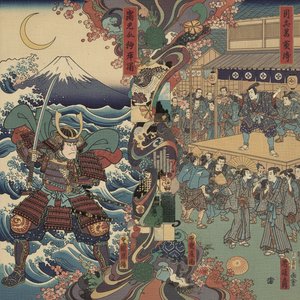
Zenkyū Sekishitsu (1294–1389), born in Fukuoka, Japan, stands as a singular figure within the annals of Nanbokuchō period art and Buddhist scholarship. His life’s journey intertwined seamlessly with the spiritual traditions of China and Japan, resulting in an artistic output that continues to inspire awe and contemplation centuries later.
Early Life & Training: Sekishitsu's formative years were spent under the tutelage of Kurin Seimu in Yuan China (modern-day Beijing), where he immersed himself in Zen Buddhism’s core tenets – mindfulness, meditation, and striving for enlightenment. This profound engagement with Chan Buddhism profoundly shaped his artistic sensibilities and philosophical outlook.
The Birth of Heirin-ji Temple: Returning to Japan in 1375, Sekishitsu established Heirin-ji Temple in Niiza City, Saitama Prefecture. More than just a place of worship, Heirin-ji became a crucible for monastic training and a testament to Sekishitsu’s unwavering dedication to preserving Zen ideals. Its designation as a National Monument underscores its enduring importance within Japanese cultural heritage.
Artistic Style & Technique
Sekishitsu's artistic style is characterized by a masterful blend of Chinese and Japanese influences, primarily expressed through calligraphy and hanging scrolls. He employed meticulous brushwork—a technique honed during his time in China—to convey profound spiritual concepts with understated elegance. His compositions often featured landscapes imbued with symbolic resonance, reflecting the Zen Buddhist emphasis on perceiving reality beyond superficial appearances.
Calligraphy: Sekishitsu’s calligraphy is particularly noteworthy. He produced a single line of Chinese-style verse that embodies the essence of Zen philosophy—a deceptively simple expression conveying immense depth and contemplation. This piece exemplifies his ability to distill complex ideas into concise, aesthetically compelling forms.
Hanging Scrolls: His hanging scrolls showcased panoramic vistas rendered in ink on paper, utilizing subtle gradations of tone and masterful perspective to evoke a sense of serenity and transcendence. These works are held in prestigious collections like the Metropolitan Museum of Art and the E-Museum, ensuring their legacy persists for generations to come.
Notable Achievements & Legacy
Sekishitsu’s contribution extends beyond individual artworks; he fundamentally shaped the landscape of Zen monastic art and temple architecture in Japan. He championed a holistic approach to Buddhist practice, integrating artistic creation with spiritual contemplation—a paradigm that continues to resonate within contemporary Zen circles.
Temple Patronage: Sekishitsu’s patronage of Heirin-ji Temple solidified its position as a beacon of Zen scholarship and artistic excellence.
Influence on Subsequent Artists: His stylistic innovations influenced subsequent generations of Zen artists, establishing a distinctive aesthetic tradition that distinguishes Japanese Zen art from its counterparts elsewhere in the world.
Preservation & Recognition
Sekishitsu’s artworks are meticulously preserved in museums across Japan and internationally, serving as invaluable reminders of the Nanbokuchō period's artistic fervor and spiritual sophistication. The Metropolitan Museum of Art holds a significant collection of his scrolls, allowing scholars and enthusiasts alike to appreciate the enduring beauty and intellectual depth of his oeuvre.
WahooArt.com Editör Ekibi Tarafından
Gözünüzü test edin
Her soru için yalnızca bir doğru cevap bulunmaktadır.
Embark on a profound journey through the soul of Chinese calligraphy. Explore the historical mastery of ink, brush, and script, from ancient Zhuanshu to elegant running script, and discover how this timeless art form reflects the enduring spirit of classical East Asian aesthetics.
Explore the captivating world of Utagawa Kuniyoshi, a master of Japanese ukiyo-e woodblock prints. Discover his innovative warrior scenes, vibrant landscapes & lasting legacy in 19th-century art history.
Zenkyū Sekishitsu için kronolojik bir döküm mevcut mu?
Zenkyū Sekishitsu'in kariyeri, sanatçının Sanat Yolculuğu sayfasında dönemlere ayrılmış bir zaman çizelgesi olarak sunulmaktadır: eserlerin kariyer dönemlerine göre gruplandırıldığı yatay bir kronoloji.
Zenkyū Sekishitsu sanatçısının sanat akımlarına göre gruplandırılmış eserlerine nereden ulaşabilirim?
Zenkyū Sekishitsu tarafından çalışılan akımlar, eserleri akımlara göre gruplandıran sanatçının Tüm Sanat Akımları sayfasında görülebilir.
Zenkyū Sekishitsu hangi ülkede doğdu?
Zenkyū Sekishitsu, Japan doğumludur.
Zenkyū Sekishitsu imzalı eserleri belirli bir temaya göre nasıl bulabilirim?
Zenkyū Sekishitsu'in eserlerini, sanatçının Anahtar Kelimelerle sayfasında anahtar kelimelere göre keşfedebilirsiniz. Her anahtar kelime ilgili eserleri bir araya getirir.
Zenkyū Sekishitsu adlı sanatçının eserlerine dair istatistikleri nerede bulabilirim?
Zenkyū Sekishitsu adlı sanatçının eserlerine dair istatistiklere sanatçının İstatistikler sayfasından ulaşılabilir.
Zenkyū Sekishitsu adlı sanatçının eserlerini kronolojik sırayla nerede görebilirim?
Zenkyū Sekishitsu eserlerinin bir zaman çizelgesi mevcuttur: sanatçının Eser Kronolojisi sayfası, eserleri yapım tarihine göre sıralar.
Zenkyū Sekishitsu sanatçısına ait katalogda kaç adet eser bulunuyor?
Tüm Sanat Eserleri sayfasında Zenkyū Sekishitsu imzalı 1 sanat eseri eseri inceleyebilirsiniz.
Zenkyū Sekishitsu hangi şehir ve ülkede doğmuştur?
Zenkyū Sekishitsu, Fukuoka, Japan doğumludur.
Zenkyū Sekishitsu sanatçısının renklere göre ayrılmış eserlerine nereden ulaşabilirim?
Renk Spektrumu sayfası, Zenkyū Sekishitsu adlı sanatçının eserlerini renklere göre düzenler.
Merhaba! Bir sanat eseri seçmenize, siparişinizi takip etmenize veya garanti sorularınızı yanıtlamanıza yardımcı olabilirim. Size nasıl yardımcı olabilirim?