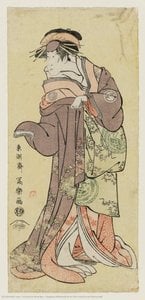
Sharaku: En Ünlü 100 Tablo

Kabuki Actor Ōtani Oniji III as Yakko Edobei (1794), Sharaku tarafından yapılmış, New York şehrindeki Metropolitan Sanat Müzesi koleksiyonunda bulunan en ünlü tablodur. Bandō Hikosaburō III as Kudōzaemon Suketsune (1795) ve Iwai Hanshirō IV as O-Han of the Shinanoya (1795), dünyanın en iyi bildiği sonraki iki eserdir. Katalogumuzdaki Sharaku adlı sanatçının 147 eseri arasından, koleksiyonerlerin ve müze ziyaretçilerinin en çok ilgi gösterdiği, yılı, sergilendiği müze ve hikayesiyle birlikte sunulan 100 eser şunlardır:

Her bir eser için yapılan aramalar, ziyaretler ve siparişlerin birleşimiyle oluşturulan popülerlik puanımıza göre sıralanmıştır. Ekim 2026 tarihinde güncellenmiştir. Bu sayfadaki her bir şaheser, seçtiğiniz boyutta müze kalitesinde, el yapımı yağlı boya reprodüksiyon veya sanat baskısı olarak sipariş edilebilir.

Sharaku portresi
Sharaku
Akım
Ukiyo-e
Kataloğumuzdaki eserler
147
En ünlüları
Kabuki Actor Ōtani Oniji III as Yakko Edobei (1794)
En çok eser şu müzede
Metropolitan Sanat Müzesi

En İyi 10: Sharaku'in en bilinen tabloları

Kabuki Actor Ōtani Oniji III as Yakko Edobei (1794) tarafından Sharaku
1

Kabuki Actor Ōtani Oniji III as Yakko Edobei

1794 · Woodblock Print · Metropolitan Sanat Müzesi, New York

In the fleeting moments of the Edo period, few artists captured the raw, unbridled energy of human emotion as piercingly as Tōshūsai Sharaku. His masterpiece, Kabuki Actor Ōtani Oniji III as Yakko Edobei, serves as a breathtaking window into the heart of Kabuki theater, frozen in time since 1794. This woodblock print does not merely depict a performer; it captures a psychological crescendo. The actor, portrayed with startling realism, is…

Bandō Hikosaburō III as Kudōzaemon Suketsune (1795) tarafından Sharaku
2

Bandō Hikosaburō III as Kudōzaemon Suketsune

1795 · Woodblock Print

In the fleeting, vibrant world of the Edo period, few images capture the raw, theatrical intensity of the stage quite like Tōshūsai Sharaku’s 1795 masterpiece, Bandō Hikosaburō III as Kudōzaemon Suketsune. This monochrome woodblock print is not merely a portrait; it is a psychological study of a moment frozen in time. The subject, the celebrated Kabuki actor Bandō Hikosaburō III, is captured mid-performance, embodying the formidable character of Kudōzaemon Suketsune.…

Iwai Hanshirō IV as O-Han of the Shinanoya (1795) tarafından Sharaku
3

Iwai Hanshirō IV as O-Han of the Shinanoya

1795 · Woodblock Print

In the fleeting, vibrant world of Edo-period Japan, few artists captured the raw, theatrical essence of human emotion as piercingly as Tōshūsai Sharaku. His masterpiece, Iwai Hanshirō IV as O-Hano of the Shinanoya, serves as a breathtaking window into the Kabuki stage of 1795. This woodblock print does not merely depict an actor in costume; it captures a moment of profound character study. The subject, portrayed with a striking three-quarter…

Nakajima Wadaemon I as Tanbaya Hachiemon (1794) tarafından Sharaku
4

Nakajima Wadaemon I as Tanbaya Hachiemon

1794 · Woodblock Print

In the fleeting moments of the Edo period, few artists captured the raw, unvarnished essence of human emotion as strikingly as Tōshūsai Sharaku. His masterpiece, Nakajima Wadaemon I as Tanbaya Hachiemon, serves as a profound window into the theatrical soul of 1794 Japan. This woodblock print does not merely depict an actor; it captures a psychological state. The subject, portrayed with Sharaku’s signature intensity, sits in a moment of palpable…

Iwai Hanshirō IV as Kōtō no Naishi (1795) tarafından Sharaku
5

Iwai Hanshirō IV as Kōtō no Naishi

1795 · Woodblock Print

In the fleeting history of Japanese ukiyo-e, few names command as much intrigue and reverence as Tōshūsai Sharaku. His brief, explosive appearance on the art scene—lasting a mere ten months between 1794 and 1795—left behind a legacy that continues to haunt and fascinate the modern collector. This particular masterpiece, Iwai Hanshirō IV as Kōtō no Naishi, serves as a profound testament to Sharaku’s unparalleled ability to capture the raw, psychological…

Morita Kan'ya VIII as Genkaibō Ajari (1794) tarafından Sharaku
8

Morita Kan'ya VIII as Genkaibō Ajari

1794 · Woodblock Print

In the fleeting moments of the Edo period, few artists captured the raw, electric energy of the Kabuki stage as profoundly as Tōshūsai Sharaku. His masterpiece, Morita Kan'ya VIII as Genkaibō Ajari, serves as a breathtaking window into a vanished era of Japanese theatrical splendor. This woodblock print is not merely a portrait; it is a captured heartbeat, a frozen instant of high drama where the boundary between performer and…

Matsumoto Koshiro IV as the Fish Peddler Gorobei tarafından Sharaku
9

Matsumoto Koshiro IV as the Fish Peddler Gorobei

Woodblock Print · Metropolitan Sanat Müzesi, New York

To stand before a portrait in the style of Tōshūsai Sharaku is to confront not merely an image, but a moment suspended between life and memory. This depiction of Matsumoto Koshiro IV as the fish peddler Gorobei captures the very essence of the Edo period's vibrant, yet often melancholic, undercurrents. The print possesses an almost startling immediacy; it feels less like an artistic rendering and more like a captured breath…

Nakamura Nakazō II, also called Sakaiya Shūkaku (1794) tarafından Sharaku
10

Nakamura Nakazō II, also called Sakaiya Shūkaku

1794 · Woodblock Print

This woodblock print presents a portrait of Nakamura Nakazō II, also called Sakaiya Shūkaku. The subject was a prominent Japanese kabuki actor, captured during a period of significant theatrical activity in Edo. The work is attributed to the artist Toshusai Sharaku, a figure whose brief and intense presence in the ukiyo-e genre remains a subject of much interest. This specific piece dates to 1794.

Sharaku sıralamasının geri kalanı, 11 ile 100 arası

The Actor Sawamura Sojuro III (1795) tarafından Sharaku
#16

The Actor Sawamura Sojuro III

1795 · Metropolitan Sanat Müzesi

In the fleeting history of Japanese Ukiyo-e, few names evoke as much mystery and intense fascination as Tōshūsai Sharaku. His brief, explosive appearance on the art scene—lasting a…

Evinize konuk edin →
Ebisu (1795) tarafından Sharaku
#21

Ebisu

1795

In the fleeting, brilliant ten-month career of Tōshūsai Sharaku, few works capture the vibrant pulse of Japanese folklore as effectively as his 1795 masterpiece, Ebisu. This woodblock print…

Evinize konuk edin →

Sharaku'in dönemlere göre tabloları

Sharaku tarafından en çok resmedilen konular

Bu şaheserler arasında en sık rastlanan dört konu ve her birinin en seçkin örneği.

Sharaku'in tabloları nerede görülebilir

Bu sayfadaki tabloların çoğuna ev sahipliği yapan 5 müze.

Müze Şehir Sharaku Eserleri Bu listedeki tablolar
Metropolitan Sanat Müzesi, New YorkMetropolitan Sanat Müzesi New York 36 Kabuki Actor Ōtani Oniji III as Yakko Edobei, Matsumoto Koshiro IV as the Fish Peddler Gorobei, Bandō Mitsugorō II as Ishii Genzō in the Play "Hana Ayame Bunroku Soga"
Brooklyn Museum, BrooklynBrooklyn Museum Brooklyn 3 Segawa Kikujuro Iii as Oshizu, Wife of Tanabe Bunzo, Kubuki Actor Ichikawa Ebizō as Takemura Sadanoshin, Daizo the Substitute
Şikago Sanat Enstitüsü, ChicagoŞikago Sanat Enstitüsü Chicago 1 Otafuku Throwing Black Beans to Chase Away the Demons on New Year's Eve
Tokyo Ulusal Müzesi, TokyoTokyo Ulusal Müzesi Tokyo 1 Kabuki Actor Ōtani Tokuji as Monogusa Tarō
Toledo Sanat Müzesi, ToledoToledo Sanat Müzesi Toledo 1 Onoe Matsusuke as Ashikaga TukaujiPublished by Tsutaya Juzaburo

Yıllar içinde Sharaku: her yılın şaheserleri

1794 ile 1795 yılları arasında, toplam 2 yıl boyunca, Sharaku bu sayfadaki tüm tarihli eserleri resmetmiştir: işte yıl yıl eserleri.

  1. 1794
    Kabuki Actor Ōtani Oniji III as Yakko Edobei (1794) tarafından Sharaku
    100 içinde #1

    Kabuki Actor Ōtani Oniji III as Yakko Edobei

    Metropolitan Sanat Müzesi

    In the fleeting moments of the Edo period, few artists captured the raw, unbridled energy of human emotion as piercingly as Tōshūsai Sharaku. His masterpiece, Kabuki Actor Ōtani…

  2. 1794
    Nakajima Wadaemon I as Tanbaya Hachiemon (1794) tarafından Sharaku
    100 içinden 4.

    Nakajima Wadaemon I as Tanbaya Hachiemon

    In the fleeting moments of the Edo period, few artists captured the raw, unvarnished essence of human emotion as strikingly as Tōshūsai Sharaku. His masterpiece, Nakajima Wadaemon I…

  3. 1794
  4. 1794
    Morita Kan'ya VIII as Genkaibō Ajari (1794) tarafından Sharaku
    100 içinde #8

    Morita Kan'ya VIII as Genkaibō Ajari

    In the fleeting moments of the Edo period, few artists captured the raw, electric energy of the Kabuki stage as profoundly as Tōshūsai Sharaku. His masterpiece, Morita Kan'ya…

  5. 1794
    Nakamura Nakazō II, also called Sakaiya Shūkaku (1794) tarafından Sharaku
    100 içinden 10.

    Nakamura Nakazō II, also called Sakaiya Shūkaku

    This woodblock print presents a portrait of Nakamura Nakazō II, also called Sakaiya Shūkaku. The subject was a prominent Japanese kabuki actor, captured during a period of significant…

  6. 1794
  7. 1794
  8. 1794
    Nakajima Wadaemon I as Migawari no Jizō (1794) tarafından Sharaku
    100 içinden 20.

    Nakajima Wadaemon I as Migawari no Jizō

    This striking woodblock print, created by the enigmatic artist Tōshūsai Sharaku in 1794, offers a captivating portrait of Nakajima Wadaemon I embodying the role of Migawari no Jizō.…

  9. 1794
  10. 1794
  11. 1794
  12. 1794
  13. 1795
    Bandō Hikosaburō III as Kudōzaemon Suketsune (1795) tarafından Sharaku
    100 içinde #2

    Bandō Hikosaburō III as Kudōzaemon Suketsune

    In the fleeting, vibrant world of the Edo period, few images capture the raw, theatrical intensity of the stage quite like Tōshūsai Sharaku’s 1795 masterpiece, Bandō Hikosaburō III…

  14. 1795
    Iwai Hanshirō IV as O-Han of the Shinanoya (1795) tarafından Sharaku
    100 içinden 3.

    Iwai Hanshirō IV as O-Han of the Shinanoya

    In the fleeting, vibrant world of Edo-period Japan, few artists captured the raw, theatrical essence of human emotion as piercingly as Tōshūsai Sharaku. His masterpiece, Iwai Hanshirō IV…

  15. 1795
    Iwai Hanshirō IV as Kōtō no Naishi (1795) tarafından Sharaku
    100 içinde #5

    Iwai Hanshirō IV as Kōtō no Naishi

    In the fleeting history of Japanese ukiyo-e, few names command as much intrigue and reverence as Tōshūsai Sharaku. His brief, explosive appearance on the art scene—lasting a mere…

  16. 1795
  17. 1795
  18. 1795
    Morita Kanya VIII as Kawachi Kanja, Disguised as Genkaibo (1795) tarafından Sharaku
    100 içinden 14.

    Morita Kanya VIII as Kawachi Kanja, Disguised as Genkaibo

    Metropolitan Sanat Müzesi

    In the fleeting, shadowy world of the Edo period, few artists captured the raw, psychological intensity of the stage as masterfully as Tōshūsai Sharaku. His 1795 woodblock print,…

  19. 1795
    The Actor Sawamura Sojuro III (1795) tarafından Sharaku
    Sıra 16 / 100

    The Actor Sawamura Sojuro III

    Metropolitan Sanat Müzesi

    In the fleeting history of Japanese Ukiyo-e, few names evoke as much mystery and intense fascination as Tōshūsai Sharaku. His brief, explosive appearance on the art scene—lasting a…

  20. 1795
  21. 1795
    Segawa Kikunojo III in an Unidentified Role (1795) tarafından Sharaku
    100 içinden 18.

    Segawa Kikunojo III in an Unidentified Role

    Metropolitan Sanat Müzesi

    In the fleeting moments of the Edo period, few names ignite as much curiosity as Tōshūsai Sharaku. His brief, explosive career—lasting a mere ten months between 1794 and…

  22. 1795
    Ebisu (1795) tarafından Sharaku
    Sıra 21 / 100

    Ebisu

    In the fleeting, brilliant ten-month career of Tōshūsai Sharaku, few works capture the vibrant pulse of Japanese folklore as effectively as his 1795 masterpiece, Ebisu. This woodblock print…

  23. 1795
  24. 1795
  25. 1795

Sharaku'in tabloları: sıkça sorulan sorular

Sharaku sanatçısının en ünlü tablosu hangisidir?Yanıtı göster

Kabuki Actor Ōtani Oniji III as Yakko Edobei (1794), Metropolitan Sanat Müzesi, New York. Ardından Bandō Hikosaburō III as Kudōzaemon Suketsune (1795) ve Iwai Hanshirō IV as O-Han of the Shinanoya (1795) gelir.

En ünlü 10 Sharaku tablosu hangileridir?Yanıtı göster

Kabuki Actor Ōtani Oniji III as Yakko Edobei, Bandō Hikosaburō III as Kudōzaemon Suketsune, Iwai Hanshirō IV as O-Han of the Shinanoya, Nakajima Wadaemon I as Tanbaya Hachiemon, Iwai Hanshirō IV as Kōtō no Naishi, Bandō Hikosaburō III as Godai Saburō Chikatada, Osagawa Tsuneyo II as Okinu, wife of Chōemon, Morita Kan'ya VIII as Genkaibō Ajari, Matsumoto Koshiro IV as the Fish Peddler Gorobei ve Nakamura Nakazō II, also called Sakaiya Shūkaku. Yukarıdaki sıralama, her birinin yapıldığı yılı ve bulunduğu müzeyi göstermektedir.

Sharaku tarafından yapılmış kaç tablo var?Yanıtı göster

Kataloğumuz, Sharaku tarafından 1794 ile 1795 tarihleri arasında üretilen 147 eseri listelemektedir.

En ünlü Sharaku tablolarını nerede görebilirim?Yanıtı göster

Çoğu Metropolitan Sanat Müzesi (New York), Brooklyn Museum (Brooklyn) ve Şikago Sanat Enstitüsü (Chicago) bünyesinde bulunmaktadır. Yukarıdaki tablo müzeleri tek tek listelemektedir.

Sharaku en bilinen eserlerini hangi dönemde yaptı?Yanıtı göster

1794 döneminde: Bu sayfadaki 100 eserin 49 tanesi o döneme aittir, bunlar arasında Kabuki Actor Ōtani Oniji III as Yakko Edobei bulunmaktadır.

En eski ünlü Sharaku tablosu hangisidir ve en yenisi hangisidir?Yanıtı göster

Bu sayfadaki en eski eser Kabuki Actor Ōtani Oniji III as Yakko Edobei (1794), en yeni eser ise Bandō Hikosaburō III as Kudōzaemon Suketsune (1795)'dir.

Sharaku hangi konuları resmetti?Yanıtı göster

Bu sayfadaki 100 eser arasında Kabuki actor (17), Woodblock print (17) ve Portrait (11) yer almaktadır.

Sharaku ne üzerine ve ne ile resim yaptı?Yanıtı göster

Woodblock Print: Bu sayfadaki 100 eserin 29 tanesi.

Sharaku'in sanatı hangi akıma aittir?Yanıtı göster

bu sayfadaki tabloların da gösterdiği gibi Ukiyo-e,

Metropolitan Sanat Müzesi bünyesinde hangi Sharaku tabloları bulunmaktadır?Yanıtı göster

Kabuki Actor Ōtani Oniji III as Yakko Edobei, Matsumoto Koshiro IV as the Fish Peddler Gorobei ve Bandō Mitsugorō II as Ishii Genzō in the Play "Hana Ayame Bunroku Soga", Metropolitan Sanat Müzesi, New York bünyesinde bulunan bu sayfadaki 19 eser arasında yer almaktadır.

Sharaku reprodüksiyonu nereden satın alabilirim?Yanıtı göster

Evet. Bu sayfadaki her tablo, tablonun kendi sayfasından seçtiğiniz boyutta, müze kalitesinde, el yapımı bir yağlı boya reprodüksiyon veya bir sanat baskısı olarak sipariş edilebilir.

Sharaku: biyografi

The Enigmatic Presence of Sharaku

Sharaku was a Japanese ukiyo-e print designer active between 1794 and 1795. His prolific output focused primarily on yakusha-e, which are portraits of kabuki actors. These works often emphasized the dynamism and energy of the subjects, frequently utilizing a realism that highlighted unflattering details such as wrinkles or large noses. His compositions often featured a focus on facial expressions, sometimes presenting a single figure or contrasting different types of faces.

The artist's career was brief, spanning approximately ten months. His work is categorized into four distinct periods:

Artistic Style and Legacy

Sharaku's technique involved the use of woodblock prints, sometimes employing extravagant methods such as the dusting of mica in the backgrounds to create a glittering effect. His portraits are noted for their ability to capture the psychology of a character through heightened theatrical gestures and expressive, almost caricature-like exaggerations.

Despite the mystery surrounding his true identity, his work has been recognized for its mastery of the medium. His reputation rests largely on his earlier prints, while his later output is often considered to have a declining artistry. His subjects included kabuki actors, sumo wrestlers, and warriors.

Sharaku tarafından yapılan tüm 147 eser →