

GEMS I FOUND PEACE IN SAIGON SALLY I'VE FORT BATTLES IN SAIGON NOW I'VE GOT TO FIGHT IN WASHINGTON (1972) is the most famous painting by Mingering Mike. THE FREEDOM STOMPERS (1969) and 3 FOOTSTEPS away from the altar, mingering mike the big D (1969) are the next two works the world knows best. From the 151 works of Mingering Mike in our catalogue, here are the 100 that collectors and museum visitors look at most, with the year, the museum and the story of each.
Ranked by our popularity score, which combines the searches, visits and orders for each work. Updated Ekim 2026.


We are looking at Lord's House JUST IN TIME FOR Easter THE SPIRIT OF PEACE AND LOVE IS UPON AND AMONG US. OPENING SONGS Lord's House JUST IN…


The four subjects that return most often among these masterpieces, with the finest example of each.
Ten years or so, 1968 to 1975, hold all of Mingering Mike's dated masterpieces: here they are, year by year.




We are looking at Lord's House JUST IN TIME FOR Easter THE SPIRIT OF PEACE AND LOVE IS UPON AND AMONG US. OPENING SONGS Lord's House JUST IN…
GEMS I FOUND PEACE IN SAIGON SALLY I'VE FORT BATTLES IN SAIGON NOW I'VE GOT TO FIGHT IN WASHINGTON (1972). Next come THE FREEDOM STOMPERS (1969) and 3 FOOTSTEPS away from the altar, mingering mike the big D (1969).
22 years old: GEMS I FOUND PEACE IN SAIGON SALLY I'VE FORT BATTLES IN SAIGON NOW I'VE GOT TO FIGHT IN WASHINGTON dates from 1972 and Mingering Mike was born in 1950.
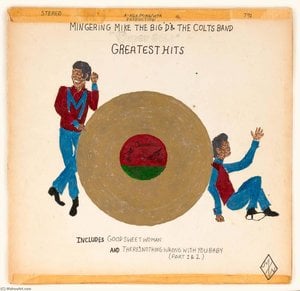
GEMS I FOUND PEACE IN SAIGON SALLY I'VE FORT BATTLES IN SAIGON NOW I'VE GOT TO FIGHT IN WASHINGTON, THE FREEDOM STOMPERS, 3 FOOTSTEPS away from the altar, mingering mike the big D, THE MINGERING MIKE SHOW LIVE FROM THE HOWARD THEATER, 3 FOOT STEPS DUET CLOSE, EAT MYSELF SILLY (M. MIKE), Gold Pot Records LIVE, FROM PARIS, MINGERING MIKE REVUE (C), PIANOMAN, MINGERING MIKE, MING · WAR ARRANGES AND DIRECT ARRANGES AND DIRECTS, A AGA MING WAR PRODUCTION MINGERING MIKE THE BIG D THE COLTS BAND SUPER GOLD GREATEST HITS and DON'T TRY AND TAKE IT ALL IN (MINGERING MIKE) MIKE THE MONITORS LOVE COMES AND GOES (JUST LIKE A RAINBOW) M. MIKE Y, RIGHT OF WAY MINGERING MIKE. The ranking above gives the year and the museum of each.
Our catalogue lists 151 works by Mingering Mike, dated from 1968 to 1975.
In 1972: 45 of the 100 works on this page date from then, among them GEMS I FOUND PEACE IN SAIGON SALLY I'VE FORT BATTLES IN SAIGON NOW I'VE GOT TO FIGHT IN WASHINGTON.
The earliest on this page is MOTHER GOOSE IT'S A BOYS LIFE (MINGERING MIKE) TWO WAY TRAFFIC (1968), the latest MERCY LET THE MUSIC TAKE YOUR MIND (1975).
Social commentary (8), Music memorabilia (4) and Vintage vinyl (4), among the 100 works on this page.
Pop art and Contemporary realism, as the paintings on this page show.
Mingering Mike, born in Washington, D.C., in 1950, wasn't simply an artist; he was the architect of his own elaborate and entirely self-contained universe. From roughly 1968 to 1977, this young man meticulously crafted a career as a soul singer and songwriter, producing over fifty “albums” – each a painstakingly assembled cardboard record complete with intricate gatefolds, handwritten liner notes, and simulated vinyl grooves. This wasn’t mere performance art; it was the embodiment of a teenage fantasy, a deeply personal project born from the vibrant, often turbulent, landscape of his youth.
The genesis of this singular endeavor lies in a potent blend of influences – the burgeoning soul music scene of the era, fueled by artists like Aretha Franklin and Otis Redding; the social unrest simmering within American cities during the Civil Rights Movement; and perhaps most crucially, the imaginative world of a young man seeking an outlet for his emotions and aspirations. Mingering Mike’s work wasn't about replicating reality; it was about constructing an idealized version of it, one where he held the microphone, commanded sold-out stadiums, and expressed profound truths through carefully crafted lyrics and soulful melodies.
What distinguishes Mingering Mike’s work is not just its scale – over fifty albums! – but the sheer dedication to detail in each piece. He didn't simply draw album covers; he built entire worlds within them, meticulously crafting cardboard records that resembled authentic vinyl releases. The liner notes were handwritten, often filled with biographical details about his “band,” tour dates, and personal reflections on the songs. This level of commitment transformed a simple artistic project into a fully realized, immersive experience.
The albums themselves are remarkable feats of miniature engineering. They’re layered constructions, incorporating elements like simulated album jackets, meticulously drawn grooves on the “vinyl,” and even tiny photographs depicting concert scenes. The process involved an obsessive attention to detail, reflecting a deep understanding of the music industry and a desire to replicate it with painstaking accuracy. This wasn't about creating art; it was about recreating a career – a career entirely within his own imagination.
For decades, Mingering Mike’s work remained largely unknown outside a small circle of collectors. It wasn’t until 2003 that the world began to take notice when record collectors Dori Hadar and Frank Beylotte stumbled upon his collection at a flea market in Washington, D.C. This serendipitous discovery sparked an intense interest in Mingering Mike's unique project, leading to exhibitions, publications, and widespread recognition within the art world.
The Smithsonian American Art Museum acquired his entire collection in 2015, solidifying his place as a significant figure in contemporary art. The museum’s exhibition, “Mingering Mike’s Supersonic Greatest Hits,” offered visitors a rare glimpse into this extraordinary artist's constructed reality – a testament to the power of imagination and the enduring appeal of a dream realized.
While seemingly fantastical, Mingering Mike’s work resonates with profound themes. It explores ideas of identity, ambition, performance, and the construction of self. His albums often touch upon social issues – civil rights, political upheaval, and personal struggles – reflecting the realities of his youth while simultaneously offering a utopian vision of success and fulfillment.
Mingering Mike’s legacy lies not just in his unique artistic practice but also in challenging our understanding of art itself. He demonstrated that an artwork doesn't need to be “real” to be meaningful, and that the act of creation can be as important as the final product. His work continues to fascinate and inspire artists and collectors alike, reminding us of the boundless possibilities of the human imagination.