Honoré Daumier, 1808 – 1879

Honoré Daumier: En Ünlü 100 Tablo

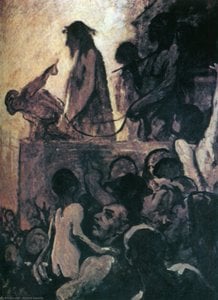
Honoré Daumier Barabbas'ı İstiyoruz (Ecce Homo) (1852), Honoré Daumier tarafından yapılmış, Essen şehrindeki Museum Folkwang koleksiyonunda bulunan en ünlü tablodur. The Third-class Carriage (1860) ve Unknown, maybe Hippolyte Lucien-Joseph Lucas (1807-1878), a Journalist, maybe P.Mendez de Vigo (1790-1860) a Spanish General, but Most Probably the Count Pelet de la Lozere (1785-1871), a Politician (1833), dünyanın en iyi bildiği sonraki iki eserdir. Katalogumuzdaki Honoré Daumier adlı sanatçının 355 eseri arasından, koleksiyonerlerin ve müze ziyaretçilerinin en çok ilgi gösterdiği, yılı, sergilendiği müze ve hikayesiyle birlikte sunulan 100 eser şunlardır:

Her bir eser için yapılan aramalar, ziyaretler ve siparişlerin birleşimiyle oluşturulan popülerlik puanımıza göre sıralanmıştır. Ekim 2026 tarihinde güncellenmiştir. Bu sayfadaki her bir şaheser, seçtiğiniz boyutta müze kalitesinde, el yapımı yağlı boya reprodüksiyon veya sanat baskısı olarak sipariş edilebilir.

Honoré Daumier portresi
Honoré Daumier · 1808 – 1879
Doğum · ölüm
1808 – 1879, Marsilya
Akım
Realizm
Kataloğumuzdaki eserler
355
En ünlüları
Honoré Daumier Barabbas'ı İstiyoruz (Ecce Homo) (1852)
En çok eser şu müzede
Musée d'Orsay

En İyi 10: Honoré Daumier'in en bilinen tabloları

Honoré Daumier Barabbas'ı İstiyoruz (Ecce Homo) (1852) tarafından Honoré Daumier
1

Honoré Daumier Barabbas'ı İstiyoruz (Ecce Homo)

1852 · Tuval Üzerine Yağlı Boya · Museum Folkwang, Essen

Powerful Depiction of Human Suffering and Social Justice This compelling artwork captures a poignant biblical scene that resonates deeply with themes of compassion, injustice, and societal critique. Rendered in a raw, expressive style, the scene invites viewers into a moment of collective emotion and moral reflection. The figures, depicted with gestural immediacy, evoke a sense of urgency and human vulnerability, making it a profound statement on social conscience and spiritual…

The Third-class Carriage (1860) tarafından Honoré Daumier
2

The Third-class Carriage

1860 · Oil On Canvas · Metropolitan Sanat Müzesi, New York

In the crowded, dimly lit confines of a mid-19th-century railway carriage, Honoré Daumier captures more than just a moment in transit; he captures the very essence of human endurance. The Third-class Carriage serves as a profound window into the burgeoning urban reality of France during the Second Empire. As the industrial revolution reshaped the landscape of Europe, Daumier turned his gaze away from the gilded salons of the aristocracy and…

Unknown, maybe Hippolyte Lucien-Joseph Lucas (1807-1878), a Journalist, maybe P.Mendez de Vigo (1790-1860) a Spanish General, but Most Probably the Count Pelet de la Lozere (1785-1871), a Politician (1833) tarafından Honoré Daumier
3

Unknown, maybe Hippolyte Lucien-Joseph Lucas (1807-1878), a Journalist, maybe P.Mendez de Vigo (1790-1860) a Spanish General, but Most Probably the Count Pelet de la Lozere (1785-1871), a Politician

1833 · Clay / Terracotta · Musée d'Orsay, Paris

This evocative portrait captures more than just the likeness of an elderly gentleman; it arrests a moment in time, freezing the very essence of 19th-century Parisian intellectual life. The subject, whose identity is suggested by the possibilities of a journalist or politician, possesses a gaze that seems to look past the viewer, into some distant, weighty contemplation. Rendered with the unmistakable hand of Honoré Daumier, the piece transcends mere portraiture;…

Ratapoil (front view) (1850) tarafından Honoré Daumier
4

Ratapoil (front view)

1850 · Bronze · Musée d'Orsay, Paris

Honoré Daumier's "Ratapoil (front view)," created around 1850, is more than just a bronze sculpture; it’s a potent distillation of 19th-century French social commentary and political critique. This arresting figure, rendered with remarkable dynamism and a touch of unsettling realism, offers a captivating window into the turbulent world of post-Revolutionary France – a world grappling with nascent democracy, imperial ambitions, and the pervasive inequalities of its society. The sculpture’s enduring…

Intermission at the Comédie Française (1858) tarafından Honoré Daumier
5

Intermission at the Comédie Française

1858 · Watercolor · Hermitaj Müzesi, Saint Petersburg

Honoré Daumier's “Intermission at the Comédie Française,” painted in 1858, isn’t merely a depiction of an elderly gathering; it’s a meticulously crafted observation of a specific moment frozen in time – and brimming with unspoken commentary. The artwork immediately draws the viewer into a densely packed scene: rows upon rows of men, their faces etched with age and lined with contemplation, are absorbed in reading newspapers or pamphlets within the…

Ratapoil (1850) tarafından Honoré Daumier
6

Ratapoil

1850 · Bronze · Staatliche Kunsthalle Karlsruhe, Karlsruhe

The photograph captures a pivotal moment – a frozen dance of energy and emotion rendered in the enduring medium of bronze. This exquisite reproduction offers an intimate encounter with "Ratapoil," a sculpture by the visionary artist Honoré Daumier, born in Marseille in 1808 and tragically lost in 1879. More than just a depiction of a figure, it’s a window into the social anxieties and artistic fervor that defined mid-19th century…

Scene from a Comedy (1858) tarafından Honoré Daumier
8

Scene from a Comedy

1858 · Oil On Canvas · Musée d'Orsay, Paris

Honoré Daumier's "Scene from a Comedy," painted in 1858, isn’t merely a depiction of two figures; it’s a meticulously crafted snapshot of Parisian society and the biting social commentary that defined the artist’s career. Housed within the walls of the Musée d’Orsay, this oil on canvas offers a rare glimpse into Daumier's world – a world brimming with observation, critique, and an undeniable sense of humor laced with profound sadness.…

Ratapoil (1850) tarafından Honoré Daumier
9

Ratapoil

1850 · Acrylic On Canvas · Artizon Museum, Tokyo

Honoré Daumier's "Ratapoil," created in 1850, isn’t merely a sculpture; it’s a distilled embodiment of the anxieties and frustrations simmering beneath the surface of mid-19th century France. This arresting figure, rendered in cast iron with a deliberate roughness that mirrors its subject matter, captures a moment of profound disillusionment – a silent indictment of societal hypocrisy and the precariousness of human existence. The sculpture’s power lies not just in its…

Family on the Barricades in 1848 (1854) tarafından Honoré Daumier
10

Family on the Barricades in 1848

1854 · Oil · Národní Galerie, Prag

In the heart of Honoré Daumier’s 1854 masterpiece, Family on the Barricades in 1848, we find a moment suspended in the amber of history. This is not merely a painting of a political uprising; it is a profound psychological study of human resilience. As the Second French Revolution tore through the streets of Paris, Daumier captured the very essence of the era's turbulent spirit. The scene presents a family huddled…

Honoré Daumier sıralamasının geri kalanı, 11 ile 100 arası

The Print Collector (1865) tarafından Honoré Daumier
#11

The Print Collector

1865 · Şikago Sanat Enstitüsü

Honoré Daumier's "The Print Collector" isn’t merely a depiction of a man surrounded by prints; it’s a carefully constructed tableau of introspection, a poignant meditation on knowledge, legacy,…

Evinize konuk edin →
The Republic (1848) tarafından Honoré Daumier
#12

The Republic

1848 · Musée d'Orsay

Honoré Daumier’s “The Republic” (1848) isn't merely a painting; it’s a potent distillation of the anxieties and aspirations swirling within post-revolutionary France. Captured with his signature blend of…

Evinize konuk edin →
Comedy scene (scene from Molière) (1862) tarafından Honoré Daumier
#13

Comedy scene (scene from Molière)

1862 · Musée d'Orsay

Honoré Daumier's 1862 painting, "Comedy Scene (Scene from Molière)," isn’t merely a depiction of a theatrical moment; it’s a vibrant snapshot of Parisian society grappling with wit, social…

Evinize konuk edin →
On a Bridge at Night (1848) tarafından Honoré Daumier
#14

On a Bridge at Night

1848 · The Phillips Collection

The scene captures a moment of silent intimacy under the artificial glow of lamplight. Two figures move across a bridge, their forms defined by expressive, simplified outlines that…

Evinize konuk edin →
Burden (1850) tarafından Honoré Daumier
#16

Burden

1850 · Hermitaj Müzesi

In the quiet, somber depths of Honoré Daumier’s 1850 masterpiece, "Burden," we are invited into a moment of profound human endurance that transcends the boundaries of time. The…

Bir reprodüksiyon sipariş edin →
Street Musicians (1855) tarafından Honoré Daumier
#17

Street Musicians

1855 · Şikago Sanat Enstitüsü

This expressive oil painting presents a somber scene, capturing two figures within an intimate, dimly lit environment. The composition utilizes a tight crop on the subjects, fostering a…

El yapımı bir kopya sipariş edin →
The Studio (1870) tarafından Honoré Daumier
#19

The Studio

1870 · J. Paul Getty Müzesi

In this intimate oil on canvas, a man leans toward a seated woman within a dimly lit interior. The composition is tightly cropped, creating a sense of enclosure…

Bir reprodüksiyon sipariş edin →
Jean-Marie Fruchard (1788-1872), Deputy (1833) tarafından Honoré Daumier
#20

Jean-Marie Fruchard (1788-1872), Deputy

1833 · Musée d'Orsay

Honoré Daumier’s 1833 sculpture of Jean-Marie Fruchard, a deputy of the French parliament, functions as a sharp political indictment. Rather than an idealized likeness, the bust utilizes deliberate…

Load (Washerwoman) (1853) tarafından Honoré Daumier
#21

Load (Washerwoman)

1853 · Národní Galerie

In this 1853 lithograph, a woman moves through a Parisian street, her form defined by the heavy burden she carries. A large basket, filled to the brim with…

Evinize konuk edin →
Two Lawyers (1860) tarafından Honoré Daumier
#24

Two Lawyers

1860 · Şikago Sanat Enstitüsü

This small-scale oil painting presents two men in profile, positioned side-by-side while facing one another. The subjects are captured from the upper torso upward, creating a close-up view…

Bir reprodüksiyon sipariş edin →
Outside the Print–Seller's Shop (1860) tarafından Honoré Daumier
#25

Outside the Print–Seller's Shop

1860 · Dallas Sanat Müzesi

This painting, titled Outside the Print–Seller's Shop, was created by the French artist Honoré Daumier. It offers a quiet glimpse into the social fabric of 19th-century France, capturing…

Evinize konuk edin →
Exit from the Theater (1863) tarafından Honoré Daumier
#26

Exit from the Theater

1863 · Nelson-Atkins Sanat Müzesi

The work titled Exit from the Theater is an oil on panel. It is attributed to the artist Honoré Daumier. The painting captures a street scene of theater-goers…

Evinize konuk edin →
The Uprising (L (1848) tarafından Honoré Daumier
#28

The Uprising (L

1848 · The Phillips Collection

For Duncan Phillips, the jewel of his unit of works by Honoré Daumier was The Uprising. When this long forgotten painting appeared on the market, Phillips seized the…

Bir reprodüksiyon sipariş edin →
The Defender (1865) tarafından Honoré Daumier
#30

The Defender

1865 · Musée d'Orsay

In the quiet, somber depths of Honoré Daumier’s "The Defender," created around 1865, we are not merely spectators to a courtroom scene, but witnesses to a profound human…

El yapımı bir kopya sipariş edin →
Penelopa's Dream (1842) tarafından Honoré Daumier
#34

Penelopa's Dream

1842 · Bibliothèque Nationale

Penelopa's Dream is a lithograph created by the artist Honoré Daumier. The work was produced in 1842. This specific piece belongs to the Ancient History series, a collection…

Evinize konuk edin →
The Washerwoman (1863) tarafından Honoré Daumier
#36

The Washerwoman

1863 · Musée d'Orsay

Honoré Daumier’s “The Washerwoman,” painted in 1863, is more than just a depiction of a woman laboring by the Seine; it's a poignant meditation on poverty, resilience, and…

Bir reprodüksiyon sipariş edin →
The Beautiful Narcissus (1842) tarafından Honoré Daumier
#59

The Beautiful Narcissus

1842 · Bibliothèque Nationale

Honoré Daumier’s lithograph, "The Beautiful Narcissus," transcends mere depiction; it embodies the spirit of Realism—a courageous confrontation with societal realities tempered by profound artistic sensitivity. Created in 1842…

Evinize konuk edin →
Two Singers tarafından Honoré Daumier
#66

Two Singers

Harvard Art Museums

In this oil painting, we find ourselves drawn into a quiet, private moment between two figures. A man and a woman are positioned closely together, their upper bodies…

Evinize konuk edin →
The Serenade (1858) tarafından Honoré Daumier
#69

The Serenade

1858 · Scottish National Gallery

The Serenade is a painting by Honoré Daumier, created about 1858. In this work, the artist captures a strolling player singing within the setting of a garden restaurant.…

El yapımı bir kopya sipariş edin →
The Print Amateur (1855) tarafından Honoré Daumier
#70

The Print Amateur

1855 · Harvard Art Museums

The Print Amateur is an oil on panel by Honoré Daumier. Created in France, this work captures a specific moment of observation. The pigment rests upon the hard,…

Evinize konuk edin →
Jacques Lefévre (1777-1856), Banker and Deputy (1833) tarafından Honoré Daumier
#72

Jacques Lefévre (1777-1856), Banker and Deputy

1833 · Musée d'Orsay

Honoré Daumier's 1833 sculpture, “Jacques Lefévre (1777-1856), Banker and Deputy,” is far more than a simple bust; it’s a meticulously crafted caricature brimming with social commentary. Captured in…

Head of Pasquin (1863) tarafından Honoré Daumier
#76

Head of Pasquin

1863 · Dallas Sanat Müzesi

Honoré Daumier’s “Head of Pasquin,” painted in 1863, is far more than a simple portrait; it's a potent distillation of social commentary and a masterful demonstration of the…

El yapımı bir kopya sipariş edin →
Rue Transnonain, April 15, 1834 (1834) tarafından Honoré Daumier
#79

Rue Transnonain, April 15, 1834

1834 · Bibliothèque Nationale

Honoré Daumier's "Rue Transnonain, April 15, 1834" isn’t merely a depiction of an event; it’s a visceral scream frozen in lithograph ink. Published six months after the brutal…

Evinize konuk edin →
Don Quixote Reading (1866) tarafından Honoré Daumier
#81

Don Quixote Reading

1866 · National Museum Cardiff

In this oil on canvas, Honoré Daumier presents us with a quiet, intense moment of absorption. The work, titled Don Quixote Reading, captures the titular character lost within…

Evinize konuk edin →
Avant l (1865) tarafından Honoré Daumier
#84

Avant l

1865

Honoré Daumier’s “Avant l’audience” (Before the Hearing), painted in 1865, is a deceptively simple yet profoundly resonant work that captures a pivotal moment of restrained tension and intellectual…

Bir reprodüksiyon sipariş edin →
Don Quixote and Sancho Panza (1870) tarafından Honoré Daumier
#90

Don Quixote and Sancho Panza

1870 · Courtauld Galerisi

Don Quixote and Sancho Panza is an oil painting by the artist Honoré Daumier. Dated 1866, this work is categorized within the movements of Realism, Satire, and Narrative.…

Evinize konuk edin →
Street Scene (1864) tarafından Honoré Daumier
#92

Street Scene

1864 · Museum Boijmans Van Beuningen

The shadows of a mid-19th-century urban environment emerge through Street Scene, a work by the French painter Honoré Daumier. Created about 1864, this piece captures a fleeting moment…

El yapımı bir kopya sipariş edin →
To the Street (1850) tarafından Honoré Daumier
#97

To the Street

1850 · The Phillips Collection

In the evocative monochrome of Honoré Daumier’s To the Street, we are transported back to the mid-19th century, a period defined by the rapid pulse of urban transformation.…

Evinize konuk edin →
Three Lawyers (1857) tarafından Honoré Daumier
#98

Three Lawyers

1857 · The Phillips Collection

In the evocative monochrome of Honoré Daumier’s "Three Lawyers," we are invited into a world where the gravity of the law meets the biting wit of social critique.…

El yapımı bir kopya sipariş edin →
Mother (1855) tarafından Honoré Daumier
#100

Mother

1855 · Народний музей Сербії

Executed in 1855, Mother by Honoré Daumier presents a portrait of disquiet. This work functions as a genre painting, utilizing a depiction of a mother and child to…

Evinize konuk edin →

Honoré Daumier'in dönemlere göre tabloları

Honoré Daumier tarafından en çok resmedilen konular

Bu şaheserler arasında en sık rastlanan dört konu ve her birinin en seçkin örneği.

Honoré Daumier'in tabloları nerede görülebilir

Bu sayfadaki tabloların çoğuna ev sahipliği yapan 8 müze.

Müze Şehir Honoré Daumier Eserleri Bu listedeki tablolar
Musée d'Orsay, ParisMusée d'Orsay Paris 33 Unknown, maybe Hippolyte Lucien-Joseph Lucas (1807-1878), a Journalist, maybe P.Mendez de Vigo (1790-1860) a Spanish General, but Most Probably the Count Pelet de la Lozere (1785-1871), a Politician, Ratapoil (front view), Ratapoil (rear view)
Burrell Collection, GlasgowBurrell Collection Glasgow 9 The Good Samaritan, Susannah and the Elders, The Miller, His Son and the Donkey
The Phillips Collection, Washington, D.C.The Phillips Collection Washington, D.C. 8 On a Bridge at Night, The Uprising (L, The Strong Man
Şikago Sanat Enstitüsü, ChicagoŞikago Sanat Enstitüsü Chicago 4 The Print Collector, Street Musicians, Two Lawyers
National Museum Cardiff, CardiffNational Museum Cardiff Cardiff 8 Head of a Man, A Third Class Carriage, Don Quixote Reading
Rhode Island School of Design Museum of Art, ProvidenceRhode Island School of Design Museum of Art Providence 4 Second-Class Carriage, Mme Pipelet, the Concierge, Au Palais de Justice (At the Law Courts)
Bibliothèque Nationale, ParisBibliothèque Nationale Paris 3 Penelopa's Dream, The Beautiful Narcissus, Rue Transnonain, April 15, 1834
Harvard Art Museums, CambridgeHarvard Art Museums Cambridge 3 Scapin, Two Singers, The Print Amateur

On yıllar boyunca Honoré Daumier: her on yıla bir şaheser

  1. 1830s
  2. 1840s
    The Republic (1848) tarafından Honoré Daumier
    Sıra 12 / 100

    The Republic

    Yaş 32 – 41 · Musée d'Orsay

    Honoré Daumier’s “The Republic” (1848) isn't merely a painting; it’s a potent distillation of the anxieties and aspirations swirling within post-revolutionary France. Captured with his signature blend of…

  3. 1850s
    Honoré Daumier Barabbas'ı İstiyoruz (Ecce Homo) (1852) tarafından Honoré Daumier
    100 içinde #1

    Honoré Daumier Barabbas'ı İstiyoruz (Ecce Homo)

    Yaş 42 – 51 · Museum Folkwang

    Powerful Depiction of Human Suffering and Social Justice This compelling artwork captures a poignant biblical scene that resonates deeply with themes of compassion, injustice, and societal critique. Rendered…

  4. 1860s
    The Third-class Carriage (1860) tarafından Honoré Daumier
    100 içinden 2.

    The Third-class Carriage

    Yaş 52 – 61 · Metropolitan Sanat Müzesi

    In the crowded, dimly lit confines of a mid-19th-century railway carriage, Honoré Daumier captures more than just a moment in transit; he captures the very essence of human…

  5. 1870s
    The Studio (1870) tarafından Honoré Daumier
    100 içinde #19

    The Studio

    Yaş 62 – 71 · J. Paul Getty Müzesi

    In this intimate oil on canvas, a man leans toward a seated woman within a dimly lit interior. The composition is tightly cropped, creating a sense of enclosure…

Honoré Daumier'in tabloları: sıkça sorulan sorular

Honoré Daumier sanatçısının en ünlü tablosu hangisidir?Yanıtı göster

Honoré Daumier Barabbas'ı İstiyoruz (Ecce Homo) (1852), Museum Folkwang, Essen. Ardından The Third-class Carriage (1860) ve Unknown, maybe Hippolyte Lucien-Joseph Lucas (1807-1878), a Journalist, maybe P.Mendez de Vigo (1790-1860) a Spanish General, but Most Probably the Count Pelet de la Lozere (1785-1871), a Politician (1833) gelir.

Honoré Daumier, Honoré Daumier Barabbas'ı İstiyoruz (Ecce Homo) eserini kaç yaşında yaptı?Yanıtı göster

44 yaşında: Honoré Daumier Barabbas'ı İstiyoruz (Ecce Homo) 1852 yılına aittir ve Honoré Daumier 1808 yılında doğmuştur.

En ünlü 10 Honoré Daumier tablosu hangileridir?Yanıtı göster

Honoré Daumier Barabbas'ı İstiyoruz (Ecce Homo), The Third-class Carriage, Unknown, maybe Hippolyte Lucien-Joseph Lucas (1807-1878), a Journalist, maybe P.Mendez de Vigo (1790-1860) a Spanish General, but Most Probably the Count Pelet de la Lozere (1785-1871), a Politician, Ratapoil (front view), Intermission at the Comédie Française, Ratapoil, Ratapoil (rear view), Scene from a Comedy, Ratapoil ve Family on the Barricades in 1848. Yukarıdaki sıralama, her birinin yapıldığı yılı ve bulunduğu müzeyi göstermektedir.

Honoré Daumier tarafından yapılmış kaç tablo var?Yanıtı göster

Kataloğumuz, Honoré Daumier tarafından 1832 ile 1870 tarihleri arasında üretilen 355 eseri listelemektedir.

En ünlü Honoré Daumier tablolarını nerede görebilirim?Yanıtı göster

Çoğu Musée d'Orsay (Paris), Burrell Collection (Glasgow) ve The Phillips Collection (Washington, D.C.) bünyesinde bulunmaktadır. Yukarıdaki tablo müzeleri tek tek listelemektedir.

Honoré Daumier en bilinen eserlerini hangi dönemde yaptı?Yanıtı göster

1850s döneminde: Bu sayfadaki 100 eserin 34 tanesi o döneme aittir, bunlar arasında Honoré Daumier Barabbas'ı İstiyoruz (Ecce Homo) bulunmaktadır.

En eski ünlü Honoré Daumier tablosu hangisidir ve en yenisi hangisidir?Yanıtı göster

Bu sayfadaki en eski eser Count Antoine-Maurice-Apollinaire d'Argout (1782-1858), Minister and Peer of France (1832), en yeni eser ise The Studio (1870)'dir.

Honoré Daumier hangi konuları resmetti?Yanıtı göster

Bu sayfadaki 100 eser arasında People (18), Satire (15) ve Man (13) yer almaktadır.

Honoré Daumier ne üzerine ve ne ile resim yaptı?Yanıtı göster

Oil On Canvas: Bu sayfadaki 100 eserin 15 tanesi.

Honoré Daumier'in sanatı hangi akıma aittir?Yanıtı göster

bu sayfadaki tabloların da gösterdiği gibi Realizm,

Musée d'Orsay bünyesinde hangi Honoré Daumier tabloları bulunmaktadır?Yanıtı göster

Unknown, maybe Hippolyte Lucien-Joseph Lucas (1807-1878), a Journalist, maybe P.Mendez de Vigo (1790-1860) a Spanish General, but Most Probably the Count Pelet de la Lozere (1785-1871), a Politician, Ratapoil (front view) ve Ratapoil (rear view), Musée d'Orsay, Paris bünyesinde bulunan bu sayfadaki 19 eser arasında yer almaktadır.

Honoré Daumier reprodüksiyonu nereden satın alabilirim?Yanıtı göster

Evet. Bu sayfadaki her tablo, tablonun kendi sayfasından seçtiğiniz boyutta, müze kalitesinde, el yapımı bir yağlı boya reprodüksiyon veya bir sanat baskısı olarak sipariş edilebilir.

Honoré Daumier: biyografi

Onur Daumier’nin Hayatı ve Sanatsal Yolculuğu: Hicivle İşlenmiş Bir Yaşam

1808 yılında Marsilya'da doğan Honoré-Victorin Daumier, 19. yüzyıl Fransa'sının çalkantılı akımlarıyla derinden iç içe bir yaşam sürmüştür. Babasının şiirsel tutkuları ve ardından 1814’te Paris’e taşınmasıyla erken çocukluğu, sanatsal enerjiyle dolu bir şehirde geçmiştir. Başlangıçta hukuk kariyerine yönlendirilse de genç Daumier'nin eğilimi kaçınılmaz olarak sanata doğru kaymıştır. Alexandre Lenoir’in atölyesinde çıraklık yapmış, klasik etkilerin yanı sıra Rubens’in dramatik ışık-gölge oyunlarına olan takdirini geliştirmiş ve Académie Suisse’de becerilerini daha da keskinleştirmiştir. Bu temel eğitim, gerçekçilik ve dışavurumcu çizim yeteneğinin güçlü bir karışımını şekillendirecek belirleyici bir rol oynamıştır. Ancak Daumier'ı tanımlayan yalnızca sanatsal teknik değildi; çevresindeki sosyal adaletsizliklere ve politik absürtlüklerine karşı derin bir duyarlılıktı.

Keskin Kalem: Karikatür ve Toplumsal Eleştiri

Daumier’nin kariyeri, Fransız tarihinin seyrini değiştiren 1830 Devrimi'nden sonra gerçek anlamda ivme kazanmıştır. Bu olay, hem Fransız tarihinde bir dönüm noktası olmuş hem de onun gelişen hiciv yeteneği için verimli bir zemin hazırlamıştır. Kısa sürede usta bir litograf olarak tanınmış, başlangıçta çeşitli yayınlara anonim olarak katkıda bulunmuş, ardından Charles Philipon tarafından kurulan bağımsız çizgi roman dergisi *Le Charivari* ile ün kazanmıştır. Daumier’nin dehası tam da burada filizlenmiştir. Karikatürleri sadece eğlenceli tasvirler değildi; burjuvaziye, hukuk sistemine ve siyasi çevreye yönelik sert eleştirilerdi. Kral Louis-Philippe'i korkusuzca hicvetmiş ve özellikle keskin bir karikatürü nedeniyle 1832’de altı aylık hapis cezası almıştır. Bu deneyim onu susturmak yerine, sanatı aracılığıyla ikiyüzlülüğü açığa çıkarma ve otoriteye meydan okuma konusundaki kararlılığını daha da pekiştirmiştir. Litografileri birer görsel manifesto haline gelmiş, zamanının toplumsal sorunlarına yönelik eleştirel yorumları yansıtmıştır. Bu dönemdeki üretkenliği hayret vericidir; hem popüler eğlence hem de güçlü politik beyanlar olarak hizmet veren binlerce litografi yapmıştır.

Karikatürün Ötesinde: Resim ve Heykel Vizyonları

Daumier genellikle litografisiyle anılsa da, onu yalnızca karikatürist olarak tanımlamak büyük bir eksiklik olurdu. Hayatının ilerleyen dönemlerinde ressam ve heykeltıraş olarak da kendini adamış, ancak bu eserleri için tanınması daha sonra gelmiştir. Paris yaşamının sıradan sahnelerini tasvir eden tabloları—üçüncü sınıf vagonlar, çamaşırcılar, avukatlar—derin bir gerçekçilik ve empati duygusuyla doludur. İdealize edilmiş tasvirler değil, aksine zorlukların ve mücadelelerin acımasızca yansıtılmasıdır. Gevşek fırça darbeleri ve dramatik ışık kullanımıyla duygu ve atmosferi ustalıkla aktarmış, İzlenimcilerin daha sonra benimsediği bazı teknikleri önceden sezmiştir. Hayatının büyük bir bölümünde pişmemiş halde kalan kil heykelleri ise insan formunu dürüstlükle yakalama ve fiziksel hareket yoluyla psikolojik karmaşıklığı ifade etme konusundaki olağanüstü yeteneğini ortaya koymaktadır. Ölümünden sonra keşfedilen bu heykeller, modelleme konusunda dikkate değer bir yetenek ve duygusal derinliği yansıtma becerisini göstermektedir.

Kalıcı Miras: Etkisi ve Tarihi Önemi

Honoré Daumier’nin sanat tarihine etkisi tartışılmazdır. Romantizm ile Gerçekçilik arasındaki boşluğu kapatmış, dünyayı olduğu gibi—kusurlarıyla birlikte—tasvir etmeye çalışan gelecek nesil sanatçılar için yolu açmıştır. Acımasız toplumsal eleştirisi Gustave Courbet ve Édouard Manet gibi sanatçıları etkilemiş, yenilikçi litografi kullanımı ise baskı sanatında devrim yaratmıştır. Eserleri bugün de yankılanmaya devam ediyor; sanata otoriteye meydan okuma, adaletsizliği açığa çıkarma ve insan durumuna tanıklık etme gücünü hatırlatıyor. Paris’teki Musée d'Orsay, tablolarının ve heykellerinin önemli bir koleksiyonunu barındırarak ziyaretçilere canlı bir şekilde tasvir ettiği dünyaya bir bakış sunuyor. Litografileri ise WahooArt gibi koleksiyonlar aracılığıyla geniş kitlelere ulaşılabilir hale getirilerek hicivsel dehasının düşünce uyandırmaya ve diyaloğu teşvik etmeye devam etmesini sağlıyor. Daumier sadece bir sanatçı değil, aynı zamanda zamanının kronikeriydi—sesi olmayanlara ses veren ve gücü hesaba çeken görsel bir şairdi. Mirası, sanatın toplumsal değişim için kalıcı gücünün bir kanıtı olarak duruyor.

Honoré Daumier tarafından yapılan tüm 355 eser →