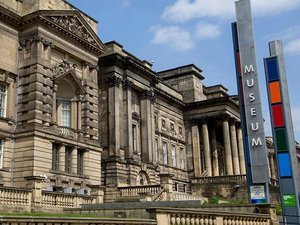
Henry Moore, 1898 – 1986

Henry Moore Tabloları: En Ünlü 100 Eser, Sıralanmış

Henry Moore'in en ünlü eseri, Detroit, Detroit Institute of Arts bünyesinde yer alan Reclining Figure'dir. Falling Warrior (1957) ve Sculptural Objects (Cramer 47) ile birlikte, herkesin tanıdığı o üç eseri tamamlıyor. Kataloğumuz Henry Moore tarafından üretilen 492 eseri listelemektedir; aşağıda yer alan 100 eser ise dünyanın en çok ilgi gösterdiği, her biri yapıldığı yıl, sergilendiği müze ve önemine dair bilgilerle birlikte sunulan seçkin parçalardır.

Her bir eser için yapılan aramalar, ziyaretler ve siparişlerin birleşimiyle oluşturulan popülerlik puanımıza göre sıralanmıştır. Ekim 2026 tarihinde güncellenmiştir.

Henry Moore portresi
Henry Moore · 1898 – 1986
Doğum · ölüm
1898 – 1986, Castleford
Akım
Modernism
Kataloğumuzdaki eserler
492
En ünlüları
Reclining Figure
En çok eser şu müzede
Tate Britain

En ünlü 10 Henry Moore tablosu

Reclining Figure tarafından Henry Moore
1

Reclining Figure

Wood · Detroit Institute of Arts, Detroit

Form and Materiality This elmwood carving presents an abstracted human form through sinuous lines and organic voids. The sculpture utilizes the wide grain of the wood to emphasize its undulating limbs and torso. Holes are integrated into the composition, allowing light and space to penetrate the solid mass. These openings create a relationship between the internal volume and the surrounding environment. Compositional Elements The figure features a looped head and…

Falling Warrior (1957) tarafından Henry Moore
2

Falling Warrior

1957 · Bronze · National Museums Liverpool, Liverpool

In the quiet halls of Tate Britain, there exists a moment of profound stillness captured in bronze—a masterpiece that breathes with the weight of history and the lightness of spirit. Henry Moore’s “Falling Warrior,” created between 1956 and 1957, is far more than a mere sculpture; it is a meditation on the very nature of existence. As one approaches this monumental work, the eye is immediately drawn to the fluid,…

Sculptural Objects (Cramer 47) tarafından Henry Moore
3

Sculptural Objects (Cramer 47)

Painting

In the vast landscape of twentieth-century modernism, few names resonate with as much tactile power and organic grace as Henry Moore. While the world often recognizes him through his monumental bronze figures that command public squares across the globe, his foray into the two-dimensional realm offers a uniquely intimate window into his creative psyche. Sculptural Objects (Cramer 47) stands as a breathtaking testament to this versatility, a painting that does…

Sheep 1 tarafından Henry Moore
4

Sheep 1

Oil

In the quiet, evocative lines of Sheep 1, we encounter a profound moment of connection between the viewer and the natural world. This striking black and white drawing by the legendary British master Henry Moore transcends simple animal portraiture to become an exploration of form, texture, and presence. The subject—a sheep with a thick, tactile wool coat—is rendered not merely as livestock, but as a sculptural entity. With its prominent…

A Miner at Work (1942) tarafından Henry Moore
5

A Miner at Work

1942 · Sculpture · Imperial War Museums, Londra

In the heavy, shadowed atmosphere of 1942, amidst the profound uncertainties of the Second World War, Henry Moore captured a moment of quiet, monumental strength in "A Miner at Work." This piece serves as much more than a mere depiction of industrial labor; it is a profound meditation on the human spirit under pressure. The artwork presents a solitary figure, a miner seated at the coal face, rendered through Moore’s…

Figure in a Shelter (1983) tarafından Henry Moore
7

Figure in a Shelter

1983 · Sculpture Bronze · Kimbell Art Museum, Fort Worth

Henry Moore (1898-1986), a titan of twentieth-century sculpture, remains an artist whose work continues to resonate with audiences worldwide. His unwavering fascination with the human form—particularly its reclining postures—coupled with his exploration of organic shapes derived from nature—like pebbles and seashells—established him as a pioneer of abstract expressionism while simultaneously grounding his art in palpable physicality.

The Artist's Hand V (1979) tarafından Henry Moore
8

The Artist's Hand V

1979 · Lithograph · Tate Britain, Londra

In the quiet intimacy of Henry Moore’s “The Artist's Hand V,” created in 1979, we are invited into a profound dialogue between the creator and his medium. This exquisite lithograph serves as more than a mere anatomical study; it is a soulful meditation on the very act of making. Through the outstretched gesture of Moore’s own hand, the artwork captures a moment of suspended animation, where the boundary between the…

Reclining Figure. Points tarafından Henry Moore
9

Reclining Figure. Points

Bronz

Henry Moore’s “Reclining Figure. Points”: A Meditation on Form and Tranquility Henry Spencer Moore, doğuştan İngiliz sanatçı olan bir figür olarak kendini göstermiş ve 20. yüzyılın en önemli ve uluslararası düzeyde tanınmış heykeltıraşlarından biri olmuştur. Humble başlangıçları ile dünya çapında kabul görmüş yolculuğu sanat keşfine olan sıkı bağlılığı ve insan vücudunun uzaya ilişkisini araştıran bir eserdir. Onun babası, öğrenmeye tutkuyla dolu kendini okumuş bir adamdı ve onu madencilik kasabasından okul…

Hands I (1973) tarafından Henry Moore
10

Hands I

1973 · Lithograph · Tate Britain, Londra

Henry Moore's 'Hands I,' created in 1973, is more than just a lithograph depicting two hands clasped together; it’s a profound meditation on connection, vulnerability, and the enduring human need for touch. Born in Castleford, Yorkshire, in 1898, Henry Spencer Moore rose to international prominence as a sculptor, yet his exploration of form extended into printmaking with remarkable sensitivity. This particular work, rendered in stark black and white, captures an…

Henry Moore, 11. - 100. tabloları

Yayılan Figür; Açık Pozisyon tarafından Henry Moore
#11

Yayılan Figür; Açık Pozisyon

Henry Moore (1898-1986), arguably Britain's most influential sculptor of the twentieth century, achieved international acclaim for his groundbreaking exploration of abstract form and its connection to the human…

Two Piece Sculpture No. 7; Pipe tarafından Henry Moore
#14

Two Piece Sculpture No. 7; Pipe

A Dance of Forms: Exploring Henry Moore’s ‘Two Piece Sculpture No. 7; Pipe’ This captivating bronze sculpture by Henry Moore exemplifies his mastery of abstract figurative form and…

Gözcü Kız; ve Oturduğu Figür tarafından Henry Moore
#16

Gözcü Kız; ve Oturduğu Figür

Henry Moore (1898-1986), arguably Britain's most influential sculptor of the twentieth century, achieved global renown through his distinctive approach to form—a radical departure from traditional representational art that…

Catspaws off the Land (1885) tarafından Henry Moore
#18

Catspaws off the Land

1885 · Tate Britain

To gaze upon Catspaws off the Land is to be gently swept away by the vast, breathing expanse of the sea meeting the steadfast embrace of the shore.…

Henry Moore tarafından en çok resmedilen konular

Bu şaheserler arasında en sık rastlanan dört konu ve her birinin en seçkin örneği.

Henry Moore'in tabloları nerede görülebilir

Bu sayfadaki tabloların çoğuna ev sahipliği yapan 8 müze.

Müze Şehir Henry Moore Eserleri Bu listedeki tablolar
Tate Britain, LondraTate Britain Londra 3 The Artist's Hand V, Hands I, Catspaws off the Land
National Maritime Museum, LondraNational Maritime Museum Londra 2 Setting Nets on the Coast of North Wales, Hove-to for a Pilot
Detroit Institute of Arts, DetroitDetroit Institute of Arts Detroit 1 Reclining Figure
National Museums Liverpool, LiverpoolNational Museums Liverpool Liverpool 1 Falling Warrior
Imperial War Museums, LondraImperial War Museums Londra 1 A Miner at Work
Kimbell Art Museum, Fort WorthKimbell Art Museum Fort Worth 1 Figure in a Shelter
Zaragoza Müzesi, SaragossaZaragoza Müzesi Saragossa 1 Portrait of Isabel de Cistué y Nieto (Retrato de Dª Isabel de Cistué y Nieto)
Finnish National Gallery, HelsinkiFinnish National Gallery Helsinki 1 Family Group

Henry Moore'in her on yıldıldan en ünlü tablosu

  1. 1940s
    A Miner at Work (1942) tarafından Henry Moore
    100 içinde #5

    A Miner at Work

    Yaş 42 – 51 · Imperial War Museums

    In the heavy, shadowed atmosphere of 1942, amidst the profound uncertainties of the Second World War, Henry Moore captured a moment of quiet, monumental strength in "A Miner…

  2. 1950s
    Falling Warrior (1957) tarafından Henry Moore
    Sıra 2 / 100

    Falling Warrior

    Yaş 52 – 61 · National Museums Liverpool

    In the quiet halls of Tate Britain, there exists a moment of profound stillness captured in bronze—a masterpiece that breathes with the weight of history and the lightness…

  3. 1970s
    The Artist's Hand V (1979) tarafından Henry Moore
    100 içinde #8

    The Artist's Hand V

    Yaş 72 – 81 · Tate Britain

    In the quiet intimacy of Henry Moore’s “The Artist's Hand V,” created in 1979, we are invited into a profound dialogue between the creator and his medium. This…

  4. 1980s
    Figure in a Shelter (1983) tarafından Henry Moore
    100 içinde #7

    Figure in a Shelter

    Yaş 82 – 88 · Kimbell Art Museum

    Henry Moore (1898-1986), a titan of twentieth-century sculpture, remains an artist whose work continues to resonate with audiences worldwide. His unwavering fascination with the human form—particularly its reclining…

Henry Moore'in tabloları hakkında sorular

Henry Moore'in en ünlü tablosu hangisidir?Yanıtı göster

Reclining Figure, Detroit Institute of Arts, Detroit. Ardından Falling Warrior (1957) ve Sculptural Objects (Cramer 47) gelir.

Henry Moore tarafından yapılan en iyi 10 tablo hangileridir?Yanıtı göster

Reclining Figure, Falling Warrior, Sculptural Objects (Cramer 47), Sheep 1, A Miner at Work, Yerleşik Figür Üzerindeki Kare Adımlar, Figure in a Shelter, The Artist's Hand V, Reclining Figure. Points ve Hands I. Yukarıdaki sıralama, her birinin yapıldığı yılı ve bulunduğu müzeyi göstermektedir.

Henry Moore kaç adet tablo yaptı?Yanıtı göster

Kataloğumuz, Henry Moore tarafından 1942 ile 1983 tarihleri arasında üretilen 492 eseri listelemektedir.

Henry Moore'in en ünlü tabloları nerelerdedir?Yanıtı göster

Çoğu Tate Britain (Londra), National Maritime Museum (Londra) ve Detroit Institute of Arts (Detroit) bünyesinde bulunmaktadır. Yukarıdaki tablo müzeleri tek tek listelemektedir.

Henry Moore en ünlü eserlerini ne zaman yaptı?Yanıtı göster

1970s döneminde: Bu sayfadaki 100 eserin 2 tanesi o döneme aittir, bunlar arasında The Artist's Hand V bulunmaktadır.

Henry Moore'in en eski ve en yeni ünlü tabloları hangileridir?Yanıtı göster

Bu sayfadaki en eski eser A Miner at Work (1942), en yeni eser ise Figure in a Shelter (1983)'dir.

Henry Moore en çok neyi resmetti?Yanıtı göster

Bu sayfadaki 100 eser arasında Scenes (22), Children (15) ve Mothers (15) yer almaktadır.

Henry Moore en çok hangi tekniği kullandı?Yanıtı göster

Bronze: Bu sayfadaki 100 eserin 2 tanesi.

Henry Moore hangi sanat akımına ait?Yanıtı göster

bu sayfadaki tabloların da gösterdiği gibi Modernism,

Tate Britain bünyesinde hangi Henry Moore tablolarını görebilirim?Yanıtı göster

The Artist's Hand V, Hands I ve Catspaws off the Land, Tate Britain, Londra bünyesinde bulunan bu sayfadaki 3 eser arasında yer almaktadır.

Henry Moore Hakkında

A Life Sculpted in Form: The World of Henry Moore

Henry Spencer Moore OM CH FBA (30 July 1898 – 31 August 1986) was an English visual artist. He is best known for his semi-abstract monumental bronze sculptures—particularly the reclining figure—which revolutionized modern British sculpture and established him as one of the most influential artists of the twentieth century. His journey from humble beginnings in Castleford, Yorkshire, to international acclaim exemplifies unwavering dedication to artistic exploration and a profound connection to both human form and the natural world.

Early Life and Artistic Beginnings

Henry Spencer Moore was born in Castleford, West Yorkshire, England, on July 30, 1898, the son of Raymond Spencer Moore (1848–1922) and Mary Baker. Growing up amidst the rolling hills of Yorkshire profoundly shaped his aesthetic sensibility, imbuing his work with a sense of organic fluidity reminiscent of his birthplace. His father, a self-taught man with a passion for learning, instilled in him a belief in the transformative power of education, steering him away from the traditional path of a miner towards formal schooling. From an early age, Moore demonstrated an innate talent for modeling clay and carving wood—activities that foreshadowed his lifelong pursuit of sculptural form. Despite facing considerable hardship during his formative years, Moore’s determination to pursue artistic endeavors remained unshaken. He attended Leeds School of Art and subsequently enrolled at the Royal College of Art in London, immersing himself in the study of classical sculpture alongside pioneering movements like Cubism. This exposure to diverse artistic traditions fueled his creative vision and solidified his commitment to pushing boundaries within the realm of visual art.

Influences and Artistic Style

Moore’s artistic education was significantly impacted by encounters with groundbreaking artistic ideas—most notably, pre-Columbian sculptures during a visit to Mexico in 1925. The simplicity and abstraction inherent in these ancient artworks liberated him from representational constraints, inspiring him to explore forms that prioritized gesture and volume over precise anatomical accuracy. This pivotal experience catalyzed the development of his signature sculptural style: semi-abstract monumental bronzes characterized by rounded, organic shapes—often punctuated by voids or apertures—that captured light and space with remarkable subtlety. He drew inspiration from classical sculpture, particularly Michelangelo’s sculptures of David and Pietà, recognizing their mastery of form and expressive power. However, Moore wasn't merely replicating established conventions; he synthesized these influences into something uniquely his own—a style that reflected both the grandeur of antiquity and the dynamism of modernism. His artistic explorations extended beyond sculptural technique to encompass broader philosophical considerations concerning the relationship between art and human experience.

Major Sculptural Achievements

Henry Moore’s prolific output spanned decades, resulting in hundreds of sculptures ranging from intimate maquettes to colossal monumental works that transformed urban landscapes. Among his most celebrated achievements are *Reclining Figure: 1951*, a seminal sculpture embodying the essence of his artistic vision; *Family Group*, a poignant depiction of familial bonds rendered in bronze; and *Shelter Drawings*, a series of evocative sketches documenting Londoners’ resilience during the Blitz—demonstrating Moore's ability to translate sculptural principles into two-dimensional form. His monumental bronzes, notably *Large Torso*, *Drummond Tower*, and *Saint Patrick’s Cathedral*, stand as enduring symbols of artistic innovation and civic pride. These sculptures captivated audiences worldwide, cementing Moore’s legacy as one of the foremost sculptors of his era—a figure whose work continues to inspire artists and viewers alike. His unwavering dedication to exploring form, volume, and spatial relationships ensured that he would remain at the forefront of sculptural discourse throughout his lifetime.

Legacy and Enduring Influence

Henry Moore's impact on twentieth-century art is undeniable. He challenged conventional notions of representation, advocating for abstraction as a means of conveying emotion and capturing the essence of human experience. His sculptures served as catalysts for artistic experimentation and fostered dialogue about the role of art in society—inspiring subsequent generations of sculptors to embrace bold new approaches. Moore’s work continues to resonate with audiences today, prompting contemplation on themes of vulnerability, resilience, and connection to the natural world. He established the Henry Moore Foundation in 1977, ensuring that his artistic legacy would endure through education and the promotion of creativity—a testament to his belief in the transformative power of art and its capacity to enrich human lives. His sculptures stand as enduring monuments to human ingenuity and a profound reminder of the beauty inherent in confronting adversity—solidifying his place among the most revered artists of the twentieth century.

Henry Moore tarafından yapılan tüm 492 eser →