Georges Braque, 1882 – 1963

Georges Braque: The 100 Most Famous Paintings

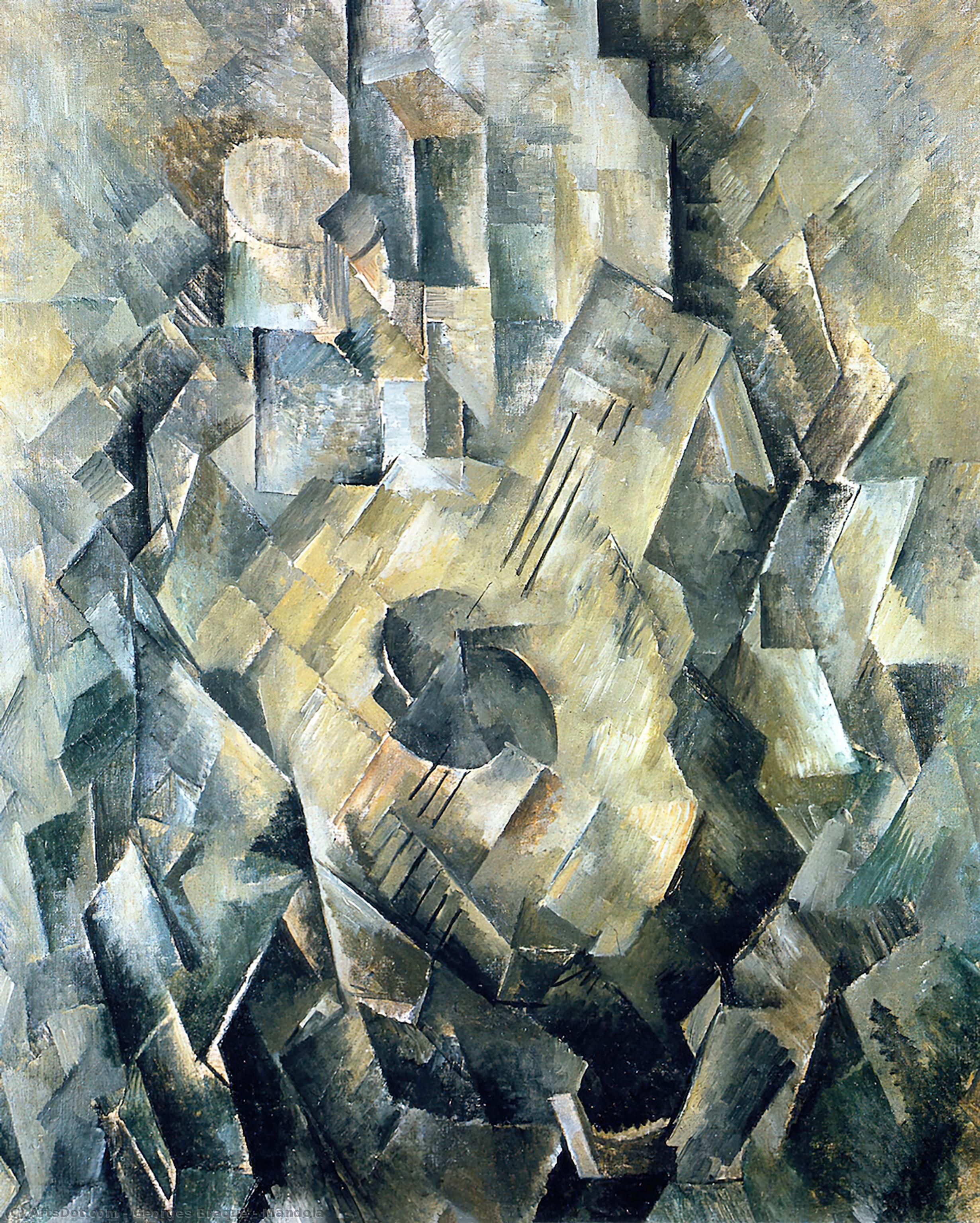
Mandola (1910) is the most famous painting by Georges Braque, held by the Tate Gallery in Londra. Georges Braque Georges Braque, 1882'de Argenteuil, Fransa'da doğdu ve modern sanatın gelişen manzarasıyla derinden iç içe olan bir yola koyuldu. Ailece ev boyacıları ve dekoratörler olarak yetiştirilmesi ona sadece malzemelerin teknik hakimiyetini değil, (1914) and L'Estaque'daki Evler are the next two works the world knows best. From the 700 works of Georges Braque in our catalogue, here are the 100 that collectors and museum visitors look at most, with the year, the museum and the story of each.

Ranked by our popularity score, which combines the searches, visits and orders for each work. Updated Ekim 2026.

Portrait of Georges Braque
Georges Braque · 1882 – 1963
Born · died
1882 – 1963, Argenteuil
Movement
Kübizm
Works in our catalogue
700
Most famous
Mandola (1910)
Most works at
The Phillips Collection

Top 10: Georges Braque's best-known paintings

Mandola (1910) by Georges Braque
1

Mandola

1910 · Tuval Üzerine Yağlı Boya · Tate Gallery, Londra

Mandola: Analitik Kübizm'in Bir Köşe Taşı Georges Braque’ın 1910 yılında tamamladığı “Mandola”, sanat tarihinde bir dönüm noktası olarak kabul edilen Analitik Kübizm akımının en önemli eserlerinden biridir. Bu yağlı boya tablo (71 x 56 cm), sadece bir müzik aletinin tasviri olmanın ötesinde, biçim, algı ve görme eyleminin derinlemesine bir keşfidir. Braque, geleneksel sanatsal normları yıkan bu eserinde mandolayı parçalayarak, karmaşık geometrik düzlemlerden oluşan etkileşimli bir kompozisyon yaratır. Gözümüzün alışık olduğu…

Georges Braque

Georges Braque, 1882'de Argenteuil, Fransa'da doğdu ve modern sanatın gelişen manzarasıyla derinden iç içe olan bir yola koyuldu. Ailece ev boyacıları ve dekoratörler olarak yetiştirilmesi ona sadece malzemelerin teknik hakimiyetini değil, (1914) by Georges Braque
2

Georges Braque Georges Braque, 1882'de Argenteuil, Fransa'da doğdu ve modern sanatın gelişen manzarasıyla derinden iç içe olan bir yola koyuldu. Ailece ev boyacıları ve dekoratörler olarak yetiştirilmesi ona sadece malzemelerin teknik hakimiyetini değil,

1914 · Tuval Üzerine Yağlı Boya

Bir Gitar Çalana Adam: Kübist Yeniliğin Temel Taşı Georges Braque’ın “Bir Gitar Çalana Adam” (1914) adlı eseri, erken 20. yüzyılda temsili sanatı yeniden tanımlayan devrimci bir sanat hareketi olan Analitik Kübizm'in önemli bir örneği olarak duruyor. Bu sadece bir müzisyenin tasviri değil; formun, uzayın ve algının derinlemesine bir keşfi, tuval üzerine zekice bir titizlikle işlenmiş bir çalışma. Koleksiyoncular için aranan bir parça ve her türlü iç mekana çarpıcı bir ifade…

L'Estaque'daki Evler by Georges Braque
3

L'Estaque'daki Evler

Tuval Üzerine Yağlı Boya

L'Estaque Evleri: Kübizmin Doğuşunda Bir Sahne Georges Braque’ın "L'Estaque Evleri" adlı eseri, 20. yüzyıl sanatında bir dönüm noktası olarak kabul edilir ve kübizm hareketinin doğuşuna tanıklık eder. 1908 yılında tamamlanan bu manzara, Fransa’nın Akdeniz kıyısında yer alan L'Estaque kasabasının tipik evlerini ve doğal çevresini yansıtır. Ancak Braque, bu sahneyi geleneksel perspektif kurallarını aşan, parçalanmış geometrik formlarla yeniden yorumlar. Eserin ilk bakışta kaotik görünümü, aslında derinlik ve boyut hissini koruyan dikkatli…

Normandiya Limanı (1909) by Georges Braque
4

Normandiya Limanı

1909 · Tuval Üzerine Yağlı Boya · Şikago Sanat Enstitüsü, Chicago

Kübik İnovasyonun Bir Başyapıtı Georges Braque'ın "Normandiya Limanı" (1909) adlı eseri, sanatçının form ve perspektife yönelik çığır açan yaklaşımını sergileyen, Erken Kübizm'in büyüleyici bir örneğidir. Bu canlı sanat eseri, parçalanmış formlar ve cesur çizgiler aracılığıyla hareketli bir liman manzarasının özünü yakalarken, izleyicileri geleneğin yenilikle buluştuğu bir dünyaya davet eder. Dinamik Kompozisyon ve Canlı Renkler Kompozisyon, derinlik ve karmaşıklık yaratan, üst üste binen geometrik formların bir senfonisi niteliğindedir. Açılı bir hassasiyetle…

Kadın Okuyor (1911) by Georges Braque
5

Kadın Okuyor

1911 · Tuval Üzerine Yağlı Boya

Georges Braque’s “Woman Reading,” completed in 1911, stands as an undeniable cornerstone of Analytical Cubism—a movement that irrevocably altered the trajectory of Western art. More than just a depiction of a woman absorbed in literature, this painting embodies Braque's audacious challenge to conventional artistic representation, prioritizing geometric abstraction and multiple perspectives over realistic illusion.

Keman ve Palet (1910) by Georges Braque
6

Keman ve Palet

1910 · Tuval Üzerine Yağlı Boya · Solomon R. Guggenheim Müzesi, New York City

Konuyu ve Kompozisyonu Keşfetmek Bu büyüleyici sanat eseri; bir keman ve bir palet gibi müzik enstrümanlarını içeren, parçalanmış ve soyutlanmış bir biçimde düzenlenmiş dinamik bir natürmort sahnesi sunuyor. Kompozisyon, izleyicileri tanıdık nesnelerin geometrik yüzeylere ayrıştırıldığı, katmanlı bir formlar etkileşimini keşfetmeye davet ediyor. Konu içeriği; sanatsal ve müzikal yaratımı yücelterek uyumu, yaratıcılığı ve sanatsız öğelerin birbirine bağlılığını simgeliyor. Eserin merak uyandıran düzenlemesi, modernist bir mercek aracılığıyla gündelik nesnelerdeki güzelliği açığa çıkararak…

Müzisyen (1918) by Georges Braque
7

Müzisyen

1918 · Tuval Üzerine Yağlı Boya

Georges Braque's "The Musician" (1918) isn't merely a depiction of a man playing the cello; it’s a profound statement about perception, form, and the very nature of artistic representation. Created during the tumultuous years following World War I, this painting embodies the revolutionary spirit of Synthetic Cubism – a movement spearheaded by Braque himself in collaboration with Pablo Picasso. It's a work that challenges our ingrained notions of reality, inviting…

Düet (Le Duo) (1937) by Georges Braque
8

Düet (Le Duo)

1937 · Tuval Üzerine Yağlı Boya · Centre Pompidou, Paris

Geometri ve Zarafetin Bir Senfonisi 1937 yılının dinginliğinde Georges Braque, sadece müzikal bir anı değil; uyumlu bir diyaloğun en saf özünü yakaladı. The Duet (Le Duo), izleyiciyi iki figürün bir piyanonun ritmik nabzıyla iç içe geçtiği samimi bir sığınağa davet ediyor. İlk bakışta sahne, dostluğun zarif bir kesiti gibi görünse de, bu yüzeyin altında Kübist hareketin derin entelektüel disiplini yatmaktadır. Braque, fiziksel dünyayı titizlikle parçalarına ayırarak özneleri ve çevrelerini karmaşık…

Gitarıyla Kadın (1913) by Georges Braque
9

Gitarıyla Kadın

1913 · Tuval Üzerine Akrilik Boya

Devrimsel Bir Sentez: Braque’nin Gitarıyla Kadın Eserini Keşfetmek (1913) Georges Braque'in 1913 yılında resmedilen Gitarıyla Kadın adlı eseri, Fauvizm'in canlı enerjisi ile Kübizm'in çığır açan yenilikleri arasında köprü kuran dönüm noktası niteliğinde bir çalışma olarak durmaktadır. Bu eser yalnızca bir müzisyenin tasviri değildir; formun ve algının, modern sanatın akışını geri dönülemez biçimde değiştiren radikal bir yapısökümüdür. Tablo, Braque'ın sanatsal etkileri sentezleme konusundaki eşsiz yeteneğini örnekleyerek, hem entelektüel açıdan uyarıcı hem…

Heracles by Georges Braque
10

Heracles

Lithograph

The Deconstruction of Heroism In the dawn of the twentieth century, Georges Braque embarked on a visual revolution that would forever alter the trajectory of modern art. His work, Heracles, stands as a profound testament to this era of radical reimagining. Executed around 1910, this monochrome lithograph does not merely recount the legendary exploits of the Greek hero; instead, it embodies the very essence of Cubism’s departure from traditional representation.…

The rest of the Georges Braque ranking, 11 to 100

L'Estaque'da Evler, Kunstmuseum Bern (1908) by Georges Braque
#11

L'Estaque'da Evler, Kunstmuseum Bern

1908

Akdeniz esintisinin L’Estaque’ın engebeli arazisiyle buluştuğu Provence’ın sakin tepelerinde, Georges Braque sadece bir manzarayı değil; geleneksel sanatın aynasının parçalandığı o anı yakaladı. 1908 yılında resmedilen L'Estaque'da Evler, Kunstmuseum…

Violin and candlestick (1910) by Georges Braque
#12

Violin and candlestick

1910

Georges Braque's "Violin and Candlestick," painted in 1910, isn’t merely a depiction of objects; it’s an architectural exploration of perception itself. This pivotal work, rendered in the heart…

Körfez, Les Lecques (1906) by Georges Braque
#13

Körfez, Les Lecques

1906 · Centre Pompidou

Modern sanatın kayıtlarında, çok az an Georges Braque’ın The Gulf, Les Lecques adlı eserindeki gibi bir üslup devriminin ham ve dizginlenemez enerjisini yakalayabilir. 1906 yılında resmedilen bu şaheser,…

Guitar and Sheet Music (1919) by Georges Braque
#14

Guitar and Sheet Music

1919

In the quiet revolution of early 20th-century modernism, few works capture the delicate tension between structure and soul as poignantly as Georges Braque’s “Guitar and Sheet Music.” Painted…

Viaduct at L_Estaque (1908) by Georges Braque
#15

Viaduct at L_Estaque

1908

In the sun-drenched landscapes of southern France, a revolution was quietly brewing, captured forever in the vibrant strokes of Georges Braque’s Viaduct at L’Estaque. Painted during a pivotal…

Gitarıyla Adam (1911) by Georges Braque
#16

Gitarıyla Adam

1911 · MoMA - Museum of Modern Art

1914 yılında tamamlanan Georges Braque’nin “Gitarıyla Adam” adlı eseri, sanat tarihinin akışını geri dönülemez bir şekilde değiştiren Analitik Kübizm akımının temel taşlarından biri olarak durmaktadır. Bu tablo, sadece…

Gitar ile Natürmort (Mandolin ile Natürmort) (1912) by Georges Braque
#17

Gitar ile Natürmort (Mandolin ile Natürmort)

1912 · Museo del Novecento

Zamanda Donmuş Bir An: Braque'un Gitarlı Natürmortu Üzerine Keşif Georges Braque'un 1912 yılında yaptığı "Gitarlı Natürmort (Mandolinli Natürmort)", sadece müzik aletlerinin bir tasviri olmanın ötesindedir; 20. yüzyılın şafağında…

Still life with harp and violin (1911) by Georges Braque
#18

Still life with harp and violin

1911

To gaze upon Georges Braque’s Still Life with Harp and Violin is to witness the very moment the mirror of traditional art was shattered and reassembled into something…

Fox by Georges Braque
#19

Fox

In the quiet, monochromatic depths of Georges Braque’s Fox, we encounter a profound moment in the evolution of modern vision. Created in 1911 and published the following year,…

Violin and pitcher, Kunstmuseum Basel (1910) by Georges Braque
#20

Violin and pitcher, Kunstmuseum Basel

1910

In the quiet halls of the Kunstmuseum Basel, a profound dialogue between light and shadow unfolds within Georges Braque’s 1910 masterpiece, Violin and Pitcher. To gaze upon this…

The Clarinet Valse (1912) by Georges Braque
#21

The Clarinet Valse

1912

To gaze upon Georges Braque’s 1912 masterpiece, The Clarinet Valse, is to step into a world where the boundaries between sound and sight begin to dissolve. This is…

Arp ve keman ile natürmort (1912) by Georges Braque
#22

Arp ve keman ile natürmort

1912

Modern Yaşamın Parçalanmış Bir Vizyonu Georges Braque’ın 1912 yılında resimlediği Arp ve keman ile natürmort, Analitik Kübizm'in zirvesini temsil eden dönüm noktası niteliğinde bir eserdir. Bu çalışma, gerçekçi…

Büyük çıplak (1908) by Georges Braque
#23

Büyük çıplak

1908

Erken Modern Duygusallığa Bir Bakış: Georges Braque'ın *Büyük Nü* (1908) Georges Braque tarafından 1908 yılında yaratılan bu büyüleyici tablo, yirminci yüzyılın başlarındaki sanatsal coşkulu atmosferine dair çarpıcı bir…

Still-Life Le Jour (1929) by Georges Braque
#24

Still-Life Le Jour

1929

Georges Braque’s “Still Life Le Jour,” painted in 1929, stands as a cornerstone of Fauvist art—a movement that irrevocably altered the course of twentieth-century painting. More than just…

Metronom (1909) by Georges Braque
#25

Metronom

1909 · Statens Museum For Kunst

Metronom, sol üst köşede oker ve sienna tonlarında piramidal bir ağırlık gibi konumlanıyor. Ahşap gövdesi, bir mandolanın kenarlarıyla iç içe geçen yamuk yüzeylere bölünmüş durumda. Kalın ve kavisli…

Bottle, Glass, and Newspaper (1914) by Georges Braque
#26

Bottle, Glass, and Newspaper

1914

In Georges Braque’s 1914 masterpiece, Bottle, Glass, and Newspaper, the boundaries between reality and representation dissolve into a captivating visual conversation. This work is not merely a depiction…

Plums, Pears, Nuts and Knife (1926) by Georges Braque
#27

Plums, Pears, Nuts and Knife

1926 · The Phillips Collection

In this 1926 oil on canvas, we find a composition that feels remarkably intimate, as if we have just stepped into a private moment of stillness. The subject…

L'Estaque (1906) by Georges Braque
#28

L'Estaque

1906

In the sun-drenched landscape of 1906, Georges Braque captured something far more profound than a mere Mediterranean vista; he captured the very moment art began to break free…

Bottle and Fishes (1910) by Georges Braque
#29

Bottle and Fishes

1910

In the quiet revolution of early twentieth-century modernism, few works capture the intellectual tension between reality and perception as poignantly as Georges Braque’s “Bottle and Fishes.” Executed around…

Still Life with Guitar (1935) by Georges Braque
#30

Still Life with Guitar

1935

In the quietude of 1935, Georges Braque captured a moment of profound stillness that transcends the simple arrangement of domestic objects. Still Life with Guitar is not merely…

Still Life with Grapes (1918) by Georges Braque
#31

Still Life with Grapes

1918

A Fragmented Reflection of Modernity In 1918, as the world emerged from the profound shadows of the Great War, Georges Braque was busy redefining the very essence of…

İki Kuş (1955) by Georges Braque
#32

İki Kuş

1955 · Tel Aviv Museum of Art

Georges Braque’ın 1955 yılında tamamlanan “İki Kuş” adlı eseri, yalnızca kuş formlarının bir tasviri değildir; 20. yüzyılın başlarından ortalarına kadar Fransa'da filizlenen sanatsal devrimin damıtılmış bir özüdür. 1882…

Fruitdish and Glass (1912) by Georges Braque
#33

Fruitdish and Glass

1912

Georges Braque’s Fruitdish and Glass stands as a pivotal work in the history of art, marking a significant milestone in the development of Cubism. Created in 1912, this…

Still Life: The Table (1928) by Georges Braque
#34

Still Life: The Table

1928

Georges Braque’s “Still Life: The Table,” painted in 1928, isn't merely a depiction of objects; it’s an invitation into a carefully constructed world of fragmented perception and deliberate…

Portrait of a Woman (1911) by Georges Braque
#35

Portrait of a Woman

1911

In the annals of modern art, few moments are as transformative as the birth of Cubism, and few works capture this seismic shift with such intimate grace as…

Still Life with a Guitar (1919) by Georges Braque
#36

Still Life with a Guitar

1919

Georges Braque's "Still Life with a Guitar," painted in 1919, isn’t merely a depiction of objects; it’s a profound exploration of perception and the very nature of representation.…

Meyve Tabağı, Maça As (1913) by Georges Braque
#37

Meyve Tabağı, Maça As

1913

Bir Kübist Natürmort: Braque'un 'Meyve Tabağı, Kulüp Ası'nda Gerçekliği Yapı Bozmak Georges Braque'un 1913 yılında yaptığı resmedilen *Meyve Tabağı, Kulüp Ası*, Analitik Kübizm'in temel bir örneğidir; geleneksel sanatsal…

Leaves in color of light (1953) by Georges Braque
#38

Leaves in color of light

1953

A Symphony of Verdant Light To gaze upon Georges Braque’s Leaves, Color, Light is to step into a quiet sanctuary of color and form. Created during the artist's…

Portuguese (1911) by Georges Braque
#39

Portuguese

1911

In the quiet, fractured landscape of 1911, Georges Braque achieved something far more profound than a mere depiction of a musician; he captured the very vibration of sound…

Persephone by Georges Braque
#40

Persephone

The Fragmented Echo of Myth In the quiet, striking depths of Georges Braque’s Persephone, we encounter more than just a depiction of a Greek deity; we witness the…

Landscape by Georges Braque
#41

Landscape

A Pivotal Moment in Modernity In 1906, the tranquil hills of L’Estaque became the stage for a quiet revolution that would forever alter the trajectory of Western art.…

At Sunset, Bird XVI (1958) by Georges Braque
#42

At Sunset, Bird XVI

1958

In the quiet, evocative depths of Georges Braque’s "At Sunset, Bird XVI," we encounter a moment where the boundaries between the physical world and abstract emotion begin to…

Lilyaların Camı by Georges Braque
#43

Lilyaların Camı

Lilyaların Camı: Natürmort Üzerine Kübist Bir Meditasyon Georges Braque’ın 1912 yılında resmettiği “Lilyaların Camı”, yalnızca bir vazo ve çiçek tasviri değil; algının kendisi üzerine yapılmış derin bir keşiftir.…

Nature Morte (1926) by Georges Braque
#44

Nature Morte

1926 · Art Gallery of Hamilton

Georges Braque’s “Nature Morte,” painted in 1926, stands as a cornerstone of Cubist exploration and a testament to the artist's profound engagement with visual perception. More than just…

Dead nature by Georges Braque
#45

Dead nature

To gaze upon Georges Braque’s “Dead Nature” is to witness a profound moment of stillness within the turbulent currents of modern art history. Created in 1930, this work…

Still Life on a Table Gillette (1914) by Georges Braque
#48

Still Life on a Table Gillette

1914

Georges Braque’s Still Life on a Table Gillette: A Fragmented Reflection of Modern Consciousness Still Life on a Table Gillette by Georges Braque stands as a cornerstone of…

Portrait of a woman 1 by Georges Braque
#49

Portrait of a woman 1

To stand before Georges Braque’s "Portrait of a Woman 1" is to witness the very moment the mirror of traditional art was shattered and reassembled into something far…

Big Nude (1908) by Georges Braque
#50

Big Nude

1908

In the annals of modern art, few moments are as transformative as the birth of Cubism, and few works capture this seismic shift as viscerally as Georges Braque’s…

Still Life with a Violin (1911) by Georges Braque
#51

Still Life with a Violin

1911

To gaze upon Georges Braque’s “Still Life with a Violin,” painted in the transformative year of 1911, is to witness the very moment the mirror of traditional art…

Factory of Rio Tinto in the L'estanque by Georges Braque
#52

Factory of Rio Tinto in the L'estanque

To gaze upon Georges Braque’s Factory of Rio Tinto in the L'estanque is to witness the very moment the mirror of traditional art was shattered and reassembled into…

Ceiling: The Birds (1953) by Georges Braque
#53

Ceiling: The Birds

1953

High above the floor of the Salle Henri II in the Louvre, a monumental vision unfolds within an oval frame. The air feels thick with the weight of…

Seated woman 1 by Georges Braque
#54

Seated woman 1

The studio overlooks the Normandy coast, yet the view is broken into shards. A woman sits at her easel, her form caught in a web of grey planes…

Guitar ''Program statue d'epouvante'' (1913) by Georges Braque
#55

Guitar ''Program statue d'epouvante''

1913

A Cubist Still Life: Deconstructing Form in Braque’s ‘Guitar ''Program statue d'epouvante''’ Georges Braque’s *Guitar ''Program statue d'epouvante''* (1913) is a pivotal example of Analytical Cubism, showcasing the…

Limonlar, Şeftaliler ve Kompotiye (1927) by Georges Braque
#56

Limonlar, Şeftaliler ve Kompotiye

1927 · The Phillips Collection

Işık, bir meyve kasesinin kenarına çarparken, nesnelerin sessiz bir parçalanma hali içinde var olduğu bir dünyayı gün yüzüne çıkarıyor. 1927 tarihli bu kompozisyonda limonlar, şeftaliler ve bir kompotiye,…

Ceiling: The Birds (1953) by Georges Braque
#58

Ceiling: The Birds

1953

To stand beneath this oval expanse is to witness a moment where the heavy weight of architecture dissolves into something far more fluid. Created between 1952 and 1953,…

Louvre Çatısı İçin Çalışma by Georges Braque
#59

Louvre Çatısı İçin Çalışma

Georges Braque'ın kuş formlarının ve göksel mucizelerin büyüleyici bir keşfi olan "Louvre Çatısı İçin Çalışma" adlı eseri, basit bir temsiliyetin ötesine geçerek uzay, ışık ve doğal dünyanın içsel…

Churth at Carrieres Saint-Denis (1909) by Georges Braque
#60

Churth at Carrieres Saint-Denis

1909

The painting is a depiction of a village with buildings and stairs. The scene features a muted palette dominated by earthy tones—greens, yellows, and browns—creating an atmosphere of…

The Round Table (1929) by Georges Braque
#61

The Round Table

1929

Georges Braque’s “The Round Table”: A Dialogue Between Tradition and Innovation Subject Matter and Composition: Cubist Style and Technique: Historical Context – The Birth of Cubism: Symbolic Resonance…

Glass, Pipe and Playing Cards (1918) by Georges Braque
#62

Glass, Pipe and Playing Cards

1918 · Des Moines Art Center

A Study in Fragmented Reality Glass, Pipe and Playing Cards presents us with a quiet, intellectual puzzle. At first glance, one might see only the remnants of a…

Landscape at L'Estaque (1907) by Georges Braque
#63

Landscape at L'Estaque

1907

In the annals of modern art, few moments capture the raw, unbridled energy of a revolution quite like Georges Braque’s Landscape at L'Estaque. Painted in 1907, this oil…

Yellow Seacoast by Georges Braque
#64

Yellow Seacoast

In the quiet evolution of modern art, few works capture the delicate balance between structural revolution and serene observation as masterfully as Georges Braque’s Yellow Seacoast. This evocative…

Pedestal Table (1913) by Georges Braque
#66

Pedestal Table

1913

The painting Pedestal Table is a collage that presents a seemingly chaotic arrangement of various objects. Within the composition, a vase is positioned in the middle of the…

Still Life with Grapes and Clarinet (1927) by Georges Braque
#67

Still Life with Grapes and Clarinet

1927 · The Phillips Collection

The eye wanders across a surface where wood grain and marble appear to ripple through layers of oil paint. A clarinet rests within this arrangement, its dark, slender…

Woman with a Mandolin (1910) by Georges Braque
#68

Woman with a Mandolin

1910

In the quiet revolution of early twentieth-century modernism, few works capture the seismic shift in human perception as profoundly as Georges Braque’s Woman with a Mandolin. Created in…

Kartlar ve Zar (1914) by Georges Braque
#69

Kartlar ve Zar

1914 · Museo Nacional Centro de Arte Reina Sofía

Tuval üzerine yağlı boya ile icra edilen Kartlar ve Zar, dikey çizgilerle hareketlendirilmiş koyu, dikdörtgen bir arka plan üzerinde, oval bir formun içine hapsedilmiş bir kompozisyon sunar. Yüzey,…

White Bird by Georges Braque
#70

White Bird

In the vast landscape of early twentieth-century modernism, few works possess the quiet, arresting power of Georges Braque’s “White Bird.” To gaze upon this piece is to witness…

Port of La Ciotat (1907) by Georges Braque
#71

Port of La Ciotat

1907

A Harbor in Fragments The water at La Ciotat holds a heavy, fractured light. In this 1907 scene, sailboats and yachts drift through a landscape broken into geometric…

Tithonos by Georges Braque
#72

Tithonos

In the quiet evolution of modernism, few moments are as profound as the emergence of Analytical Cubism, and few works capture this seismic shift with such poetic restraint…

Bottle (1914) by Georges Braque
#73

Bottle

1914

In this 1914 work, we find ourselves looking at a scene that has been carefully dismantled and reassembled. The composition centers on a bowl and various bottles, yet…

Still Life with a Pair of Banderillas (1911) by Georges Braque
#74

Still Life with a Pair of Banderillas

1911

In this 1911 oil on canvas, the surface is occupied by a collection of everyday items arranged upon a dining table and near a chair. Two banderillas, used…

A Table Grise by Georges Braque
#75

A Table Grise

A Window Into Cubist Still Life: Georges Braque’s “A Table Grise” Georges Braque's "A Table Grise" (1930) isn’t merely a depiction of an arrangement; it’s a carefully constructed…

Violin and Glass (1913) by Georges Braque
#76

Violin and Glass

1913 · Kunstmuseum Basel

In this 1913 composition, we find ourselves observing a quiet arrangement of everyday objects that have been carefully deconstructed. A violin rests upon a wooden bow, positioned near…

Nature Morte a la Guitare (1938) by Georges Braque
#77

Nature Morte a la Guitare

1938

The scene unfolds through a fractured lens, where the boundaries between objects and space dissolve into a rhythmic dance of planes. A guitar neck and body emerge from…

Saint-Pol Roux by Georges Braque
#78

Saint-Pol Roux

The composition is defined by a stark, graphic tension between deep black silhouettes and a cream-colored ground. A profile face, rendered as a solid dark form, is integrated…

The Violin Valse (1913) by Georges Braque
#79

The Violin Valse

1913

Created in 1913, The Violin Valse is a still life painting that utilizes charcoal, oil, and canvas. The artwork features the contour of a violin, including its f-holes…

Viaduct At L'estaque. Le Viadue De L'estaque by Georges Braque
#80

Viaduct At L'estaque. Le Viadue De L'estaque

Georges Braque’s “Viaduct At L’Estaque,” painted in 1907, stands as a pivotal moment in the burgeoning Cubist movement—a bold assertion of artistic innovation that simultaneously honors and departs…

untitled by Georges Braque
#81

untitled

In the quiet revolution that redefined the boundaries of modern vision, Georges Braque’s “untitled (7718)” emerges as a profound meditation on the nature of sight itself. This seminal…

untitled (928) by Georges Braque
#83

untitled (928)

In the realm of modern art, few moments are as profoundly transformative as the birth of Cubism, and Georges Braque’s “untitled (928)” stands as a breathtaking testament to…

The Painter and His Model (1939) by Georges Braque
#84

The Painter and His Model

1939

In the quiet, contemplative atmosphere of 1939, Georges Braque captured more than just a moment in time; he captured the very essence of perception itself. The Painter and…

embattled head by Georges Braque
#85

embattled head

In the quiet intensity of Georges Braque’s embattled head, we encounter a profound meditation on the human condition, captured through the radical lens of Cubist innovation. Executed in…

Pitchet, Glass And Lemons by Georges Braque
#86

Pitchet, Glass And Lemons

Georges Braque’s 1942 painting, “Pitchet, Glass and Lemons,” isn’t merely a depiction of everyday objects; it’s a profound exploration of perception itself. Born in Argenteuil, France, in 1882,…

untitled (3508) by Georges Braque
#87

untitled (3508)

The painting features a guitarist playing an instrument set against a red background. The scene depicts a crowd, with several individuals visible throughout the composition.

L'Estaque (1906) by Georges Braque
#88

L'Estaque

1906

In the quiet landscape of 1906, a profound transformation was taking place within the confines of a canvas. Georges Braque’s L'Estaque is far more than a mere depiction…

Terrace Of Hotel Mistral by Georges Braque
#89

Terrace Of Hotel Mistral

The painting Terrace Of Hotel Mistral captures a sunlit scene featuring a group of trees positioned in front of the hotel. Some trees appear closer to the foreground,…

Still Life with Ace of Hearts (1914) by Georges Braque
#90

Still Life with Ace of Hearts

1914

To stand before Georges Braque’s Still Life with Ace of Hearts is to step directly into the crucible of early 20th-century modernism. This painting, executed in 1914, is…

The large trees by Georges Braque
#91

The large trees

In the quiet, sun-dappled groves of the French countryside, Georges Braque captured something far more profound than a mere landscape; he captured the very pulse of nature. “The…

The Chariot II by Georges Braque
#92

The Chariot II

In The Chariot II, we encounter a profound exploration of movement and structural deconstruction, a piece that serves as a window into the radical shifts of early twentieth-century…

Head Of A Woman by Georges Braque
#93

Head Of A Woman

A Fragmented Gaze: Exploring Braque’s “Head of a Woman” Georges Braque’s “Head of a Woman” is a compelling example of Analytical Cubism, a revolutionary style he pioneered alongside…

The Studio (III) (1949) by Georges Braque
#94

The Studio (III)

1949

The painting The Studio (III), executed by Georges Braque in 1949, presents a room viewed through a fractured lens. The composition is built from geometric planes, primarily rectangular…

Landscape at L'Estaque (1906) by Georges Braque
#95

Landscape at L'Estaque

1906

In the quiet coastal reaches of Provence, where the Mediterranean sun warms the earth, Georges Braque captured a moment that would forever alter the trajectory of Western art.…

The Bottle of Rum (1914) by Georges Braque
#96

The Bottle of Rum

1914

In the quiet, revolutionary atmosphere of 1914, Georges Braque captured more than just a still life; he captured the very fracturing of modern perception. The Bottle of Rum…

The Birds (1953) by Georges Braque
#97

The Birds

1953

Georges Braque’s “The Birds”: A Symphony of Geometric Abstraction “The Birds,” completed in 1953, stands as a testament to Georges Braque's unwavering commitment to Cubist principles even amidst…

untitled (9288) by Georges Braque
#98

untitled (9288)

Georges Braque’s “untitled (9288)” stands as a testament to the transformative power of artistic experimentation during the early years of the 20th century. Executed in 1974, this photolithograph…

Girl with a Cross (1911) by Georges Braque
#99

Girl with a Cross

1911 · Kimbell Art Museum

In the quiet, fractured landscape of Georges Braque’s 1911 masterpiece, Girl with a Cross, the viewer is invited into a world where reality is not merely observed, but…

Guitar and Still Life on a Guéridon (1922) by Georges Braque
#100

Guitar and Still Life on a Guéridon

1922

A Moment Frozen in Time: Georges Braque’s “Guitar and Still Life on a Guéridon” Georges Braque's "Guitar and Still Life on a Guéridon" isn’t merely a depiction of…

Georges Braque's paintings by period

The subjects Georges Braque painted most

The four subjects that return most often among these masterpieces, with the finest example of each.

Where to see Georges Braque's paintings

The 8 museums that hold the most of the paintings on this page.

Museum City Works by Georges Braque Paintings from this list
The Phillips Collection, Washington, D.C.The Phillips Collection Washington, D.C. 11 Plums, Pears, Nuts and Knife, Limonlar, Şeftaliler ve Kompotiye, Still Life with Grapes and Clarinet
Centre Pompidou, ParisCentre Pompidou Paris 4 Düet (Le Duo), Körfez, Les Lecques, Little Bay at La Ciotat (also known as Cove at La Ciotat)
Şikago Sanat Enstitüsü, ChicagoŞikago Sanat Enstitüsü Chicago 5 Normandiya Limanı, Still Life with Glass, Dice, Newspaper and Playing Card
Statens Museum For Kunst, KopenhagStatens Museum For Kunst Kopenhag 8 Metronom
Kunstmuseum Basel, BaselKunstmuseum Basel Basel 5 Violin and Glass
Kunstsammlung Nordrhein-Westfalen, DüsseldorfKunstsammlung Nordrhein-Westfalen Düsseldorf 2 Still life with fruit bowl, bottle and mandolin (Nature morte au compotier, bouteille et mandoline)
Tate Gallery, LondraTate Gallery Londra 1 Mandola
Solomon R. Guggenheim Müzesi, New York CitySolomon R. Guggenheim Müzesi New York City 1 Keman ve Palet

Georges Braque through the decades: one masterpiece for each

  1. 1900s
    Normandiya Limanı (1909) by Georges Braque
    Rank 4 / 100

    Normandiya Limanı

    Age 18 – 27 · Şikago Sanat Enstitüsü

    Kübik İnovasyonun Bir Başyapıtı Georges Braque'ın "Normandiya Limanı" (1909) adlı eseri, sanatçının form ve perspektife yönelik çığır açan yaklaşımını sergileyen, Erken Kübizm'in büyüleyici bir örneğidir. Bu canlı sanat…

  2. 1910s
    Mandola (1910) by Georges Braque
    No. 1 of 100

    Mandola

    Age 28 – 37 · Tate Gallery

    Mandola: Analitik Kübizm'in Bir Köşe Taşı Georges Braque’ın 1910 yılında tamamladığı “Mandola”, sanat tarihinde bir dönüm noktası olarak kabul edilen Analitik Kübizm akımının en önemli eserlerinden biridir. Bu…

  3. 1920s
    Still-Life Le Jour (1929) by Georges Braque
    No. 24 of 100

    Still-Life Le Jour

    Age 38 – 47

    Georges Braque’s “Still Life Le Jour,” painted in 1929, stands as a cornerstone of Fauvist art—a movement that irrevocably altered the course of twentieth-century painting. More than just…

  4. 1930s
    Düet (Le Duo) (1937) by Georges Braque
    No. 8 of 100

    Düet (Le Duo)

    Age 48 – 57 · Centre Pompidou

    Geometri ve Zarafetin Bir Senfonisi 1937 yılının dinginliğinde Georges Braque, sadece müzikal bir anı değil; uyumlu bir diyaloğun en saf özünü yakaladı. The Duet (Le Duo), izleyiciyi iki…

  5. 1940s
    The Studio (III) (1949) by Georges Braque
    #94 of 100

    The Studio (III)

    Age 58 – 67

    The painting The Studio (III), executed by Georges Braque in 1949, presents a room viewed through a fractured lens. The composition is built from geometric planes, primarily rectangular…

  6. 1950s
    İki Kuş (1955) by Georges Braque
    Rank 32 / 100

    İki Kuş

    Age 68 – 77 · Tel Aviv Museum of Art

    Georges Braque’ın 1955 yılında tamamlanan “İki Kuş” adlı eseri, yalnızca kuş formlarının bir tasviri değildir; 20. yüzyılın başlarından ortalarına kadar Fransa'da filizlenen sanatsal devrimin damıtılmış bir özüdür. 1882…

Georges Braque's paintings: frequently asked questions

What is the most famous Georges Braque painting?Show the answer

Mandola (1910), Tate Gallery, Londra. Next come Georges Braque Georges Braque, 1882'de Argenteuil, Fransa'da doğdu ve modern sanatın gelişen manzarasıyla derinden iç içe olan bir yola koyuldu. Ailece ev boyacıları ve dekoratörler olarak yetiştirilmesi ona sadece malzemelerin teknik hakimiyetini değil, (1914) and L'Estaque'daki Evler.

At what age did Georges Braque paint Mandola?Show the answer

28 years old: Mandola dates from 1910 and Georges Braque was born in 1882.

Which are the 10 most famous Georges Braque paintings?Show the answer

Mandola, Georges Braque Georges Braque, 1882'de Argenteuil, Fransa'da doğdu ve modern sanatın gelişen manzarasıyla derinden iç içe olan bir yola koyuldu. Ailece ev boyacıları ve dekoratörler olarak yetiştirilmesi ona sadece malzemelerin teknik hakimiyetini değil,, L'Estaque'daki Evler, Normandiya Limanı, Kadın Okuyor, Keman ve Palet, Müzisyen, Düet (Le Duo), Gitarıyla Kadın and Heracles. The ranking above gives the year and the museum of each.

How many paintings by Georges Braque are there?Show the answer

Our catalogue lists 700 works by Georges Braque, dated from 1906 to 1958.

Where can I see the most famous Georges Braque paintings?Show the answer

Most of them are in The Phillips Collection (Washington, D.C.), Centre Pompidou (Paris) and Şikago Sanat Enstitüsü (Chicago). The table above lists the museums one by one.

In which period did Georges Braque paint the best-known works?Show the answer

In 1910s: 37 of the 100 works on this page date from then, among them Mandola.

What is the earliest famous Georges Braque painting, and the latest?Show the answer

The earliest on this page is Körfez, Les Lecques (1906), the latest At Sunset, Bird XVI (1958).

What subjects did Georges Braque paint?Show the answer

Geometric forms (20), Geometric (13) and Geometric shapes (12), among the 100 works on this page.

What did Georges Braque paint on, and with what?Show the answer

Oil On Canvas: 49 of the 100 works on this page.

Which movement does Georges Braque's art belong to?Show the answer

Kübizm, as the paintings on this page show.

What Georges Braque paintings does the The Phillips Collection hold?Show the answer

Plums, Pears, Nuts and Knife, Limonlar, Şeftaliler ve Kompotiye and Still Life with Grapes and Clarinet are among the 3 works on this page held by the The Phillips Collection, Washington, D.C..

Georges Braque: biography

Erken Yaşam, Aile ve Eğitim

Georges Braque, 1882 yılında Fransa'nın Argenteuil kentinde dünyaya geldi. İlk yılları, Fransa'nın Le Havre kentinde, dekorasyonun ve rengin pratik gerçekleriyle şekillenen bir ev ortamında geçti. Ev boyacıları ve dekoratörlerden oluşan bir ailenin çocuğu olarak büyümesi, çok küçük yaşlardan itibaren zanaatının dokunsal gerçeklerine dahil olmasını sağladı. Bu yetiştirilme tarzı, daha sonra tuval üzerindeki yaklaşımını besleyecek olan teknik bir ustalık temeli sundu.

Güzel sanatlara yönelmeden önce, akrabalarının izlediği yolu takip ederek bir ev boyacısı ve dekoratörü olarak çıraklık yaptı. Bu fiziksel emek dönemi, ona malzemeler ve yüzeylerin fiziksel özellikleri hakkında derin bir anlayış kazandırdı. Bu tür pratik bir eğitim, pigmentlerin farklı dokularla nasıl etkileşime girdiğine dair köklü bir bakış açısı sunarak, onun ilerleyen yıllarda maddesellik üzerine yapacağı deneyleri ayırt edici kılan o hassasiyeti inşa etti.

Zanaatkarlıktan akademik eğitime geçiş süreci, onu 1902 yılında Paris'e taşıdı. İçsel eğilimlerini akademik disiplin yoluyla rafine etmek amacıyla çalışmalarını Académie Humbert'te sürdürdü. Bu resmi eğitim dönemi, boyanın manuel uygulaması ile kompozisyonun entelektüel arayışı arasındaki boşluğu doldurarak, gelişmekte olan vizyonu için gerekli olan yapıyı sağladı.

Fauvist Dönem ve Cézanne'ın Etkisi

Georges Braque'ın kariyerinin ilk yılları, İzlenimcilik ve Ard İzlenimciliğin bıraktığı kalıcı gölgelerle şekillenmişti. İlk keşifleri ışığın ve atmosferin uçucu niteliklerini yakalamayı amaçlasa da, zamanla daha derin bir yapısal açlık filizlenmeye başladı. 1905 yılına gelindiğinde, Fauvizm'in ilkelerini benimseyerek duyguları aktarmak adına daha yoğun ve doğal olmayan bir renk kullanımıyla tanıştı. Bu dönem, sadece gözleme dayalı bir yaklaşımdan kopuşla damgalandı; zira sanatçı, nesnelerin gerçekçi tasvirinden ziyade paletinin dışavurumcu gücünü önceliklendirmeye başlamıştı.

Bu yeni keşfedilen renk özgürlüğü, Paul Cézanne'ın eserlerinde gerekli olan dayanağını buldu. Georges Braque, Cézanne'ın görsel alanı düzenlemek için kullandığı sağlam yapılar ve renklere yönelik bilinçli yaklaşımından büyülenmişti. Fauvist renk ile Cézannevari geometrinin bu kesişimi, onun daha radikal bir görme biçimine geçişini tanımlayan temel unsur olacaktı. Sanatçı, renklerinin duygusal yoğunluğunu, mimari bir kalıcılık hissiyle uzlaştırmayı hedefliyordu.

Bu sentezin sonuçları, 1908 tarihli Houses at L'Estaque adlı eserinde açıkça görülmektedir. Bu parçada manzara, artık yumuşak izlenimlerin bir toplamı değil; renkli, eğik düzlemlerden ve geometrik şekillerden oluşan bir dizidir. Arazi, özsel hacimlerine indirgenmiş durumda olduğu için Cézanne'ın etkisi burada yadsınamaz bir boyuttadır. Georges Braque, manzaranın geleneksel perspektifini parçalamaya başlayarak, onun yerine dünyanın temel formuna öncelik veren fragmanlı ve yapılandırılmış bir gerçeklik inşa etmiştir.

Kübizmin Doğuşu ve Dönüşümü

1907 ile 1914 yılları arasında Paris, Georges Braque ve Pablo Picasso arasındaki o muazzam işbirliğiyle derin bir görsel yeniden yapılanmaya sahne oldu. Bu ortaklık, Fauvizm'in duygusal yoğunluğunun ötesine geçerek formun daha zihinsel ve analitik bir incelemesine doğru evrildi. Nesneleri parçalanmış geometrik şekillere ayıran bir yöntem olan Analitik Kübizm'i geliştirdiler. Üç boyutlu mekan illüzyonunu taklit etmeye çalışmak yerine, bir nesnenin bütünlüğini birden fazla bakış açısını eş zamanlı olarak sunarak temsil etmeyi amaçladılar. Bu yaklaşım, geleneksel perspektifi yıkarak yerine düzlemlerin ve çizgilerin karmaşık bir düzenini getirdi.

1912 yılına gelindiğinde ise hareket, Sentezci Kübizm'e doğru önemli bir geçiş yaşadı. Bu evre, formların parçalanmasından uzaklaşarak, farklı öğelerin bir araya getirilmesiyle yeni imgelerin inşa edilmesine odaklandı. Braque, bir çizimin üzerine duvar kağıdı yapıştırarak ilk papier collé tekniğini yaratan isim olarak bu dönüşümün öncü yenilikçilerinden biriydi. Fiziksel malzemelerin yüzeye yapıştırılması eylemi, tuvalin sınırlarını zorlayarak resmi, başka bir dünyaya açılan bir pencere olmaktan çıkarıp kendi başına var olan otonom bir nesne haline getirdi. Bu dönemdeki çalışmaları, temsil ile kullanılan malzemelerin somut gerçekliği arasındaki o hassas ilişkiye odaklanıyordu.

Teknik ve Sanatsal Yenilik

Georges Braque'ın tuvalle kurduğu ilişki, malzemelerin fiziksel özelliklerine duyulan dinmek bilmez bir merakla şekillenmişti. Derinlik illüzyonuna meydan okuyan unsurlar sunarak yağlı boya resmin geleneksel sınırlarını aşan sanatçı, gazete kupürleri, duvar kağıtları ve kumaş gibi gerçek dünyadan parçaları kompozisyonlarına dahil ederek resim düzleminin tekil perspektifini altüst etti. Bu deneysel arayışlar, günlük yaşamın dokularını doğrudan eserlerine entegre etmesine olanak tanıyan ve papier collé olarak bilinen kağıt yapıştırma tekniğinin doğuşuna zemin hazırladı. Braque, boyanmış imge ile somut nesne arasındaki o derin uçurumu kapatmayı hedefliyordu.

Teknik repertuvarı, neredeyse heykelimsi bir dokunsallık ve duyarlılıkla damgalanmıştı. Yüzey dokusunu değiştirmek amacıyla pigmentleri sık sık kumla harmanlayarak, ışığı beklenmedik şekillerde yakalayan pürüzlü bir yapı oluşturuyordu. İzleyicinin mekan ve maddiyat algısını daha da manipüle etmek adına, ahşap damarlarının ve mermerin görsel desenlerini taklit etme üzerine deneyler yaptı. Bu, yalnızca dekoratif bir tercih değil, farklı yüzeylerin ışık ve formla nasıl etkileşime girdiğini keşfetmeye yönelik bir yöntemdi. Ayrıca eserlerinde şablon harfler kullanarak kompozisyonu modern ve okunabilir bir gerçekliğe demirleyen, ona grafik bir boyut kazandıran bir teknik de kullandı.

  • Fruit Dish and Glass (1912)
  • Violin and Pipe (1912)
  • Clarinet and Bottle of Rum on the Mantlepiece (1912)

Savaş ve Üslup Evrimi

1914 yılında Birinci Dünya Savaşı'nın patlak vermesi, Kübizm akımının entelektüel disiplinine ani ve şiddetli bir müdahale olarak geri döndü. Askerlik hizmetine çağrılan Georges Braque için bu dönem, hem fiziksel sağlığını hem de yaratıcı mizaç yapısını kökten değiştirecek bir dönüm noktası oldu. 1915 yılında siperlerde aldığı ciddi bir baş yaralanması, geçici bir körlüğe yol açtı ve görme yetisini geri kazanabilmesi için bir trepanasyon ameliyatı geçirmesi gerekti. Karanlıkla olan bu amansız karşılaşma, onun algı dünyasında kaçınılmaz bir kırılmaya neden oldu. Erken yıllarını tanımlayan o katı ve analitik yapılar yumuşamaya başladı; yerini konularına karşı daha kişisel ve lirik bir yaklaşım aldı.

Savaştan döndüğünde, Picasso ile yürüttüğü önceki işbirliklerinin o sıkı geometrik kısıtlamaları artık tek odağı değildi. Üslubu, klasik kompozisyon öğelerini de içine alacak şekilde evrildi; fiziksel dünyaya daha sağlam bir şekilde tutunan bir denge ve uyum arayışına girdi. Formun tamamen entelektüel bir biçimde parçalanmasından uzaklaşarak, daha incelikli ve tefekküre dayalı bir görme biçimini benimsedi. Sanatı, uzayın parçalanmasıyla değil, nesnelerin kendi içindeki o sessiz ve huzurlu atmosferiyle ilgili bir derinlik kazandı.

  • Oyun Kağıtlarıyla Natürmort (1919)

Önemli Eserler ve Dikkat Çeken Parçalar

Georges Braque'ın kariyerindeki yolculuk, düşünce yapısındaki ve tekniğindeki değişimleri müjdeleyen çok özel kompozisyonlarla şekillenmiştir. 1908 yılında, geleneksel perspektiften kopuşu yansıtan renkli, eğik düzlemler ve geometrik formlar kullanan L'Estaque Evleri gün yüzüne çıktı. Bu deneysel dönem, 1910 yılında, rengin formla nasıl etkileşime girdiğini incelemek için kağıt ve karma tekniklerden yararlanan Violin ve Palet eseriyle devam etti. 1911 yılına gelindiğinde ise odağı, çağdaşlarıyla birlikte geliştirdiği analitik yaklaşımı örnekleyen Gitarist ile Adam adlı yapıtında uzayın parçalanmış yapısına kaydı.

Yöntemleri evrildikçe, yeni malzemelerin kullanımı tuvallerinin dokusunu da kökten değiştirdi. 1912 tarihli Mey Kasesi ve Bardak çalışması, kolaj kullanımı sayesinde tanınabilir nesnelerin yeniden kompozisyona dahil edildiği bir tarza geçişi gözler önüne serdi. Savaşın yarattığı tüm kesintilere rağmen, sanatsal üretimi erken dönem araştırmalarıyla olan bağını koparmadı. 1918 yılında yaratılan Müzisyen, kişisel bir geçiş dönemini yansıtırken; çok daha geç bir tarihte, 1955 yılında ortaya çıkan İki Kuş adlı tablosu, seçtiği konuların temel özelliklerine olan bitmek bilmeyen ilgisini gösterir.

Miras ve Kalıcı Etki

Georges Braque, 31 Ağustos 1963'teki vefatına kadar dünyayı nasıl algıladığımızın ve temsil ettiğimizin temel anlayışını kökten değiştirmişti. Kübizm akımının kurucu ortaklarından biri olarak, geleneksel perspektife olan uzun süreli bağımlılığı yıkarak, onun yerine parçalanmış ve çok boyutlu bir gerçeklik getirilmesine yardımcı oldu. Eserleri, doğanın yalnızca bir taklidi olmanın ötesine geçerek, form ve mekanın titiz bir çalışması yoluyla nesnelerin özünü yakalamayı amaçladı. Bu paradigma değişimi, yirminci yüzyılın görsel dilinde kalıcı bir dönüşümü zorunlu kıldı.

Sanatın sonraki nesilleri üzerindeki etkisi ölçülemez düzeyde kalmaya devam etmektedir. Papier collé tekniğini tanıtarak ve gündelik malzemeleri kompozisyonlarına dahil ederek, tuval ile somut dünya arasındaki boşluğu doldurdu. Bu yenilik, bir tablonun ne olabileceğine dair sınırları zorlayarak, doku ve maddesellik üzerine yapılacak gelecekteki keşiflerin önünü açtı. Yaşamının ilerleyen yıllarında stili daha lirik ve huzurlu temalara doğru evrilse de, Kübist temellerinin yapısal bütünlüğü, üretimlerinin her aşamasında sarsılmaz bir varlık olarak kaldı.

  • L'Estaque Evleri
  • Gitar Çalan Adam
  • Mey Kasesi ve Bardak
  • Keman ve Piponun Yanında

All 700 works by Georges Braque →