Anthony van Dyck, 1599 – 1641

Anthony van Dyck: The 100 Most Famous Paintings

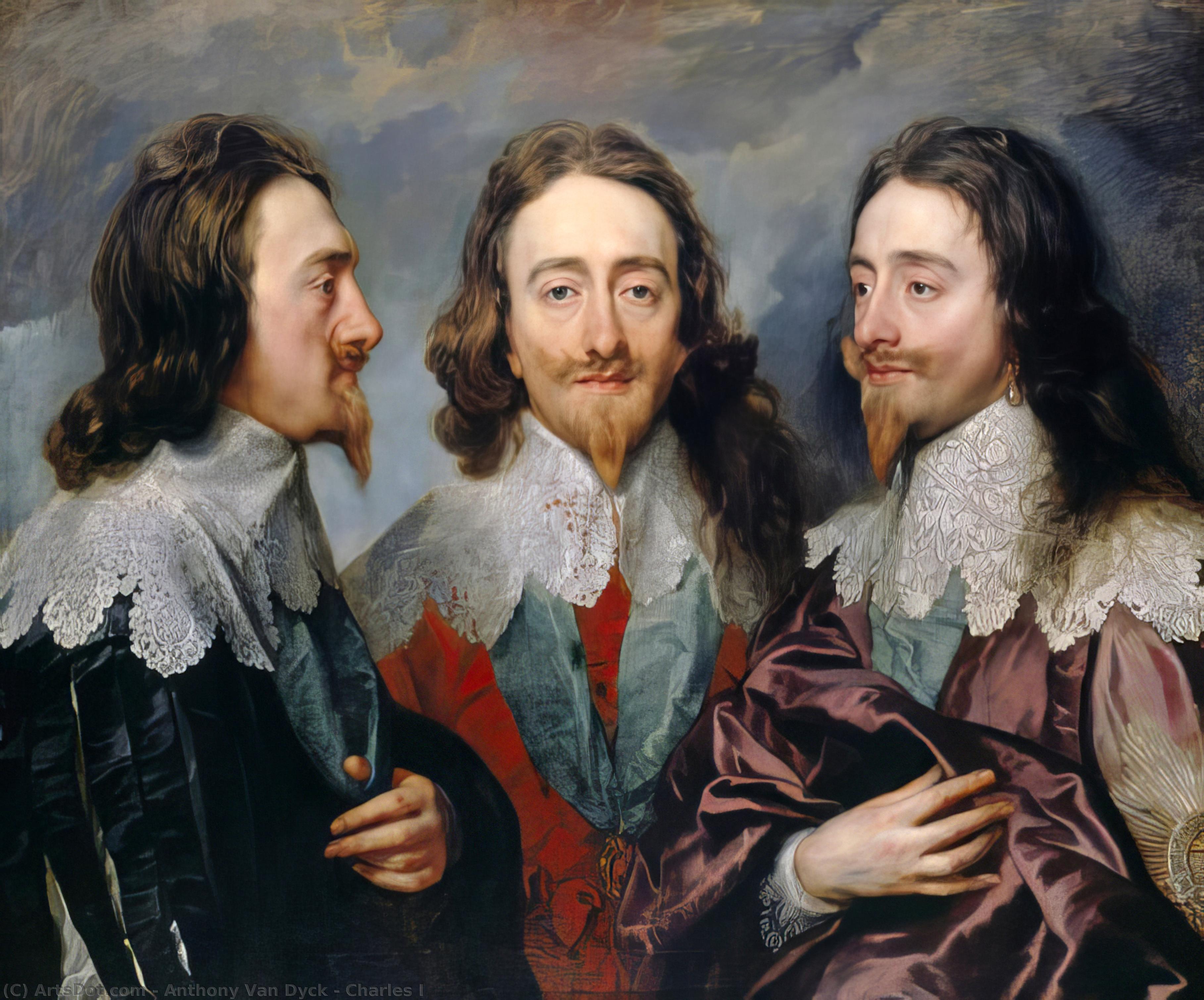
Charles I Üç Pozisyonda (1636) is the most famous painting by Anthony van Dyck, held by the Royal Collection in Londra. Family Portrait (1621) and Portrait of Isabella Clara Eugenia as Widow (1628) are the next two works the world knows best. From the 1,620 works of Anthony van Dyck in our catalogue, here are the 100 that collectors and museum visitors look at most, with the year, the museum and the story of each.

Ranked by our popularity score, which combines the searches, visits and orders for each work. Updated Ekim 2026. Every masterpiece on this page can be ordered as a museum-quality, hand-painted oil reproduction or a fine art print, at the size you choose.

Portrait of Anthony van Dyck
Anthony van Dyck · 1599 – 1641
Born · died
1599 – 1641, Anvers
Movement
Baroque realism
Works in our catalogue
1.620
Most famous
Charles I Üç Pozisyonda (1636)
Most works at
Bavarian State Painting Collections

Top 10: Anthony van Dyck's best-known paintings

Charles I Üç Pozisyonda (1636) by Anthony van Dyck
1

Charles I Üç Pozisyonda

1636 · Tuval Üzerine Yağlı Boya · Royal Collection, Londra

“Charles I Üç Pozisyonda”, Sir Anthony van Dyck'ın Barok portre sanatındaki ustalığının olağanüstamente çarpıcı bir örneğidir. 1635-1636 yılları arasında tuvale yansıyan bu yağlı boya şaheseri, Flaman sanatçının eşsiz yeteneğini ve Avrupa sanat tarihi üzerindeki derin etkisini gözler önüne serer. Prestijli Kraliyet Koleksiyonu'nun bir parçası olan bu tablo, günümüzde Windsor Kalesi'ndeki Kralın Resim Odası'nda sergilenmeye devam etmektedir.

Family Portrait (1621) by Anthony van Dyck
2

Family Portrait

1621 · Oil On Canvas · Hermitaj Müzesi, Saint Petersburg

To gaze upon this magnificent family portrait is to step directly into the opulent drawing rooms of the early seventeenth century. It captures not merely three figures—a distinguished man, an elegant woman, and a cherished child—but an entire tableau of familial pride and societal standing. The composition itself speaks volumes; every fold of fabric, every carefully placed hand, contributes to a narrative of enduring connection. The rich, dramatic red background…

Portrait of Isabella Clara Eugenia as Widow (1628) by Anthony van Dyck
3

Portrait of Isabella Clara Eugenia as Widow

1628 · Oil On Canvas · Museo de Arte de Ponce, Ponce

Sir Anthony van Dyck’s “Portrait of Isabella Clara Eugenia as Widow” is more than just a depiction of a noblewoman; it's a carefully constructed tableau of power, grief, and the enduring legacy of a formidable ruler. Painted in 1628, this oil-on-canvas work transports us to the heart of the Spanish Netherlands during a period of significant political and personal upheaval. Isabella Clara Eugenia, daughter of Philip II of Spain, served…

Jacqueline van Caestre (1622) by Anthony van Dyck
4

Jacqueline van Caestre

1622 · Oil On Panel · Royal Łazienki Müzesi, Varşova

The portrait of Jacqueline van Caestre, painted in 1622 by the masterful Sir Anthony van Dyck, is more than a mere likeness; it’s a carefully constructed tableau of wealth, status, and burgeoning domesticity. Within its richly layered composition lies a captivating story of a noblewoman navigating the complexities of marriage and courtly life in 17th-century Antwerp. Van Dyck, already establishing his signature style—characterized by an almost sensual realism and a…

Susanna and the Elders (1622) by Anthony van Dyck
5

Susanna and the Elders

1622 · Tuval Üzerine Yağlı Boya · Alte Pinakothek, Münih

In the grand tapestry of the Flemish Baroque, few works capture the visceral intersection of vulnerability and voyeurism as profoundly as Sir Anthony van Dyck’s Susanna and the Elders. Painted around 1622, this monumental canvas is far more than a mere biblical illustration; it is a psychological drama frozen in time. The scene centers on Susanna, a figure of profound grace and purity, caught in a moment of harrowing intrusion.…

Genoese Noblewoman (1622) by Anthony van Dyck
6

Genoese Noblewoman

1622 · Oil On Canvas · The Frick Collection, New York City

Anthony van Dyck's "Genoese Noblewoman," painted circa 1625-1627, isn’t merely a portrait; it’s a meticulously crafted window into the opulent world of early 17th-century Genoa. This captivating work, now residing within The Frick Collection in New York City, offers a rare glimpse into the refined tastes and social dynamics of a wealthy Italian city-state – a vibrant hub of commerce, art, and cultural exchange during a period of immense artistic…

Henrietta Maria (1635) by Anthony van Dyck
7

Henrietta Maria

1635 · Oil On Canvas

The gaze of Henrietta Maria meets the viewer through this commanding portrait by Anthony van Dyck. Executed in 1636, the work captures Henrietta Maria of France in a moment of poised royal dignity. She exists here as the Queen of England, a position she holds through her marriage to King Charles I. The painting functions as a visual declaration of her status and her presence within the English court.

Portrait of Queen Henrietta-Maria (1638) by Anthony van Dyck
8

Portrait of Queen Henrietta-Maria

1638 · Oil On Canvas · Hermitaj Müzesi, Saint Petersburg

To stand before this portrait is to encounter the quiet gravity of the seventeenth-century English court. The Queen stands slightly off-center, her figure anchored by the heavy weight of crimson drapery and a draped table. There is a certain stillness here, a moment caught between the political tensions of 1638 and the personal dignity of the sitter. Van Dyck uses light to sculpt her form, pulling her face and chest…

The healing of the paralytic (1620) by Anthony van Dyck
9

The healing of the paralytic

1620 · Oil On Canvas · Bavarian State Painting Collections, Münih

In this oil painting, titled The healing of the paralytic, Anthony van Dyck explores a moment of profound spiritual intervention. The work, which dates to about 1618-20, captures the immediate aftermath of a miracle. We find ourselves witnessing the precise instant of transition between infirmity and restoration. The subject matter is drawn from the New Testament, specifically the narratives found in Matthew 9:1-8 or John 5:1-15.

Portrait of Alexandre della Faille (1589-1653) (1632) by Anthony van Dyck
10

Portrait of Alexandre della Faille (1589-1653)

1632 · Oil On Canvas · Belçika Kraliyet Güzel Sanatlar Müzeleri, Brüksel

A dignified three-quarter length portrait, this work captures a middle-aged man positioned centrally against a dark, atmospheric background. The subject, Alexandre della Faille, is rendered with a sense of quiet authority and formal composure. A voluminous white ruff collar acts as the primary focal point, its crisp texture contrasting sharply against the heavy, dark fabric of his cloak. Light enters from the upper left, casting soft shadows across the right…

The rest of the Anthony van Dyck ranking, 11 to 100

The Pietà (1629) by Anthony van Dyck
#12

The Pietà

1629 · Museo del Prado

Step closer to observe the weight of this scene. In this 1629 composition, we find the Virgin Mary cradling the limp, pale body of Christ. The arrangement is…

Order a reproduction →
The Lomellini Family (1627) by Anthony van Dyck
#16

The Lomellini Family

1627

To stand before 'The Lomellini Family' is to step directly into the gilded drawing rooms of 17th-century Genoese aristocracy. Anthony van Dyck, a painter whose elegance seemed to…

Order a reproduction →
Moses and the Brazen Serpent (1530) by Anthony van Dyck
#19

Moses and the Brazen Serpent

1530

Moses and the Brazen Serpent by Anthony van Dyck captures a moment of divine intervention from the Book of Numbers. The oil painting on canvas depicts the biblical…

Samson and Delilah (1630) by Anthony van Dyck
#24

Samson and Delilah

1630 · Kunsthistorisches Museum

In the grand tapestry of the Flemish Baroque, few moments capture the tension between divine strength and human frailty as poignantly as Sir Anthony van Dyck’s Samson and…

Bring it home →
Charles I (1600-49) on Horseback (1635) by Anthony van Dyck
#26

Charles I (1600-49) on Horseback

1635 · Hampton Court Sarayı

The scene unfolds with the commanding presence of Charles I (1600-49) on Horseback, a work by the artist Anthony van Dyck. Created in 1635, the portrait captures the…

Bring it home →
Cupid and Psyche (1640) by Anthony van Dyck
#27

Cupid and Psyche

1640 · Royal Collection

Anthony van Dyck's "Cupid and Psyche," painted in 1640, is more than just a depiction of a mythological romance; it’s a distillation of the Baroque spirit – a…

Bring it home →
Queen Henrietta Maria of England (1620) by Anthony van Dyck
#28

Queen Henrietta Maria of England

1620 · Bavarian State Painting Collections

In this three-quarter length portrait, Anthony van Dyck positions Queen Henrietta Maria of England slightly off-center. This subtle shift creates a quiet tension within the frame. A luminous…

Bring it home →
Queen Henrietta Maria of England (1639) by Anthony van Dyck
#30

Queen Henrietta Maria of England

1639 · Statens Museum For Kunst

Queen Henrietta Maria of England, painted by Anthony van Dyck, captures the queen consort of Charles I. Dated 1636, the portrait presents the woman who was born in…

Bring it home →
Saint Sebastian and the Angel (1631) by Anthony van Dyck
#31

Saint Sebastian and the Angel

1631 · Galleria Sabauda

A diagonal line cuts through the composition, pulling the eye from the descending angel down to the slumped, pale form of Saint Sebastian. The saint’s skin is luminous,…

Bring it home →
Portrait of a painter (1640) by Anthony van Dyck
#32

Portrait of a painter

1640 · Kunstmuseum Basel

We are looking at Portrait of a painter, a work by Sir Anthony van Dyck. Created about 1640, this piece presents a man whose identity is tied closely…

Bring it home →
St Jerome (1620) by Anthony van Dyck
#35

St Jerome

1620 · Nationalmuseum

The composition centers on the muscular, elderly figure of St. Jerome, positioned in a wilderness setting. His torso is partially exposed, draped in a voluminous red cloth that…

Order a reproduction →
Venetia, Lady Digby (1634) by Anthony van Dyck
#36

Venetia, Lady Digby

1634

To stand before this magnificent portrait is to step directly into the dramatic heart of the seventeenth century. Sir Anthony van Dyck’s depiction of Venetia, Lady Digby is…

Order a reproduction →
Crucifixion (1622) by Anthony van Dyck
#38

Crucifixion

1622 · San Zaccaria

Sir Anthony van Dyck's 1622 depiction of the Crucifixion is not merely a representation of a biblical event; it’s a visceral exploration of human suffering and spiritual anguish,…

Commission a hand-painted copy →
Ottaviano Canevari (1627) by Anthony van Dyck
#40

Ottaviano Canevari

1627 · The Frick Collection

Sir Anthony van Dyck’s 1627 portrait of Ottaviano Canevari is more than simply a likeness; it's a carefully constructed tableau of intellect, status, and the quiet dignity of…

Bring it home →
Lamentation of Christ (1620) by Anthony van Dyck
#41

Lamentation of Christ

1620 · Bavarian State Painting Collections

In this 1620 work, we find ourselves drawn into a tight, pyramidal arrangement of figures that centers entirely on the lifeless body of Christ. A heavy, sacred silence…

Commission a hand-painted copy →
Saint Sebastian (1620) by Anthony van Dyck
#44

Saint Sebastian

1620 · Bavarian State Painting Collections

The oil on canvas known as Saint Sebastian is an artwork by Anthony van Dyck. Created about 1620, the painting captures a moment of martyrdom. The figure is…

Order a reproduction →
Sir Kenelm Digby (1640) by Anthony van Dyck
#47

Sir Kenelm Digby

1640 · National Portrait Gallery

To gaze upon this portrait of Sir Kenelm Digby is to step directly into the opulent, charged atmosphere of the early seventeenth century English court. The subject, depicted…

Commission a hand-painted copy →
Portrait of an Old Man (1618) by Anthony van Dyck
#49

Portrait of an Old Man

1618 · Liechtenstein Müzesi

Sir Anthony van Dyck's "Portrait of an Old Man," painted circa 1618, is more than a simple likeness; it’s a profound meditation on time, wisdom, and the quiet…

Order a reproduction →
Portrait of a Man (1922) by Anthony van Dyck
#50

Portrait of a Man

1922 · Bavarian State Painting Collections

This work is a Portrait of a Man by the Flemish Baroque artist Anthony van Dyck. Dated 1922, the painting presents a formal, full-length composition. The subject is…

Order a reproduction →
Charles I in Three Positions (1636) by Anthony van Dyck
#51

Charles I in Three Positions

1636 · Royal Collection

In the grand tapestry of Baroque portraiture, few works command the room with as much quiet authority as Sir Anthony van Dyck’s “Charles I in Three Positions.” Completed…

Order a reproduction →
Portrait of a Genovese Gentleman (1621) by Anthony van Dyck
#53

Portrait of a Genovese Gentleman

1621 · Gemäldegalerie

To stand before this portrait is to step directly into the opulent, sophisticated world of early 17th-century European aristocracy. Sir Anthony van Dyck, the Flemish master whose brushstrokes…

Order a reproduction →
Portrait of a Man (1618) by Anthony van Dyck
#58

Portrait of a Man

1618 · Liechtenstein Müzesi

Sir Anthony van Dyck's “Portrait of a Man,” painted circa 1618-1619, is not merely a likeness; it’s a carefully constructed meditation on presence and authority. This small yet…

Commission a hand-painted copy →
Marie de Raet (1631) by Anthony van Dyck
#59

Marie de Raet

1631 · Wallace Collection

To stand before Marie de Raet is to be enveloped in the profound stillness of the early seventeenth century. This magnificent portrait by Sir Anthony van Dyck, dating…

Bring it home →
The Virgin and Child (1631) by Anthony van Dyck
#63

The Virgin and Child

1631 · Buckingham Sarayı

In this Baroque oil painting, the Virgin Mary is positioned at the center of a pyramidal structure, cradling the Christ Child. She wears a rose-colored tunic beneath a…

Order a reproduction →
Lord George Stuart (1638) by Anthony van Dyck
#64

Lord George Stuart

1638 · National Portrait Gallery

To gaze upon this portrait of Lord George Stuart is to step directly into the opulent, yet deeply thoughtful, world of early seventeenth-century English aristocracy. Sir Anthony van…

Order a reproduction →
Queen Henrietta Maria (1760) by Anthony van Dyck
#66

Queen Henrietta Maria

1760 · Birmingham Museum and Art Gallery

In this oil on canvas work from 1636, Sir Anthony van Dyck presents Queen Henrietta Maria. The portrait captures the queen, who lived from 1609 to 1669, with…

Order a reproduction →
The Polish Rider (1620) by Anthony van Dyck
#69

The Polish Rider

1620 · Bavarian State Painting Collections

The composition is dominated by the diagonal movement of the horse and rider. This movement creates a sense of forward momentum across the canvas. The subject is a…

Order a reproduction →
Kraliçe Henrietta Maria (1636) by Anthony van Dyck
#73

Kraliçe Henrietta Maria

1636 · Metropolitan Sanat Müzesi

1636 yılında resmedilen Anthony van Dyck imzalı "Kraliçe Henrietta Maria", sıradan bir portreden çok daha fazlasıdır; o, 17. yüzyıl Avrupası'nı şekillendiren güç, inanç ve diplomasinin o karmaşık dansının…

Order a reproduction →
Lady Dacre (1633) by Anthony van Dyck
#74

Lady Dacre

1633 · Denver Art Museum

Sir Anthony van Dyck’s “Lady Dacre” is not merely a portrait; it's a carefully constructed tableau of Renaissance elegance, imbued with subtle symbolism and the quiet dignity of…

Commission a hand-painted copy →
Charles i - (16) by Anthony van Dyck
#76

Charles i - (16)

In this work, titled Charles i - (16), Anthony van Dyck presents a formal bust-length depiction of the monarch. The subject is Charles I, who held the titles…

Bring it home →
Deux têtes d (1650) by Anthony van Dyck
#77

Deux têtes d

1650 · Musée des Beaux-Arts de Lyon

Sir Anthony van Dyck's "Deux têtes d" – literally, “Two Heads” – is not merely a painting; it’s an arresting tableau of psychological depth and subtle drama. Completed…

Bring it home →
Christ carrying the Cross by Anthony van Dyck
#83

Christ carrying the Cross

Musei di Strada Nuova

In Christ carrying the Cross by Anthony van Dyck, the viewer is met with a tightly cropped, bust-length portrait. The composition focuses entirely on the upper torso and…

Bring it home →
Ecce Homo (1626) by Anthony van Dyck
#85

Ecce Homo

1626 · The Barber Institute of Fine Arts

Sir Anthony van Dyck’s “Ecce Homo,” painted circa 1625-1626, is not merely a depiction of Christ before Pilate; it's an intensely human portrayal of sorrow, humility, and the…

Bring it home →
Margareta Snyders (1620) by Anthony van Dyck
#86

Margareta Snyders

1620

To gaze upon Anthony Van Dyck's portrait of Margareta Snyders is to step directly into the opulent, emotionally charged world of the early seventeenth century. This painting, executed…

Bring it home →
Margareta de Vos (1620) by Anthony van Dyck
#87

Margareta de Vos

1620 · The Frick Collection

Sir Anthony van Dyck’s “Margareta de Vos,” painted in 1620, is more than just a portrait; it's a meticulously crafted tableau of wealth, status, and subtle artistry. This…

Order a reproduction →
Portrait of a Man (1618) by Anthony van Dyck
#90

Portrait of a Man

1618 · Liechtenstein Müzesi

In this formal portrait from 1618, Sir Anthony van Dyck presents a man positioned slightly off-center, facing forward to engage the viewer directly. The composition is characterized by…

Bring it home →
Portrait of James Hamilton (1630) by Anthony van Dyck
#92

Portrait of James Hamilton

1630 · Liechtenstein Müzesi

A Noble Presence: Unveiling Anthony van Dyck’s Portrait of James Hamilton The image before you captures not merely a likeness, but the very essence of 17th-century power and…

Bring it home →
Charles I on Horseback (1635) by Anthony van Dyck
#93

Charles I on Horseback

1635 · National Gallery

Sir Anthony van Dyck's “Charles I on Horseback,” painted in 1635, is more than just a portrait; it’s a carefully constructed statement about power, authority, and the evolving…

Bring it home →
The Lomellini Family (1626) by Anthony van Dyck
#96

The Lomellini Family

1626 · National Gallery of Scotland

To stand before Sir Anthony van Dyck’s “The Lomellini Family” is to step directly into the gilded drawing rooms of seventeenth-century Genoa, where the air feels heavy with…

Commission a hand-painted copy →
Samson ve Delilah (1620) by Anthony van Dyck
#97

Samson ve Delilah

1620

Anthony van Dyck’in 1620 yapımı olan “Samson ve Delilah” eseri, sadece bir biblik hikayesini anlatmakla kalmıyor, aynı zamanda dönemin en etkileyici sanat akımlarından biri olan Barok tarzının zirvesini…

Order a reproduction →
Abraham and Isaac (1617) by Anthony van Dyck
#98

Abraham and Isaac

1617 · Národní Galerie

Sir Anthony van Dyck's “Abraham and Isaac,” painted in 1617, is more than just a biblical scene; it’s a profound meditation on faith, obedience, and the agonizing weight…

Commission a hand-painted copy →
Portrait of Anna van Craesbecke (1635) by Anthony van Dyck
#99

Portrait of Anna van Craesbecke

1635 · Staatliche Museen

Sir Anthony van Dyck’s “Portrait of Anna van Craesbecke,” painted in 1635, is more than just a likeness; it's a meticulously crafted tableau of aristocratic life and the…

Bring it home →
A wooded ridge (1630) by Anthony van Dyck
#100

A wooded ridge

1630 · Art Gallery of South Australia

Sir Anthony van Dyck's "A Wooded Ridge," painted around 1630, isn’t merely a landscape; it’s an invitation into a hushed and contemplative realm. This evocative piece, rendered in…

Bring it home →

Anthony van Dyck's paintings by period

The subjects Anthony van Dyck painted most

The four subjects that return most often among these masterpieces, with the finest example of each.

Where to see Anthony van Dyck's paintings

The 8 museums that hold the most of the paintings on this page.

Museum City Works by Anthony van Dyck Paintings from this list
Bavarian State Painting Collections, MünihBavarian State Painting Collections Münih 57 The healing of the paralytic, Equestrian Portrait of Charles I of England, Queen Henrietta Maria of England
Hermitaj Müzesi, Saint PetersburgHermitaj Müzesi Saint Petersburg 25 Family Portrait, Portrait of Queen Henrietta-Maria, Portrait of Charles I, King of the Great Britain (1600-1649)
Royal Collection, LondraRoyal Collection Londra 29 Charles I Üç Pozisyonda, Cupid and Psyche, Charles I in Three Positions
Liechtenstein Müzesi, ViyanaLiechtenstein Müzesi Viyana 23 Portrait of an Old Man, Portrait of a Man, Portrait of a Man
The Frick Collection, New York CityThe Frick Collection New York City 8 Genoese Noblewoman, Ottaviano Canevari, Margareta de Vos
Wallace Collection, LondraWallace Collection Londra 9 Queen Henrietta Maria, Marie de Raet
National Portrait Gallery, LondraNational Portrait Gallery Londra 6 Sir Kenelm Digby, Lord George Stuart
İskoç Ulusal Portre Galerisi, Edinburghİskoç Ulusal Portre Galerisi Edinburgh 5 Thomas Hamilton, 2nd Earl of Haddington, 1600 - 1640, Alexander Henderson (c.1583–1646), Presbyterian Divine and Diplomatist

Anthony van Dyck through the decades: one masterpiece for each

  1. 1610s
    The Martyrdom of Saint Sebastian (1616) by Anthony van Dyck
    #45 of 100

    The Martyrdom of Saint Sebastian

    Age 11 – 20 · Bavarian State Painting Collections

    The Martyrdom of Saint Sebastian emerges from the shadows of the Baroque era, a religious work that captures a moment of profound transition. In this painting by Sir…

  2. 1620s
    Family Portrait (1621) by Anthony van Dyck
    #2 of 100

    Family Portrait

    Age 21 – 30 · Hermitaj Müzesi

    To gaze upon this magnificent family portrait is to step directly into the opulent drawing rooms of the early seventeenth century. It captures not merely three figures—a distinguished…

  3. 1630s
    Charles I Üç Pozisyonda (1636) by Anthony van Dyck
    Rank 1 / 100

    Charles I Üç Pozisyonda

    Age 31 – 40 · Royal Collection

    “Charles I Üç Pozisyonda”, Sir Anthony van Dyck'ın Barok portre sanatındaki ustalığının olağanüstamente çarpıcı bir örneğidir. 1635-1636 yılları arasında tuvale yansıyan bu yağlı boya şaheseri, Flaman sanatçının eşsiz…

  4. 1640s
    Queen Henrietta Maria (1640) by Anthony van Dyck
    No. 17 of 100

    Queen Henrietta Maria

    Age 41 – 42 · Wallace Collection

    The Queen sits in a moment of quiet poise, her figure angled slightly away from the viewer to create a sense of graceful movement. She is draped in…

Anthony van Dyck's paintings: frequently asked questions

What is the most famous Anthony van Dyck painting?Show the answer

Charles I Üç Pozisyonda (1636), Royal Collection, Londra. Next come Family Portrait (1621) and Portrait of Isabella Clara Eugenia as Widow (1628).

At what age did Anthony van Dyck paint Charles I Üç Pozisyonda?Show the answer

37 years old: Charles I Üç Pozisyonda dates from 1636 and Anthony van Dyck was born in 1599.

Which are the 10 most famous Anthony van Dyck paintings?Show the answer

Charles I Üç Pozisyonda, Family Portrait, Portrait of Isabella Clara Eugenia as Widow, Jacqueline van Caestre, Susanna and the Elders, Genoese Noblewoman, Henrietta Maria, Portrait of Queen Henrietta-Maria, The healing of the paralytic and Portrait of Alexandre della Faille (1589-1653). The ranking above gives the year and the museum of each.

How many paintings by Anthony van Dyck are there?Show the answer

Our catalogue lists 1,620 works by Anthony van Dyck, dated from 1616 to 1641.

Where can I see the most famous Anthony van Dyck paintings?Show the answer

Most of them are in Bavarian State Painting Collections (Münih), Hermitaj Müzesi (Saint Petersburg) and Royal Collection (Londra). The table above lists the museums one by one.

In which period did Anthony van Dyck paint the best-known works?Show the answer

In 1630s: 44 of the 100 works on this page date from then, among them Charles I Üç Pozisyonda.

What is the earliest famous Anthony van Dyck painting, and the latest?Show the answer

The earliest on this page is The Martyrdom of Saint Sebastian (1616), the latest Portrait of Prince Charles Louis, Elector Palatine (1641).

What subjects did Anthony van Dyck paint?Show the answer

Man (22), Portraiture (20) and Portrait (17), among the 100 works on this page.

What did Anthony van Dyck paint on, and with what?Show the answer

Oil On Canvas: 75 of the 100 works on this page.

Which movement does Anthony van Dyck's art belong to?Show the answer

Baroque realism, as the paintings on this page show.

What Anthony van Dyck paintings does the Bavarian State Painting Collections hold?Show the answer

The healing of the paralytic, Equestrian Portrait of Charles I of England and Queen Henrietta Maria of England are among the 10 works on this page held by the Bavarian State Painting Collections, Münih.

Where can I buy a Anthony van Dyck reproduction?Show the answer

Yes. Every painting on this page can be ordered as a museum-quality, hand-painted oil reproduction or a fine art print, in the size you choose, from the painting's own page.

Anthony van Dyck: biography

Erken Yaşam, Aile ve Eğitim

22 Mart 1599'da Anvers'te dünyaya gelen Sir Anthony Van Dyck, ticaret ve zanaatla iç içe geçmiş bir dünyanın içine doğdu. İpek tüccarı Francoïs "Frans" van Dijck ile Maria Cupers'ın on iki çocuğundan yedincisiydi. Refah içindeki bu aile ortamı, görsel sanatlara karşı erken yaşta, olağanüstü bir yetenek sergileyen bir çocuk için sağlam bir temel oluşturdu. Henüz on yaşındayken, resim sanatları üzerine olan resmi eğitimi Hendrick van Balen the Elder'ın rehberliğinde başladı.

Sanatsal gelişimi, Flaman sanat dünyasının geleneksel yapısı içinde hızla yükselmesiyle karakterize edildi. Sadece bir öğreni statüsünde uzun süre kalmadı; teknik becerisi, ona şaşırtıcı bir hızla bağımsızlığa doğru ilerleme imkanı tanıdı. 18 Ekim 1617 tarihine gelindiğinde, Anvers Aziz Luka Loncası'na usta olarak kabul edilerek çok önemli bir dönüm noktasına ulaştı. Bu erken profesyonel tanınma, çok yakında doğup büyüdüğü şehrin sınırlarını aşacak olan büyük bir yeteneğin gelişini müjdeliyordu.

  • Otoportre (1613–14 tarihli)

Peter Paul Rubens'un Etkisi

Sir Anthony Van Dyck'ın kariyerinin izlediği yol, Peter Paul Rubens'un atölyesinde geçirdiği yıllar tarafından kökten şekillendirilmiştir. Bu, sıradan bir çıraklık döneminden çok daha fazlasıydı; genç sanatçı, hem teknik bir hassasiyet hem de karmaşık bir görsel dili özümseme yeteneği gerektiren bir konumda, ustanın baş yardımcılığına kadar yükseldi. Rubens'in kendisi de öğrencisinin olağanüstü yeteneğini fark etmiş ve genç adamı kendi öğrencilerinin en iyisi olarak tanımlamıştır. Bu mentorluk, Sir Anthony Van Dyck'a on yedinci yüzyılın önde gelen sanatsal akımlarıyla doğrudan bir bağ kurma imkanı tanımış; ona büyük ölçekli kompozisyonların yaratılışını ve üretken bir atölyenin yönetimini bizzat gözlemleme fırsatı vermiştir.

Rubens'in etkisi, genç sanatçı üzerinde ifade, jest ve form üzerine kurulu ortak bir odaklanma aracılığıyla kendini göstermiştir. Sir Anthony Van Dyck nihayetinde daha rafine ve vakur bir üslup geliştirmiş olsa da, ilk yılları mentorunun enerjisini ve gözlem gücünü taklit ederek geçmiştir. Yaşamın canlılığını yağlı boya ve pigmentlere dönüştürmeyi öğrenmiş olması, daha sonra Rubens tarzının o güçlü ve gür enerjisinden sıyrılıp daha incelikli bir noktaya evrilmesine olanak sağlayan bir yetenek olmuştur. Bu atölyede atılan teknik temeller, onun Avrupa'nın kraliyet saraylarına uzanan görkemli yükselişi için gerekli olan tüm araçları ona sağlamıştır.

İtalya ve Cenova'daki Sanatsal Yolculukları

Henüz gençlik yıllarının sonuna gelmeden, bağımsız bir ressam olarak başarılar elde etmeye başlayan Sir Anthony Van Dyck, bu başarının verdiği ivmeyle Alçak Ülkeler'den ayrılma cesaretini buldu. 1621 ile 1627 yılının sonları arasındaki İtalya seyahatleri, onun Avrupa aristokrasisinin karmaşık sosyal hiyerarşilerinde ustalıkla yolunu bulmasını sağlayan, sanatını olgunlaştıran kritik bir dönem oldu. Bu seyahatler, sıradan bir gezginlikten ziyade, Akdeniz elitlerinin görsel diline yönelik stratejik bir derinleşme niteliğindeydi.

Sanatçının Cenova'da geçirdiği yıllar, kariyerinin en önemli dönemeçlerinden biri olarak tarihe geçti. Burada, gelişmekte olan sanatsal üslubuyla mükemmel bir uyum yakalayan Cenovalı soylular arasında sadık bir müşteri kitlesi edindi. Yerel ailelerin portrelerini yaparken sergilediği ustalık, şehirde büyük bir hayranlıkla karşılandı ve onu yüksek sosyetenin talep ettiği o kendine has vakarı yakalayabilen nadir ressamlardan biri haline getirdi. Bu portrelerde Sir Anthony Van Dyck, sadece fiziksel bir benzerlik sunmanın ötesine geçerek, modellerinin sosyal statüsünü ve ruhsal derinliğini tuvale yansıtmayı başardı.

İngiliz Sarayına Hizmet

Sir Anthony Van Dyck’in İngiliz krallığı ile olan bağı, Londra'ya kalıcı olarak yerleşmesinden çok daha önce başlamıştı. 1620 yılında Kral I. James'in hizmetine girmesi, İtalya ve İspanyol Netherlands topraklarındaki kapsamlı yolculuklarından önce gelen kısa bir dönemdi. Hareketlilikle geçen ve çeşitli siparişlerle şekillenen bu yıllar, onu çok daha derin bir varoluşa hazırladı. 1632 yılına gelindiğinde İngiltere'ye geri dönmüş ve birinci sınıf bir portre ustası olarak şöhretinin perçinleneceği saray hayatına yerleşmişti. Aynı yıl, kendisini kraliyet yaşamının tam merkezine yerleştiren 'Majesteleri'nin Baş Ressamı' unvanına layık görüldü.

Londra'daki varlığı, monarşinin görsel dilini kökten değiştirdi. Geçmişin o katı ve resmi portre anlayışından uzaklaşarak, kralı ve aristokrasiyi zahmetsiz bir zarafet ve otorite duygusuyla sunmayı tercih etti. Modellerinin karakterini yakalama yeteneği, onun İngiltere'nin önde gelen saray ressamı olmasını sağladı. O, sadece yüzleri kaydetmekle kalmıyor; İngiliz sarayını nesiller boyu etkileyecek bir güç imajı inşa ediyordu. Bu dönemdeki çalışmaları, dönemin estetiğini tanımlayan bir vakar ve duruş duygusu sundu.

Teknik ve Sanatsal Üslup

Sir Anthony Van Dyck, yağlı boyanın yoğun dokusu ile gravür sanatının o keskin ve hassas çizgileri arasında kusursuz bir geçiş yapabilmesini sağlayan eşsiz bir teknik çeşitliliğe sahipti. Yetkin bir desen sanatçısı olarak, renkleri uygulamadan önce güçlü bir yapısal temelin gerekliliğini çok iyi kavramıştı. Kompozisyonları, genellikle formun ustaca bir düzenlemesi üzerine kuruluydu; ışık ve gölgenin dramatik etkileşimini kullanarak figürlerinin hatlarını belirginleştirirdi. Bu chiaroscuro kullanımı, özellikle ışığın karanlığın içinden bir jesti veya ifadeyi vurgulamak için doğuyormuş gibi göründüğü dini ve mitolojik sahnelerinde, eserlerine derinlik ve hacim kazandırıyordu.

Sanatçının renk paleti, derin ve doygun tonlar ile dokunun en ince ayrıntılarına gösterdiği özenle karakterize edilirdi. İster ipeğin o parlak ışıltısını ister tenin en hafif dokusunu resmetsin, çağdaşlarının bazen aşırıya kaçan ağırbaşlılığından kaçınarak her zaman bir zarafet duygusunu korumayı başardı. Bu hassasiyet sadece resmi siparişleriyle sınırlı kalmıyordu; hareketi ve karakteri yakalama yeteneği, onu mitolojik anlatıların görkeminden portrelerinin o mahrem psikolojik derinliğine kadar pek çok farklı türde ustalaşmaya itti. Işığı, bir modelin sosyal statüsünü veya içsel mizacını fısıldamak için kullanma konusunda özel bir yeteneğe sahipti; bireyi çerçevelemek için genellikle görkemli jestlerden ve titizlikle seçilmiş arka planlardan yararlanırdı.

Miras ve Kalıcı Etki

Sir Anthony Van Dyck'ın 9 Aralık 1641 tarihinde Londra'da hayata gözlerini yumması, Avrupa saraylarının görsel dilini çoktan yeniden şekillendirmiş olan muazzam bir kariyerin sonu demekti. Peter Paul Rubens'in açtığı yoldan ilerleyen sanatçı, on yedinci yüzyılın en önemli Flaman ressamı olarak tarihe geçti. İngiliz sarayındaki varlığı, sanatın yönünü önümüzdeki 150 yıl boyunca etkileyecek bir portre standardı belirledi. Konularının sosyal statüsünü ve karakterini, sonraki nesil ressamlar için bir referans noktası haline gelen rafine bir teknikle tanımlama konusunda eşsiz bir yeteneğe sahipti.

Onun etkisi İngiltere sınırlarının çok ötesine uzandı. Sanatçının eserleri, dönem boyunca Avrupa genelinde üretilen sanat üzerinde derin bir nüfuz sahibi oldu. Bu geniş etki alanı, dini anlatıların gereklilikleri ile aristokrasinin sofistike beklentileri arasında ustalıkla geçiş yapabilen çok yönlülüğünden besleniyordu. O, sadece yüzleri kaydetmekle kalmadı; güç ve statü sergilemek isteyenler için tercih edilen estetik bir anlayış olan otorite ve zarafet imajını inşa etti.

  • Charles I in Three Positions (1636)
  • The Balbi Children
  • Self-Portrait (1622)

All 1620 works by Anthony van Dyck →