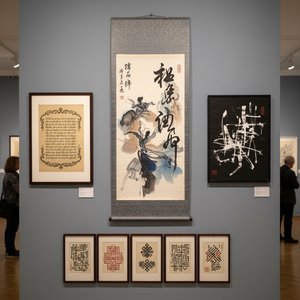
A Quiet Voice Amidst Edo Elegance: Sekiten Dōrin’s Legacy
Sekiten Dōrin (1825), a figure largely obscured by the annals of Japanese art history, nevertheless possesses a profound resonance within the contemplative traditions of Zen Buddhism and the refined aesthetic sensibilities of the late Edo period. Born in Tokyo, he ascended to abbatial leadership of Shisenin Kosen temple in Kyoto, inheriting not merely administrative responsibilities but also the sacred Dharma entrusted to him by Banjin Dōtan—a lineage steeped in centuries of monastic scholarship and artistic practice.
His artistic endeavors centered primarily on calligraphy and poetry, disciplines inextricably linked within Zen philosophy. Unlike many artists of his time preoccupied with grand narratives or opulent commissions, Dōrin’s output speaks volumes about a dedication to inner reflection and the pursuit of spiritual enlightenment. His calligraphy wasn't merely decorative; it was considered a vehicle for transmitting Buddhist teachings—precise strokes conveying profound concepts of emptiness (sunyata) and interconnectedness. The deliberate spacing between characters mirrored the stillness of meditation, emphasizing harmony and balance – hallmarks of Edo aesthetics.
- Early Life & Training: Dōrin’s formative years were spent diligently studying Zen Buddhism under influential masters, absorbing the tenets of shikantaza (“just sitting”) and investigating the nature of consciousness.
- Calligraphic Style: His distinctive style favored a restrained elegance characterized by subtle variations in ink density and brush pressure. He meticulously crafted each character with unwavering focus, reflecting the Zen ideal of mindful action.
- Poetic Output: Dōrin’s poems explored themes of impermanence (anicca), compassion (karuna), and acceptance—expressions of Buddhist wisdom distilled into lyrical beauty. Recurring motifs included images of mountains, waterfalls, and blossoming cherry trees – symbols laden with spiritual significance.
The influence of Banjin Dōtan’s teachings undoubtedly shaped Dōrin's artistic vision. Banjin Dōtan championed a particular interpretation of Zen emphasizing the importance of cultivating compassion and recognizing the illusory nature of ego—principles that permeated Dōrin’s creative output. Furthermore, he stood within a broader artistic milieu marked by the flourishing Edo aesthetic – a movement prioritizing simplicity, naturalism, and understated grace. Artists like Hiroshige and Turner were exploring similar themes of landscape and spirituality, demonstrating a shared fascination with capturing the essence of existence.
Dōrin's contribution to Zen calligraphy and poetry extends beyond mere stylistic innovation; it embodies a commitment to embodying Buddhist ideals in artistic practice. His works serve as poignant reminders that beauty can arise from profound contemplation and that art possesses the capacity to illuminate the path toward spiritual liberation. Though his name may not dominate museum halls, Sekiten Dōrin’s legacy persists—a testament to the enduring power of Zen aesthetics and a quiet voice resonating within the grandeur of Edo Japan.