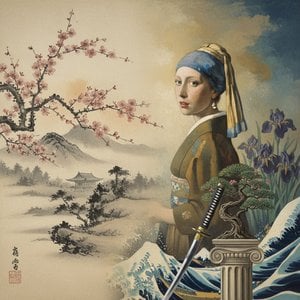
A Pioneer of Zen Art and Historiography: Muchaku Dōchū (1653-1744)
Muchaku Dōchū, whose name translates to “Silent Virtue,” stands as a pivotal figure in the annals of Japanese art history. Born in Tajima Prefecture in 1653 during the Edo Period—a time marked by social stability and artistic flourishing—he lived through a transformative era that would ultimately reshape Japan’s cultural landscape. His life was inextricably linked to Zen Buddhism, which profoundly impacted his worldview and subsequently informed his artistic endeavors as well as his scholarly pursuits.- Early Life and Education: Dōchū's formative years were spent immersed in the traditions of Zen monasteries, where he honed his understanding of Buddhist philosophy and aesthetics. Precise biographical details remain scarce, reflecting the common practice of monastic life during that period—a dedication to contemplation and spiritual advancement above worldly concerns.
- Zen Mastership and Artistic Practice: Dōchū’s mastery extended beyond philosophical discourse; he was a skilled painter whose work embodies the essence of Zen principles. His distinctive style favored simplicity, balance, and subtle tonal variations – characteristics that resonate deeply within Zen aesthetics. Notably, his celebrated ‘Five-Character Quatrain,’ housed in the Museum of Zen Buddhist Culture in Setagaya, exemplifies this approach.
The Legacy of Five Houses: Muchaku Dōchū’s Biographical Contributions
Perhaps Dōchū's most enduring contribution to Japanese art and intellectual history lies in his monumental biography of seventy-four Chan masters—known as “Characterizations of Chan’s Five Houses.” This ambitious undertaking represents a groundbreaking effort to document the lives, teachings, and lineages of influential Zen figures. It wasn’t merely a recitation of facts; Dōchū imbued each portrayal with nuanced psychological insight, capturing the spirit of individual monks and their respective monasteries.Beyond Painting: Historical Scholarship and Cataloguing
Dōchū's scholarly pursuits extended far beyond biographical studies. He served as Director of the Zenbunka Kenkyüjo (Zen Buddhist Culture Research Institute), where he undertook a monumental task—the creation of a comprehensive catalogue of Chan monasteries across Japan. This meticulous undertaking aimed to preserve knowledge about monastic institutions and their role in shaping Japanese culture.A Poet’s Reflection: Laudatory Poems Dedicated to Zen Masters
Furthermore, Dōchū expressed his reverence for Zen masters through lyrical poetry—a genre favored by monks during the Edo Period. These poems served as tributes to Chan practitioners and conveyed profound spiritual sentiments, reflecting a deep appreciation for Zen's core values of mindfulness and compassion.Historical Significance and Enduring Influence
Muchaku Dōchū’s work stands as a testament to the intellectual vibrancy of the Edo Period and its enduring impact on Japanese art. His biographical masterpiece continues to inspire scholars and artists alike, providing invaluable insights into Zen Buddhism's history and psychology. The WahooArt.com platform recognizes his contribution to artistic heritage, ensuring that Muchaku Dōchū’s legacy persists for generations to come.Soru ve Cevaplar
Muchaku Dōchū tarafından üretilen tüm eserleri nasıl görebilirim?
bu web sitesi üzerindeki Muchaku Dōchū imzalı tüm eserlere sanatçının Tüm Sanat Eserleri sayfasından göz atabilirsiniz.
Muchaku Dōchū sanatçısının konulara göre haritalanmış eserlerine nereden ulaşabilirim?
Muchaku Dōchū sanatçısının Konu Atlası, sanatçının eserlerini konularına göre listeleyen bir sayfadır.
Muchaku Dōchū hangi dönem sanatçısıdır?
Muchaku Dōchū, Early Modern döneminde eserlerini vermiştir. Bu dönem, sanatçının çalışmalarını tarihsel bir bağlama oturtur.