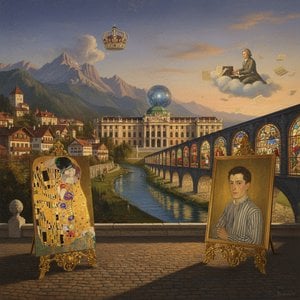
maria lassnig, an austrian artist known for her painted self-portraits and her theory of 'body awareness', was born on september 8, 1919, in kappel am krappfeld, austria. her early life was marked by her mother's troubled relationship with a much older man, leading to lassnig being raised primarily by her grandmother. this complex family dynamic would later influence her artistic themes. lassnig attended the academy of fine arts in vienna during world war ii, where she began to develop her unique style and approach to art.
artistic career and contributions
maria lassnig's artistic career is distinguished by several key contributions:
introduction of informalism and tachisme: lassnig played a pivotal role in introducing these styles into post-war austrian art.
participation in the hundsgruppe ('dog pack') group: alongside notable artists like arnulf rainer, ernst fuchs, and wolfgang hollegha, lassnig was part of this influential group that shaped the austrian art scene in the 1950s.
development of 'body awareness' theory: this concept, coined by lassnig in 1948, emphasizes depicting only body parts felt during the creative process, leading to innovative self-portraits with missing body parts or unnatural colors.
awards and legacy
- first female artist to win the grand austrian state prize (1988) - awarded the austrian decoration for science and art in 2005 - received the golden lion award for lifetime achievement at the 55th venice biennale in 2013
from 1980 until her death, lassnig lived and taught in vienna, becoming a professor at the vienna university of applied arts in 1980. her later work continued to explore themes of body awareness and self-portraits.
discover more about the museum of applied arts and its significance in austrian art history on WahooArt's blog.
conclusion
maria lassnig's pioneering work in 'body awareness' has left an indelible mark on austrian art, inspiring generations with her innovative approach to self-portraits and her contributions to the development of informalism and tachisme. her legacy continues to be celebrated through her artworks and the impact she had on the art world.
WahooArt.com Editör Ekibi Tarafından
Sanat Bilgisi Testi
Her soru için yalnızca bir doğru cevap bulunmaktadır.
Soru 1:
What artistic movement is Maria Lassnig credited with introducing into Austrian art?
Soru 2:
Maria Lassnig developed a theory known as “Body Awareness.” What does this theory primarily focus on?
Soru 3:
Maria Lassnig was a member of which influential Austrian artist group?
Soru 4:
In what year did Maria Lassnig receive the Austrian Decoration for Science and Art?
Soru 5:
Maria Lassnig was awarded the Golden Lion Award for Lifetime Achievement at:
Embark on a sophisticated journey through art history's most captivating masterpieces of reflection. Explore how legendary artists used mirrors to explore identity, surrealism, and the soul through expert art historical analysis.
Embark on a sophisticated journey through Austrian art history. Explore the golden brilliance of Gustav Klimt and the elegance of the Vienna Secession through an expert lens, celebrating the enduring soul of Central European masterpieces.
Embark on a sophisticated journey through the splendor of Austrian art. From Gustav Klimt’s golden masterpieces to the elegance of the Viennese Secession, discover the history and symbolism behind Europe's most iconic works for the discerning collector.
Merhaba! Bir sanat eseri seçmenize, siparişinizi takip etmenize veya garanti sorularınızı yanıtlamanıza yardımcı olabilirim. Size nasıl yardımcı olabilirim?