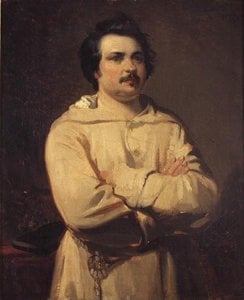
Louis Boulanger: A Romantic Visionary
Louis Boulanger (1806 – 1867) stands as a prominent figure in French Romantic painting, an artist whose dramatic canvases captured the spirit of his era and cemented his place within the artistic landscape of mid-century Paris. Born in Paris, Boulanger’s formative years were steeped in classical training—he enrolled at the École des Beaux-Arts where he honed his skills under Guillaume Guillon Lethière—a foundation that would profoundly shape his artistic style and sensibility. This disciplined approach contrasted sharply with the burgeoning emotional fervor of Romanticism, yet Boulanger skillfully blended tradition with innovation to produce works imbued with both grandeur and psychological depth.- Early Influences & Training: Boulanger’s education instilled in him a meticulous attention to detail and an understanding of anatomical precision—traits evident throughout his oeuvre. He particularly admired the works of Ingres, whose classical idealism served as a guiding principle for Boulanger's artistic endeavors.
- The Prix de Rome Prize & Eugène Devéria: Recognizing his talent, Boulanger secured a prestigious Prix de Rome scholarship in 1824, allowing him to travel extensively throughout Italy and immerse himself in the artistic heritage of antiquity. His collaboration with Eugène Devéria fostered intellectual exchange and broadened his artistic horizons, influencing his stylistic choices.
A Parisian Romantic Circle & Dramatic Narrative
Boulanger’s artistic career flourished within the vibrant Parisian Romantic circle—a milieu characterized by passionate debates about art and literature, fueled by political upheaval and social reform. He befriended Victor Hugo and numerous other writers and artists who championed expressive emotion and imaginative storytelling. This environment undeniably impacted Boulanger's artistic vision, encouraging him to prioritize dramatic narrative and theatrical composition. His paintings frequently depicted historical events with visceral intensity, conveying the emotional turmoil of the time—a hallmark of Romantic aesthetics.- Salon Successes & Recognition: Boulanger achieved considerable acclaim at the Salon exhibitions of 1827 and 1831, notably securing a medal for “La naissance d’Henri IV” alongside Devéria's monumental canvas. These successes propelled him to prominence within the artistic community and solidified his reputation as a masterful storyteller.
- Notable Paintings: Among Boulanger’s most celebrated works are "Mazeppa," a stirring depiction of Mickiewicz’s epic poem, showcasing his ability to convey heroism and pathos; “La mort de Sardanapale,” a collaborative effort with Delacroix that captures the horror and grandeur of Napoleonic warfare; and “Portrait d’Honoré de Balzac,” an iconic portrayal of Balzac rendered in exquisite detail—a testament to Boulanger's technical prowess and artistic sensitivity.
Illustrations & Artistic Style: Fantastical Visions
Beyond his easel paintings, Boulanger distinguished himself as a prolific illustrator, notably collaborating with Victor Hugo and Alexandre Dumas on literary adaptations. His lithographs—particularly “La ronde du sabbat”—embraced a distinctive stylistic approach characterized by fantastical imagery and unsettling atmosphere—a trend reflecting the anxieties of the Romantic period. Boulanger’s meticulous technique—characterized by smooth brushstrokes and subtle tonal gradations—created canvases imbued with luminosity and emotional resonance. He skillfully employed chiaroscuro to heighten dramatic impact, emphasizing contrasts between light and shadow and conveying psychological complexity.Legacy & Historical Significance
Louis Boulanger's contribution to French Romantic painting remains significant for its unflinching portrayal of human emotion and its masterful execution. His canvases continue to inspire admiration for their grandeur, dynamism, and psychological depth—qualities that resonate powerfully with audiences today. Furthermore, Boulanger’s association with literary giants like Hugo solidified his place within the cultural history of 19th-century France, ensuring that his artistic legacy would endure as a symbol of Romantic idealism and dramatic narrative. His work resides prominently in institutions such as Saint Louis Art Museum and Maison Victor Hugo, guaranteeing its accessibility to future generations eager to appreciate the enduring beauty and power of Romantic art.Soru & Cevap
Louis Boulanger sanatçısının sanat akımlarına göre gruplandırılmış eserlerine nereden ulaşabilirim?
Tüm Akımlar sayfası, Louis Boulanger eserlerini sanat akımlarına göre gruplandırır.
Louis Boulanger adlı sanatçının çalışmalarını yıl yıl nasıl takip edebilirim?
Louis Boulanger’in eserlerini kronolojik sırayla sanatçının Eser Kronolojisi sayfasında inceleyebilirsiniz.
Louis Boulanger’in tüm eserlerindeki renk kullanımını inceleyebilir miyim?
Louis Boulanger'in bu web sitesi üzerinde listelenen eserlerindeki renk kullanımı, sanatçının Palet Genomu sayfasından incelenebilir.