Early Life and Artistic Training
Lembit Sarapuu entered the world on August 1, 1930, in Tallinn. Growing up in the Estonian capital, he would eventually spend six decades shaping a visual language that was entirely his own. His early years in Tallinn provided the foundation for a life dedicated to the canvas, a path that would see him navigate the complexities of both nature and human existence through his brush.
His formal education began in earnest when he enrolled at the Estonian State Art Institute. He spent the years between 1955 and 1961 honing his technical skills within those studio walls. This period of study was essential, providing him with the discipline required to sustain a professional career that lasted sixty years. It was during these formative years of training that the seeds of his unique perspective were planted, allowing him to eventually move beyond simple representation into the more complex territories of myth and social commentary.
Technique and Artistic Style
Sarapuu’s approach to the canvas is a constant negotiation between the tangible world and a more profound, perhaps unsettling, truth. He often spoke of his work as a way to navigate the space between reality and the actuality of life. This tension is visible in his diverse range of subjects, moving from the quiet simplicity of landscapes, nudes, and portraits to much more unsettling territory. His paintings often carry a sense of irony or social criticism, using allegory to peel back the layers of everyday existence.
His visual language is difficult to pin down to a single movement, as it shifts between naivism, transavantgarde, postmodernism, and surrealism. He found a foundation in the works of early Renaissance masters, yet he used that classical influence to explore much darker or more provocative themes. His mythological subjects are particularly striking; he reimagined figures like Zeus, Danaed, and the Leda myths, as well as Estonian motifs like Kalevipoja and Saarepiigad. These are not polite or distant myths. Instead, he presented them as sexual, brutal, and grotesque beings, driven by their own impulses and free from the constraints of cultural expectations.
There is a certain grit to his work that refuses to look away from the more difficult aspects of human nature. He used a sense of the grotesque to address the human condition, often blending the mundane with the mythological to create something entirely his own. Whether he was painting a simple scene of daily life or a complex, provocative allegory, his work remained deeply rooted in a personal, highly developed mythology.
Major Awards and Recognition
Throughout a career spanning six decades, Lembit Sarapuu has been recognized by many of the most significant institutions in his homeland. His contributions to the arts were acknowledged early on when he received the Kristjan Raua Prize in 1988. This recognition preceded a period of even greater national attention, particularly as his work began to engage deeply with the shifting social and cultural landscape of the country.
In 1996, he was honored with the Estonian Republic Cultural Prize, a distinction that highlighted his unique position within the contemporary art scene. His standing within the nation was further solidified in 2001 when he received the Order of the White Star, IV Class. These honors reflect a life spent navigating the delicate space between reality and myth, often using humor and irony to address the complexities of human existence.
The highest level of professional respect came in 2010, when he was awarded the Konrad Mäe Medal. This honor is a significant milestone for any Estonian painter, marking him as a figure of profound importance to the country's artistic history. His ability to maintain a fresh perspective, even as he moved through different eras of political and social change, ensured that his work remained a subject of serious study for those who curate and preserve the nation's visual legacy.
Key Works and Notable Exhibitions
Throughout a career spanning six decades, Sarapuu developed a body of work that moves between the quietude of the natural world and the complexities of human existence. His earlier paintings often focused on the simplicity of life, such as the 1966 work Bathing Maidens. By 1973, his brush had captured subjects like the Girl from South Estonia, a portrait that reflects a more grounded, observational approach to his subjects. These works sit alongside his more mythological explorations, where he reimagined ancient figures to explore themes of desire and social critique.
His engagement with Estonian mythology is perhaps most visible in Kalevipoeg allmaailmas, a piece held within the Kumu Art Museum collection. This work belongs to a larger tradition of his painting where he uses figures from folklore to navigate the space between reality and myth. His ability to balance these heavy, often grotesque mythological themes with a sense of irony and humor allowed his work to remain relevant across different eras of Estonian history.
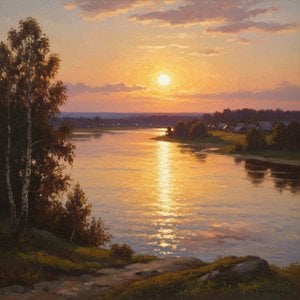
In more recent years, major retrospectives have brought his expansive output to the public eye. The Kumu Art Museum hosted the exhibition Tegelikkus ja tõelisus in 2022, which presented a wide range of his creations from 1961 to 2021. Another significant gathering of his work, titled Romantikast ühiskonnakriitilise räiguseni, took place at the Pärnu City Gallery, offering a look at how his focus shifted from romantic landscapes toward a more pointed social commentary.
Where to See His Works
Finding a piece of Lembit Sarapuu's vision often means looking into the quiet corners of private collections or the organized halls of major institutions. His paintings have traveled far from his studio, finding homes with individual collectors who hold his works in private hands. Because his art has been part of the cultural fabric for so many decades, much of his output is preserved within the official records of the ENSV Kunstifondi.
For those seeking to see his paintings in a public setting, the Art Museum of Estonia maintains a collection of his work. His presence is also felt within the Kumu Art Museum, where his pieces are held in the permanent collection. These institutions ensure that his specific way of looking at the world remains accessible to those who wish to study his long career.