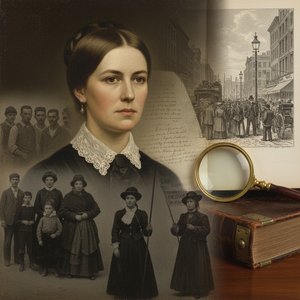
The Soul Behind the Canvas: The Life of Joseph-Alexandre Boichard
In the vibrant, shifting landscape of late 19th-century France, few artists captured the quiet intimacy of the human spirit as gracefully as Joseph-Alexandre Boichard. Born in 1833 in the serene village of La Grande-Combe-des-Bois, Boichard emerged from the Doubs region to become a defining voice in Parisian portraiture. His life was set against a backdrop of profound historical transformation, moving through the fervent Romantic idealism of his youth into the burgeoning Modernism that would soon reshape the art world. As a painter, he did not merely record faces; he sought to bridge the gap between traditional classical aesthetics and the psychological complexities of a modernizing society.
Boichard’s early development was marked by a rigorous devotion to technical precision. Before he became a master of the brush, he honed his eye under the guidance of established engravers. This foundational period in printmaking instilled in him an unparalleled appreciation for detail and line, a skill that would later allow him to render the delicate textures of lace, skin, and fabric with breathtaking accuracy. His professional journey was further enriched by his tenure at Maison Devambez, a prestigious printing firm in Paris. This connection to one of the era's most celebrated ateliers not only refined his sense of visual communication but also placed him at the heart of the Parisian art scene, where the dissemination of fine art and literature flourished.
Mastery of the Portrait and the Belle Époque
The true essence of Boichard’s oeuvre lies in his profound ability to breathe life into his subjects, particularly through his celebrated depictions of women. His portraits are far more than mere likenesses; they are windows into the inner lives of his sitters. Through a masterful use of light and shadow, he captured nuanced expressions—a fleeting glance, a subtle tilt of the head, or a soft, contemplative gaze—that revealed the underlying character and emotional depth of each individual. His work often reflects the Belle Époque spirit, balancing a sense of classical elegance with an observant, almost modern, psychological intimacy.
Boichard’s technical repertoire allowed him to navigate various artistic currents, blending the following elements into his signature style:
- Classical Precision: A reliance on the meticulous detail learned from his training in engraving.
- Psychological Depth: An ability to convey complex emotions and silent narratives within a single portrait.
- Luminous Texture: The skillful rendering of light to create a sense of presence and tactile reality.
- Humanist Sensibility: A commitment to portraying the dignity and grace of his subjects.
Legacy and Historical Significance
The significance of Joseph-Alexandre Boichard extends beyond the borders of France, as his works found their way into some of the world's most esteemed collections. His paintings have been honored in prestigious institutions, ranging from the Frick Collection in New York to the Palazzo Madama in Turin. This international reach underscores the universal appeal of his artistry—a style that resonates with anyone moved by the beauty of classical form and the profound truth of human emotion.
Even as the art world moved toward more radical abstractions, Boichard remained a steadfast guardian of the portraiture tradition, ensuring that the nuances of character and the elegance of the human form were preserved for posterity. His life, intertwined with the social upheavals of his time, such as the Communard uprising of 1871, reflects a man who was deeply rooted in the reality of his era yet remained focused on the timeless pursuit of artistic excellence. Today, his work stands as a testament to a period of unparalleled artistic richness, reminding us of the enduring power of the painted portrait to capture the ephemeral beauty of the human soul.