

John Opper'in en ünlü tablosu Untitled, from the portfolio American Abstract Artists (1937)'dir. Wyoming (1947) ve Color Series 8 71 (1971) ile birlikte, herkesin tanıdığı o üç eseri tamamlıyor. Kataloğumuz John Opper tarafından üretilen 6 eseri listelemektedir; aşağıda yer alan 5 eser ise dünyanın en çok ilgi gösterdiği, her biri yapıldığı yıl, sergilendiği müze ve önemine dair bilgilerle birlikte sunulan seçkin parçalardır.
Her bir eser için yapılan aramalar, ziyaretler ve siparişlerin birleşimiyle oluşturulan popülerlik puanımıza göre sıralanmıştır. Kasım 2026 tarihinde güncellenmiştir.


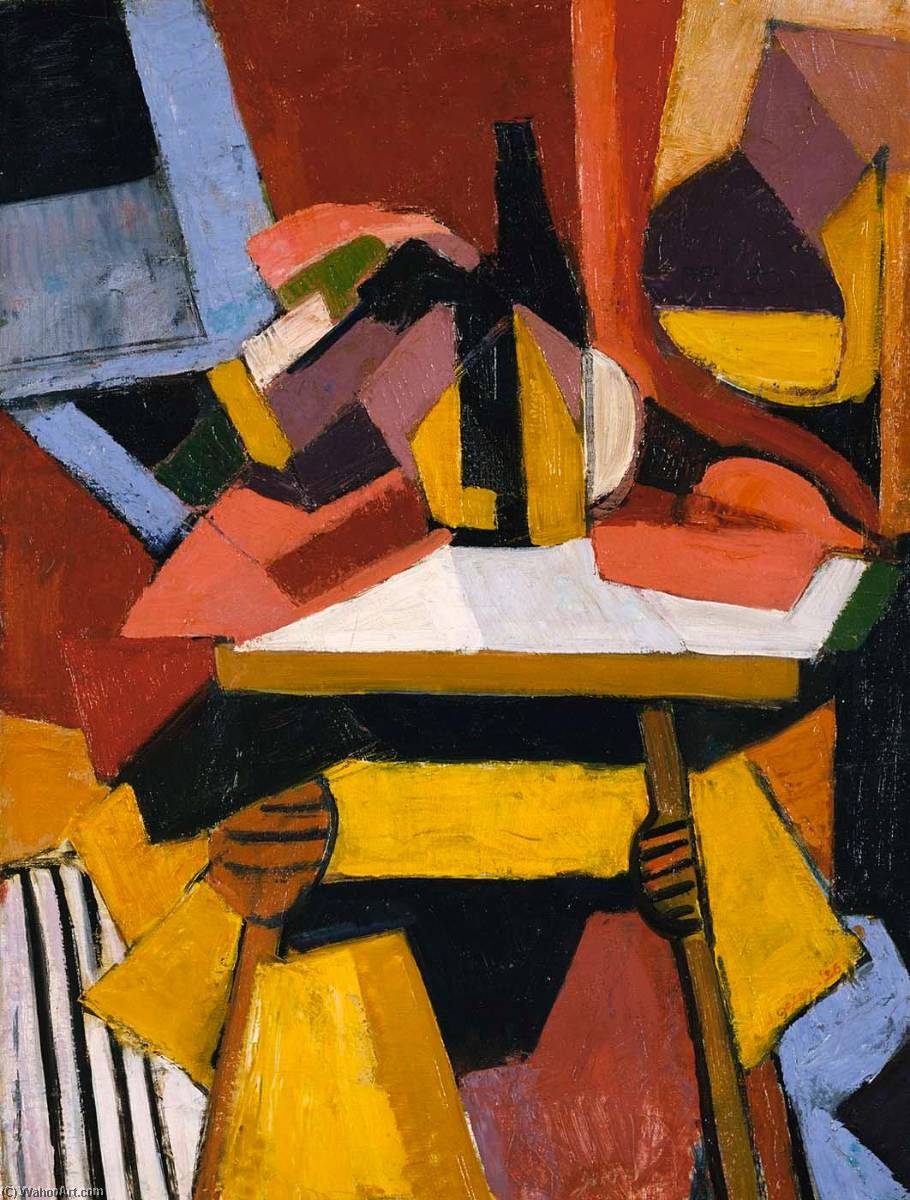
The Smithsonian American Art Museum is home to a stunning oil on canvas piece by John Opper, titled Untitled. Created in 1935, this artwork measures 61 x 46 cm and showcases the artist's unique style. As a professional expert in Art and https://AllPaintingsStore.com salesman, I am excited to delve into the world of John Opper and explore the significance of this captivating piece. John Opper: A Brief Overview John Opper…

The Farmyard painting by John Opper is a remarkable watercolor piece that showcases the artist's exceptional skill and attention to detail. Created in 1937, this artwork measures 39 x 57 cm and is currently housed at the Smithsonian American Art Museum in the United States. A Glimpse into the Artist's Life John Opper was an American artist known for his unique and captivating watercolor paintings. He described the 1930s as…


Untitled, from the portfolio American Abstract Artists (1937). Ardından Wyoming (1947) ve Color Series 8 71 (1971) gelir.
29 yaşında: Untitled, from the portfolio American Abstract Artists 1937 yılına aittir ve John Opper 1908 yılında doğmuştur.
Kataloğumuz, John Opper tarafından 1935 ile 1971 tarihleri arasında üretilen 6 eseri listelemektedir.
1930s döneminde: Bu sayfadaki 5 eserin 3 tanesi o döneme aittir, bunlar arasında Untitled, from the portfolio American Abstract Artists bulunmaktadır.
Bu sayfadaki en eski eser Untitled (1935), en yeni eser ise Color Series 8 71 (1971)'dir.
In the grand tapestry of American modernism, few threads are as vibrantly woven as those left by John Opper. A painter who mastered the delicate balance between the tangible world and the ethereal realm of pure emotion, Opper’s journey was one of profound transformation. Born in Chicago in 1908, his early years were marked by a burgeoning fascination with the visual language of form, nurtured through rigorous studies at the Cleveland School of Art and the Art Institute of Chicago. This foundational period instilled in him a technical discipline that would later serve as the scaffolding for his most radical experiments. As he moved through the 1930s, Opper began to shed the weight of representational accuracy, moving toward a style that whispered of Cubism while yearning for something far more primal and unconstrained.
The landscape of the American West acted as a silent collaborator in his artistic evolution. During a pivotal expedition to Wyoming in 1937, the vastness of the horizon and the raw, elemental power of the terrain ignited a fascination with color as a vessel for memory and feeling. It was during this era that Opper’s work began to pulse with a new kind of energy, moving away from the structured geometry of his early training toward a more fluid, atmospheric exploration. He viewed the 1930s as a "great gestation period," a time when he learned to perceive the unseen forces and tensions vibrating within the picture plane, preparing him for the monumental stylistic shift that would define his legacy.
As the mid-20th century approached, Opper emerged as a vital voice within the Abstract Expressionist movement. His transition from semi-abstract landscapes to fully realized abstraction in the 1950s was not merely a change in subject matter, but a complete reimagining of what a canvas could achieve. He became a founding member of the American Abstract Artists (AAA), a group dedicated to liberating the medium from the constraints of literal depiction. In his hands, painting became an act of constructing intensity through the juxtaposition of color. He possessed a singular ability to create drama on the picture plane by arranging more-or-less rectangular areas of pigment, creating a rhythmic tension that drew the viewer into a state of deep contemplation.
Opper’s technique was deeply aligned with the principles of Color Field painting, echoing the spiritual depth found in the works of contemporaries like Mark Rothko. However, Opper maintained a unique identity through his specific handling of texture and light. His canvases were not merely flat surfaces but luminous environments where color seemed to breathe. He avoided the coldness of hard-edge abstraction, preferring instead a style that felt organic and evolved from nature itself. To Opper, the essence of art lay in its ability to be more than just a sum of parts; it was an immersive experience where the boundaries between the viewer and the pigment dissolved into a singular, emotive moment.
The historical significance of John Opper lies in his role as a bridge between the structured modernism of the early century and the explosive freedom of the post-war era. His work remains a testament to the power of chromatic exploration, proving that color alone can communicate the complexities of the human condition. Throughout his career, which spanned until his passing in 1994, he remained steadfast in his belief that art should not be bound by rigid definitions or conceptual labels. He famously described his school of art as one that was neither purely geometric nor strictly conceptual, but simply an evolution of natural forces.
Today, the presence of Opper’s work in prestigious institutions like the Smithsonian American Art Museum ensures that his contribution to the American avant-garde is never forgotten. His paintings continue to captivate new generations of enthusiasts, offering a window into a period of unparalleled artistic bravery. To look upon an Opper canvas is to witness a master at work, orchestrating light, color, and space to create a lasting resonance that transcends the boundaries of time.