ÜCRETSİZ SANAT DANIŞMANLIĞI

x

1786 - 1862

Kısa Bilgiler

  • Nationality: Germany
  • Works on APS: 21
  • Born: 1786, Nördlingen, Germany
  • Lifespan: 76 years
  • Top 3 works:
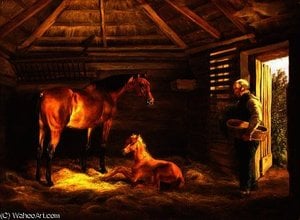
    • Horses at the Porch
    • Countess Caroline of Waldbott-Bassenheim
    • Lieutenant theodor
  • Daha fazla…
  • Top-ranked work: Horses at the Porch
  • Art period: 19th Century
  • Copyright status: Public domain
  • Died: 1862

Sanat Bilgisi Testi

Her soru için yalnızca bir doğru cevap bulunmaktadır.

Soru 1:
In what year was William Mulready born?
Soru 2:
Which of the following best describes Benjamin Robert Haydon's primary area of artistic focus?
Soru 3:
Marie Denise Villers is most notably associated with which artistic event or movement?
Soru 4:
What significant event occurred in 1840 related to William Mulready’s work?
Soru 5:
Benjamin Robert Haydon faced challenges throughout his career primarily due to:

William Mulready: A Pioneer of Rural British Landscape

Born in Ennis, County Clare, Ireland, on April 1st, 1786, William Mulready’s artistic journey began far from the grand salons of London. His early life was marked by a shift to Dublin and then, at the age of twelve, to the bustling metropolis of England. This relocation proved pivotal, opening doors to formal training at the Royal Academy Schools in London – an institution that would profoundly shape his artistic sensibilities. Initially drawn to portraiture, Mulready quickly discovered a deep affinity for capturing the serene beauty of the British countryside, establishing himself as one of the foremost practitioners of rural landscape painting during the early 19th century.

Mulready’s style was characterized by an almost photographic realism, yet tempered with a remarkable sensitivity to light and atmosphere. He eschewed the prevailing academic approach that favored idealized compositions and dramatic narratives, instead focusing on meticulously observing and faithfully rendering the details of everyday rural life. His paintings weren't grand statements; they were intimate glimpses into the lives of farmers, shepherds, and laborers, set against the backdrop of rolling hills, verdant fields, and meandering streams. This commitment to direct observation aligned him with the burgeoning Barbizon School in France, a movement that championed painting *en plein air* – directly from nature – and rejected the artificiality of studio work.

  • Early Influences: Mulready’s artistic development was significantly influenced by John Varley, a contemporary painter known for his innovative use of light and color. Varley's encouragement and guidance proved instrumental in shaping Mulready’s technique and approach to landscape painting.
  • The Boydell Shakespeare Gallery: In 1802, Mulready secured a prestigious commission to illustrate scenes from Shakespeare’s plays for the Boydell Shakespeare Gallery, a project that showcased his artistic talent and established him as a rising star in the London art world.
  • Illustrator of Scott's Novels: Perhaps most notably, Mulready served as the primary illustrator for Robert Cadell’s edition of Sir Walter Scott’s novels, a monumental undertaking that cemented his reputation as a skilled and versatile artist. His illustrations captured the essence of Scott’s narratives with remarkable detail and sensitivity.

The Postage Stamp and a Nation's Image

Beyond his artistic achievements, Mulready is perhaps best remembered for his pivotal role in designing the first pre-paid postage stamp for Great Britain in 1840. Commissioned by Henry Cole, the visionary founder of the Victorian Free Library Movement, Mulready was tasked with creating an image that would represent the nation’s postal system. His design – a depiction of Britannia overseeing the global distribution of mail – became instantly iconic and remains one of the most recognizable symbols of British identity.

However, the stamp's success was short-lived. Despite its initial popularity, it proved aesthetically unappealing to the public, leading to its swift withdrawal from circulation. Nevertheless, Mulready’s design laid the foundation for future postage stamps and demonstrated his ability to translate complex concepts into visually compelling imagery. The story of the “Mulready stamp” serves as a fascinating case study in the intersection of art, commerce, and national identity.

A Life of Artistic Pursuit and Personal Challenges

Despite his professional success, Mulready’s life was marked by personal struggles. His marriage to Elizabeth Robinson Varley proved unhappy, ending in divorce after only four years. He faced significant financial difficulties throughout his career, often resorting to debt and imprisonment as a consequence of his extravagant spending habits. Yet, he remained dedicated to his art, continuing to paint prolifically until his death on July 7th, 1863, at the age of seventy-seven.

Mulready’s legacy extends beyond his individual works; he played a crucial role in shaping the development of British landscape painting. His commitment to realism, his embrace of *plein air* techniques, and his focus on depicting everyday rural life influenced generations of artists who followed him. He stands as a testament to the power of observation, dedication, and artistic vision.

Legacy and Historical Significance

William Mulready’s contribution to British art is often overlooked in favor of more celebrated figures, yet his work deserves recognition for its quiet beauty and profound insights into rural life. His meticulous depictions of the English countryside offer a valuable window into the social and cultural landscape of early 19th-century Britain. Furthermore, his design for the first pre-paid postage stamp cemented his place in British history as an innovator and a pioneer.

Today, Mulready’s paintings are housed in major museums across the United Kingdom, including the Tate Gallery in London and the National Gallery of Ireland. His work continues to be studied and admired for its technical skill, its atmospheric quality, and its enduring appeal. William Mulready's life and art serve as a reminder that even seemingly modest contributions can have a lasting impact on the world.