Titian Ramsay Peale II’s “Venus Anadyomene”: A Renaissance Echo in the New World
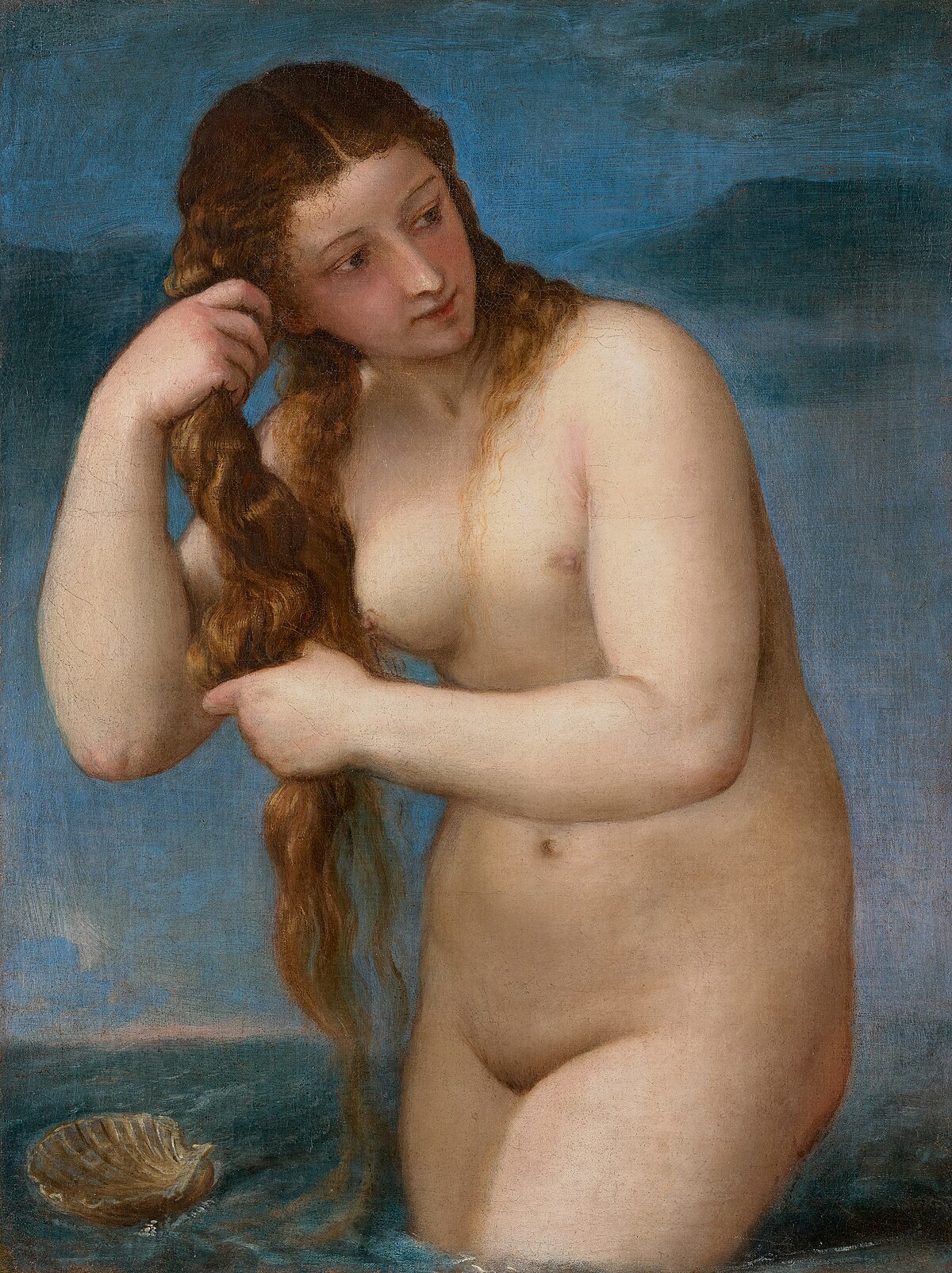
The painting "Venus Anadyomene," created by Titian Ramsay Peale II around 1520, transcends mere depiction; it constitutes a profound dialogue between classical ideals and the burgeoning spirit of American identity. Peale, deeply influenced by Venice’s artistic heritage and his father’s prominent role in establishing America's first museum – Charles Willson Peale – meticulously crafted this oil on canvas masterpiece not simply as an aesthetically pleasing image, but as a testament to his own skill and a reflection of the era’s fervent fascination with antiquity. Currently residing at the Scottish National Gallery of Modern Art in Edinburgh, “Venus Anadyomene” offers a captivating glimpse into a world where Renaissance principles were being reimagined through distinctly American eyes.
At its core, “Venus Anadyomene” embodies the classical narrative of Venus emerging from the sea – a potent symbol of rebirth, beauty, and fertility. Peale skillfully captures this moment, portraying the goddess in a dynamic pose; her long hair cascades down her body as she seems to contemplate her gaze or playfully scratch her head. This subtle gesture—a shift in focus—injects an unexpected intimacy into the scene, drawing the viewer into a private, almost vulnerable contemplation. The background, subtly rendered with mountainous forms and a serene azure sky, provides depth and context without overshadowing the central figure. Careful manipulation of light and shadow enhances the painting’s three-dimensionality, mirroring the values prized during the High Renaissance.
Artistic Technique and Compositional Choices
Peale's mastery is evident in the meticulous detail with which he renders every element of the composition. The texture of Venus’s hair, the folds of her drapery, and even minute reflections on the water are rendered with remarkable precision. He employs *sfumato*, blurring edges and creating soft transitions between colors—a technique contributing to the painting's ethereal quality. Noticeably balanced, the composition draws the eye naturally from Venus’s face to her flowing hair and then back to the tranquil backdrop. Strategically positioned seashell at the base subtly reinforces the mythological narrative, anchoring the image in its classical origins.
Symbolism and Historical Context
Beyond immediate visual representation, “Venus Anadyomene” overflows with symbolic significance. Venus herself represents not only beauty but also love, desire, and prosperity – qualities highly valued within Renaissance society. The act of scratching her head can be interpreted as a gesture of self-awareness or vulnerability—suggesting that even divinity acknowledges earthly concerns. Furthermore, Peale’s decision to depict Venus in this particular pose—a departure from earlier depictions—reflects the evolving artistic tastes of the era. Aligning with broader trends prioritizing psychological depth and emotional complexity, “Venus Anadyomene” embodies a pivotal moment in American art history.
Explore exquisite oil painting reproductions of "Venus Anadyomene" at WahooArt.com
Additional Research Resources:
Experience the beauty of “Venus Anadyomene” with a handmade oil painting reproduction from WahooArt.com.


 Önizleme yap
 Baskı Moduna Geç
 Paylaş
 Paylaş


 İndir
İndir
 Benzerlerini gör
 X-Işını
 Slayt Gösterisi
 İstatistikler


